$this->bbcode_second_pass_quote('AndyA', '
')Consumption taxes are the most regressive form of taxation, the more of your net income you spend on consumption the higher your effective tax rate. It's most notable impact will be to make the poor even poorer.



PeakOil is You
Economist Says Best Climate Fix A Tough Sell, But Worth It
Re: Economist Says Best Climate Fix A Tough Sell, But Worth
 by yellowcanoe » Wed 12 Feb 2014, 17:19:12
Not a problem if you provide a tax credit to low income people. Ontario, Canada single residents can get up to a $265 HST tax credit per year (paid quarterly) and up to a $281 sales tax credit from the provincial government. Considering that some of the essential living costs such as rent and food are not subject to sales tax, the tax credits should more than compensate for any sales tax a low income person has actually paid.
"new housing construction" is spelled h-a-b-i-t-a-t d-e-s-t-r-u-c-t-i-o-n.
- yellowcanoe
- Tar Sands

- Posts: 965
- Joined: Fri 15 Nov 2013, 14:42:27
- Location: Ottawa, Canada
Re: Economist Says Best Climate Fix A Tough Sell, But Worth
by Plantagenet » Wed 12 Feb 2014, 20:58:42
$this->bbcode_second_pass_quote('yellowcanoe', '')$this->bbcode_second_pass_quote('AndyA', '
')Consumption taxes are the most regressive form of taxation, the more of your net income you spend on consumption the higher your effective tax rate. It's most notable impact will be to make the poor even poorer.
')Consumption taxes are the most regressive form of taxation, the more of your net income you spend on consumption the higher your effective tax rate. It's most notable impact will be to make the poor even poorer.
Not a problem if you provide a tax credit to low income people.
Actually, it is a problem with carbon taxes.
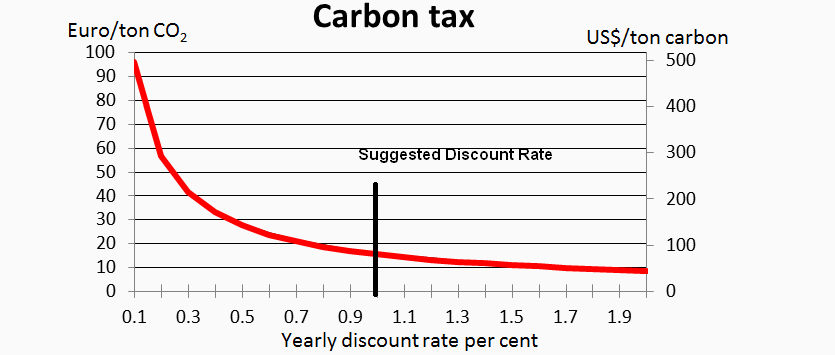
The whole point of a carbon tax is to make fossil fuels so expensive that people will use less of them. Giving people a tax credit to offset the carbon tax defeats the whole purpose of the carbon tax.
------------------
Low income people who take the bus aren't going to have to pay any carbon tax anyway. Rich people like Al Gore who drive expensive imported cars and fly in private jets and own multiple houses will have to pay lots of carbon tax. Thats completely fair.

A carbon tax is completely fair---the more carbon you emit, the more tax you pay.
-

Plantagenet - Expert

- Posts: 26765
- Joined: Mon 09 Apr 2007, 03:00:00
- Location: Alaska (its much bigger than Texas).
Re: Economist Says Best Climate Fix A Tough Sell, But Worth
by ralfy » Wed 12 Feb 2014, 21:38:46
$this->bbcode_second_pass_quote('pstarr', 'N')ot me. I put in solar because a) I had extra money and I thought it was the correct thing to do. b) I knew that I'd make the money back in the future. But that wasn't the point of my post, it was to respond to your "consumption still has to rise. " Consumption does not rise, not in the long term. My investment is depreciated and the savings/solar-gain keeps on coming. 
If we can assume that investments in general are chosen because they are "the correct thing to do" and not because they offer a better return, then I'd believe you.
-

ralfy - Light Sweet Crude

- Posts: 5651
- Joined: Sat 28 Mar 2009, 11:36:38
- Location: The Wasteland

 RE means working at Apple and living in the Palo Alto hills like a caveman? OK---but that house in the hills will cost you a couple of million bucks!!!!