I'm in that group.
If things get real tough before my time, you'll inherit my soda cap collection.



PeakOil is You
Middle ground between believers & deniers
Re: Any middle grounders here?
 by VMarcHart » Wed 23 Jul 2008, 15:16:34
-

VMarcHart - Heavy Crude

- Posts: 1644
- Joined: Mon 26 May 2008, 03:00:00
- Location: Now overpopulating California
Re: Any middle grounders here?
by NeoPeasant » Wed 23 Jul 2008, 15:43:36
Austere times are not necessarily unhappy times. If you are someone who can be happy as long as you get enough to eat and the opportunity to bathe occasionaly, you may do fine.
Knowing this I don't fear the likely hardships peak oil will bring.
Knowing this I don't fear the likely hardships peak oil will bring.
The battle to preserve our lifestyle has already been lost. The battle to preserve our lives is just beginning.
- NeoPeasant
- Heavy Crude
- Posts: 1003
- Joined: Tue 12 Oct 2004, 03:00:00
Re: Any middle grounders here?
by Carlhole » Wed 23 Jul 2008, 15:55:23
The peak oil idea has been around for decades but recent momentum has been building since 1999. Most recently, it began with Campbell and LaHererre's article in Scientific American, "The End Of Cheap Oil".
Since then, there have been hundreds of articles, dozens of books, tons of commentary on it - but it just doesn't look as though the world-at-large is buying into the die-off scenario.
Stock market speculation and investment in conventional and renewable energies is extremely active and growing. I guess the Doomers always say, "We'll be proven right in the end". But that's what cultish believers always say about whatever it is they believe in. They claim to know the future when others do not.
As far as PeakOil.com is concerned, I guess it's sexier to spout the Doom line but I just keep noticing how the numbers of page viewers keeps declining. It used to average around 600; now it seems to vary between 250 and 350.
If you wup some doom ass on the subject of oil depletion, they just start spouting off about other resource depletion. If you counter those arguments, they start spouting off about population and eco-system destruction. They should be posting on OverPopulation.com instead of PeakOil.com - because their arguments always go back to overpopulation at core.
If there were suddenly a fusion energy breakthrough, the Doomers wouldn't even break stride. It would be very bad news, in their view, because it would simply allow for the maintenance modern civilization for a longer time. In their view, it's best to see a sudden cataclysmic die-off of 2/3 of the human race regardless of whether or not peak would be the cause of it.
Personally, I wouldn't mind seeing the human race pruned back a bit too, even if I were one of the clippings. But is it realistic? I never had underestimated the ability of human beings to innovate; I seem to have much less contempt for science than the Doom crowd seems to have.
I'm expecting to see a big energy crunch and whopping huge response to it. We haven't seen anything yet.
Since then, there have been hundreds of articles, dozens of books, tons of commentary on it - but it just doesn't look as though the world-at-large is buying into the die-off scenario.
Stock market speculation and investment in conventional and renewable energies is extremely active and growing. I guess the Doomers always say, "We'll be proven right in the end". But that's what cultish believers always say about whatever it is they believe in. They claim to know the future when others do not.
As far as PeakOil.com is concerned, I guess it's sexier to spout the Doom line but I just keep noticing how the numbers of page viewers keeps declining. It used to average around 600; now it seems to vary between 250 and 350.
If you wup some doom ass on the subject of oil depletion, they just start spouting off about other resource depletion. If you counter those arguments, they start spouting off about population and eco-system destruction. They should be posting on OverPopulation.com instead of PeakOil.com - because their arguments always go back to overpopulation at core.
If there were suddenly a fusion energy breakthrough, the Doomers wouldn't even break stride. It would be very bad news, in their view, because it would simply allow for the maintenance modern civilization for a longer time. In their view, it's best to see a sudden cataclysmic die-off of 2/3 of the human race regardless of whether or not peak would be the cause of it.
Personally, I wouldn't mind seeing the human race pruned back a bit too, even if I were one of the clippings. But is it realistic? I never had underestimated the ability of human beings to innovate; I seem to have much less contempt for science than the Doom crowd seems to have.
I'm expecting to see a big energy crunch and whopping huge response to it. We haven't seen anything yet.
- Carlhole
Re: Any middle grounders here?
by benzoil » Wed 23 Jul 2008, 15:57:23
$this->bbcode_second_pass_quote('NeoPeasant', 'A')ustere times are not necessarily unhappy times. If you are someone who can be happy as long as you get enough to eat and the opportunity to bathe occasionaly, you may do fine. Knowing this I don't fear the likely hardships peak oil will bring.
I assume we'll see a rash of books/media memes about how people are happier now that they're living "simpler" lives. These will be the feel good human interest stories on cable news and the slow news day show on NPR's Fresh Air. I also expect to see a mini-Baby boom as people don't have anything else to do...
You're right about happiness though. If you can realize that all the rest is just stuff you'll be fine. It's the Go-Go-Prozac-burnout-more-is-better crowd that will be unhappy. Many of them will forever bemoan what they lost. Seeing as how I see a slow slide, I figure I'll have to listen to these people for a very long time. In that sense, I wish I were more of a doomer.
TANSTAAFL
-

benzoil - Coal

- Posts: 443
- Joined: Fri 26 Aug 2005, 03:00:00
- Location: Windy City No Longer
Re: Any middle grounders here?
by CarlosFerreira » Wed 23 Jul 2008, 16:11:25
$this->bbcode_second_pass_quote('benzoil', 'I')t's the Go-Go-Prozac-burnout-more-is-better crowd that will be unhappy. Many of them will forever bemoan what they lost. Seeing as how I see a slow slide, I figure I'll have to listen to these people for a very long time. In that sense, I wish I were more of a doomer.

Expect a rash of books on gardening, pedestrianism and simple living. And a go-back-to-land movement.
We don't need that mini baby boom. Perhaps there will still be state-owned TV? Maybe a couple of channels, with endless MacGyver re-runs to teach people how to repair stuff?

Environmental News and Clippings:
http://www.google.co.uk/reader/shared/1 ... 4898696533
Environmental Economics and Systems
http://enviroecon.wordpress.com/
http://www.google.co.uk/reader/shared/1 ... 4898696533
Environmental Economics and Systems
http://enviroecon.wordpress.com/
- CarlosFerreira
- Tar Sands

- Posts: 734
- Joined: Wed 02 Jul 2008, 03:00:00
- Location: Canterbury, UK
Re: Any middle grounders here?
by Twilight » Wed 23 Jul 2008, 16:13:00
$this->bbcode_second_pass_quote('Interfector', 'B')y that I mean, anyone who believes that the era of cheap oil is over, and that life will probably get steadily tougher for the majority of people, but doesn't think that we'll be resorting to cannibalism to survive within a decade, but that could be a potential scenario in the future if the right action isn't taken now.
Yes, me. I expect an eventual Soviet-style collapse of industrial economies if the challenge of peak oil is not constructively met (remember, that took many years and did not happen overnight), but the effect on political, social and cultural institutions will vary widely. Disenchantment and atrophy in one place, strengthening in another, all absolutely impossible to predict except in hindsight. Some countries will do far better than others, depending on present condition and what mistakes they make or avoid along the way.
- Twilight
- Expert

- Posts: 3027
- Joined: Fri 02 Mar 2007, 04:00:00
Re: Any middle grounders here?
by EndOfGrowth » Wed 23 Jul 2008, 16:54:05
Total economic meltdown....yes, people boiling each others heads or fighting over insects in the garden.... no, which I suppose makes me a moderate doomer
Machines are what distinguish modern man from the savage.
-

EndOfGrowth - Lignite
- Posts: 309
- Joined: Mon 04 Dec 2006, 04:00:00
- Location: End of the plateau
Re: Any middle grounders here?
by benzoil » Wed 23 Jul 2008, 16:59:47
$this->bbcode_second_pass_quote('CarlosFerreira', 'M')aybe a couple of channels, with endless MacGyver re-runs to teach people how to repair stuff?
LOL...sure...DTTV - Duck Tape TV. I expect to have electricity for most of my lifetime (I'm in my late 30s), so it's not too far fetched that we'll have shows like that.
On the other hand, people haven't wanted to see their own lives on TV since the 50s. Incomes portrayed on TV have steadily risen since The Honeymooners. Archie Bunker in the 70s and Rosanne in the 80's were about the only shows on TV that showed working class people as the main characters. I expect to see more historical escapism (Westerns, etc.) than reality.
Edited to fix errant smiley.
Last edited by benzoil on Wed 23 Jul 2008, 17:04:54, edited 1 time in total.
TANSTAAFL
-
benzoil - Coal
- Posts: 443
- Joined: Fri 26 Aug 2005, 03:00:00
- Location: Windy City No Longer

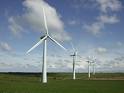
 . But I don`t expect zombie hoards, however through economic force (i.e; we can`t afford to waste it so much as we can`t pay the monthly bill), I think there is a lot of room for powering down. Recessions will happen, but they have always happened and are a natural part of economics.


