
Peak Oil is You

Donate Bitcoins ;-) or Paypal :-)


Page added on November 29, 2020

Resource Depletion

Resource Depletion. It’s such a big issue in our world, yet so much about it is unknown. Just imagine, resources that are crucial for mankind to survive disappear. Moreover, it takes a very long time to get them back. What will we do without them? When will this happen? How will we know before it’s too late? Learning about resource depletion is the first step to discovering what we can do to end this matter once and for all.
Resource depletion is when renewable and nonrenewable resources are used up much faster than they can recover. Renewable resources are sources that can regenerate and can be replaced. An example of a renewable resource includes biomass energy, which is an organic material that comes from various plants and animals. Non-renewable resources are resources that cannot be replenished by natural processes. Some examples include coal, oil, and natural gas. Once a non-renewable source is depleted, however, it’s gone forever.
The top 3 resources that are being depleted right now are:


Water – Water is crucial for all living organisms, and it makes up more than ¾ of our planet. But 97% of that water is saltwater, which is too saline for growing crops, drinking, and industrial uses. Only the remaining 3% is for us, or so it seems. 2.5% of that water is locked in glaciers, ice caps, the atmosphere, and the soil. In the end, all that’s left for us is 0.5%. Water is a multipurpose resource as well, since we use it for multiple reasons. Some examples include human consumption and house use (10%), agriculture (20%), industrial uses (70%), and much more. Even though water is a renewable resource, we can’t replace freshwater since it’s so limited. With climate change and rising global temperatures, we are experiencing more droughts and heatwaves than ever before. The melting of ice caps and glaciers depletes our last resort of freshwater. Tim Radford from Climate News Network writes, “Within three decades, almost 80% of the lands that depend on groundwater will start to reach their natural irrigation limits as the wells run dry” (Radford).
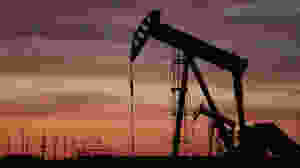

Oil – Oil is one of the key factors of pollution, yet it’s a valuable resource for humans. The US started using oil in the 1950s, and it has been proven to be a very convenient source of energy. We use it mostly for road transportation (cars, trucks, motorcycles, etc.) and petrochemicals. Petrochemicals are chemical products produced by oil, but mostly petroleum. 49.87% of oil is for road transportation, and 14.96% of oil is used for petrochemicals globally. The problem is that these oil reserves that we rely on so much will soon be depleted. An author at Ecotricity writes, “Globally, we currently consume the equivalent of over 11 billion tonnes of oil from fossil fuels every year” (Ecotricity). At the rate we are using oil, research shows that we will have oil enough for only another 46.5 years. Since oil is a non-renewable resource, there is no way for us to get more after we finish it up. It will be gone forever.


Forests – 31% of land is covered by forests since they’re useful for all organisms. They provide shelters for animals, absorb carbon dioxide and greenhouse gases in our air, and produce the oxygen that we breathe, which is crucial for organisms. But rates of deforestation have increased. Deforestation occurs by natural causes, like wildfires, floods, hurricanes, and parasites, or by human activities. Some human activities include cutting down for paper, farm and ranch uses, and building houses. An author from World Wildlife writes, “For example, in the Amazon around 17% of the forest has been lost in the last 50 years, mostly due to forest conversion for cattle ranching” (World Wildlife). An estimated 18 million acres of forests are destroyed each year, and a half of the world’s forests have already been cleared. Animals will not have homes and will either have to adapt to different and new surroundings or ultimately face endangerment. Oxygen is a bare necessity, and trees give that to us. Without them, none of us would be able to survive. Luckily, trees are a renewable resource and will grow, but it will take a lot of time and effort for our forests to grow back fully.
What can we do to help?
Now that you know what top resources are being depleted from Earth, fortunately, there are things we can do to avail. Of course, we cannot magically bring back the forests that were burned down or the amount of oil that has already been used, but we can at least help reduce the rate of usage of these resources. Reducing our carbon footprints will help conserve these precious resources.
-
Prevent the immense amount of water usage. We use water a lot in our daily lives. Some ways to dial down the amount of water you are using is to take shorter showers, turn off the tap while brushing your teeth, conserving and using 1 cup of water for 2-3 dishes instead, checking for leaky pipes, and harvesting rainwater for plants and gardens.
-
Decrease the amount of vehicle use. Most vehicles use oil to run and by doing so, also contribute to air pollution. Try to walk, cycle, or use public transportation wherever you can. You’ll help conserve some resources and you’ll also get some daily exercise!
-
Conserving trees. There are many ways that we can help conserve trees. We can start by recycling more. Recycling more often by throwing away the right things in the right bins and reusing and saving more items reduces the amount of waste and also conserves natural resources, such as paper. You can start buying more products that are recyclable. Reducing the amount of paper you use by using it efficiently is resourceful. Try to stop printing as much as possible and to use less paper, print on both sides of the sheet. There are also many alternative resources to use for paper, such as bamboo and sugarcane grass. Lastly, plant a tree! Try your best to volunteer in tree planting events or become a member of an organization. Donating to many tree planting organizations is very beneficial as well.
We are running out of resources every day and it will become an even bigger difficulty in the future. But if everyone contributes to helping conserve them, we will have a much bigger chance of beating this problem.
greenkeepers
4 Comments on "Resource Depletion"
Roger on Sun, 29th Nov 2020 7:38 pm
“Oil – Oil is one of the key factors of pollution, yet it’s a valuable resource for humans. The US started using oil in the 1950s, and it has been proven to be a very convenient source of energy.”
1950’s???? Who writes this crap?
FamousDrScanlon on Mon, 30th Nov 2020 9:04 pm
What’s the problem?
It’s life doing what it does.
I’m a gradient reducer extraordinaire & I will not forego even 1 fucking calorie of energy for any reason. Especially not for some ass holes stupid kids who, if they grow up, will be the competition.
Take a look at the winners, individuals & nations, in this world. They all are energy & resource pigs. There is no other way.
The so called ‘great reset’ is simply the next step down in declining net energy in a world in unprecedented Overshoot.
It had to happen. Did you morons think we could fake it on ever more retarded levels of debt forever?
Welcome to reality where papering over net energy decline is no more. It’s consequences time.
Don’t need any stupid fucking conspiracies to explain what we knew was going to happen 50 years ago – limits to growth & “The inevitable “overshoot”
Here we go loop de loop
OVERSHOOT LOOP: Evolution Under The Maximum Power Principle
The rush to social collapse cannot be stopped no matter what is written or said. Humans have never been able to intentionally-avoid collapse because fundamental system-wide change is only possible after the collapse begins.
What about survivors? Within a couple of generations, all lessons learned from the collapse will be lost, and people will revert to genetic baselines. I wish it weren’t so, but all my experience screams “it’s hopeless.” Nevertheless, all we can do is the best we can and carry on…
Organisms evolved a bias to maximize fitness by maximizing power. With greater power, there is greater opportunity to allocate energy to reproduction and survival, and therefore, an organism that captures and utilizes more energy than another organism in a population will have a fitness advantage.
Individual organisms cooperate to form social groups and generate more power. Differential power generation and accumulation result in a hierarchical group structure.
“Politics” is power used by social organisms to control others. Not only are human groups never alone, they cannot control their neighbors’ behavior. Each group must confront the real possibility that its neighbors will grow its numbers and attempt to take resources from them. Therefore, the best political tactic for groups to survive in such a milieu is not to live in ecological balance with slow growth, but to grow rapidly and be able to fend off and take resources from others[5].
The inevitable “overshoot” eventually leads to decreasing power attainable for the group with lower-ranking members suffering first. Low-rank members will form subgroups and coalitions to demand a greater share of power from higher-ranking individuals who will resist by forming their own coalitions to maintain it. Meanwhile, social conflict will intensify as available power continues to fall.
Eventually, members of the weakest group (high or low rank) are forced to “disperse.”[6] Those members of the weak group who do not disperse are killed,[7] enslaved, or in modern times imprisoned. By most estimates, 10 to 20 percent of all the people who lived in Stone-Age societies died at the hands of other humans.[8] The process of overshoot, followed by forced dispersal, may be seen as a sort of repetitive pumping action — a collective behavioral loop — that drove humans into every inhabitable niche of our planet.
Here is a synopsis of the behavioral loop described above:
Step 1. Individuals and groups evolved a bias to maximize fitness by maximizing power, which requires over-reproduction and/or over-consumption of natural resources (overshoot), whenever systemic constraints allow it. Differential power generation and accumulation result in a hierarchical group structure.
Step 2. Energy is always limited, so overshoot eventually leads to decreasing power available to the group, with lower-ranking members suffering first.
Step 3. Diminishing power availability creates divisive subgroups within the original group. Low-rank members will form subgroups and coalitions to demand a greater share of power from higher-ranking individuals, who will resist by forming their own coalitions to maintain power.
Step 4. Violent social strife eventually occurs among subgroups who demand a greater share of the remaining power.
Step 5. The weakest subgroups (high or low rank) are either forced to disperse to a new territory, are killed, enslaved, or imprisoned.
Step 6. Go back to step 1.
The above loop was repeated countless thousands of times during the millions of years that we were evolving[9]. This behavior is inherent in the architecture of our minds — is entrained in our biological material — and will be repeated until we go extinct. Carrying capacity will decline[10] with each future iteration of the overshoot loop, and this will cause human numbers to decline until they reach levels not seen since the Pleistocene.
https://dieoff.com/
“collapse cannot be stopped no matter what is written or said. collapse cannot be stopped no matter what is written or said. collapse cannot be stopped no matter what is written or said.”
That means all the bitching & moaning about a great reset is wasted effort.
NOTHING can bring back the low hanging oil & resource fruit. We blew it. Gone forever & never coming back.
Deal with it like a man or go join every hysterical crisis cult that comes along. Either way, we’re still broke & on our way to worse.
FamousDrScanlon on Mon, 30th Nov 2020 9:06 pm
Why Life Originated (And Why it Continues)
“In a recent study called “Why did life emerge?”, two scientists, son and father Arto Annila of the University of Helsinki and Erkki Annila of the Finnish Forest Research Institute, offer some insight into the general driving force of life’s origins in terms of thermodynamics. As they explain, all organisms are composed of molecules that assemble together via numerous chemical reactions. Just as heat flows from hot to cold, these molecules obey the universal tendency to diminish energy differences, so that the most likely chemical reactions are those in which energy flows “downhill” toward a stationary state, or chemical equilibrium.
Although the researchers don’t speculate on the specific chemical reactions that created life, they explain that the molecules involved most likely underwent a series of more and more complex reactions to minimize mutual energy differences between matter on Earth and with respect to high-energy radiation from Sun. The process eventually advanced so far that it cumulated into such sophisticated functional structures that could be called living.
“The most important idea in our study is that there is no distinction between animate and inanimate,” Arto Annila told PhysOrg.com. “Processes of life are, in their principles, no different from any other natural processes.”
https://phys.org/news/2008-12-life.html
Sissyfuss on Wed, 2nd Dec 2020 9:06 pm
Famine is inevitable along with the concomitant die-off. It’s too late to even bitch now. We’ve set back the biosphere 10 million years. Argue among yourselves while I continue to search for any insects in my rewilded acreage.