
Peak Oil is You

Donate Bitcoins ;-) or Paypal :-)


Page added on June 9, 2019

Farewell to the Fishes
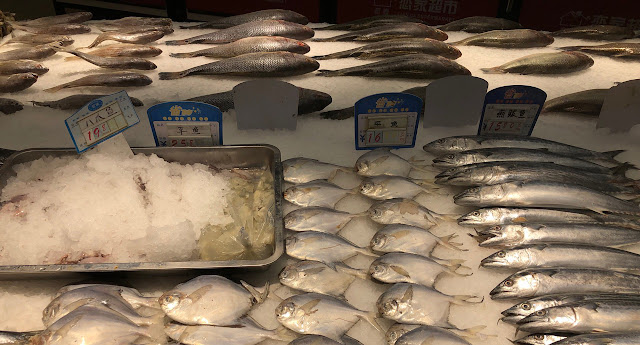
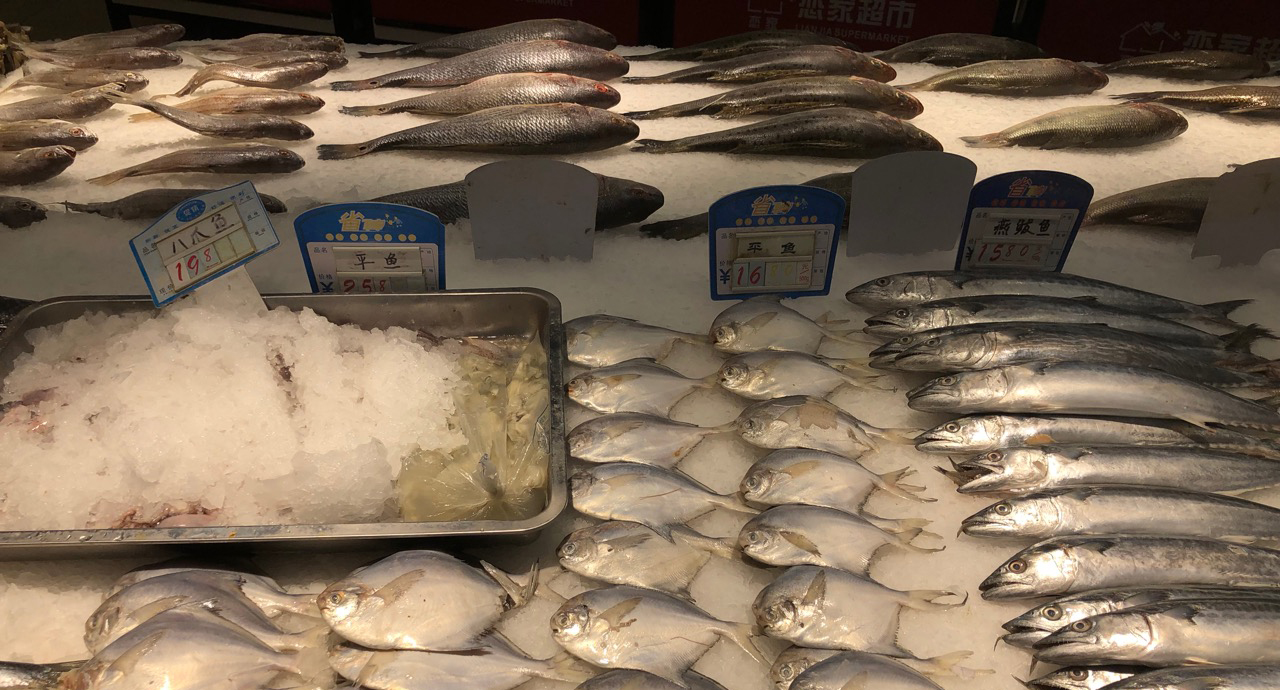 |
| Jianping Fish Market, photo by author |
And scales full of the sunset Twitch on the rocks, no more to wander at will The wild Pacific pasture nor wanton and spawning Race up into fresh water.
— Robinson Jeffers, Salmon Fishing (1938)
A Greenland Shark born four centuries ago would have swum in a world that existed not long after the Elizabethan era when the human population was little over half a billion. Now, with the human population nearing 8 billion and the climate changing faster than ever before, I wonder what a Greenland Shark born today will experience if she survives to 400?
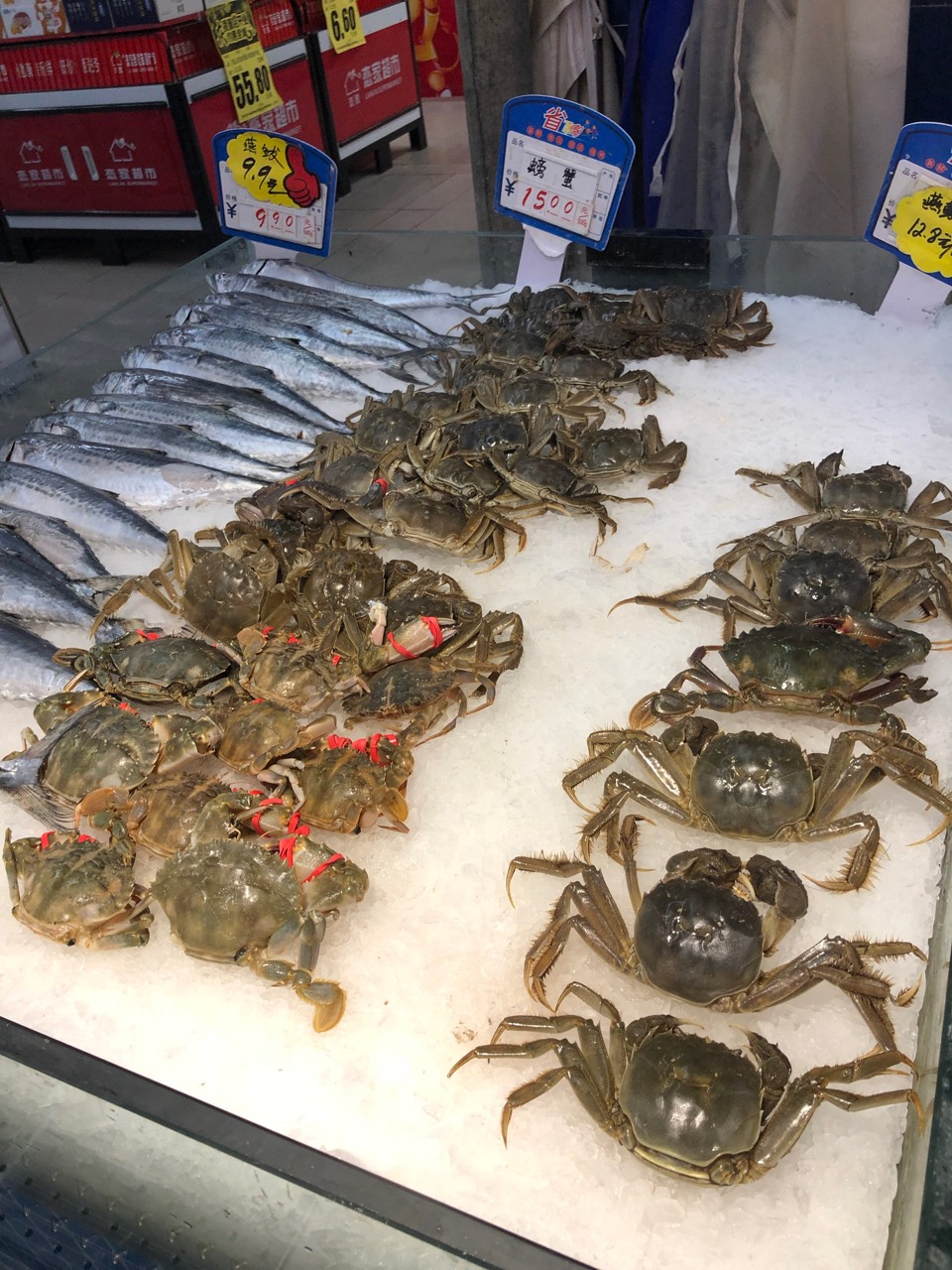
If she survives even another 40 years (hundreds of tons of the species are still caught accidentally by shrimp and halibut trawlers around the Arctic), she will find the company has changed. There will be, for instance, no more Yangtze giant softshell turtle (Rafetus swinhoei) because the last known female died in a Chinese zoo on April 12. There will be no more Vaquitas (only 30 remained in 2017); Hawaiian Monk Seals, Guadalupe Fur Seals, Steller Sea Lions, or Southern Sea Otters. Stocks of tuna, mackerel, and bonito have fallen by almost 75 percent since 1970. Last Sunday an ingested plastic bag starved a young, 3-meter True’s Beaked Whale (Mesoplodon mirus) off Florida’s East Coast. The population of Beaked Whales is too small to measure.
Last November I began a blog about plastics in the ocean and subsequently a chapter in my book, Transforming Plastic, with a summary of the famous lecture on the exponential function by the late mathematician Albert Bartlett. I observed that since the invention of modern synthetic polymers, the plastics industry had gone through their fourth doubling since 1968. By any fourth doubling, the curve’s trajectory is still at the bottom of the J and only beginning to bend upward. By 2030 the slope up will be much more obvious, just as it is for climate change or feral rabbits. By 2040 each human baby born will have twice the detectable microplastics in its blood as now, and in 20 years its child will have twice that much, then double that, then twice that again as we complete this century.
If you were an average bacterium in that bottle, at what time would you first realize you were running out of space? Well, let’s just look at the last minutes in the bottle. At 12:00 noon, it’s full; one minute before, it’s half full; 2 minutes before, it’s a quarter full; then a 1/8th; then a 1/16th. Let me ask you, at 5 minutes before 12:00, when the bottle is only 3% full and is 97% open space just yearning for development, how many of you would realize there’s a problem?
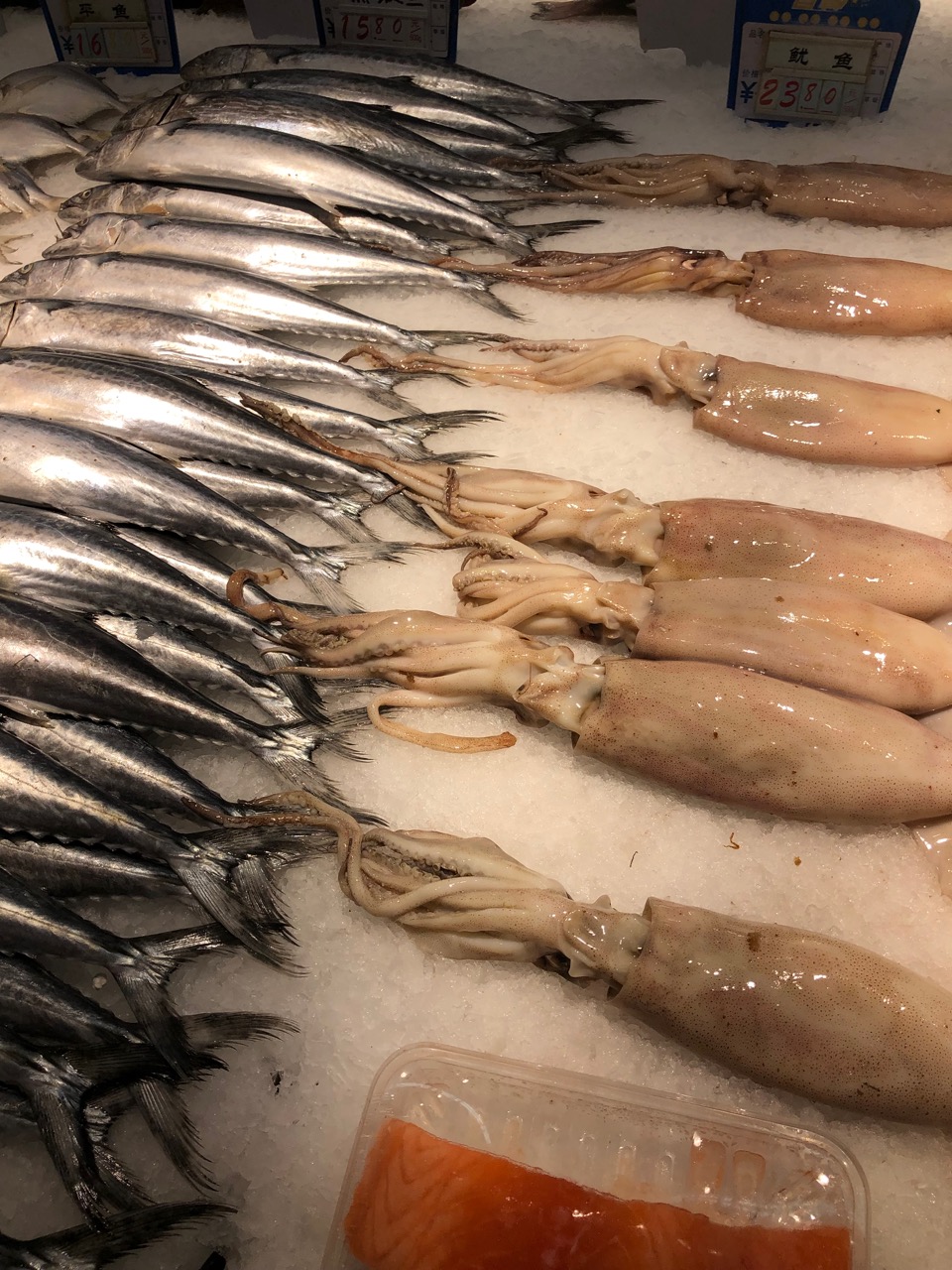
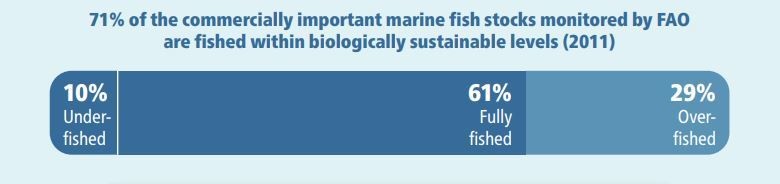
Fish accounts for 17% of all animal protein consumed in the world, and 26% of that consumed in the poorest and least developed countries. The ocean is also an important source of income; nearly 60 million people work in fisheries and aquaculture, and an estimated 200 million jobs are directly or indirectly connected with the fisheries sector. [500 million by other estimates]. Fish remains one of the most traded food commodities worldwide, and 54% of this trade comes from developing countries. For these countries, the fish trade generates more income than most other food commodities combined.
The sustainability of fisheries is therefore essential to the livelihoods of billions of people in coastal communities around the world, especially in developing countries, where 97% of fishermen live. But if we stay on our current course, we will push one of the planet’s prime food sources to the limit and compromise our ambitions for a better world by 2030. The subsidies that do harm to fisheries, and which have underpinned the dramatic decrease of fish stocks in the last 40 years, must be withdrawn by 2020. Only then can we begin to achieve the UN’s Sustainable Development Goals.
Harmful fisheries subsidies are estimated to total more than $20 billion a year [$35 billion by some estimates]. Not only do they fuel overexploitation, they disproportionately benefit big business. Nearly 85% of fisheries subsidies benefit large fleets, but small-scale fisheries employ 90% of all fishermen and account for 30% of the catch in marine fisheries.
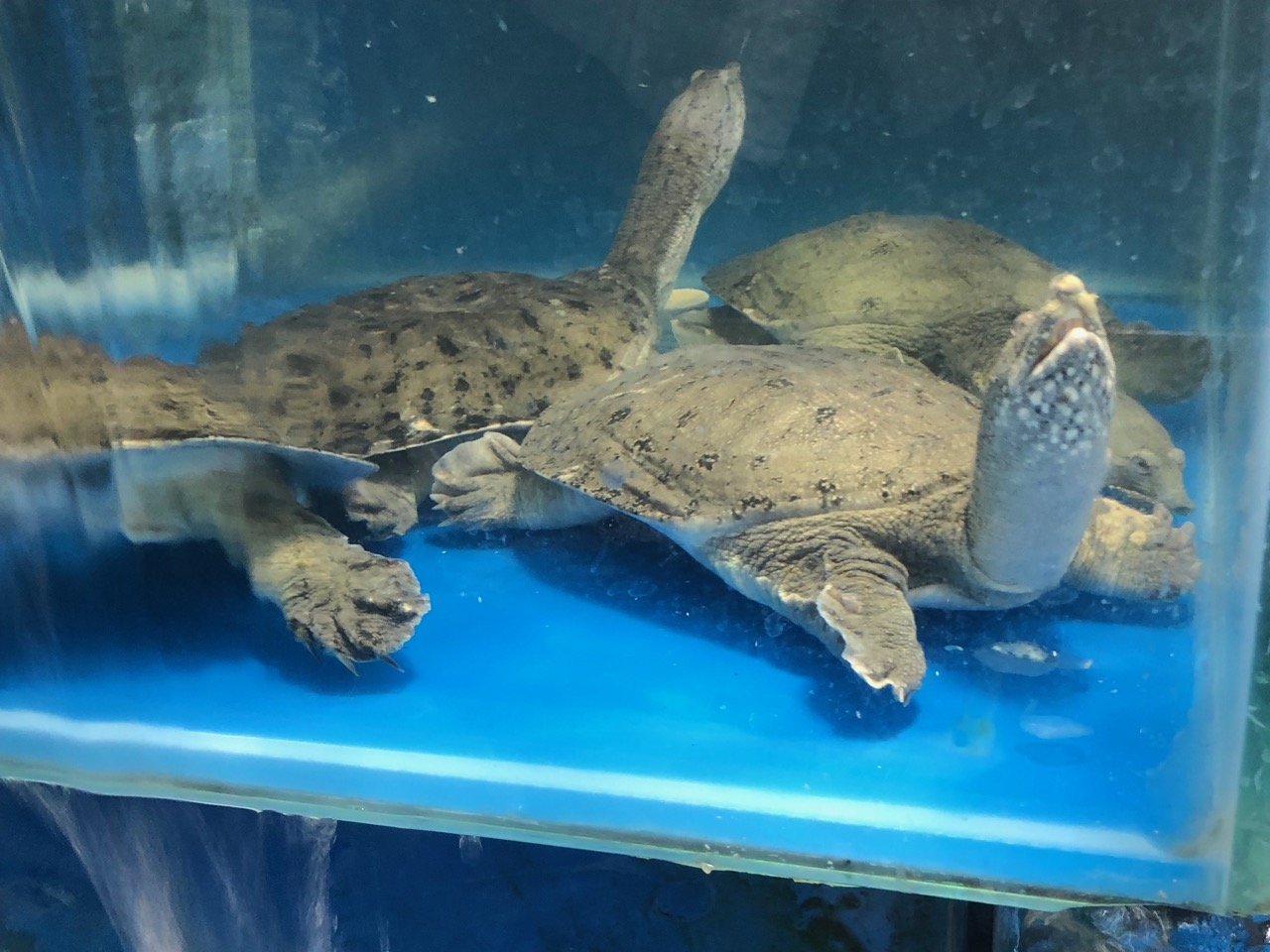
According to Ken Norris, lead author of a study by World Wildlife Federation and the Zoological Society of London that tracked 5,829 populations of 1,234 species such as seals, turtles and dolphins and sharks, “Billions of animals have been lost from the world’s oceans in my lifetime alone. This is a terrible and dangerous legacy to leave to our grandchildren.” The marine life of the ocean is now at the “brink of collapse.”
-
Fishing without a license or quota for certain species.
-
Failing to report catches or making false reports.
-
Keeping undersized fish or fish that are otherwise protected by regulations.
-
Fishing in closed areas or during closed seasons, and using prohibited fishing gear.
-
Conducting unauthorized transshipments (e.g., transfers of fish) to cargo vessels.
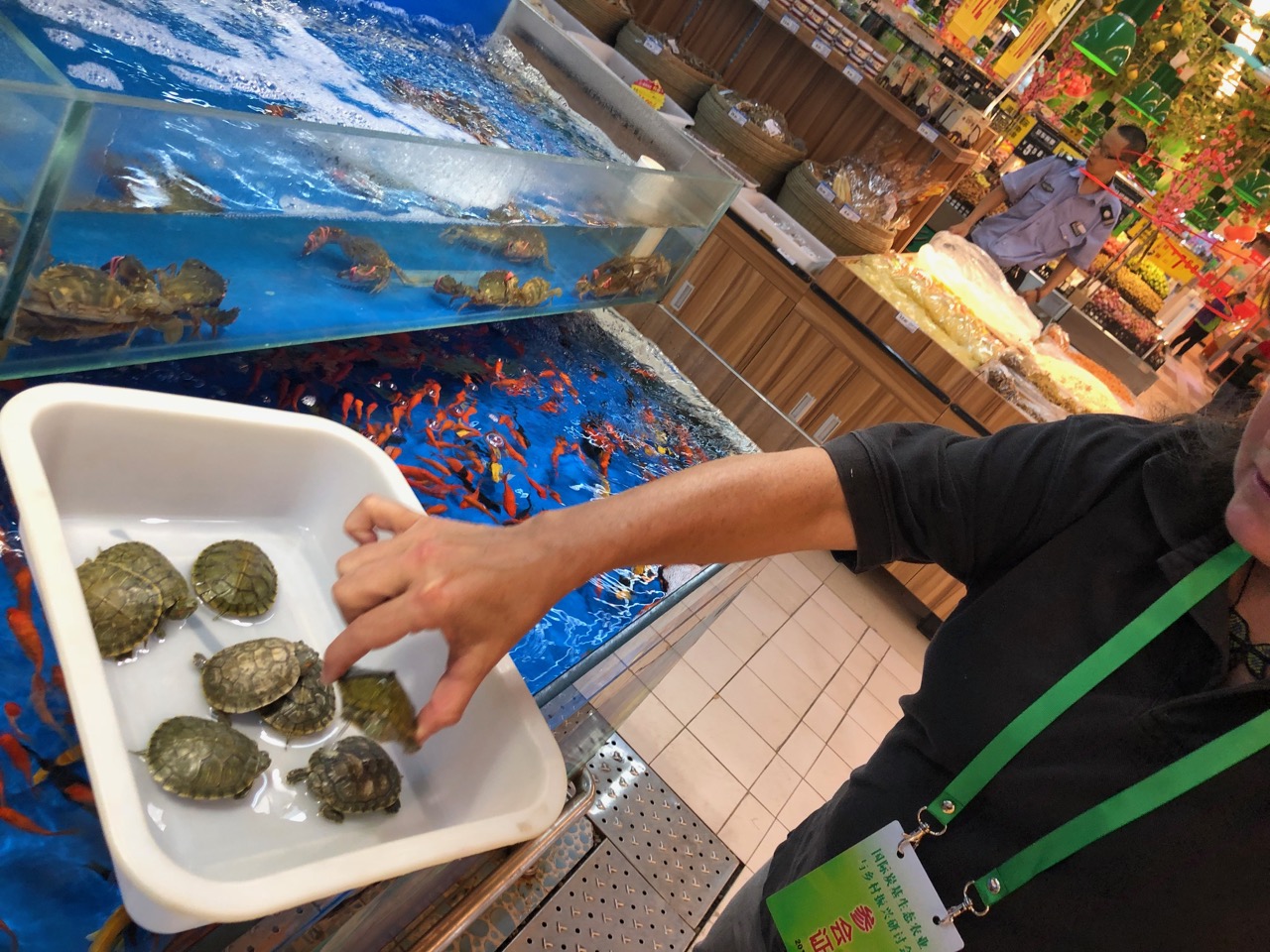
Unregulated fishing is a global problem that threatens ocean ecosystems and sustainable fisheries. It threatens the natural resources that are critical to global food security. The new UN Sustainable Development Goals call for ending overfishing and destructive fishing practices by 2020 and restoring stocks “in the shortest time feasible,” but in many areas and for many fish stocks there are no applicable conservation or management measures. Even where fishing activities are in managed areas, they may be conducted improperly with impunity by vessels without nationality, or by those flying a flag of a State or fishing entity that is not party to the regulation or the conservation measures of the host nation. And so it goes. You can call for change, but can you really enforce it?
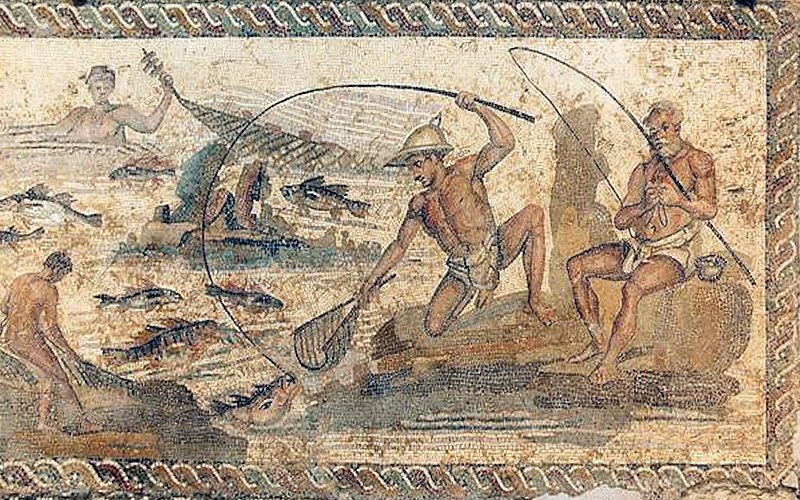 |
| Villa of the Nile Mosaic, 1st Century |
We chastise meat-eaters for negligent and profligate consumption to the detriment of soils, forests, and climate, but we say little or nothing to those who consume fish ensnared by dubious practices or from species poised at the edge of extinction. We do nothing to deter the fishermen of the world from doubling their number in the coming years. In fact, in many places, we train them and pay them to fish more efficiently. And they will.
Three whole days and nights alternate
Old Nokomis and the sea-gulls
Stripped the oily flesh of Nahma,
Till the waves washed through the rib-bones,
Till the sea-gulls came no longer,
And upon the sands lay nothing
But the skeleton of Nahma.
— Henry Wadsworth Longfellow, Hiawatha’s Fishing (1855)
The Great Changeby Albert Bates
7 Comments on "Farewell to the Fishes"
Duncan Idaho on Sun, 9th Jun 2019 7:15 pm
I’m a former commercial fisherman.
It is over—-
Sissyfuss on Sun, 9th Jun 2019 8:16 pm
The question is are we really as homicidal and suicidal as we appear to be? The answer of course is yes but so very few are aware of the question. As the chaos accumulates, both asked and answered will become more commonplace.
makati1 on Sun, 9th Jun 2019 11:11 pm
Will the oceans become too acidic to support fish or will the fish stocks be extinct from over fishing first?
Then there is the warming of the oceans which lowers its ability to hold enough oxygen.
And when the bottom of the fish chain disappears, how will that affect the top predators like tuna and shark?
I suggest we will find out by 2050 or sooner, not 2070 as the author suggests.
Davy on Sun, 9th Jun 2019 11:33 pm
That Bartlett feller was real smart like.
Go Speed Racer on Mon, 10th Jun 2019 2:18 am
Hmmmm
there wont be fish anymore.
Well, I like cheeseburgers better than fish.
So it won’t really matter that there’s
no more fish.
Just go to the drive-in
in my 1978 Ford LTD Royal Brougham,
and enjoy a cheeseburger.
Anonymous on Mon, 10th Jun 2019 3:43 pm
Overfishing is a huge issue. Much bigger than many of the name issues that get more ink.
Dooma on Thu, 13th Jun 2019 10:21 am
Had a Chinese workmate back in 2001 I used to build aircraft wings with. As I was a mad-keen angler I said “Hong, being a country boy what type of fish did you catch as a boy? To which he replied “no wild fish left in the water”.
Bycatch footage can almost bring a tear to my eye. We are a destructive blight on this planet.