
Peak Oil is You

Donate Bitcoins ;-) or Paypal :-)


Page added on June 5, 2017

Millets, Sorghum, and Grain Legumes: the Smart Foods of the Future
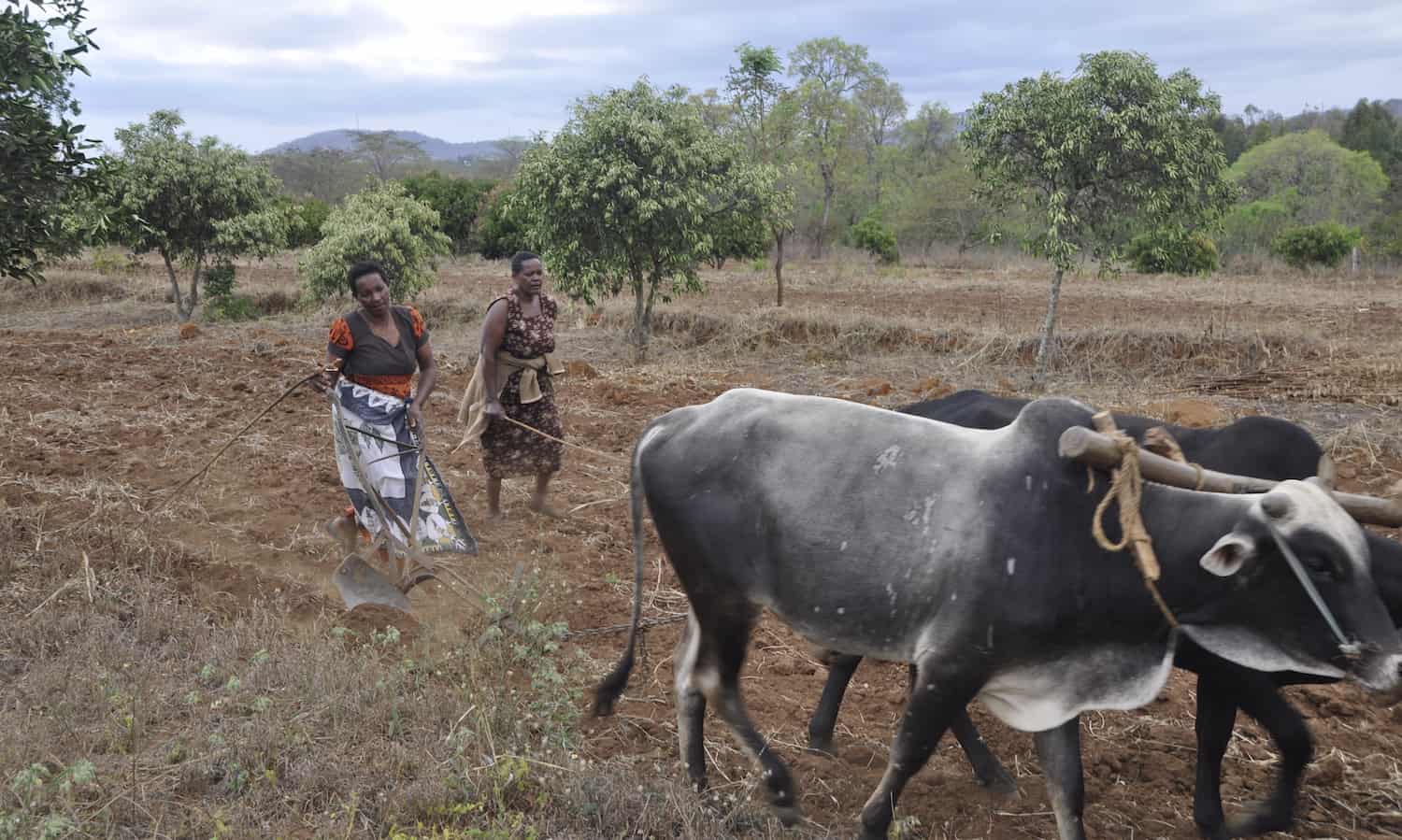
The Smart Food Project is hoping to popularize nutrient-rich, drought-tolerant crops in an effort to diversify diets and ensure global food security. An initiative by the International Crops Research Institute for the Semi-Arid Tropics (ICRISAT), the Smart Food Project is promoting the consumption of sorghum, millets, and grain legumes like chickpea, pigeon pea, green gram, and groundnut as micronutrient-dense, plant-based sources of protein.
Recently, the Smart Food Project filmed a reality TV show that brought amateur Kenyan chefs together to compete and cook with Smart Foods to win a culinary scholarship to the Strathmore Professional Culinary Program. Watch the first episode of the Smart Food Show here.
Food Tank interviewed Joanna Kane-Potaka, ICRISAT Director of Strategic Marketing and Communication, about Smart Food’s work to change what the world eats.
Food Tank (FT): How does the Smart Food Project approach differ from the work of other organizations working to address food security issues?
Joanna Kane-Potaka (JK): For decades, and still now, the investors in food security are devoting the majority of investments in the Big 3—rice, wheat, and maize. Whether through policy support, research, product development, or development aid—the majority is invested in these crops. The reason this is a problem is that we know we need more diversity in diets and on-farm. What we have created is a Food System Divide. As with other divides, like the digital divide and education divide, the more one is advantaged they are able to develop faster and so are even more advantaged. So the spiral continues, and it becomes more difficult to break this cycle.
So our aim is not just to popularize some more foods but to break the divide and mainstream some other foods back as staples in developing countries. Rather than the Big 3, we need to create the Big 5, and later the Big 7, and so on. But we need to select carefully which foods we focus on to mainstream. This is where Smart Food is important. Smart Food is defined as food that is good for you, so highly nutritious, good for the planet, and good for the farmer. We need to mainstream Smart Food. Achieving this will be what is needed to make a major impact on food security and some of the biggest global issues in unison—malnutrition, poverty, and environmental issues.
FT: Why does Smart Food believe that the food industry should invest more in the research and marketing of millets, sorghum, and grain legumes?
JK: A major challenge we have with these foods is the image and lack of development of the value chain. Millets and sorghum, which were the traditional crops across many parts of Africa and India, are now seen as old fashioned or food for the poor. In Mali, I visited an international NGO who was providing a mid-day meal for school children. They provided a millet meal since this is very nutritious and grown locally. However, the children, even the parents, reacted strongly saying they wanted rice. This was because rice had become the modern food in the urban areas and now was influencing eating habits in rural areas. The NGO was in a difficult position because they didn’t want the only meal a day they provided to be the least nutritious meal.
There has been much less investment in these foods. The value chain is less developed, from the seed system being set up through to modern convenience products being developed.
I visited a dry area in eastern Kenya currently growing maize that I was told survives just one in four years. Because it is a dry area it is not as suitable for maize. When asked why they grow maize and not a more drought resilient crop, the farmers said, ‘Well it is just easier. Someone comes to the farm gate and sells the seed and the input. Someone comes to the farm gate and buys the grain.’ Maize has a well-developed value chain, well supported and set up. This area used to grow millets including sorghum that are hardy crops surviving with little water. When there were difficult economic times nationally, the government gave maize as free food aid. People became used to eating maize and started to grow it as well. A couple of generations have passed, and people now do not know how to cook sorghum or millets or even what it tastes like.
Unless we also ensure the development of the whole value chain from seed to markets, we will not make it viable for the farmers to return to traditional crops like millets and sorghum. ICRISAT and Africa Harvest have a project here working with the rural communities, not just growing the sorghum and millets but also helping develop the value chain from seed supplies being made available through to with creating bakery agribusinesses with the women. Even cooking classes are being held so families know how to cook with the sorghum and millets—which is quite easy as the same recipes can be made by substituting the maize for sorghum or millets or using a combination.
We even have Smart Food Ambassadors on the ground now in Kenya thanks to support from the USAID Feed the Future Program. There is a real buzz being created around rural cooking displays and competitions with Smart Food and we are bringing in nutritional information about these Smart Food crops through the health workers that are already on the ground but previously did not talk about the value of the traditional foods. It is showing a lot of success in bringing back traditional, drought tolerant crops to have a more diverse diet. See a newly released video on this.
FT: Describe the Smart Food Project reality TV show. How did it come about, and what response have you seen since its launch last month?
JK: To attract people back to these highly nutritious traditional foods, we needed to not only build awareness but also create a whole new buzz and positive image around them. This meant we needed to be very creative with the marketing of these foods. We also did not have a large budget, so we needed to be innovative and not follow a traditional mass media campaign.
We are engaging some great new methods to bring attention back to these foods, and a reality TV cooking show is one of these. USAID Feed the Future has made this possible in Kenya. By funding the first season, we can show the success of this approach and from then on it will be self-sustaining. What we plan to do is run these in a number of countries and eventually bring the winners together in an amazing fusion of Smart Foods.
FT: Smart Food aims to mainstream smart foods by combining the efforts of food retail and catering industries, development agencies, the health industry, advertisers, governments, and NGOs – how is this accomplished and what can consumers do to help?
JK: Smart Food will only be successful if we can ensure the whole value chain is developed—it will only be as strong as the weakest link. This does make it a bigger task to achieve, but this is possible with a wide partnership. We see ourselves as the catalyst. Others have understood the critical need and are inspired by the vision. We still have many steps and no doubt hurdles ahead, but with the support and commitment, we are excited with what lies ahead.
15 Comments on "Millets, Sorghum, and Grain Legumes: the Smart Foods of the Future"
Go Speed Racer on Mon, 5th Jun 2017 7:24 pm
Millet, sorghums and Legumes?
Like hell, my Bomb shelter am stocking
it with forklift loads of Snickers bars.
They will never spoil, unlike all that health food.
makati1 on Mon, 5th Jun 2017 7:45 pm
The meat diet will disappear as the cost/availability will prevent the masses from consuming meats of all kinds. The bigger animals first, then down to chickens and rabbits eventually. Ditto for fish as the larger ones disappear and we turn to squid or jellyfish. We may ALL become vegetarians before the end. We shall see.
Davy on Mon, 5th Jun 2017 8:16 pm
Bull shit makati you are showing your lack of understanding of farming again. Many areas will only raise animals becuase of the vegitation type. But you wouldn’t know that being a fantasy farmer:
Cloud9 on Mon, 5th Jun 2017 9:11 pm
Wild hogs will feed off the corpse of civilization. They are smart and resilient.
makati1 on Mon, 5th Jun 2017 9:30 pm
Cloud9, I think all of the wild hogs will have already been eaten by the starving humans long before the last human dies. And every other edible plant and animal, including some humans.
makati1 on Mon, 5th Jun 2017 9:36 pm
Davy, how long before your neighbors rustle your livestock for dinner? And, you continue to ASSUME that the climate change is not going to dry up your little farm or make it unlivable long before the end. Narrow views can be hazardous to your heath.
You need to feed and water those livestock, house them, protect them from predators (two and four legged) and keep them healthy until they are edible. That takes a lot of manpower. Soon the family dog may look good on the dinner table. Americans don’t know what starvation is. They will soon find out.
Sissyfuss on Mon, 5th Jun 2017 10:16 pm
Cloudnein, like the wolves of Chernobyl the wild boars have taken over Fukushima. The Nipponese will be nipping on these and very little cooking is needed.
Go Speed Racer on Tue, 6th Jun 2017 1:56 am
Radioactive Bacon. Yummy!
Can we sell that for a premium?
Davy on Tue, 6th Jun 2017 4:54 am
“Davy, how long before your neighbors rustle your livestock for dinner?”
Makati, I don’t know and I am asking you how long to all those fruit and vegetables on your 3acre fantasy farm get stripped bare by roving bands of poor desperates Filipinos? Let look at the numbers. Missouri is a little over half the size of your P’s but with 6MIL compared to your 100MIL. Who is going to have the issue with roving bands of desperates?
I am already planning and adapting to climate change unlike you on your fantasy farm where you have likely made no changes because how could you, you are never there. I have included goats with my cattle. I have native grasses, weeds, and brush in addition to the usual quality grass cattle need. These would be fescue, orchard grass, and timothy. I have yellow top and Korean lespedeza. I also have sericea which is considered an invasive and highly competitive but the goats love it and it is drought tolerant. I am as we speak fencing off 60 acres of woods to put the goats in for the worst of the heat in the summer and a place in the fall for them to eat acorns. I have plenty of water from several different sources including a spring, lakes, and deep wells. I have solar setups to get water as needed.
I might remind you we don’t know exactly what climate change is bringing and when. Here we may have floods with droughts. Excessive heat might be a danger in the summer but more tolerant winters might be a side benefit. I think you are just blowhard old man that is hanging out in a mega urban region of 20MIL that will be a death trap in a collapse. You are trying to cut down others because of your cognitive dissonance of how bad your situation is in the face of collapse. The Philippines is right near the top of vulnerable places for climate change. Check out these lists, it shows you are ranked number 4 on one list and number 6 on another for climate change exposure and you are trying to criticize me for climate change:
https://germanwatch.org/fr/download/13503.pdf
https://maplecroft.com/about/news/ccvi.html
There is even a free poster you can download and put up in the apartment. Are you prepared makati? We shall see^<^. Nuff said.
makati1 on Tue, 6th Jun 2017 5:18 am
Ah Davy, you like to divert what I said to another meaning don’t you? You think cattle rustling is history in the U$? When I was building my last home in the U$ in 1998, 12 head of Black Angus was stolen from the field across from my house at night and they never caught the rustlers. Not starvation, just greed was the motive. Starvation means they will just kill you for them. I’ll share what I have with my neighbors. As for roving bands … from where? Most of the locals are self sufficient. And the nearest city is 100 miles away by road, across a mountain range. They would starve before they go to our area.
You cannot adapt to climate change in the U$. YOU have even less of an idea of what is coming than I do. Last winter in the U$ was a sample with it’s wild weather changes. This summer is going to bring even more change. Here in the Ps, there were no wild swings or even noticeable differences from the norm. The Pacific Ocean and the South China Sea evens out the weather for the 7,000 P’s islands.
http://world.time.com/2013/11/11/the-philippines-is-the-most-storm-exposed-country-on-earth/
Try telling me something I don’t already know. Yes, people die. But then, about 40,000 people in the U$ die from auto accidents every year and another million are injured. So? Is it more dangerous to live here than to drive a car in the U$? Nope! Again, I factored in ALL of the negatives when I decided to move here, and I still made the correct choice. America is going insane. Not a place I want to be as it falls apart.
BTW: Our farmhouse is designed and being built for typhoons and earthquakes. Concrete, steel and CMU. Is yours? LMAO
Davy on Tue, 6th Jun 2017 5:40 am
Makati, are you grasping, cattle rustling was from the 19th century. You read too much fiction I think. Sure I need to worry about people stealing animals that is why I have 3 LGD dogs. I have two Anatolian Shepherds and one Akbash:
https://en.wikipedia.org/wiki/Akbash_dog
https://en.wikipedia.org/wiki/Anatolian_Shepherd
I have plenty of guns and ammo. We have a close group of neighbors and my county is lightly populated.
Makati, is your fruit trees and vegetables built for a typhoon? You talk about self-sufficiency like it will keep people out. 100MIL people makati, think about that, in an area twice as big as Missouri. I have 6 million and most of those are in 2 cities. One of those cities is 3 hours away and another 2 hours. You have all the worst of what one would not want with collapse and climate change but you are still bragging and criticizing.
I know there are risks but I do not deny them away by criticizing others. I am criticizing you today because you are criticizing me. You brag and talk down others. I defend myself against assholes like you and greg. Obviously you guys have personality problems or why would you guys be attacking people constantly and bragging?
Davy on Tue, 6th Jun 2017 6:11 am
Makati, did you see this one just off the press?
“One Belt, One Road, And One Debt Hangover”
http://tinyurl.com/ybc5kl2o
“China is not only one of the world’s largest debtors, it is one of the world’s largest creditors. China uses debt not in the customary financial manner, but as a political tool to generate employment and maintain social stability. Likewise China uses loans and investment as a tool to advance its strategic interests. This may be good geopolitics in the short run, but it will be a disaster economically in the long run. Just as Chinese state owned enterprises (SOEs) can’t repay debts to Chinese banks, China’s foreign partners will not be able to repay debts to China itself. These twin disasters-in-the-making may converge in such a way that China’s assets disappear or become illiquid at exactly the time they are most needed to bail-out its own banking system.”
“China Investment Corporation, or CIC, established in 2007. Sovereign wealth funds are a way for countries to invest their reserves in securities other than safe instruments such as U.S. Treasury notes. CIC today has assets of over $800 billion, spread among stocks, corporate bonds, hedge funds, private equity, commodities, and commercial real estate. Some of CIC’s investments are directly-owned enterprises, including gold mines in Zimbabwe. While these assets may outperform Treasury notes over time, they are also illiquid, and would tend to decline in value during a financial panic. This means that about 20%, of China’s reserves are unavailable for critical tasks such as bailing out the banking system or defending the currency.”
“The problem with One Belt, One Road is that many of the potential recipients of development loans are not highly creditworthy or have a track record of defaulting on debts or requiring substantial debt restructuring in order to stay current. As with Chinese bank loans to SOEs, the NDB, AIIB, and One Belt, One Road efforts are not primarily economic but political. China is seeking to use its economic clout to create jobs and control critical infrastructure. In the end, China is attempting to create a geopolitical sphere of influence of even greater scope than the Japanese Empire prior to World War II, called by Japan “The Greater East Asian Co-Prosperity Sphere.” As with its other policies, China will turn liquid assets into illiquid assets in order to pursue its ambitions. This could make sense if nothing goes wrong. But, things will go wrong. China will face a monumental liquidity crisis sooner than later and find that its liquid assets have been turned into bridges to nowhere.”
deadlykillerbeaz on Tue, 6th Jun 2017 6:14 am
You mean bean sprouts and alfalfa sprouts. Pea soup, porridge. Been going on for centuries, survival, the most important part. Stay living.
There is this remarkable stuff called food.
Wheat, barley, corn, rye, all are used to provide nutrition. Bread, beer, cornbread, those can do the job too and all are good, food.
You can have cows and chickens, a place for them, feed them hay and chicken feed, pigeon grass, screenings from the grain elevator.
One day, you grab a chicken by the feet, use a machete to kill the chicken, bleed out the blood through the neck, the chicken jumps around like chicken with his head cut off, pluck the dead chicken, cool the plucked chicken, cut up the chicken into eight pieces, dredge in flour with salt and pepper, fry and eat. Serve with bread and butter, relish tray, and you’re there.
That is how it is done here on earth.
What you get is food. A blessing in disguise.
Davy on Tue, 6th Jun 2017 7:05 am
“Philippines conflict: Starving residents tell of terror in Marawi”
http://www.bbc.com/news/world-asia-40155369
JuanP on Tue, 6th Jun 2017 7:44 am
I’d like to put in a good word for Pigeon Peas. They are an amazing plant. Down here in Miami they grow like weed year round. At the farm where I volunteer we grow them as a hedge to protect the Starfruit trees from the cold winter winds, too. They are great for the soil,too, an also help fight erosion. I plant them everywhere I go and hand out their seeds regularly. I introduced them at the Permaculture farm I helped design and build in the Dominican Republic and now they grow wild. I also ship Pigeon Pea seeds regularly to Haiti where people request them all the time. Crops like this will keep us going after civilization collapses.