
Peak Oil is You

Donate Bitcoins ;-) or Paypal :-)


Page added on November 8, 2016

Why Oklahoma Can’t Turn Off Its Earthquakes
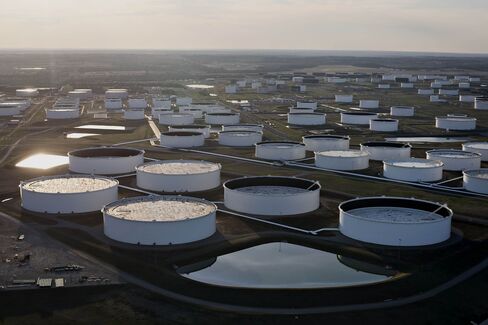
Sunday night’s 5.0 magnitude earthquake that hit Cushing, Okla., is the latest and, in some ways, the most troubling in a series of temblors that has rocked the Sooner State over the past few years. Not only did it strike within a mile of what is arguably one of the country’s most important strategic assets—Cushing is the largest crude oil trading hub in North America, with almost 600 million barrels of stored crude—but its occurrence raises questions over the state’s ability to do anything about the significant rise in earthquakes, which has been linked to oil and gas activity.
While regulations limiting the underground disposal of wastewater have succeeded in reducing the overall frequency of earthquakes, they haven’t been able to stop the really big ones from happening. And when they hit close to Cushing, they suddenly become an issue of national security.
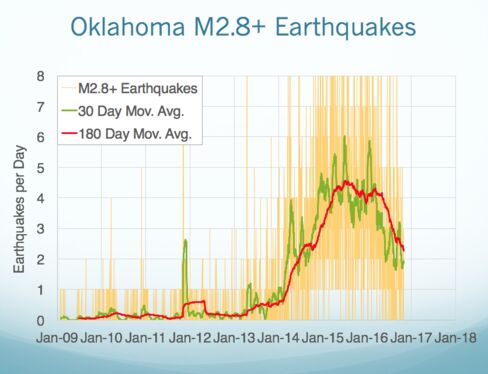
Last year, Oklahoma experienced more than 1,000 earthquakes measuring at least 3.0 in magnitude; that’s up from fewer than two in 2008. The state is now the most seismically active in the continental U.S. Seismologists believe the quakes there are the result of wastewater injection wells used by the oil and gas industry.
Horizontal oil wells in Oklahoma can produce as many as nine or 10 barrels of salty, toxin-laced water for every barrel of oil, and much of that fluid is injected back underground into wastewater disposal wells. The fracking revolution resulted in an enormous increase in the disposal of wastewater underground in Oklahoma. From 2009 to 2014, disposal volumes shot up 81 percent, to more than 1 billion barrels a year. It is this wastewater, injected near faults, that many seismologists, including those at the U.S. Geological Survey, say has caused the spike in earthquakes.
After years of official skepticism over the relationship between fracking and earthquakes, Oklahoma’s government finally acknowledged the link in 2015. That came as the industry was reeling from lower crude prices, and it was a big step, considering that oil and gas accounts for about a quarter of all jobs in the state. That summer, the Oklahoma Corporation Commission, the state’s oil and gas regulator, began imposing restrictions aimed at cutting the amount of wastewater disposed of underground. To date, the OCC has ordered some 700 disposal wells either to shut down or reduce their volumes. That’s cut disposal rates by about 800,000 barrels a day, from a high of about 2.5 million in 2014.
With the added restrictions, Oklahoma has gone from averaging more than four earthquakes a day to around two per day. The reduction, in some ways, confirms the connection between wastewater disposal and earthquakes. “It’s the closest thing we have to a smoking gun,” said Jeremy Boak, director of the Oklahoma Geological Survey. But it also shows the limited power of strict regulations in reducing the largest earthquakes.
The Cushing quake was the third quake with a magnitude of 5.0 or greater so far this year in Central, the 19th temblor over the past week. It hit just two months after the biggest quake in state history, a 5.8-magnitude one in Pawnee, about 25 miles south of Cushing.
That event has muted some of the enthusiasm around the OCC restrictions, said Dan McNamara, a research geophysicist at the U.S. Geological Survey in Denver. “For about six months, the story was that these restrictions were working, but then the 5.8 hit,” said McNamara. “The small events may be trending down, but the frequency of the largest ones is going up, and that is what’s troubling about this latest cluster of activity, particularly around Cushing.”
Last year, McNamara co-authored a paper that studied a sequence of earthquakes around Cushing in 2014. His paper linked the quakes to the activity of four injection wells in the vicinity. It also uncovered a fault line directly beneath Cushing’s enormous oil tanks that was previously unknown to geologists—the same fault that was activated on Sunday. The recent seismic activity, despite a significant reduction in disposal rates, is cause for concern, McNamara said. “It tells me that there is something else going on other than the direct injection of water underground.”
Even if Oklahoma were to stop injecting wastewater tomorrow, McNamara said, the chance of large quakes will remain elevated for years to come. The pressure that fracking wastewater has added to the complex network of fault lines running beneath Oklahoma isn’t going away. “We’re looking at many, many years of earthquakes as that energy dissipates through the system,” he said.
The Cushing quake knocked out power and damaged many of the small town’s historic buildings, but no damage was reported to its oil and gas infrastructure. The oil facility resumed normal operations on Monday.
Even so, might the latest tremblers serve as a wake-up call to the industry that more must be done to prevent what could ultimately become a national catastrophe? “I don’t think this changes anything,” said Kim Hatfield, vice chairman of the Oklahoma Independent Petroleum Association, a trade group of oil and gas producers. The industry still strongly opposes any moratorium on wastewater disposal, said Hatfield.
Although big fracking companies are exploring options on how to treat and recycle their wastewater, rather than inject it underground, the industry insists those options still aren’t cost-effective and that a disposal moratorium would destroy the state’s economy by shutting down oil production. “If you shut down wastewater disposal, there won’t be anything left to regulate,” said Hatfield. “So that is an awfully expensive science project you’d have there.”
It’s also an awfully risky chance to take.
12 Comments on "Why Oklahoma Can’t Turn Off Its Earthquakes"
Dredd on Tue, 8th Nov 2016 11:33 am
There is no “off” button for goobers.
rockman on Tue, 8th Nov 2016 11:36 am
And now the rest of the story as Paul Harvey used to say. First, the supposed link has nothing to do with frac’ng. The folks speculating on causation clearly point that out: it’s about waste water injection of which frac fluids are a fairly small %. The bulk is made up of salt water produced with oil.
And the most critical data you won’t see the anti-frackers admit is that not only has there NOT been an increase in disposal volumes but actually significantly less prior to and during the time of the recent swarm. And that data, seen in the link’s chart, comes from the state itself: “…produced water volumes in Oklahoma were actually about 30 percent higher in the 1980s than they have been in recent years, yet there were only a handful of recorded earthquakes in Oklahoma during that time.”
Here’s some pertinent excepts from:
https://energyindepth.org/national/banning-wastewater-injection-wrong-response-earthquakes-oklahoma/
“But the activists’ theory is neither scientific nor economic. In reality, banning wastewater injection is not an effective solution for Oklahoma’s earthquakes….Such a ban would not only prohibit the operation of a legally permitted activity, but also shut down wells that are not linked to earthquakes. In fact, experts say shutting down injection could make the earthquakes worse, and even create larger environmental problems. As Oklahoma’s state seismologist Dr. Austin Holland has observed, stopping injections could actually cause new earthquakes, adding that there is “a fair amount of modeling that shows that might be the case.” There are also many cases where earthquakes continue after injection ceases, according to Holland.
A recent study from researchers at Stanford University determined that, even without wastewater injection: “…the earthquakes in Oklahoma would have happened…given the geology in the state…There’s also no scientific basis for suggesting a blanket ban is necessary.” As the U.S. Geological Survey has observed, “most injection wells are not associated with felt earthquakes,” and only a “small fraction” of wells have “induced earthquakes that are large enough to be of concern to the public.” In fact, the USGS says “there is no conclusive example linking injection operations to triggering of major earthquakes,” though the agency says it can’t eliminate the possibility altogether.
The reason induced seismicity is rare is because it requires the alignment of many site-specific factors, as the USGS has previously explained. Additionally…many of Oklahoma’s recent earthquakes have “occurred in the Oklahoma City metropolitan area, where there are no high-volume wastewater injection wells.
All oil and natural gas wells yield wastewater in some quantity, most of which is called “produced water” or brine. According to the U.S. EPA, “widespread use of injection wells began in the 1930s to dispose of brine generated during oil production.” These wells are regulated under the federal Safe Drinking Water Act’s Underground Injection Control program. In the United States, underground injection remains the most common method for disposing of wastewater from oil and natural gas operations.
Interestingly, produced water volumes in Oklahoma were actually about 30 percent higher in the 1980s than they have been in recent years, yet there were only a handful of recorded earthquakes in Oklahoma during that time. Some scientists have suggested that certain types of injection are more prone to triggering seismic events, and the location of wells – including proximity to faults – also plays a role. Regardless, this demonstrates that the state’s recent seismic activity is far more complex than a simple correlation with injection may suggest, and shows why blaming injection is an oversimplification at best.”
Of course most of this post will be rejected by the anti-frackers even though the state, the USGS and other scientists have clearly stated that whatever is behind the recent tremor surge in OK frac’ng isn’t the cause. But they’ll continue to misrepresent the situation as frac’ng related even if undeniable proof is developed linking waste water disposal to the increased seismicity.
Danlxyz on Tue, 8th Nov 2016 11:41 am
So what happened to the 800,000 bod that didn’t get reinjected? Can they clean it up?
Danlxyz on Tue, 8th Nov 2016 12:44 pm
That was poorly worded. What happened to the 800,000 barrels of produced water per day that did not get injected into the disposal wells?
Was it just not produced? Was it partially evaporated and concentrated so there was less to inject? Or what?
Apneaman on Tue, 8th Nov 2016 1:13 pm
rockman you sniveling lying sack of shit. Why would anyone believe a cancer defender like you when you have repeatedly stated that not one of you in the cancer industry gives a fuck about anything except the money? “we ain’t your money”
“Last year, Oklahoma experienced more than 1,000 earthquakes measuring at least 3.0 in magnitude; that’s up from fewer than two in 2008.”
Oh yeah it’s just a big fucking coincidence – from 2 earthquakes to 1000 earthquakes. Oh yeah that happens all the time.
the cancer industry says: it’s not us and we have nothing to hide.
Big Oil Pressured Scientists Over Fracking Wastewater’s Link to Quakes
w.bloomberg.com/news/articles/2015-03-30/big-oil-pressured-scientists-over-fracking-wastewater-s-link-to-quakes
Rockman do you actually think anyone around here who knows what the industry is all about will be convinced by your lame assed apologetics? Funny how most around here are just here to bullshit and such, but for you it’s a free propaganda platform to spew more of your industry apologetics. Poor widdle rockman can’t stand the truth. What makes it so obvious is your mad rush to defend after any anti industry post like this one and doubly so for anyone about fracking, which is what you do for a living. Rockman the unbiased fracker. If you are intentionally trying to make yourself look desperate you have done a bang up job.
USGS: Oklahoma quake likely caused by wastewater disposal
October 24, 2016
“The third-largest earthquake in Oklahoma was likely triggered by underground disposal of wastewater from oil and natural gas production, the U.S. Geological Survey found in a report issued Monday.”
http://phys.org/news/2016-10-usgs-oklahoma-quake-wastewater-disposal.html
In Texass too
Satellites help link Texas earthquakes to wastewater injection, scientists say
“The largest recorded earthquake in East Texas was triggered by the high-volume injections of wastewater from oil and gas activities deep underground, according to a study co-authored by Stanford geophysicist William Ellsworth.”
http://phys.org/news/2016-09-satellites-link-texas-earthquakes-wastewater.html
The cancer industry is part of the corporate state. In fact the rest of the corporate state cannot exist without them. Rockman serves and defends the corporate state at every turn. Rockman is the corporate state – not your internet buddy.
peakyeast on Tue, 8th Nov 2016 1:29 pm
They are just releasing the already built-up stresses so the earthquakes doesnt combine to one great one. They are the poor misunderstood saviors of the US!
Fracking yellow stone is soon to be top priority due to proof that fracking releases the fault stresses into 1000s of tiny earthquakes – even in places where no faults are.
LOL 😀
Apneaman on Tue, 8th Nov 2016 2:18 pm
What happens when humans get in the way of the oily cancer state?
One picture says it all.
http://bit.ly/2ejpxEj
Sissyfuss on Tue, 8th Nov 2016 4:18 pm
Rock, if waste water injections contain fracking chemicals and injection of said waste is causing the quakes then how is tracking is an innocent bystander? Something about someone’s paycheck not allowing understanding of cause and effect, perhaps?
Snoopy on Wed, 9th Nov 2016 6:48 pm
I don’t often agree with your posts Apneaman but in this case I have to agree. Rockman (whose opinion I normally enjoy reading) does sound very much like a shill in this instance. Shame on you!
makati1 on Wed, 9th Nov 2016 7:59 pm
Sissy, careful, you are tramping on oily toes. You might slip and get fracked. ^_^
makati1 on Wed, 9th Nov 2016 8:00 pm
Great pic Ap! Says it all.
Apneaman on Wed, 9th Nov 2016 8:53 pm
Thanks Snoopy.