
Peak Oil is You

Donate Bitcoins ;-) or Paypal :-)


Page added on October 21, 2016

Peak Oil & System Justification: Uncertainty
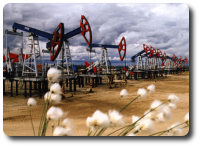

The management of uncertainty is served by resistance to change insofar as change (by its very nature) upsets existing realities and is fraught with epistemic insecurity. *
MORE ON CHANGE & UNCERTAINTY
If you have a strong psychological need to keep things as they are, you’re likely to reject information that, if true, strongly implies the need for major change.
There’s a certain logic to all of this, if we understand that fear of change and an aversion to ambiguity are among the core personality traits research has long attributed to conservatives. Regardless of the changes being proposed or imposed, the comfort of the decisive familiar resonates more deeply with those inclined to conservative thought and principles.
It is thus not too much of a leap to appreciate why conservatives, much more so than progressives, are content to rely on what is, and to defend the status quo as strenuously as necessary to maintain the familiar and the “safe.” To that way of thinking, peak oil and climate change are topics not worth considering. If only….
Basic postulates of System Justification Theory
I. In general, people are motivated (often unconsciously) to justify and defend the status quo, such as prevailing social arrangements and political and economic institutions.…
V. The system justifying goal can be satisfied through several means such as endorsement of certain ideologies, the legitimation of institutions and authorities, complementary stereotyping, rationalization, denial, and minimization, etc.
System justification behaviors are certainly not restricted to those on the Right’s side of the political divide, of course. But the actions taken by those identifying themselves as conservative in its various shadings—when measured by the standards of facts and evidence—clearly predominate when it comes to dismissive treatment of facts, evidence, and realities which call for significant changes in how we live and work.
DENIAL & RESISTANCE
The distress sure to follow needed adaptations and changes prompted by the realities of climate change and a decline in the availability and affordability of our primary fossil fuel resources all but guarantees more strenuous resistance. The greater the potential for significant disruption—as the realities and consequences of climate change and peak oil suggest—the more pronounced will be the efforts to deny, dispute, mischaracterize, and avoid.
Not only are people motivated to avoid social issues when they feel issues are complex—thus maintaining their present level of unfamiliarity—but this effect appears strongest for those issues believed to be most urgent and serious.
It is at times when change is most needed, therefore, that people may become the most likely to defend the status quo and agents of sociopolitical systems.
As such, the present studies suggest that rather than ensuring those in charge are maximally qualified to be in charge, and rather than remaining especially attuned to any limitations of the system, the psychological processes that are instigated when issues are seen as both severe and complex may limit any criticism of the current system and its decision-making process.
And, perhaps even more critically, they may also prevent the types of behaviors, such as information gathering, that are necessary to efficacious social action.
More often than not, those efforts are intended to reinforce a Cornucopian point of view that all is well and will continue to be well, which can only be supported if what’s offered contains as little genuine factual information as possible. The Left’s immediate response to that approach: what’s to be learned by blatant denial of facts, evidence, and reality when the potential for such great and long-lasting harm is so clear?
A DIFFERENT PERSPECTIVE
If the traditional conservative principles and their associated behaviors are likewise causing harm, the other question which those of us on the Left want desperately to ask is: Are you not paying attention?
Creating more problems by denying the current state of affairs or trivializing the details in favor of buttoning up the issue quickly is probably not a wise choice, yet too many seem conditioned to do just that much more often than circumstances warrant.
How does the fear of change, and the corresponding unwillingness to consider new information or perspectives, merit greater loyalty than one’s own well-being—now and in the future? We’re presumably dealing with a lot of rational and intelligent adults, so how do those more basic fears outweigh the risks entailed in choosing to stand where they are in the face of so much evidence suggesting greater harm?
But the bigger issue is not how to continue supporting one’s belief system in the face of potential change. The more important question is: do we create more harm for ourselves and others by failing to question or think about what we’re confronted with? Do we give in to the emotional responses which first set us on the paths of ideological reassurance, or can we find room for reasoning before arriving at final conclusions? Given what we face, is that “automatic” and unquestioned response wise?
Is the ideology more important than our longer term well-being? Who wants to explain that to our children as they are forced to deal with the prior generation’s unyielding loyalty to principle and its deliberate ignorance about the world we’re dealing with?
13 Comments on "Peak Oil & System Justification: Uncertainty"
Revi on Fri, 21st Oct 2016 8:36 am
Excellent article! I think about this all the time.
When people are scared they are less likely to change things.
Davy on Fri, 21st Oct 2016 8:39 am
This is related and important I highly recommend reading George Mobus 5 part series. This is the conclusion:
“A New Human Society – Part 5”
http://questioneverything.typepad.com/question_everything/2016/10/a-new-human-society-part-5.html
Hence the big question. Can human beings as they are presently constituted rise to the level of consciousness needed to enact these kinds of changes? My research into sapience suggests not. On the other hand, the human brain is an evolvable system. Through the process of learning it is capable of changing its set of beliefs. It is capable of learning new beliefs. Is it possible that the average human mind can come to hold beliefs that are more in accord with reality? This I honestly have to say I do not know. The evidence I have looked at so far suggests not. Yet I am strongly motivated to hope that there is some part of our humanness that is capable of transcending these mundane beliefs. There are those humans who are able to cognize the reality of what our condition really is and they might lead the transition to a more sapient society.
What we do know about human learning suggests that even something as complex and deep as a world view can be changed by trauma. Existential challenges are known to cause a few people to completely change their understandings and motivations. So, perhaps, that is what it will take for humanity to chart a new course. As I have written for several years now, I see the path as winding through a complete collapse of civilization — a very traumatic experience for any survivors — and an evolutionary bottleneck. With some luck and a little bit of foresight the survivors might be higher sapients or better capable of attaining higher consciousness through learning. Let us hope that a surviving human population has the capacity to adapt not just to the conditions of a very different world, but to the needs of organizing themselves for becoming fit in whatever environment they are in. That organization will necessarily include figuring out the real purpose that the human social system can fulfill in the Ecos. We cannot just be a population of consumers/polluters and expect these functions to provide a service to the Ecos so that we will be rewarded with a judgement of fitness. Our society needs to have a purpose that is helpful to the Ecos as a whole or it will eventually be selected against. It is conceivable that part of that purpose may be to become a strategic decision layer in the hierarchical cybernetic governance of the planet (stewardship). But that seems unlikely given the current state of the average human as decision maker.
A future, new society will have to be based on quite different principles than those that guide our current ways of living in the world. Human beings will have to abandon many current beliefs and ideologies that are popular or attractive, but for the wrong reasons. They will have to adopt many attitudes and understandings that are currently only poorly received and not at all understood properly. Do we have the capacity to learn these, or do we need to undergo further biological evolution in order to accomplish this? That to me is still an open question even though so much of my research suggests the later. I have always said, I hope I am wrong.
Dredd on Fri, 21st Oct 2016 1:29 pm
The author of the post asks: “How does the fear of change, and the corresponding unwillingness to consider new information or perspectives, merit greater loyalty than one’s own well-being—now and in the future?”
The answer depends on the degree of the fear, the degree of death being the most chaotic:
“A recent paper by the biologist Janis L Dickinson, published in the journal Ecology and Society, proposes that constant news and discussion about global warming makes it difficult for people to repress thoughts of death, and that they might respond to the terrifying prospect of climate breakdown in ways that strengthen their character armour but diminish our chances of survival. There is already experimental evidence suggesting that some people respond to reminders of death by increasing consumption. Dickinson proposes that growing evidence of climate change might boost this tendency, as well as raising antagonism towards scientists and environmentalists. Our message, after all, presents a lethal threat to the central immortality project of Western society: perpetual economic growth, supported by an ideology of entitlement and exceptionalism.”
(Convergence – Fear of Death Syndrome).
penury on Fri, 21st Oct 2016 2:55 pm
Certainly people and institutions change. Change is on going and affects everyone and everything. Will all people accept the change? And will the change be for the better or worse? No one knows or can know, but everyone will tell you their version of change will benefit you the most. (if you are rich, or important like them) But change we will or perish, You can lead a horse to water etc etc. And sometimes it is not fear of change but the fear of loss of social position or perks of position shich will come with the change.
Apneaman on Fri, 21st Oct 2016 3:01 pm
Global warming continues; 2016 will be the hottest year ever recorded
We will soon see a three-peat of record hot annual global temperatures
“A few things to note. First, these temperatures are surface temperatures that are taken across the globe. But, you can measure temperatures elsewhere and see the same result. Most importantly, measurements in the oceans, where 93% of the extra heat is stored are the best proof of global warming. I recently coauthored an open-access paper on this very topic which interested readers can get here.
You can measure sea level rise as the heated water expands, you can measure ice loss across the globe, you can measure temperatures in the lower part of the atmosphere. It doesn’t matter where; the story is the same.
What is the big deal? Well first of all, 2016 blows away 2015 which was previously the hottest year ever and that had beaten 2014 as the hottest year ever – call this a three-peat. Three records in a row and the last two are by large margins. ”
https://www.theguardian.com/environment/climate-consensus-97-per-cent/2016/oct/21/global-warming-continues-2016-will-be-the-hottest-year-ever-recorded
Sissyfuss on Fri, 21st Oct 2016 7:14 pm
Pen says” change we will or perish.” Well , perishing is certainly a change and the only one sappy sapiens will effect.
makati1 on Fri, 21st Oct 2016 7:45 pm
Ap, have we hit the point in the hockey stick where it goes off the charts? Seems like it to me.
Apneaman on Fri, 21st Oct 2016 8:32 pm
CARTEL ME ALL ABOUT IT
A global corporate conspiracy helped catalyze a food crisis and drove 44 million into poverty
“Now, new research (pdf) funded by the German and Polish national science foundations has refined the fertilizer argument and identified global cartels as the culprit. Large food production is enabled by fertilizers derived from nitrogen and potassium that provide key nutrients to plants in otherwise exhausted soil. The largest firms involved include Canada’s Potashcorp, Mosaic in the US, Russian Uralkali and Belarussian Belaruskali.”
http://qz.com/787943/a-literal-global-conspiracy-doubled-world-food-prices-and-drove-44-million-into-poverty/
makati1 on Fri, 21st Oct 2016 9:29 pm
I seem to see even more of a plan to kill off the ‘eaters’. If Monsanto, et al. were able to conquer the GMO seed supply, and one year, refused to sell new seed, how many millions (billion?) would be unable to plant or harvest? I understand that it’s against the law to save their GMO crop seeds for the next year.
No seed, No harvest, No food, Plenty of deaths.
DMyers on Fri, 21st Oct 2016 11:46 pm
Rather than cast this as a contrast in Right and Left styles, it would be better to recognize the virtually non-existent difference between those two presumed extremes.
Where ever there are seated Leftists, those individuals are as motivated as any Conservative to conserve what they have. We don’t see any coalition of the Left leading us toward a vision of peace, tolerance, inclusiveness, and sharing (of the “starting with me” variety). It is very clear that the Democrats – our organized Left in USA – are NOT trying to change the status quo. They are the status quo.
Truth Has A Liberal Bias on Sat, 22nd Oct 2016 4:32 am
Mak your talents are wasted! You should work for a think tank or somethings!! Or maybe be an advisor!! Your powers of analysis are amazing. Lol retard.
Apneaman on Sat, 22nd Oct 2016 3:38 pm
Hey Boat, so much for your imagined tech and efficiency wet dreams.
“Furthermore, modern technology has not made our economies more efficient, as promised. As technology has advanced, material consumption accelerated. Fossil fuel consumption has grown annually by 2.9%, metal ores by 3.5%, and non-metalic minerals by 5.3%. Since 2000, even as economic growth and population growth slowed, material demand accelerated. Frivolous consumption has increased among the rich and we now spend increasing amounts of energy to extract lower grade resources, reducing productivity.”
http://www.greenpeace.org/international/en/news/Blogs/makingwaves/un-report-on-resource-limits/blog/57689/
GLOBAL MATERIAL FLOWS AND RESOURCE PRODUCTIVITY
http://unep.org/documents/irp/16-00169_LW_GlobalMaterialFlowsUNEReport_FINAL_160701.pdf
Boat on Sat, 22nd Oct 2016 5:24 pm
ape,
What products are less efficient?