
Peak Oil is You
Donate Bitcoins ;-) or Paypal :-)


Page added on September 22, 2016

Saudi Arabia’s Clout in Washington Isn’t What It Used to Be

Saudi Arabia doesn’t have the same clout it used to. That’s the message the chairman of the U.S. Senate Foreign Relations Committee says he has delivered to the Saudi government.
On Wednesday, the Senate blocked a measure by a wide 71-27 margin that would have prohibited a $1.15 billion arms sale to Saudi Arabia, in a vote that was nonetheless embarrassing to the kingdom. Next week, Congress is expected to try to override a looming presidential veto of a Sept. 11 lawsuit bill the kingdom strongly opposes.
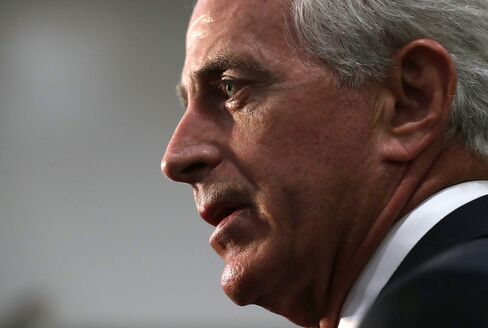
“I have shared with the Saudis directly that public opinion in Congress and in America is at a low and they should be aware of that,” said Senator Bob Corker. “I say that just to be honest with them and it’s up to them to overcome that.” The Tennessee Republican said he met last week with Saudi Foreign Minister Adel al-Jubeir, who has been lobbying lawmakers in hopes of derailing the Sept. 11 bill.
Long a strategic ally in the Middle East with enormous financial resources, Saudi Arabia now faces rising bipartisan criticism in the halls of the Capitol over the export of Wahhabism, a branch of Sunni Islam, the bloody prosecution of the war in Yemen using American weaponry and other human rights concerns. Another huge change is that Saudi oil exports to the U.S. hit a six-year low in 2015, thanks to a boom in North American supply.
Even President Barack Obama took an unusual public swipe at the Saudis, criticizing them publicly for fueling unrest and proxy wars in the Middle East.
All of this is a far cry from 2001, when, in the weeks and months after the Sept. 11 attacks, lawmakers and officials in the George W. Bush administration stood together to defend the kingdom.
‘The Right Terms’
“It is true that when we were so dependent on their oil they had more influence on us,” said Dick Durbin of Illinois, the No. 2 Senate Democrat. “We still would like to have them as allies, but on the right terms.”
Durbin said he met with the Saudi ambassador recently and expressed his concerns about the export of radical Wahhabism in particular.
“The fact that they are exporting some of the most radical folks when it comes to their religion is troublesome and it has been a consistent pattern,” he said, pointing to recent extremist activity and attacks in Belgium. “They sent some of the more radical adherents to this religion and it does trouble me and I brought it up with the ambassador.”
Durbin, the ranking Democrat on the Defense Appropriations Subcommittee, voted to continue debate on the resolution, S.J.Res. 39, authored by Republican Rand Paul of Kentucky and Democrat Chris Murphy of Connecticut, that would have blocked the arms sale.
Veto Override
The White House and Saudis also face an expected override vote once Obama carries out his promise to veto legislation, S. 2040, that would let the kingdom be sued over Sept. 11. The impetus for the bill stems from unproven allegations that elements in the Saudi government aided some of the Saudi citizens who carried out the hijackings. The administration and its allies warn that stripping sovereign immunity over terrorist attacks on U.S. soil could have deep implications for the U.S. around the world.
“Members of Congress in both parties have indicated they are open to the concerns we have expressed,” White House Press Secretary Josh Earnest said Tuesday evening. “In many cases they share them.”
Al-Jubeir, the Saudi foreign minister, has been meeting with senior lawmakers in both parties to deliver the message that not only will the measure damage U.S.-Saudi relations, but countries in Europe and the Middle East are opposed as well, according to a person familiar with the kingdom’s efforts on the Hill. He’s also making the case that U.S.-Saudi efforts to counter the Islamic State terrorist group and Iranian-backed extremists are making progress.
Key Allies
To be sure, Saudi Arabia still has friends in high places, including Senate Majority Leader Mitch McConnell of Kentucky, who declared Tuesday he backs the arms sale.
“I think it’s important to the United States to maintain as good a relationship with Saudi Arabia as possible,” McConnell said.
Nonetheless, he said he intended to keep the Senate in session next week for a vote to override the veto of the Sept. 11 lawsuit bill — and he expects the veto to be overridden.
Senator Lindsey Graham, perhaps Saudi Arabia’s most loyal ally in Congress, said there is also “Mideast fatigue” among his colleagues, attributing some of it to Republican presidential nominee Donald Trump.
“Mr. Trump has done this a bit, it’s popular right now to push against all things Mideast,” the South Carolina Republican said in an interview. “If you wish to destroy the relationship with Saudi Arabia, be careful what you wish for.”
Not a ‘Big Fan’
During the campaign, Trump has had harsh words for Saudi Arabia, saying he’s not a “big fan” of that government in a 2015 appearance on NBC’s “Meet the Press.”
“So Saudi Arabia is going to need help,” he said. “Like it or don’t like it, people have backed Saudi Arabia. What I really mind, though, is we back it at tremendous expense. We get nothing for it and they’re making a billion dollars a day.”
Few senators are going that far, but the anger over the kingdom’s approach to extremists, combined with its intervention in Yemen, has shifted the balance.
“I think this is clearly a moment when Congress is reconsidering the foundations of our relationship with Saudi Arabia,” said Murphy, who has accused the Saudis of repeatedly targeting civilians using American weapons. “I think the relationship will continue to be an important one but Saudis are getting a pretty clear message there are concerns.”
Aligned Interests
By contrast, the No. 2 Senate Republican, John Cornyn of Texas, who has helped lead the fight to allow families to sue Saudi Arabia, says he stills support the arms sale.
“Our interests are aligned frequently with Saudi Arabia, not all the time,” Cornyn said, adding that his overall attitude toward the country hasn’t changed.
“Our interest is making sure that the victims of 9/11 get access to the courts to make the case if they can against whoever sponsored the terrorist attack, that’s all the legislation does,” he said.
Jon Alterman, a senior vice president at the Center for Strategic and International Studies, said congressional attitudes overall have been increasingly at odds with the kingdom.
“It has a number of different threads: One is increased energy production in the United States which both makes Americans feel freer to criticize Saudi Arabia and makes Saudis feel more vulnerable that the United States can turn its back on Saudi Arabia,” Alterman, a former State Department official, said in a telephone interview.
He also cited “lingering bruises” from the Arab Spring uprisings in 2011 “when the United States felt the Saudi government has been on the wrong side of history,” he added, as well as the kingdom’s complicated relationship with the U.S. on fighting terrorism, which he said is both “indispensable” in the fight while also promoting the problem.
“Many believe that Saudi Arabia can be more helpful with the war on terrorism,” said Senator Jeff Flake, an Arizona Republican who sits on the Foreign Relations Committee. “As a valued ally that we have been close to, they can do more.”
22 Comments on "Saudi Arabia’s Clout in Washington Isn’t What It Used to Be"
makati1 on Thu, 22nd Sep 2016 7:11 pm
From other articles lately, I think the KSA is switching sides. The clincher is when they start selling oil for other than USDs. We shall see.
Anonymous on Thu, 22nd Sep 2016 7:31 pm
Jewberg idiots. Saudi Arabia never had any ‘clout’ to begin with. uS puppet states never do. Of course, washingdum and Tel Aviv accommodate the sauds so long as nothing they did or wanted interfered with the western empire in any real way, which is SOP for all uS puppet states, not just the ‘sauds’.
The only way that Arabia will regain its independence, is when the ‘house of saud’ is overthrown, and every member of that extended family\tribal groups leaders are rendered headless. I suspect something like that will only occur after Arabia becomes a net importer of oil and or has no commercially viable oil worth extracting.
onlooker on Thu, 22nd Sep 2016 7:35 pm
Power dynamics at work. Smaller kid better listen to the bigger one or else.
Boat on Thu, 22nd Sep 2016 8:59 pm
mak,
Do you even know how much the Saudi sell to the US?
Truth Has A Liberal Bias on Thu, 22nd Sep 2016 11:54 pm
Boat are you fucking retarded or can’t you read. Mak stated ‘selling oil for other than US dollars’. If Germany wants to buy oil from Saudi Arabia the first thing they do is take their euros and go buy some US dollars. This increases the demand for US dollars and therefore increases/helps sustain their value. Then they take their US dollars and give it to the Saudis in exchange for oil. Then the Saudis take their US dollars and buy US treasuries. This increases the demand for US treasuries and pushes down the interest rate that the US treasury has to offer. This therefore makes borrowing cheap for the US treasury. Saudi Arabia could never again sell a barrel of oil to the USA but as long as they only sell it for US dollars then the empire is happy. Yet you reply to mak with a remark suggesting his comment is flawed because he doesn’t know how much oil USA buys from Saudi Arabia. You’re one stupid fucking retard man. Typical fucking American. I bet you’re fat, lazy and white.
Anonymous on Fri, 23rd Sep 2016 12:25 am
Petro-dollar recycling is the what keeps the amerikan empire in business. The business of extracting tribute from the world, and sowing chaos whenever it cant gain direct control a specific area. But don’t expect ‘boat’ to understand any of that, even though PD recycling is well understood and commented on. ‘boat’ is one those simpletons that point at articles that point out ‘Saudi’ Arabia is selling less physical oil to the empire of late.
Irrelevant.
The ‘sauds’ could sell ZERO barrels to the yankee empire, so long as the world is forced to use USD to buy oil, its mega-malls and Homeland insecurity at home, and super-carrier battle groups, multi-billion dollar proxy wars in Ukraine, Syria and in Asia and the middle-east for the foreseeable future.
makati1 on Fri, 23rd Sep 2016 12:35 am
For Boat’s education:
Top sources and amounts of U.S. petroleum imports, exports, and net imports, 20,151
(million barrels per day)
Import sources Gross imports Exports Net imports
Total, all countries 9.40 4.75 4.65
OPEC countries 2.90 (31%) 0.25 2.65
Persian Gulf countries 1.51 (16%) 0.01 1.50
Top five countries:
Canada 3.75 (40%) 0.95 2.81
Saudi Arabia 1.06 (11%) 0.00 1.06
Venezuela 0.83 (9%) 0.08 0.75
Mexico 0.76 (8%) 0.69 0.07
Colombia 0.39 (4%) 0.17 0.22
Not sure how the chart is going to post but KSA currently supplies a net of about 11% of US gross oil imports. 1.06 mbd is down from the high of 1.70 mbd in 1991.
makati1 on Fri, 23rd Sep 2016 12:38 am
Anon, you got it right. Sink the good ship Petrodollar and the Empire goes down with it. Tomorrow would not be soon enough.
GregT on Fri, 23rd Sep 2016 1:08 am
“For Boat’s education:”
You’re wasting your time Mak. You can’t fix stupid.
Anonymous on Fri, 23rd Sep 2016 2:14 am
Your list is interesting mak, if you examine who is on it, and who the uS is currently attacking and has under virtual siege. Every one of the nations on that list, is a uS colony\satrap, except one.
Yea Venezuela
9% of imports, BUT, with a truly nationalized oil company and public ownership of its oil resources. Unlike say, the pseudo NOC, PEMEX. The sole country on that list, is under heavy siege, economically, and in a back-handed military way, by the amerikans. Every other nation on your list is partially, or a wholly owned subsidiary of washingdum\London\Tel Aviv. If the amerikans have Columbia under their thumb@4%, you know they are not going to let 9% co-exist peacefully on their own terms with the neoliberal empire of chaos to the north.
Cloggie on Fri, 23rd Sep 2016 3:17 am
The relationship between the US and KSA was strictly colonial. The core deal was that KSA agreed to sell oil for dollars only on world markets and that in return the US military would protect the “royals”.
What is really happening is that KSA has quietly accepted Turkey as the new overlord, now that Turkey is gradually moving away from secularism towards Islamic fundamentalism. IS is accepted and supported by both Turkey and KSA as an icebreaker to connect Turkey and KSA via Syria and create a Sunni continuum. The Ottoman empire revisited albeit probably with a different name. Caliphate will do.
This tweet says it all:
https://mobile.twitter.com/marklowen/status/777776233564237825
Erdogan: leader of the Islamic world.
KSA agrees.
marmico on Fri, 23rd Sep 2016 5:25 am
Petro-dollar recycling is the what keeps the amerikan empire in business
Bull shit. 80 million barrels per day times $50/barrel equals $1.5 trillion per year in a global economy of $75 trillion. $1.5 trillion divided by $75 trillion equals 2%.
makati1 on Fri, 23rd Sep 2016 6:45 am
Marm, claiming ignorance is no excuse. You really need to see a shrink. I guess I have to add you to my ignore list as too stupid to waste time on.
The Petrodollar is the ONLY reason we are worried that the Saudis might be changing partners. If they sell oil for anything but US dollars, they will break the dollars back and take down the US. The war can be won in the financial arena easier than in the military one. China and Russia already know this. Apparently you do not.
Davy on Fri, 23rd Sep 2016 6:52 am
The petrodollar is a phenomenon of oil nations earning more money than they can invest in their own economy so these oil export dollars circulates back into the global economy benefiting a wide range of economic participants. It is related to the US having a reserve currency status and that status is related to the requirements of the global system for liquidity for many reasons besides just oil.
Until there is an alternative to the dollar the global economy functions on a significant liquidity contribution of the US dollar. This is in every market not just oil. Since no currency or even a basket of currencies is in a position to usurp the importance of the dollar in world trade the death of the petrodollar phenomenon is a zero sum gain. The phenomenon reverses with flows at times of low oil prices.
The decline of the petrodollar is related to the fact that the phenomenon is least pronounced when oil prices are low not a confidence issue nor a sign the dollar will be debunked from reserve currency status. What will end the dollar as a global reserve currency is the end of globalism not some vague notion of toppling the dollar by anti-Americans. It could also be a global agreement and monetary cooperation of which the US and the dollar must play a part. It appears the end of globalism is the likely outcome for the end of the dollar because there is no sign of a cooperative effort to redesign the global system at the moment.
Cloggie on Fri, 23rd Sep 2016 7:13 am
https://en.wikipedia.org/wiki/List_of_countries_by_foreign-exchange_reserves
I don’t think either that China has the ability to “take down the US”, nor the will. The Chinese will continue to accept the dollar as payment for its many products as long as they have confidence that the dollar will hold its value for a considerable time to come.
The Chinese and Russians are very well aware of the advantage the US has over other countries in that it can, to a certain extent, simply print the money it otherwise doesn’t have because of a huge trade deficit:
https://en.wikipedia.org/wiki/List_of_countries_by_current_account_balance
The US can only afford this huge imbalance because of the status of the dollar, leading to a situation like this (substitute EBT with Fed):
It’s free!
Swipe Yo EBT Free!
Swipe Yo EBT It’s free!
Swipe Yo EBT Free!
Swipe Yo EBT It’s free You had me to get it all free You had me to get it all free You had me to get it all free You had me to get it all free
https://www.youtube.com/watch?v=NzspsovNvII
One thing is certain: China is not really keen in letting the pile of dollars grow much beyond $3T. Currently they are busy buying up all the gold they can lay their hands on until the West has no more to cough up. China could of course buy assets in the West like ports, real estate, farm land, etc., but these assets can in case of conflict all be “frozen”.
It is more likely that China will begin to exert pressure on the US to share the advantage of owning a reserve currency status with its major trading partners and that dollar printing will be subjected to global accepted rules. If not, China could begin to selectively refuse dollars for its products.
makati1 on Fri, 23rd Sep 2016 7:46 am
China can take down the US anytime it decides to. Dump a trillion dollars in USTs on the market and watch the crash and burn of America. Yes, it would also take down any currencies that are pegged to the dollar … for about a day or two until the new exchange rates were worked out at the dollars new low, low Walmart value. Something just north of toilet paper.
But, as you said, it would kill the ability of the US to print and spend. Suddenly the US is a 3rd world country as far as international trade is concerned. No need for dollars in your reserve. No need to pay a percentage to buy dollars to buy oil. Rupees, gold, yuan, yen, pesos accepted in payment.
China is taking it one step at a time. They know a fast move could seriously devalue the buying power the dollar still has. But, I would not rule out a dump if it was that or war. An EMP armed satellite over Kansas and a trillion dollar dump and it’s game over for the Empire.
ghung on Fri, 23rd Sep 2016 8:12 am
Suddenly the
USworld is a 3rd world country as far as international trade is concerned.There, Mak, fixed that for you.
Davy on Fri, 23rd Sep 2016 9:19 am
Ghung, thanks for the verification. This board has elements of a soap box of unreality. A reality based view of the world is essential if we are going to avoid being a tabloid.
HARM on Fri, 23rd Sep 2016 5:54 pm
“On Wednesday, the Senate blocked a measure by a wide 71-27 margin that would have prohibited a $1.15 billion arms sale to Saudi Arabia, in a vote that was nonetheless embarrassing to the kingdom”
Wow, if a 71-to-24 vote favorable to the KSA somehow marks a “decline of clout”, I bet most regular working Americans would LOVE to trade places with them. Imagine if unions routinely got 71% support from the U.S. Senate? Imagine if student debtors, long-term unemployed or homeless people received 71% support from their “elected representatives”? What an awful “disadvantage”. Must really suck to be a lobbyist for the KSA.
Anonymous on Sat, 24th Sep 2016 12:31 am
NK eh Harm?, but the entire farticle’s premise is nonsense from start to end of course. What IS surprising, is they that they found 27 that would go on record as opposing such a thing. Unless of course, their ‘against’ votes were just for show. It cannot be ruled out.
makati1 on Sat, 24th Sep 2016 12:44 am
Ah, but, ghung, most of the world was already 3rd world. It is only the billion or so 1st worlders that will be feeling the deep pain.
ghung on Sat, 24th Sep 2016 10:03 am
We’re back!