
Peak Oil is You

Donate Bitcoins ;-) or Paypal :-)


Page added on June 17, 2016

A Realistic Look at the Local Food Movement
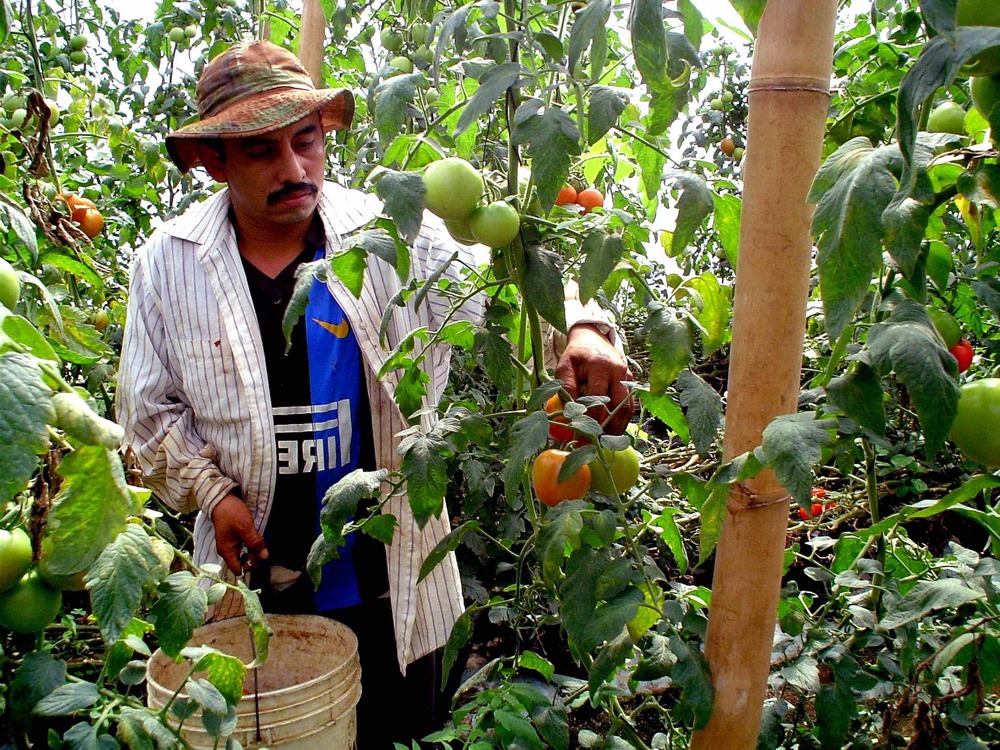
The farm-to-table/local food movement is very popular right now. It has expanded beyond high-end restaurants to more casual cafes, bars and coffee shops. Even in restaurants that don’t have a specific farm-to-table mission, you can still often find a local coffee brand on the menu or cheese from a local dairy included in your sandwich. The local food movement is growing and expanding, along with the healthy food movements and the organic food movement. Budget grocery stores now carry organic produce. McDonald’s offers “healthy” options. My own chain grocery store proudly marks all the local produce they sell…
Incorporating a higher percentage of locally-produced food from small-scale farms into our lives is important in the way that shopping at local businesses is important: because it keeps money in the community and it diversifies our economy. Local farms not only benefit the people who own them, but also tend to pay higher wages than huge agribusinesses, and they often treat land and crops in a more sustainable manner.
On a purely pleasure-based level, I also believe in the value of good local food. Family traditions and celebrations so often happen around the table. I want everyone to be able to enjoy local strawberries in a pie and realize how much better they taste than the commercially-plumped up ones we get in cartons at the store. I want everyone to understand where eggs and butter come from, and that those foods might even be produced a few dozen miles from your home. But how feasible is this vision?
Is an all-local diet even possible?
On the Strong Towns Strength Test we ask, “If you wanted to eat only locally-produced food for a month, could you?” I have a hunch that almost every town would answer “no” to this.
A little while back, one of my friends quit college to become a farmer. When I reconnected with her after her first year on the farm, she said her biggest realization was that this is incredibly hard work, even for someone who loves it. Anyone who dreams of a world where we all eat local is in for a nasty surprise, she said, when they realize how many of us would need to give up our current jobs to spend hours on farms everyday, just to produce enough food to support a small town.
What’s more, small farms are getting less and less financially feasible, especially as the demands on them — like being certified-organic and GMO-free — increase. For young people, farming is a particularly challenging pursuit because the start-up capital required (on top of the student loans that so many young people owe) is simply out of reach. Today, the average age of a US farmer is 58. Another challenge for small-scale farmers is that they often have to spend precious time driving to and from nearby cities to sell their produce at farmers markets. That might make those of us who consume the food feel good and create a fun Saturday morning activity, but it takes away time from the farmers that could actually been spent growing and harvesting product (or even resting from their labors).
Meanwhile Big Ag is heavily subsidized in the US by our own tax dollars, making it even more difficult for a small local farm to compete. For many families who struggle to pay their bills (and even those who don’t), it is often easiest to reach for the cheapest produce, meat, and dairy — distributed by a large national company — in the grocery store anyway. In summary, the goal of a local food diet may be admirable and may benefit our communities, but the cards are stacked against it.

I’ve been watching a show on Netflix called Chef’s Table. Each episode tells the story of a different chef from around the world. These are Michelin-starred, Top 50 Best Restaurants in the World kind of chefs. Their dishes look more like exquisite sculptures than food and their tasting menus cost hundreds of dollars per person. Each 60-minute TV episode gives the chef a chance to tell the story of how he or she got into cooking and started a restaurant, plus the challenges and successes along the way.
Many (but not all) of the restaurants featured in the show are urban, in places like Los Angeles, Mexico City, and Bangkok. But nearly every episode follows the chefs to farms, vineyards, ranches and markets to track down the food they source for their restaurants. Some of these chefs even own their own farms outside the city. The connection to the source is vital for them, especially given the fact that farm-to-table is such a popular concept right now. These chefs are not grabbing a bag of 20-cent-a-pound bananas or processed flour at the supermarket. Most of their ingredients are locally-produced, with precision and dedication. Is this only something that famous chefs have the time and money for?
The truth is that unless you live on or near a farm, or you’re willing to eat the same 5-10 ingredients each day, you’re probably not going to be able to afford a locally produced menu for every meal. For one thing, you’d have to spend a lot of time seeking out that food from the source, and most people simply don’t have the capability or resources to do that. For another, the cost of sourcing everything locally would be prohibitive for many of us—at least it is right now. But that doesn’t mean we can’t commit to a more locally-based diet.
How can we incorporate local food into our lives? Start by making good use of land.
I don’t think that an all-local food diet is necessary to have a Strong Town; that’s a very unattainable goal for most American communities. But we can do everything in our power to decrease our towns’ reliance on imported goods and, most importantly, decrease the flow of capital out of our communities and into wealthy agribusiness’s pockets.
It’s hard to imagine any town being prosperous without a certain amount of local food. Here are some ways to help encourage that:
1. Use any space you have to cultivate your own food. We devote so much of our land to parking lots and stroads, and more to empty lawns where, perhaps the kids occasionally play or we maybe sit outside to barbecue, but most of the space is just grass or bushes, and usually unused at that. How much more prosperous would our cities and towns be if strong citizens chose to use some of that land for growing food? I’d wager quite a bit. Not only is home-grown food the ultimate definition of local, it’s also an extremely rewarding process and sometimes a way to save a few bucks.

My tiny balcony garden. Currently growing: rosemary, chives, cilantro, flowers, plus basil and tomatoes (not pictured).
2. If you can afford it, buy it. Maybe you can’t afford to purchase local, cage-free eggs or locally-grown fruit for every meal, but can you find a few local items that are affordable and add those to your weekly shopping list? I know I can’t afford local, ethical meat every night for dinner, so I’ve chosen to decrease my consumption of meat altogether and only buy it sparingly. But when I do, I buy the local stuff. I challenge everyone who reads this to seriously consider how much you spend on groceries and other items in your daily life. Certainly there are plenty of people who need to choose the cheapest possible items in the grocery store, but there are plenty more who could spend a few extra bucks every week (and maybe decrease their spending elsewhere) to support local farm businesses. Turns out the food usually tastes better too.
3. Make SNAP benefits an acceptable currency at your local farmers market. Many farmers markets now accept SNAP benefits (food stamps) as currency, which is an important step in improving equal access to healthy local food. Check if your neighborhood farmers market participates and if not, here are some resources to get them signed up.
4. Get to know local food leaders. Visit a nearby farm; many are open for tours or even berry/apple/pumpkin picking. Even closer to home, explore a community garden. Both activities are great for kids. You could also get to know local restaurant owners and learn their role in the local food economy. The more you know, the more you’re invested.
5. ink outside the grocery store. Visit a local butcher, coffee shop or bakery for some of your shopping. I know many of you are thinking “But I don’t have the time or money for that.” Please just give it a shot once. I bet it will take less time and money than you think — and the pay-off will be worth it. You could also consider signing up for a community supported agriculture (CSA) weekly food delivery. It might be too late for this summer but start planning for next summer. And I know I bad-mouthed farmers markets a bit earlier in this essay, but they are an ideal place to access local food and support local businesses.
I’m not a doomsday cynic but James Howard Kunstler’s musings about a future without cheap oil, where we’ll have to be more independent and grow our own food, come back to me sometimes. I think the more local food we can incorporate into our diets, the stronger our towns will be—now and in future generations. For most of us, it’s not feasible to be completely local, but we should strive to have a certain percentage of our food come locally. Maybe it’s 20, maybe it’s 40, maybe one day it’s 80. But I see the local food movement as an important—and delicious—way to build stronger towns.
14 Comments on "A Realistic Look at the Local Food Movement"
PracticalMaina on Fri, 17th Jun 2016 12:18 pm
I stopped when I saw that her friend told her it would take hours a day of work to grow enough food, noooo… So thats why politicians are always talking out of both side of their mouths when it comes to the border, apparently food does not magically show up in the back of a tractor trailer on its own.
ghung on Fri, 17th Jun 2016 1:21 pm
Having trouble making sense of your post, PM. Growing enough food with enough variety does take hours a day. That’s why so many farmers specialise in one or two crops per year. It becomes a lot of hurry-up-and-wait with regular checks and maintenance requiring maybe a couple of hours per day. Planting and harvesting requires a lot of time, checking for weeds, pests, and watering, but not so much if done right. Raising livestock is a different thing; generally a slow grind year ’round.
I’m growing several varieties of beans in the high tunnel this year, and staggered prepping/planting takes a few weeks of only a few hours per day. All watering is automated and I use bed covers to eliminate weeding for the most part. I check things every evening, but won’t be into harvesting for at least a couple of months after planting. Right now, beans are on cruise control until harvest begins. Meanwhile, I have plenty of blueberries that need picking, and other things to attend to. My blueberries are also heavily mulched and on automatic irrigation, so not much there except for harvesting and annual pruning. When we get our goat operation going, it’ll be the daily goat grind incorporated into an already fairly full schedule. Of course, it’s just me running things. Other local producers, producing other things, means our small community produces a lot of food, but nowhere near what it consumes; this in a smaller area that has a fairly robust agricultural base. Cities will be basically screwed when it comes down to a major contraction because rural areas and outlying communities will necessarily be consuming most of what they produce. While maybe 15% of our community is involved in some form of food production, in the US it’s less than 2% overall.
Yesterday I helped some friends get their solar system fixed and traded my time/labor for some nice lamb they produce; my favorite way of doing things. Trying to go certified organic or marketing to grocery stores is costly and complex. We even have to jump through a lot of hoops to market our crops at the farmer’s markets; paperwork, sales taxes, etc. required, especially since the food safety regs (FDA Food Safety Modernization Act – FSMA) kicked in. Organic certification is about a $1000 (or more) overhead just for annual inspections. You have to sell a shitload of beans to go there and just break even. Many organic growers join co-ops, but that has it’s own issues.
Davy on Fri, 17th Jun 2016 1:23 pm
Good news and bad news. I always want the bad news first for some reason. The good news is destructive change is happening now and will be magnified in a “oh shit” curve soon. With climate change, peak oil dynamics, and a collapsing global economy combined with population and consumption overshoot only bad things can come from that. These bad things are going to increasingly make globalism values unstable. These global values are just-in-time production and distribution for on-demand from anywhere for everywhere satisfactions of wants. We are near a point of a big drop downward in discretionary consumerism. This drop in prosperity by its very nature will enhance localism across a spectrum of goods and services. We are heading local and don’t know it just yet. These folks in the article are talking about it like we have to make an effort. Just be patient and we will be there but unfortunately not like many think.
The bad news is we are going to be poor and stressed when this localism period comes to us. I am farming now and doing the garden thAng. It is just plain hard in every way. Yesterday the heat index here was around 110 and dangerous. Climate change means this dangerous type conditions are going to increase. Today I had Japanese lady beetles all over my fruit trees and grapevines. It is always something and it seems like the fight is never over. There is never enough time in the day. I am lucky I have time and some money to do these things I enjoy but that is not going to last for much longer. Soon our consumerism that helps out so much for permaculture and localism is going to be cut back. Kind of ironic isn’t it globalism and consumerism supporting localism but that is the way it is today. We need globalism and consumerism to be localist. That is the irony of the paradoxes of modern life. We live in this surreal existence now of being near momentous change but not there quite yet.
PracticalMaina on Fri, 17th Jun 2016 2:35 pm
Ghung, my sarcasm threw text always misses, I should learn 🙂 I just find it amazing that people don’t appreciate the time and effort involved in producing food. I just finished my planting for the spring, much later than I wanted. I try to make things as low maintenance as possible, don’t produce enough food to right home about, I am not growing a wide variety of crops, and it still takes me significant time threw-ought the summer. Yeah I usually get a few hundred pound of squash, tomatoes and potatoes, but that is maybe a few weeks of calories for my big ass.
Go Speed Racer on Fri, 17th Jun 2016 3:12 pm
Ho Lee Fuk, such long writings for a chat board.
My opinion is, I want the tomatoes and lettuce flown in from southern Mexico. On a 747.
makati1 on Fri, 17th Jun 2016 7:34 pm
It would be difficult to grow enough food to sustain yourself with a healthy, varied diet unless you have a mature permaculture system already in place and the land to raise a few food animals. Easiest is to raise things your neighbors might not have, and want, and trade for what they do have that you don’t.
Better 5 hectares you can use and manage than 500 that you cannot. Manual labor is the only ‘renewable’ in the not too distant future. Anyone planning to have fuel for that tractor is kidding himself. A good selection of quality hand tools will be worth their weight in gold.
Davy on Fri, 17th Jun 2016 9:04 pm
“Better 5 hectares you can use and manage than 500 that you cannot.” Makati Bill, what kind of hectares of land? Try to be more focused and less general because you are showing how little you think you know about farming. There is a big difference between farming types and the optimal acreages.
Sissyfuss on Fri, 17th Jun 2016 9:55 pm
Your gardening through me for a loop, PM.
JuanP on Fri, 17th Jun 2016 10:05 pm
This is a good article and I can relate to many of the points made in it. I know the regulars here already know it, but I will tell my story one more time.
I am very lucky to live in South Florida where I can grow and harvest fruits and veggies every day of the year. Growing food is hard work and I am usually sore from it, but I love it and wouldn’t have it any other way. I spend a few hours a day in the garden or fishing on average and I do one or the other almost every day.
My wife and I volunteer at every local organic farm in our area. We have five urban organic farms that are less than 15 miles from our home. As part of this volunteering we help with two farmers market stands and one CSA. None of these small farms are certified organic though they grow all their food organically. It simply makes no economic sense for them to be certified.
We are gardening at two local community gardens, and used to garden at all three CGs in our city. We stopped gardening at the one on South Beach because the new manager is a prick. We are very involved in this and it is our main hobby and pastime. Right now we have 10 8’X4′ plots plus access to many fruit trees and common areas.
Today we spent two hours in one of the gardens as usual, and we built a bamboo and netting trellis for our Red Chinese Noodle beans, weeded a little, transplanted a few pepper plants, and harvested a bag full of local organic fruits and vegetables.
I had a 5 year old girl stop by to visit and I let her pick and eat all my ripe Super Sweet 100 cherry tomatoes which are so sweet they are almost like candy. The half hour I spent with her was the highlight of my day. I love having kids eating from my plants. She also ate scallions right there!
We also grow food indoors in pots and vertical gardens on our windows and walls and on our balcony. The heat is too much for some plants here in Summer so we move some plants indoors to protect them, just like people move plants indoors in Winter to protect them from the cold during the winter in colder climates. We can’t grow tomatoes, lettuce, spinach, parsley, basil or cilantro outside in the summer here because of the heat.
We also farm earthworms, make our own compost, harvest rainwater, and are now learning beekeeping, too.
I am obsessive compulsive and have an addictive personality and I like to channel these flaws into productive activities. I can’t recommend growing your own food enough. This is also the best free therapy for my cronic and acute clinical depression.
My wife and I consider the time, money, and energy that we have spent in these activities the best investment we’ve made in our lives. Carpe diem, girls and guys!
Davy on Sat, 18th Jun 2016 5:58 am
For those who can we “MUST” not “SHOULD” emulate what Juan and his wife are doing. This cannot be stress enough as a preparation for some really ugly times ahead. The amount of industrial food that is vulnerable to climate change, peak oil dynamics, and economic collapse is beyond significant it is dangerous. We are not talking places in Africa overpopulated and in civil strife with famines we are talking Main Street anywhere.
I am not as elaborate with the garden as Juan because I also have cows, goats, and chickens. The type of farming opportunities are huge. You can do the community gardens or just as important is an effort to raise animals as a group. People should think about sheep and or goats where several people work together to raise animals. Insead of some invasive ornamental planted in your yeard do a fruit tree. These things were once done and for a reason.
The key is lifestyle and attitudes adapting and mitigating decline and destructive change through the food basics. We have to turn away from energy consumptive activities that have no benefit to sustainability and resilience in the face of a collapse process. We must turn to basics of life support. I know this is not going to happen as it must but anyone here who is reading this feed should consider starting the process of learning to grow food.
We don’t know how this collapse process will proceed in timing degree, and duration. Where it will start is still an unknown although we are beginning to witness failing states. Climate change is turning out to be worse than once thought. It was quietly hiding it effects in the oceans and now it is starting to boil. It appears the polar region heat amplification is going to profoundly change weather patterns which will not be good for traditional crop production. The world is not able to adapt quick enough to this change. It is like the problems with renewables and EV’s. The ability of the global system to change quick and effectively enough to changes to agriculture growing conditions is not there in scale of time and resources. We have too much built out hardware and too many people orientated to doing one thing.
Peak oil dynamics is appearing to be dead by many skeptics but is actually worse because instead of constrained supply coming on and causing beneficial changes with adaptations to less over time we had a glut develop from destructive central bank polices. These policies promoted the excesses of the market (bubbles) that allowed for excess supply. With this glut we now have nations that must pump flat out to stay solvent without concern for the health of their resource. This has created a dynamic of reduced investment and many firms going bust. What we are seeing is a situation where supply potential will be damaged such that we will never get back to growth in supply where it needs to be and along with this a population that is not concerned about potential shortages. Oil is central to farming and the global food chain. That is strike two.
Strike three is the economy which is decaying in deflation and destructive polices and economic trends. Global farming is a big business and like oil operates on large scales. Economic decline will impact production and distribution. We get food from far away locations and this situation is unstable in an economic decline scenario.
The only way we can address these issues is if everyone becomes involved with food production in some way. We need education, materials, and the logistics to deliver product. Localism is the only answer. If there is anything I could put at the top slot of importance to preparation for the destructive trends ahead of climate change, peak oil dynamics, and economic decline it is local food. We may be able to swing into an effort with momentum once a serious crisis develops. It would be so much easier if we used some of the wealth being generated now by a functioning global economy to do these things. Once economies suffer these efforts will be so much harder. We have people now making local food choices but it is not for the right reasons. Something similar is happening with renewables. It may be too late to transition but we can make a dangerous forced transition process less painful if we start now. We need to do these changes like our survival depends on it as it does.
makati1 on Sat, 18th Jun 2016 9:13 am
Amazing how one warm winter and cold snaps at the wrong time can change things.
http://www.cnbc.com/2016/06/17/2016s-weird-weather-is-causing-fruit-shortages.html
“An unusually warm winter starting in 2015 “tricked” many stone fruit trees to bloom earlier this year. In particular, a week of weather around 50 degrees Fahrenheit in February, was one of the warmest winter periods in history.
The trees were “tricked” into blooming early, notes Modern Farmer, only to be blasted by two cold spells weeks later — one in mid-February, and one in April.”
Food security? lol
green_achers on Sat, 18th Jun 2016 9:52 am
“Willing” is a funny word.
frankthetank on Sun, 19th Jun 2016 12:13 pm
Living in the midwest where rain is not much of an issue, i find some things almost stupid simple to grow (garlic, tomatoes, peppers, eggplant, pumpkins) and other things very difficult (tree fruits//apples, peaches, plums). Everything is at the mercy of the weather. Spring freezes, heat waves, too much rain, too little rain. All i can say is you don’t need a 100 acres. I have a small lot and i still sometimes am drowning in too much of one thing. Diversity is key.
frankthetank on Sun, 19th Jun 2016 12:15 pm
One thing i forgot to mention that is wreaking havoc on soft fruits is something called SWD. I first noticed it here maybe 2 years ago. It lays its eggs in various fruits, mainly raspberries. I’ve all but given up on fall ripening berries.