
Peak Oil is You

Donate Bitcoins ;-) or Paypal :-)


Page added on May 13, 2016

Crude soothsayers should recall cautionary tale of ‘Peak Oil’
This week at the annual conference in Montreal of the CFA Institute, a professional body for investors, there were some grand narratives about the future of oil. They should be taken seriously. But the last time the conference visited Canada, in Vancouver in May 2008, there was also a grand oil story. How did that work out?
Back then, crude prices were at a record, on their way to an insane peak of $150 per barrel two months later. That spike sparked a narrative: Peak Oil.
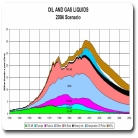
Peak Oil’s adherents pointed out correctly that the supply of oil under the ground is finite, and that at some point production would peak and then start to decline. As supply declined, so prices would rise to ration it.
In global output figures, it was possible to discern a slight fall, or at least a plateau, ahead of the price spike. Judging by the IEA figures, this was a period when demand (led by the seemingly unstoppable rise of China) exceeded supply to an uncharacteristic extent. It then became an article of faith for many that oil supply had peaked, and that prices could only increase in future.
I took the idea seriously, but received much abuse from Peak Oilers for not doing more to alert FT readers to the doom that awaited them. The notion that the high price would spark more supply received less attention, even though this is what the first chapter of any economics textbook would have predicted. And it is, of course, what happened.
Subsequent events have disproved the Peak Oil thesis being peddled then. It may yet come to pass, but it has not happened yet. New supplies have been discovered, new technology has untapped shale, investment has flowed into alternatives, and oil prices have fallen about 80 per cent below their 2008 highs.
Treat 2008 Peak Oil as a cautionary tale when listening to new narratives, promulgated after the oil price collapse of the second half of 2014. Since then, oil has lurched wildly but is roughly where it was at the start of last year. Because so many have borrowed so much on the assumption of high oil prices, fear remains intense.
The 2014 swoon followed a period when supply outstripped demand. Was that a one-off adjustment? Or is there reason to expect demand to keep falling, or supply to keep rising, and prices to stay low?
The CFAs were offered two separate narratives to suggest that prices will stay low, at least in the US.
The first centred on technology. Amy Myers Jaffe of the University of California Davis suggested that a “technology revolution” will further decouple energy use from economic growth. Big Oil no longer dominates, and Chinese demand can no longer be relied on. The Paris climate accords, backed by the technology to make them happen, call into question the notion of endlessly increasing demand.
Now add some game theory, focusing on “inverse musical chairs”: every time the music stops, someone adds a chair. Oil producers can see the future for demand. Their worst outcome would be to be left with assets “stranded” worthless under the ground. So with every new indicator of falling demand, the impetus will be for suppliers to pump out more, and turn their resources into money while they still can. Increased supply would join falling demand — great for oil importers but potentially disastrous for producers.
Another narrative, hinging on geopolitics, came from the geopolitical strategist and former diplomat Peter Zeihan. He suggests that oil will cease to be a global market. The US has achieved self-sufficiency in oil, which means that it does not have to be dragged into the next conflict in the oil producing regions. The availability of shale will put a ceiling on oil prices, not far above their current level.
Elsewhere, this will drive the incentive for conflict, as oil producers are hurting and fighting for market share. As conflicts resume — whether between Iran and Saudi Arabia, or between Russia and its neighbours — supply will grow erratic, leading to price spikes. Without US intervention to stop prices rising, the rest of the world could see more expensive oil.
The ripples would be global. Mr Zeihan pointed out that China, Japan, Taiwan and South Korea, all dependent on oil imports, are geographically far removed from any oilfields. They risk being drawn into conflict with each other, as they compete to send navies to escort tankers all the way home.
Both narratives deserve to be taken seriously. Investors, and everyone, should monitor events for confirmation, and until there is clear evidence to rebut them, oil prices are unlikely to rise much further. But remember Peak Oil in 2008 — just because prices have shocked us by falling recently, does not mean that we should adopt theories that they will stay low forever.
7 Comments on "Crude soothsayers should recall cautionary tale of ‘Peak Oil’"
makati1 on Fri, 13th May 2016 7:50 am
More bullshit from another Wall Street shill. And then there is the Russian source for all of those countries … not mentioned, of course. But they did include the old bullshit that the US is oil independent. That lie should be obvious to all by now.
dave thompson on Fri, 13th May 2016 8:02 am
As deniers do, by lumping all production of liquid hydrocarbons together the narrative becomes, see “peak oil” just some crazy notion a bunch of doomer socialists cooked up to scare you into thinking capitalism and endless growth is over. Never mind that the only “growth” in hydrocarbon production comes from to expensive and lower energy (as compared to conventional oil) unconventional tar sands, fracking, and deep water. The above article is for people planning the next Disney Land vacation and season tickets purchase of their favorite sporting team, while sticking their fingers in their ears and singing “see you peak oiler fools LA LA LA I can’t hear you!”
PracticalMaina on Fri, 13th May 2016 8:18 am
Dave, well played.
rockman on Fri, 13th May 2016 8:54 am
“…as oil producers are hurting and fighting for market share.” Yes indeed: one heck of a fight as producers are selling every bbl they can deliver.
So exactly who had to shut some of their oil production in because they lost some of their market?
JuanP on Fri, 13th May 2016 9:18 am
OPEC’s Russian king, Iranian prince? http://bawerk.net/2016/05/12/opec-politics-russian-king-iranian-crown-prince/
GregT on Fri, 13th May 2016 9:31 am
“But the last time the conference visited Canada, in Vancouver in May 2008, there was also a grand oil story. How did that work out?”
“no market lends itself to grand narratives as much as oil.”
Or the Vancouver real estate market. It shouldn’t be all that difficult to figure that grand story out either. Doesn’t stop people from ignoring reality though. Human beings are not rational.
antaris on Fri, 13th May 2016 11:34 am
Yes, back then I could have sold the house I purchased at 325k for 400k.
The smaller house and property 5 doors down just listed Tuesday for $1,188,000.
Fucking crazy.