
Peak Oil is You
Donate Bitcoins ;-) or Paypal :-)


Page added on January 9, 2016

Michael Lynch: Oil Markets 1986 Or 1998?
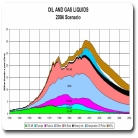
Oil markets have started with a bang or, more precisely, an implosion with prices hitting levels not seen since pre-peak oil days (i.e., 2003, especially if you ignore December 23, 2008) and causing havoc in not just the oil industry but commodity and equity markets and even some currency markets. For the youngsters, this probably resembles the apocalypse, a once-in-a-lifetime catastrophe that could spell the end, or at least smaller bonuses.
The question remains as to where the bottom is, and what is a sustainable price for the medium and long-term. For the former, which is a short-term question and much more influenced by trader psychology, I often cite the case of two major market turns, in 1998 and 2008, both “predicted” by The Economist magazine (sort of). As the late Matthew Simmons often pointed out, the oil price in 1998 began to rise shortly after the infamous “Drowning in Oil” cover on that magazine, in which oil prices were predicted to remain at $12/barrel for an extended period.
The magazine published an apology later, “We Wuz Wrong,” and went so far as to feature said Matthew Simmons in an interview in 2008, just as oil prices were passing $130/barrel. In it, he predicted that “The high priest of “peak oil” thinks world oil output can now only decline.” Within days, the oil price peaked and began its decline to sub-$40/barrel levels. The lesson: The Economist is a negative predictor of price trends.
But the major point that The Economist, and many others, missed was that the 1998 oil price decline occurred from a normal oil price level (roughly $30 in current dollars), meaning it very quickly approached marginal cost levels. In 1986, by contrast, the pre-crash price was over $50/barrel in current dollars and although many argued that even that level was too low to cover costs, this reflected cyclical inflation in costs rather than a depletion of the “easy oil”. The same, arguably, is true today.
 Oil Prices in 2010$
Many have misinterpreted the interaction of costs and prices, thinking that high costs will provide a floor under prices, at least in the long-term. (Christophe de Margeri, who implied I was an idiot for suggesting a sustainable oil price was $50-60 in 2012, fell into this category.) The mistake was interpreting the tripling of costs in the 2000s as due to the end of the “easy” oil instead of cyclical inflation due to high prices and soaring upstream investment. Costs are already declining with lower oil prices and upstream activity, and will result in much lower “marginal cost” over the long term.
Revenue needs have also been cited as implying a high floor price for oil, but while they are influential, they are hardly determining and often misunderstood. (When my daughter was little, I often had to explain that she didn’t “need” a doll, she “wanted” it.) One difference now is that many of the Gulf countries, at least, have amassed substantial cash reserves, whereas in 1986, most had run through the bonanza of the Iranian Oil Crisis, spending their income (and then some), assured by the many predictions of ever-rising prices from the vast majority of energy economists. (Morry Adelman, my mentor, was often derided for suggesting prices would decline.) And budgets in many Gulf countries have more flexibility than assumed: most include a boost in spending in response to the Arab Spring uprisings, as well as large capital projects and armaments purchases, all of which can be reduced and/or delayed, lowering the oil price level needed to meet revenue “needs”.
Countries like Iran, Nigeria, Russia and Venezuela are certainly suffering from the drop in income, but each was suffering at $100 a barrel as well. Nigeria’s problem has long been the loss of revenue to corruption, while the other three have been burdened not only with corruption but deficient, if not destructive, economic ideologies. The possibility of political unrest is increased by lower oil prices, and varies from country to country, but should not be exaggerated.
Indeed, the end of the Soviet Union came after the 1986 oil price collapse, which cut their foreign exchange earnings by nearly half, but their need of money to buy grain and other food reflected the reliance on collective farms instead of private enterprise. And other producers survived a decade and a half of “low” oil prices from 1986 to 2000, because lower oil revenue has negative political consequences but most governments have coping mechanisms. (A subject for a later post.)
So, the price drop to $30-40/barrel represents a 1986-style correction to a price ‘boom,’ and is unlikely to be reversed by market fundamentals, at least in the near term. A return to $80/barrel, as many predict, would involve some major changes to the supply map which are all but impossible, short of political interventions. (Again, subject for a later post.) That said, the abrupt change in prices (and oil revenues for producers) is extremely disruptive and there is every chance that political disturbances in Venezuela or the Gulf could see prices rising, if only temporarily.
4 Comments on "Michael Lynch: Oil Markets 1986 Or 1998?"
twocats on Sat, 9th Jan 2016 9:15 pm
Another totally supply-side oriented article. None of these authors wants to highlight crumbled demand and the anemic economy. The global Central Bank Superstorm Debt Extravaganza has faltered and it’s a long long way down. Confidence is a very ephemeral thing once the veil is pierced.
makati1 on Sat, 9th Jan 2016 9:30 pm
twocats, they are trying to keep BAU going as long as possible, including the idea that if you say it often enough, it will be believed. These articles are all pimping for big petroleum. Truth is farthest from their plans. More and more of us are seeing behind the Iron MSM Curtain.
Reality is about to hit a lot of deniers in the face with that big heavy 2X4. Their homes will be worth much less than they thought, or nothing. Their 401Ks will be decimated along with every other mutual fund or retirement plan. Even their savings, if they have any, could vanish in a blink of the government’s eye. I hope you are preparing.
JN2 on Sun, 10th Jan 2016 5:47 am
twocats: crumbled demand? IEA says Q4 demand down 0.2% from peak; Q1 will be 0.5% down. I can’t see demand collapsing with prices so low…
https://www.iea.org/oilmarketreport/omrpublic/
Davy on Sun, 10th Jan 2016 7:10 am
JN2, it is worth looking at demand and growth not as an “either or” equation. That viewpoint does not respect the systematic substiles and the nefarious corruption and manipulation of the status quo. What is real growth? Is it what we are told? Many of us feel these official numbers must be digested and reality tested.
Even at face value a drop in the rate of growth at this particular time in our systematic growth phase is ominous in regards to a minimum operating level needed to combat entropic decay. You can’t just have growth it must be robust growth. Declining rate of growth is not pointing in the right direction.
Obviously there is still enough growth out there but for how long will this trend holds? I might add enough growth for who and what. We see multiple examples of broad base decay and dysfunction that can’t be ignored.
It appears this macro decline in the rate of growth is no longer a short term trend it appears this is going to be a longish cycle that no one knows how or if we will surface from it. Will positive rate of growth return? This could be the beginning of the manifestations systematically of limits to growth and diminishing returns to complexity.
Finite systems always rebalance when pushed to extremes. Bubbles are extremes so expect a rebalance with the possibility of a big one. We have seen these huge bubbles with commodities, China development, and the US financialization. These are huge bubbles alone not even consider the rest of the world’s lessor bubbles. The biggest bubble of all is us. Our overpopulation is the big kahuna of bubbles.