
Peak Oil is You

Donate Bitcoins ;-) or Paypal :-)


Page added on December 3, 2015

Peak oil is a reality with serious consequences
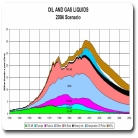
Sir, Martin Wolf, in “Cheap oil puts humanity on a slippery slope” (December 2) states: “The emergence of shale oil underlines what was already fairly clear, namely, that the global supply capacity is not only enormous but expanding. Forget peak oil.” He is mistaken. Even the International Energy Agency acknowledges that conventional oil production peaked in 2005. Add other sources of liquid production, in particular tight oil (often misleadingly called shale oil) production from the US, and there has been a modest increase since then, giving a kind of “undulating plateau” as Shell would have it. What the burst of unconventional production from the US has done is to mask the underlying reality of peak oil. This will become apparent as the tight oil potential itself proves limited in time.
Bear in mind the huge scale of the industry and the production infrastructure required. The vast bulk of production is coming from conventional oilfields, the majority of which are past peak and whose production is in decline. A consideration of the discoveries waiting to be developed and the timescale to put them into production reveals a significant gap, apparent even on close consideration of the work of the IEA, which masks this gap as production that will come from as yet unidentified, undiscovered fields. It is totally unrealistic to anticipate future discoveries on the scale required to fill this gap, given the historical record (especially this century) and the fact that most promising oil provinces have already been well explored and developed.
The potential of a future boost in production from Iraq and Iran can be assessed, as can that from unconventional sources including Canadian oil sands and US tight oil, but all of this combined is insufficient to fill a large demand-supply gap when considering the horizon 2020-30. What is actually important is not the date of peak global oil production, but the decades of decline that follow. They imply a continuous global economic contraction until the underlying basis of the global economy — liquid hydrocarbons for everything that moves — is substantially changed. Furthermore, rapid growth in the domestic consumption of the key oil-exporting countries means less will be available for export — oil exports from key exporting countries will decline much faster than their production declines (the so-called “export land effect”). Peak oil and its consequences are as serious for the global economy as climate change.
Nicholas Tobin
Paris, France
52 Comments on "Peak oil is a reality with serious consequences"
makati1 on Sat, 5th Dec 2015 8:02 pm
Peaky, I doubt that it will take long for the effects of oxygen deprivation to become noticeable as we approach the limits.
How long would it take to replace the oxygen burned up in a 1,000 square mile forest fire? (Well over 1,000 sq.mi. in just the US and Canada last year.)
How much does 1,000,000,000+ cars burn up in a day? Trucks? Planes? Ships? Coal burners? NG burners? Oil burners? Steel foundries? Glass plants? 1,000,000,000+ cattle? 7,400,000,000+ people?
And on and on. Have we reached peak oxygen consumption? We shall see.
rockman on Sun, 6th Dec 2015 9:51 am
Not that I’m trying to discourage personal attacks. But all you folks have enough smarts to well address the more technical aspects of our energy situation. Which isn’t to say I might not disagree with various interpretations of the facts. But such debates are what I enjoy here.
OTOH the debate over who is the biggest asshole here is of no value to me: I’ve long ago developed that mental list. LOL.