
Peak Oil is You
Donate Bitcoins ;-) or Paypal :-)


Page added on September 16, 2015

From Saudi Skyscrapers to Turkish Tunnels
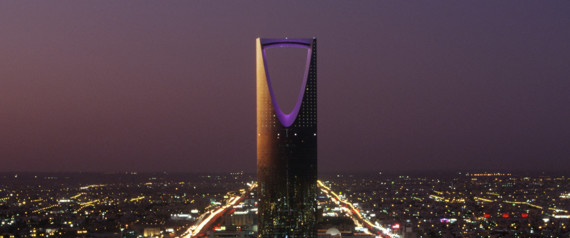
What do the world’s tallest skyscraper in Saudi Arabia, a sea-water-desalination system in Cyprus, and an underwater tunnel in Turkey all have in common? They all represent challenges that growing cities face, and in all these projects, BASF has helped to meet these challenges. It is estimated that more than 70 percent of the world’s population will live in cities by 2050. Many will live in megacities of up to 50 or 60 million people, in countries like China or India. These are the reasons why the United Nations has made “Sustainable Cities and Communities” one of the proposed 17 global Sustainable Development Goals.
The increasing urbanization gives rise to a host of questions: What will our cities look and sound like in the future? How can more and more people find living space and maintain quality of life? Do we have enough resources, such as water, electricity and clean air, for everyone? How can we improve urban mobility with the least impact on the environment?
At BASF, finding answers to such questions is at the core of our business. Space is limited in big cities — that’s why one trend is to build upwards. The world’s tallest skyscraper, the Kingdom Tower, in the port city of Jeddah uses our concrete admixture, which allows concrete to be poured at record heights. Cities demand great quantities of resources like water. Sea-water desalination is an opportunity for coastal cities to secure their long-term supply of water. Our ultrafiltration technology transforms saltwater into drinking water in the coastal city of Famagusta, Cyprus; our membranes made from high-performance plastic prepare the seawater for desalination.
Megacities like Istanbul need efficient transportation and are looking for solutions to reduce traffic noise and exhaust. An alternative to the Bosporus Bridge highway was recently opened: the Marmaray Tunnel under the Bosporus. BASF technologies contributed: A special injection foam to prevent water ingress and a concrete formulation to earthquake-proof the tunnel were used in its construction.
These are just a few examples from our portfolio of solutions for the challenges caused by rapidly expanding urbanization. How do we address these challenges? We innovate. We create new products and solutions that meet the sustainability needs of our customers and of the society. We ensure that our production methods are safe and efficient.
Research and development are key here. BASF spends almost 2 billion euros a year on research and development. Innovation has been the source of our success since the company was founded in 1865. Our research pipeline has more than 3,000 projects — more than 60 percent of these projects result in products and solutions with a substantial contribution to sustainability.
BASF has been committed to creating sustainable practices throughout its 150-year history. Our “Verbund principle” of integration enables us to add value as one company through efficient use of our resources. Our understanding of sustainability encompasses environmental and social aspects, as well as economic considerations. We see sustainability as a starting point for new business opportunities and as a significant engine for our growth.
18 Comments on "From Saudi Skyscrapers to Turkish Tunnels"
Makati1 on Wed, 16th Sep 2015 7:58 pm
“It is estimated that more than 70 percent of the world’s population will live in cities by 2050.”
How much do you want to bet on that statement? Your life? That will be your bet if you live in or anywhere near a city when the SHTF.
Huff & Puff ads again…
apneaman on Wed, 16th Sep 2015 8:01 pm
It’s true Mak, 70 million out of the 100 million remaining apes will live in what passes for cities in 2050.
Plantagenet on Wed, 16th Sep 2015 9:02 pm
The whole idea of a “megacity” with a population of 50-70 million people is crazy and even revolting.
I’d much rather live in my cabin here in beautiful Alaska.
CHEERS!
Makati1 on Wed, 16th Sep 2015 11:13 pm
Top 10 includes the surrounding burbs…
1.Tokyo, Japan (37,126,000)
2.Jakarta, Indonesia (26,063,000)
3.Seoul, South Korea (22,547,000)
4.Delhi, India (22,242,000)
5.Shanghai, China (20,860,000)
6.Manila, Philippines (20,767,000)
7.Karachi, Pakistan (20,711,000)
8.New York, USA (20,464,000)
9.Sao Paulo, Brazil (20,186,000)
10.Mexico City, Mexico (19,463,000)
Davy on Thu, 17th Sep 2015 5:41 am
Why would someone reference a list with his “city” and near where is farm is when it is disgustingly overpopulated with little hope of a future? Even being near such a large population on a farm and thinking one can survive the locust people is folly” 20MIL is 3 times the population of my state of Missouri. My state is half the size of the entire country of the Phillipines. Crazy!
ghung on Thu, 17th Sep 2015 8:52 am
Running advertising propaganda for BASF these days, eh?
shortonoil on Thu, 17th Sep 2015 9:33 am
Amazing – the oil age is ending, and these guys haven’t even noticed!!
Maybe doctors should be prescribing stimulates instead of depressives; neural activity seems to have come to a complete halt!
penury on Thu, 17th Sep 2015 9:36 am
Really? Stupidity dressed formal. Anyone remember what led to the formation of cities?Just think of all the advantages that these city dwellers will enjoy. No electricity, nearest food growing a three day walk away, no manufacturing, no water, life will be a dream of wonder for those millions.
Davy on Thu, 17th Sep 2015 9:41 am
Pen, cities have a place in the mix if we can avoid a massive die off with a loss of most complexity required to run cities. If this is a collapse process smallish cities may have a future. If it is a collapse event maybe not.
Kenz300 on Thu, 17th Sep 2015 9:53 am
Cities need more open space within them…..
City parks and gardens allow the city to breath.
More cities should provide linear parks that connect homes. businesses, schools and work so that people can walk or bicycle to where they need to go.
makati1 on Thu, 17th Sep 2015 10:45 am
Kenz, city land is more valuable than parks. It is sold by the square foot, not acre.
Plantagenet on Thu, 17th Sep 2015 3:14 pm
Actually, some of the best cities have many many acres of public parks.
Its wrong to evaluate city land only on the basis of its price it bring when developed, while ignoring the importance of having parks and open spaces to improve the quality of urban life.
Cheers!
GregT on Thu, 17th Sep 2015 5:11 pm
“Actually, some of the best cities have many many acres of public parks.”
And you wouldn’t want to walk alone through most of them at night.
GregT on Thu, 17th Sep 2015 5:14 pm
Cities seen from space look like cancerous tumours on the Planet Earth.
http://izismile.com/2009/08/07/cities_at_night_seen_from_space_21_pics.html
apneaman on Thu, 17th Sep 2015 5:34 pm
MEGACANCER ~ Exploring the pathology of industrial civilization.
“Generally we see cancer as being an “evil” entity with malice towards the body it grows within. In many instances it causes death. But there is no intended malice, only an opportunity for unfettered growth brought about by breakage in the mechanisms of control. We could also say that humans are malicious for growing uncontrollably within the ecosystem and destroying it, but they too have escaped previous limitations, not by willful act, but through a process of organic evolution that led to the acquisition of characteristics that set the stage for their escape into much more rapid technological evolution and growth. With technological adaptations and very little evolved moral restraint towards other species and the ecosystem, an orgy of consumption has ensued.”
http://megacancer.com/2015/07/18/the-beginning/
Kenz300 on Fri, 18th Sep 2015 8:10 am
Maybe endless population growth is the problem that needs to be addresses. Endless population growth is not sustainable.
Around the world we can find a food crisis, a water crisis, a declining fish stocks crisis, a Climate Change crisis, an unemployment crisis and an OVER POPULATION crisis.
Birth Control Permanent Methods: Learn About Effectiveness
http://www.emedicinehealth.com/birth_control_permanent_methods/article_em.htm
apneaman on Fri, 18th Sep 2015 3:12 pm
Do the Math
Using physics and estimation to assess energy, growth, options—by Tom Murphy
You Call this Progress?
“One of the prevailing narratives of our time is that we are innovating our way into the future at break-neck speed. It’s just dizzying how quickly the world around us is changing. Technology is this juggernaut that gets ever bigger, ever faster, and all we need to do is hold on for the wild ride into the infinitely cool. Problems get solved faster than we can blink.
But I’m going to claim that this is an old, outdated narrative. I think we have a tendency to latch onto a story of humanity that we find appealing or flattering, and stick with it long past its expiration date. Many readers at this point, in fact, may think that it’s sheer lunacy for me to challenge such an obvious truth about the world we live in. Perhaps this will encourage said souls to read on—eager to witness a spectacular failure as I attempt to pull off this seemingly impossible stunt.”
http://physics.ucsd.edu/do-the-math/2015/09/you-call-this-progress/#more-1551
Kenz300 on Sun, 20th Sep 2015 9:29 pm
It all revolves around over population……. endless growth meets limited resources with bad results…… musical chairs with no food or water for the losers… not a pleasant outlook…
Ocean Fish Populations Cut In Half Since The 1970s: Report
http://www.huffingtonpost.com/entry/crucial-marine-populations-cut-in-half-since-the-1970s-report_55f9ecd2e4b00310edf5b1b2?ir=Green§ion=green&utm_hp_ref=green