
Peak Oil is You
Donate Bitcoins ;-) or Paypal :-)


Page added on September 10, 2015

Building a Brighter Future — Powered by Renewable Energy
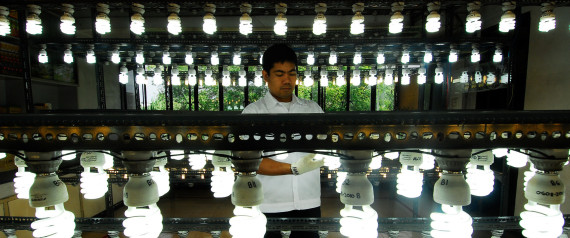
It is impossible to succeed in today’s economy without access to energy. But for an estimated 1.3 billion people, mostly in the developing world, electric power is still out of reach. Even among those with energy access, many still face unreliable service and regular blackouts. This is why it is so important that we push for Goal 7 of the proposed Sustainable Development Goals: “ensure access to affordable, reliable, sustainable, and modern energy for all.”
Our current energy system, largely based on fossil fuels, not only leaves out vast swaths of the world’s population but is also actively harmful to human health. Globally, an estimated 3.7 million people die prematurely each year due to air pollution, much of it related to fossil fuels. The cost of premature deaths resulting from air pollution amounts to 4 percent of GDP on average in the 15 largest economies. In India, it is around six percent and in China it is more than 10 percent. Yet, 40 percent of the world’s electricity still comes from coal, one of the most polluting fuels. And in 2013, the world spent around $600 billion on fossil-fuel subsidies, straining public finances, distorting investment and consumption choices, and fueling dangerous climate change.
Thankfully, the economics of energy are shifting. In 2013, for the first time, the world added more low-carbon electricity capacity than fossil-fuel capacity. It is becoming clear that renewables and enhanced energy efficiency, not fossil fuels, will be the solutions to energy poverty.
The barriers to energy access, which just a few years ago seemed insurmountable, are rapidly eroding. The tumbling costs of renewable energy are opening up new possibilities for clean, reliable energy for those who previously couldn’t afford it. Solar-photovoltaic modules are 80 percent cheaper than they were in 2008. As prices continue to fall and technologies mature, each dollar invested in renewables buys more capacity than ever. US$270 billion invested in renewables in 2014 bought more than 36 percent more capacity than the same amount spent in 2011.
Innovation in renewable technology is especially important for rural communities far from the energy grid. In the past, they had to rely on kerosene, which is both expensive and dangerous for health. But off-grid renewable energy is rapidly emerging as a viable and cheap alternative. According to SolarAid, which sells portable solar systems for homes in Africa, homes that replace kerosene with a solar light can save on average US$85 a year. The money saved tends to be spent on healthcare, education and better food.
In India, where more than 300 million people don’t have access to power, off-grid energy is becoming a huge market for businesses and is providing major social and environmental benefits. Some studies suggest that solar home systems added more than US$21 million to the rural Indian economy in 2014, allowing one billion extra hours of studying each year for more than 2.5 million children. Prime Minister Narendra Modi’s government has increased the previous national solar targets by five times, to 100 GW by 2020.
Methods of distributing renewable power to rural communities are becoming increasingly creative. In East Africa, a company called M-KOPA combines solar power and cell-phone technology to bring affordable energy to off-grid villages. Customers pay a small deposit for a solar-home system, and then pay back the balance over time through a widely used mobile platform, reducing transport and transaction costs. The solar units are cheaper and cleaner than kerosene, and once they’re fully paid for — after about a year — the electricity is completely free. More than 200,000 homes in Kenya, Tanzania, and Uganda now use M-KOPA’s solar systems.
For fast-growing countries trying to achieve universal energy access with limited resources, energy-efficiency investments can also be extremely helpful. By reducing demand for energy, energy efficiency can be the “first fuel.” And support is at hand. Sustainable Energy for All has identified at least 168 institutions and 145 initiatives around the world that focus on energy efficiency. For example, through UNEP’s “en.lighten” initiative, more than 60 countries have committed to transition away from inefficient lighting by 2016.
Ensuring universal-energy access with renewable power will be a win itself, but it will also contribute to the other Sustainable Development Goals. It will play a part in ending poverty (Goal 1) by saving rural communities the costs of kerosene and allowing more people to participate in the modern economy. It will help ensure healthy lives (Goal 3) by reducing air pollution. And finally, it will play a major role in combating climate change (Goal 13). The latest New Climate Economy report finds that investing in clean energy and improving energy efficiency could reduce global greenhouse gas emissions by an estimated 12.2 Gigatonnes of CO2 equivalent each year by 2030, more than the current annual emissions of the United States and the European Union combined.
New companies and initiatives like SolarAid, M-KOPA, and en.lighten are showing that it’s possible to expand energy access in a sustainable way. Let’s accelerate the momentum and build a brighter future.
24 Comments on "Building a Brighter Future — Powered by Renewable Energy"
Makati1 on Thu, 10th Sep 2015 8:06 pm
“Renewables” are dying along with the economy. Even if the Market Casino is propped up one more time, there is no money for “renewables”.
“Britain rejects four planned wind farms in Wales”
“Wind-Power Producers Find Profits as Elusive as a Summer Breeze”
“Could Too Many Wind Turbines Offer Diminishing Returns?”
“How the US and the WTO Crushed India’s Subsidies for Solar Energy”
“Wind EROI range and payback time (also solar, NG, geothermal, hydro, coal)”
“California’s electric vehicle program blasted as a giveaway to the rich”
Another Huff & Puff from the HuffPost.
Davy on Thu, 10th Sep 2015 8:59 pm
Sustainable Development Goals: “ensure access to affordable, reliable, sustainable, and modern energy for all.” This is just not realistic at a scale that has meaning. It is a talking point that sounds good. Renewables are not going to scale either.
We have too many unrealistic plan B’s that distract us from the real issues of adapting to an ugly descent. We can do something to change some problems. We can adapt and mitigate some problems. Most of the problems we will just have to live through. We are at a point where we cannot afford the luxury of dreaming.
Boat on Thu, 10th Sep 2015 9:32 pm
Davy,
What are the solutions. Easy to gripe. Tougher to fix.
apneaman on Thu, 10th Sep 2015 10:05 pm
There is only one solution boat.
OVERSHOOT LOOP:
Evolution Under The Maximum Power Principle
Here is a synopsis of the behavioral loop described above:
Step 1. Individuals and groups evolved a bias to maximize fitness by maximizing power, which requires over-reproduction and/or over-consumption of natural resources (overshoot), whenever systemic constraints allow it. Differential power generation and accumulation result in a hierarchical group structure.
Step 2. Energy is always limited, so overshoot eventually leads to decreasing power available to the group, with lower-ranking members suffering first.
Step 3. Diminishing power availability creates divisive subgroups within the original group. Low-rank members will form subgroups and coalitions to demand a greater share of power from higher-ranking individuals, who will resist by forming their own coalitions to maintain power.
Step 4. Violent social strife eventually occurs among subgroups who demand a greater share of the remaining power.
Step 5. The weakest subgroups (high or low rank) are either forced to disperse to a new territory, are killed, enslaved, or imprisoned.
Step 6. Go back to step 1.
The above loop was repeated countless thousands of times during the millions of years that we were evolving[9]. This behavior is inherent in the architecture of our minds — is entrained in our biological material — and will be repeated until we go extinct. Carrying capacity will decline[10] with each future iteration of the overshoot loop, and this will cause human numbers to decline until they reach levels not seen since the Pleistocene.
http://www.dieoff.org/
” This behavior is inherent in the architecture of our minds — is entrained in our biological material — and will be repeated until we go extinct.”
GregT on Thu, 10th Sep 2015 10:08 pm
“What are the solutions. Easy to gripe. Tougher to fix.”
There are no solutions to predicaments Boat. Only uncomfortable choices. Our situation is not fixable.
Boat on Thu, 10th Sep 2015 10:39 pm
We’ll there you go. When it comes right down to it we agree. There will and have to be mass death.
Now we can go back to arguing about when and how long before it happens.
GregT on Thu, 10th Sep 2015 10:59 pm
I knew you’d eventually come around Boat.
Personally I’m not so much concerned with when it will happen, as I’m already convinced that it will happen within my lifetime. My greatest concern is the magnitude of the die-off. The longer we pursue BAU, the further into overshoot we go, and the bigger the die-off will be. If population overshoot was our only concern that would be bad enough, but it isn’t our only concern any longer. Thanks mainly to our exploitation of fossil fuels, human population overshoot now threatens life as we know it on the entire planet. We’re taking everything else with us Boat. Including our own children.
Boat on Thu, 10th Sep 2015 11:05 pm
I am single and have not fathered any children. I am not part of the problem. As far as coming around, I repeat, for 10 years I have been reading about climate and peak oil. I look ahead 5 years and don’t see any problems that would cause a crash. Unless it’s geopolitical, asteroid etc. My money is in the market and the experts say do not have it in the market if you think you need your money within 10 years. That’s what I think.
GregT on Thu, 10th Sep 2015 11:57 pm
“I am single and have not fathered any children.”
Then you are absolved from all responsibility Boat. Who cares if we destroy the Earth, just as long as you can make a return on your investment, everything is A OK. I hate to break it to you Boat, but you are a very large part of the problem. It is thinking like yours that is completely destructive.
“I look ahead 5 years and don’t see any problems that would cause a crash.”
How about looking back to 2008, or looking around the globe presently. Instead of pretending that all is still well in the world.
I’m going to make a predication Boat. Within 10 years time, your money in the markets will be completely worthless. I really hope that I’m wrong.
Makati1 on Fri, 11th Sep 2015 12:16 am
GregT, I think you will be proven correct and more likely in less than 5 years. Maybe tomorrow. The sooner the better for all of us and our families. I would love to wake up tomorrow and see the DOW at 5,000 or less. Where it should be in the real world.
If boat is single and no family to think about, his comments make more sense. He has admitted that he is a dreamer of the old “Capitalist” lifestyle, now dying a death of a thousand cuts. Perhaps he should read the history of the Great Depression and see what happens along the way?
GregT on Fri, 11th Sep 2015 12:28 am
Mak,
If Boat is indeed 58 like he says he is, he won’t need to read about it.
apneaman on Fri, 11th Sep 2015 12:35 am
That’s his IQ, not his age.
Davy on Fri, 11th Sep 2015 4:34 am
Boat “What are the solutions. Easy to gripe. Tougher to fix.” The solution is not unrealistic optimism. The solution is to accept there are no solutions especially like preached by a wide spectrum of society at all levels.
What we need now is acceptance and sobriety. When one is diagnosed with something serious what does he do? Does he continue on with life as normal and claim because he is optimistic he will overcome the problem? Does he make life changes that reflect his new reality and behave accordingly? I think most realistic observers know that answer.
What we need now is extreme caution. We need to be in crisis mode on all fronts. This of course is not being done because it does not jive with growth based policies and optimism. I agree confidence and liquidity are the key drivers of the global system and vital. I also stress that confidence and liquidity must be realistic or they may fail catastrophically. This is exactly the direction we are heading.
We are in a hole and digging it deeper by the same policies that got us here. If we change course the economy is going to decline. If we keep going the economy is going to decline. The current system does not have a future. It is time to prepare for the rebalance of consumption and population before we lose the ability to adjust at all. Fall less with policies that accept less. Fall more with policies that dismiss failure.
There are few who realize how quickly and drastically the global system can deteriorate. Most have been habituated to the status quo which is normality for the most part. Normality is money works, lights go on, gas at the pumps, and food in the frig. We are facing food and fuel shortages as the vicious cycle of demand and supply destruction accelerates. We are facing a deflationary spiral of bad debt, bankruptcies, and social safety net failures. To discount this is to duck reality.
Frankly none of us know what is ahead exactly but we should practice extreme caution at this point dismissing extremism. Optimism like we see routinely in the mainstream media, academia, and global organizations is excessive. Sobriety, humility, and realism is the only answer when one is faced with insurmountable problems and predicaments. What’s in your wallet Boat?
Makati1 on Fri, 11th Sep 2015 8:20 am
GregT, if he is 58, he is showing signs of early senility. lol.
Makati1 on Fri, 11th Sep 2015 8:21 am
Ap, if it’s his I.Q., I think it is still too high. Maybe he should take the test again?
Davy on Fri, 11th Sep 2015 8:58 am
You guys are hilarious. You jump my ass for jumpin the board pimp from the Philippines then you all engage in the same activities with boat.b Double standards anyone.
Keep up the shit Mak and I will blister your ass more as I have in the past. I burried the hatchet for the sake of a clean board it is now your turn asswipe.
Kenz300 on Fri, 11th Sep 2015 9:00 am
Building a safer, cleaner and cheaper energy future….
The Year Humans Got Serious About Climate Change — NYMag
http://nymag.com/daily/intelligencer/2015/09/sunniest-climate-change-story-ever-read.html
——————-
Wind, Natural Gas, Solar Provide More U.S. Power, Replacing Coal
http://www.greencarreports.com/news/1098033_wind-natural-gas-solar-provide-more-u-s-power-replacing-coal
Kenz300 on Fri, 11th Sep 2015 9:03 am
Now if only the OVER POPULATION problem could be solved.
Endless population growth is not sustainable. Adding 80 million more people to feed, clothe, house and provide energy and water for every year
makes every problem harder to solve.
BC on Fri, 11th Sep 2015 12:05 pm
https://app.box.com/s/pfdk6c7a9g9n5i0e3s5txnej16q7biav
https://app.box.com/s/jemdqkdd23257oummtpjwl6348wigdlx
http://www.bbc.com/future/story/20150209-the-network-that-runs-the-world
Not sustainable to scale due to Peak Oil, LTG, and the end of growth (EOG).
US electricity consumption per capita is at the levels of the late 1990s to early 2000s, which I suspect is where the growth of solar and wind energy production is going in the years ahead for the YoY and 6- and 9-year change rates.
http://www.detroitnews.com/story/business/autos/2015/07/01/hybrid-ev-sales-tumble/29565265/
http://www.engadget.com/2015/03/09/tesla-slashes-jobs-in-china/?ncid=txtlnkusaolp00000589
http://www.autonews.com/article/20150608/OEM05/306089953/nissan-braces-for-falling-leaf-sales
http://cleantechnica.com/2015/08/05/us-electric-car-sales-in-july-more-rocky-roads-for-models-under-35000/
Crashing oil and gasoline prices are hitting EV sales as anticipated, apart from the higher-end vanity sales, which is an ongoing reflection of the worsening income and wealth inequality. Without tax credits, EV sales will be trivial as a share of the US and global fleets.
The economic fundamentals of “secular stagnation”, LTG, and EOG do not justify further growth of build-out of “renewables” apart from marginal replacement of capacity of coal-burning plants.
Without Peak Oil, there would not have been the shale and tar boom/bubble and the wind and solar build-out. But has the “renewables” build-out peaked with the crash in the price of oil, end of “globalization”, and LTG/EOG? I suspect so.
Kenz300 on Fri, 11th Sep 2015 7:12 pm
Climate Change is real……. deal with it….. phase out fossil fuels…
World Moves Toward 100 Percent Renewable Energy – First Electricity, Then Heating/Cooling, and Finally Transportation – Renewable Energy World
http://www.renewableenergyworld.com/articles/2015/07/world-moves-toward-100-percent-renewable-energy-first-electricity-then-heating-cooling-and-finally-transportation.html
————
Solar Beats Gas in Colorado – Renewable Energy World
http://www.renewableenergyworld.com/articles/2015/08/solar-beats-gas-in-colorado.html
Ted Wilson on Fri, 11th Sep 2015 8:47 pm
Solar power has increased from 1 GW (2000) to 180 GW (2014) which is 180 fold increase and wind power also has increased more than 12 fold.
India is planning to replace all street lights with LED and this will drastically cut down the power consumption. Meanwhile solar panels are also installed in street lights to store the batteries for night time usage.
All this will ensure that fossil fuel consumption growth grinds to a 0.
BC on Fri, 11th Sep 2015 10:56 pm
http://www.technologyreview.com/review/540226/paying-for-solar-power/
GregT on Fri, 11th Sep 2015 11:27 pm
Very good article BC. No nonsense and to the point.
Davy on Sat, 12th Sep 2015 7:43 am
Ted if you are going to be balanced mentioned the grid operating level of wind and solar which is single digits. You might mention the time it will take to scale up those assets and the capital investment. Scale is the issue and it is realistically a situations too little too late that is the problem. This is not saying we should abandon AltE quite contrary but we should not waive around unrealistic claims of AltE plan B’s when they are in no way a plan B for the status quo. We are toast Ted admit it and better choices can be entertained.