
Peak Oil is You

Donate Bitcoins ;-) or Paypal :-)


Page added on June 15, 2015

Fighting Extinction

“This is a true challenge. If the story is told as one of avarice, private gain and exceptionalism, the human race will go extinct.”

At the G7 last week, the leading industrial nations agreed to cut greenhouse gases by phasing out the use of fossil fuels by the end of the century. While that may seem to many, ourselves included, as whistling past the graveyard, the mainstream press and many climate organizations are hailing the diplomatic triumph of German Chancellor Angela Merkel in bringing fossil foot-draggers Australia, Japan and Canada to a “Jesus, the climate!” moment.
On the final day of G7 talks in their Bavarian castle, and before rushing off to the secretive Bilderberg Group meeting, Merkel said the leaders had committed themselves to the need to “decarbonize the global economy in the course of this century.” They also agreed on a global target for limiting the rise in average global temperatures to a maximum of 2°C over pre-industrial levels, oblivious of the contradiction in those two positions.
Two weeks ago, at the St. Petersberg Climate Dialogue, Chancellor Merkel called upon the overdeveloped countries to draft a roadmap of how to meet the $100 billion bribe Hillary Clinton offered underdeveloping countries to acquiesce to President Obama’s stalling strategy in Copenhagen in 2009. For five years now, Obama has declined to present such a plan, and not having one has undermined trust in both the UN process and the United States. At home, Obama’s popularity ratings are now below those of George W. Bush in his final year. The President’s legacy is likely to be that his name becomes synonymous with loss of trust. Merkel’s is likely to be associated with loss of ambition.
In fact, let us apply Merkel as the denomination for degrees of warming expected to result from heel dragging for the next 85 years. Thus, a rise of one-degree this coming century would be 1 Merkel. Six degrees would be 6 Merkels, and so on.
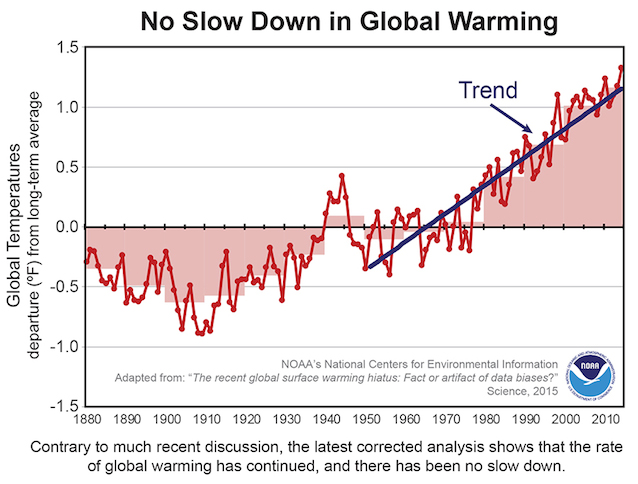
Scientific consensus recently concluded that even if CO2 and other greenhouse gases were stabilized in a time short of 85 years, surface air temperatures and sea levels will continue rising for at least another century and probably several. This means that even if we moved from fossil fuels to 100% renewable energy by 2030 or 2050, further impacts on people and ecosystems will continue unabated. Hurricanes will continue to strengthen. Heat transfer between Atlantic and Pacific across the Arctic may reveal a new tipping point. Both the Jet Stream and the Atlantic Conveyor will break weirdness records.
This might cause one to despair utterly, and then to psychologically block the consequences and perhaps even party like its 1999. Some speculate that is already what is going on at 1600 Pennsylvania Avenue and 10 Downing Street. This assumes they are already in the acceptance mode of grieving for near term human extinction. In our view, that assumption is flawed and anybody’s despair for our race is pre-mature. Killian O’Brien, from the Permaculture and Resilience Initiative in Detroit, writes:
[A] last resort mindset [is] inappropriate when return to a stable Anthropocene, largely de-mechanized and far simpler than OECD nations currently enjoy, is still at least theoretically possible. Given it is feasible to return to sub-300 ppm by 2100, if not far sooner, and even to the mid-to-low 200’s, which would bring on cooling, giving up (or ‘going into hospice,’ as Guy McPherson puts it), is an unethical, even immoral, suggestion, is it not?
Step one: zero GHG. Full stop. Step two: go beyond zero
John Holdren, who as White House Science Advisor has the Drone King’s ear, should be whispering words to the effect that a global fossil fuel extraction levy, applied at the ridiculously low price of $2/ton of CO2e, could easily generate $50 billion a year. That levy would need to increase substantially year on year as we phase out fossil fuels but it would shift the cost of fossil fuels from the victims to the industry and feedback favorably to accelerate the phase-out.
If the ultimate objective of the UN Convention is to repair the climate, not just to seem to be doing something, it would require actually reversing greenhouse gas (GHG) emissions and taking down concentrations to pre-industrial levels. Step one: zero GHG. Full stop. Step two: go beyond zero, to net-sequestration techniques like biochar, living roofs, bioenergy-to-carbon-storage, and regrarian farming.
 |
| courtesy of Andy Singer |
The IPCC has focused on setting a goal of 2°C for absolute increase, understanding that we are already at 0.8 – 1.1°C (call it one Merkel) and on our current trajectory we could see 4 Merkels by mid-century globally, and up to 10 Merkels in local regions, such as Mombassa, Mumbai, Damascus and Beijing. At 2 Merkels, half the world’s coral reefs will disappear, small island states and populous coastlines will be submerged, Brazil’s soils will go from sink to source, and many indigenous societies will go extinct.
Even to have a 2 Merkel limit begs the question of whether are we aiming to achieve that with a probability of 90%, 66%, or something less, and what might each of those require? A 25-50% probability might require achieving net sequestration in something like 10 years (by 2025). Do non-scientists really appreciate what that means? Even to limit warming below 3°C a radical transformation of capitalism will be necessary.
The Bonn draft text, taking its G7 cue, supports phasing out fossil fuel emissions and transitioning (equitably) to 100% renewable energy by … 2100? 2050? — that will be the central Paris negotiating point if the G7 and Bilderberg conferences didn’t already decide it. Given what we know about the net energy of renewables and Jevon’s paradox from the Swedish study mentioned here last week, it is hard to imagine even a 2050 target representing anything less than 3 Merkels.
 |
| courtesy of Andy Singer |
Progressive nations like Switzerland plan to reduce emissions by 50% from 1990 levels by 2030, with 30% to be achieved domestically, and the rest through offsets (paying other countries to reduce). This is 10% more ambitious than the EU as a whole, but as the Climate Action Network asks, “If the whole world needs to decarbonize by mid-century, what makes Switzerland think there will be enough offsets available?”
Some, like India and Japan, believe that fossil fuels can be used for some time to come and we will still achieve a 2°C target. India is expanding its coal-fired electric grid by leaps and bounds. Japan is massively subsidizing a coal build-out to help underdeveloping countries further underdevelop and covertly plans to frack SE Asia, on the way derailing antifracking laws, which is a lot of what TPP, TTPP and TiSA are about. Either these countries have a steep learning curve to even comprehend the science, or less charitably, they are merely partying hard towards the Apocalypse.
Japan’s P.M. predicts that by fifteen years from now, 20-22% of his country’s electricity will be sourced from nuclear power, despite Fukushima. Coal will provide 26% more energy than renewables in 2030 Japan and extending the operation of old nuclear power plants to 60 years and/or building new nuclear plants is slated to fill any gaps. Good luck with all that. We are getting our protest bandana out of mothballs.

To accord with both ethics and science, OECD countries should cut emissions by 106-128% immediately, the IPCC reports. If that seems extreme, it really is not such a heavy lift, policy-and-popularity-wise. The current $5.3 trillion fossil fuel industry subsidy for 2015 — $10 million per minute — is greater than the total health spending of all the world’s governments.
Or compare the cost of Exxon blackmail to the cost of the Iraq War, at about 1 trillion per year (and a civilian death toll of an estimated 176,000 to 189,000) — about $1.9 million per minute (although arguably the Iraq War was another fossil fuel subsidy). Subsidizing fossil fuels is like running 5 Iraq wars simultaneously, for the next 85 years!
But remember the Gilens and Page study, described here last week. Whether the public supports or distains a particular policy has no effect on its likelihood of becoming law. The same is true of international law.
Algeria: “Thank you Mr. President and fellow representatives. I am very glad to talk to you about my country’s opinions on unsustainability. It seems as if we are running out of water. And all of our schemes to try to combat energy and renewable resources and climate change – we just need more money. We need more cash. We can use it to come up with new solutions. If only we had more money and investment we could solve all of these problems. If only there was more money we could combat the food issues, the people starving all over the world; hungry, hungry people everywhere.”
– Extraenvironmentalist Episode #86, Slow Money Part C (May 26, 2015).
Imagine a group of people in a disaster shelter. If they go outside they will not likely survive, but to stay within means learning to get along, despite their differences. Two of the people are very wealthy, and they inherited that wealth by their parents enslaving or otherwise mistreating the parents of several of the other people in the shelter, engendering feelings that linger as simmering anger.
But, those two people are learned and skilled at the process of organizing groups to work towards a common goal, and they get everyone to agree to join and discuss what needs to be done. Certain things are obvious priorities: food, water, sewage management, personal security, and First Aid for the injured. Other things, like working through the emotions of those old hatreds, are less immediate but still need to be addressed for the process to move along.
Many in the group feel that although they have not achieved the wealth of the two wealthiest, they are on the path to achieving it, or were before the disaster struck, and when the disaster is over, they still intend to pursue that goal.
What happens? Every issue that the group takes up – from the smallest to the largest seems to arouse animosity more than a spirit of cooperation. The two wealthiest, and many of the would-be wealthy, feel sorry for those who have nothing, but they are not willing to share the food and water they have brought with them. They are happy to provide first aid assistance, but reticent to have hands-on involvement in pollution management, infrastructure maintenance and health care, other than by designing systems on paper, and they would like to be paid for that.
The poorest, many of whom are used to maintaining good hygiene despite difficult circumstances, are unwilling to perform work for the wealthy that the wealthy are unwilling to perform for themselves. They would prefer to suffer from bad sanitation than from indignity.
These things play out on the international scale just as they play out in a small group. Unless differences can be put aside, as they were not in Bonn but must be in Paris, there is little hope for the survival of our species, and many others.
If, on the other hand, these things can be put aside for this moment, and we can find common ground and a spirit of shared sacrifice, much is yet possible. This is a true challenge.

If the story that is told is one of avarice, private gain and exceptionalism, the human race will go extinct. For this story to end happily it must be a story of our noblest attributes, elevating us above our history.
In his message to COP20 in Lima, Pope Francis said there is a “clear, definitive and ineluctable ethical imperative to act.” In 4 days, on June 18, Francis will issue a new encyclical, “Laudato Si,” on the future of our planet and people. It will speak of climate in the context of human moral development. It could not be more on point.
8 Comments on "Fighting Extinction"
penury on Mon, 15th Jun 2015 9:29 am
It certainly is a step forward for the leaders to come to an agreement. It of course would be even more wonderful if they actually had their nations do anything. be that the leaders have managed to never do anything except what would add money to the pockets of the rich and assure their own political futures, the only real action to be taken will be minimal, short lived and only costly to the poor and middle class,
Davy on Mon, 15th Jun 2015 9:46 am
More bullshit from the greenies that want cake and eat it. There is no complex society as we know it without carbon. There are no alternative at this time with the size of our population and financial need to consume.
The only answer is a quick reduction in population and consumption. This will happen through nature and our own systematic decay as a society.
What we can do is lessen the pain and suffering. What we don’t need is a bunch of asshole greenies and global numb-nut leadership preaching hope for a world of having cake and eating it. I don’t know about you folks but it insults my intelligence to hear things that just are not true.
Let’s face the writing on the wall and begin to adapt and mitigate a coming die off and economic descent. You can start locally and individually. Globally and nationally we may see efforts but only after a full scale crisis. A full scale crisis will likely be accompanied with war big or small that will just make the process accelerate.
I am sorry I can’t give you any happy news but that is the shit and you can’t put perfume on shit. Shit stinks and life is going to stink like shit soon for all you well to do BAUtopians including me.
BobInget on Mon, 15th Jun 2015 10:25 am
First Solar, Inc. (NASDAQ:FSLR) announced it has set yet another world record for cadmium-telluride (CdTe) photovoltaic (PV) module conversion efficiency, achieving 18.6 percent aperture efficiency for an advanced full size module. For the first time ever, First Solar has demonstrated a record module that is more efficient than the best multi-crystalline module recorded.
This achievement reinforces confidence in First Solar’s ability to deliver sustained product improvements consistent with its long-term technology roadmap.
The record has been measured and certified by the U.S. Department of Energy’s National Renewable Energy Laboratory (NREL).
This 18.6 percent aperture area efficiency corresponds to a full area conversion efficiency of 18.2 percent, which easily beats the best recorded multi-crystalline Si PERC module with an approximate full area efficiency of 17.7% (based on 19.1% aperture efficiency and published module area data).
This achievement is the eighth substantial update to CdTe record efficiency since 2011, continuing a disruptive and sustained trend of rapid performance improvements. In January, First Solar produced a research cell with 21.5 percent conversion efficiency, certified at the Newport Corporation’s Technology and Applications Center (TAC) PV Lab and confirmed by NREL.
“First Solar’s CdTe thin film is now rightly categorized as a high performance product,” said Raffi Garabedian, First Solar’s Chief Technology Officer. “At one time, we might have been characterized as a low cost, low efficiency technology, but consistent with our technology projections we are now proving that CdTe thin film delivers both industry-leading performance AND sustainable thin-film cost structures.”
Garabedian emphasized that First Solar’s significant sustained investment in development of CdTe technology has enabled the company to meet or exceed its aggressive projections for improvements in research cells and modules, as well as commercialized technology.
“While silicon technologies have approached their theoretical efficiency entitlement and leveled out in terms of performance and cost, First Solarcontinues to harvest the upside available from its superior thin film technology. Our CdTe modules are now more efficient than the best multi-crystalline Si modules, and we still have a great deal of technology head room for further innovation,” Garabedian said.
Nick Strevel, First Solar’s Senior Manager of Technology, noted that efficiency combined with other real-world performance attributes result in First Solartechnology delivering higher energy density than multi-crystalline Silicon (m-Si) solar panels. Given the same installed nameplate module capacity (Watts) with equivalent ground coverage ratio, he said, First Solar’s CdTe product will provide up to 8 percent more useable energy from the same land area than m-Si, which gives First Solar a competitive advantage over other PV technologies.
“A narrow focus on simple metrics such as standard-test-condition (STC) efficiency or cost per STC-watt obscures the actual value of solar generation technologies,” said Strevel. “Customers value energy produced by a solar power plant (kWh), not its nominal STC power rating. Metrics with greater relevance to real-world conditions – including specific energy yield, energy density, cost/kWh and long term reliability – ultimately tell a much more comprehensive story of real-world performance and are more influential in reducing Levelized Cost of solar Electricity.”
Strevel said that, in addition to the continued trend of efficiency records, First Solar’s modules are amongst the highest quality, most reliable modules in the world, having passed the industry’s most rigorous multi-stress testing protocols such including Atlas 25+, IEC Long Term Sequential and Thresher Tests. (Original Source)
Shares of First Solar closed last Friday at $50.48 . FSLR has a 1-year high of $73.78 and a 1-year low of $39.18. The stock’s 50-day moving average is $54.50 and its 200-day moving average is $52.34.
On the ratings front, First Solar has been the subject of a number of recent research reports. In a report issued on May 26, RBC analyst Mahesh Sanganeria downgraded FSLR to Sell, with a price target of $34, which implies a downside of 32.6% from current levels. Separately, on May 13, Deutsche Bank’s Vishal Shah initiated coverage with a Buy rating on the stock .
According to TipRanks.com, which ranks over 7,500 financial analysts and bloggers to gauge the performance of their past recommendations, Mahesh Sanganeria and Vishal Shah have a total average return of 15.3% and -11.7% respectively. Sanganeria has a success rate of 72.2% and is ranked #527 out of 3624 analysts, while Shah has a success rate of 30.5% and is ranked #3588.
In total, one research analyst has rated the stock with a Sell rating, 3 research analysts have assigned a Hold rating and 2 research analysts have given a Buy rating to the stock. When considering if perhaps the stock is under or overvalued, the average price target is $51.33 which is 1.7% above where the stock closed last Friday.
penury on Mon, 15th Jun 2015 10:38 am
Bloomberg is a better place to sell stocks.
Perk Earl on Mon, 15th Jun 2015 11:36 am
“What we don’t need is a bunch of asshole greenies and global numb-nut leadership preaching hope for a world of having cake and eating it.”
That’s humankind mentality though, Davy. You hit it right on the botton; “…having cake and eating it.”
Just try sometime to tell someone they can’t have something. They will figure out numerous ways to make sure they do in fact get whatever it is. “But what if blah, blah, blah, then can I have it? In fact, once you tell them they can’t have something then it will become part of their motus apprandi to make sure they always have plenty of whatever it was they weren’t suppose to have.
Of course in post collapse they will spin discussions backwards and forwards trying to figure out how to get what they use to have, insisting it should still be possible.
Apneaman on Mon, 15th Jun 2015 1:24 pm
Biodiversity reduces human, wildlife diseases and crop pests
Study confirms ‘dilution effect hypothesis’ that suggests biodiversity loss in nature poses a public health threat by causing and exacerbating disease outbreaks
Date:
June 15, 2015
Source:
University of South Florida (USF Health)
Summary:
With infectious diseases increasing worldwide, the need to understand how and why disease outbreaks occur is becoming increasingly important. Looking for answers, a team of biologists found broad evidence that supports the controversial ‘dilution effect hypothesis,’ which suggests that biodiversity limits outbreaks of disease among humans and wildlife.
http://www.sciencedaily.com/releases/2015/06/150615094309.htm
Apneaman on Mon, 15th Jun 2015 5:57 pm
This alone is enough to do us all in. Just one of a number of serious positive feed backs already under way………………………………..
Climate scientists raise alarm on melting of carbon-bearing permafrost
http://www.interaksyon.com/article/112188/climate-scientists-raise-alarm-on-melting-of-carbon-bearing-permafrost
Apneaman on Mon, 15th Jun 2015 11:51 pm
Pause? What a Joke. The Reality is Global Temperatures are Skyrocketing.
“News out from NASA today — the first five months of 2015 are the hottest ever recorded in the global climate record. Global temperatures hotter than any comparable period by a very significant margin.
According to NASA’s GISS division, May of 2015 came in at 0.71 C hotter than the 20th Century average. That ties 2012 for the second hottest May since record keeping began in 1880. But, more importantly, when averaged — January (+0.75 C), February (+0.82 C), March (+0.84 C), April (+0.71 C) and now May — the first five months of 2015 come in at 0.766 C above 20th Century baselines. That’s about 0.96 C above 1880s values — a level fast approaching the 1 C threshold and the far more dangerous climate impacts that come after.”
https://robertscribbler.wordpress.com/2015/06/15/pause-what-a-joke-the-reality-is-global-temperatures-are-skyrocketing/