
Peak Oil is You
Donate Bitcoins ;-) or Paypal :-)


Page added on June 7, 2015

What if the Worst-Case Scenarios Actually Come to Pass?

Imagine this, if you can: the world as we know it torn apart by ‘hypercanes’, storms with wind speeds of over 500 mph, capable of producing a system the size of North America. A tiny fraction of humanity driven to a civilisation underground, the remaining masses left to fend for themselves on the virtually uninhabitable Earth’s surface. Species extinction is complete and genetic engineering is at a new height, to ensure the continued survival of what’s left of the human race.
This is the setting for ‘Some Fine Day’, a novel for young adults by Kat Ross that falls into an emerging sub-genre of science fiction known as climate fiction, or ‘cli-fi’.
Readers follow the story of sixteen-year-old Jansin Nordqvist, who’s on the verge of graduating from a military academy when her parents surprise her with a trip to the surface.
Thrilled at the chance to see the ocean, breathe fresh air and experience real sunlight, Jansin cannot anticipate what her future holds: a period of captivity with the surface ‘savages’ she’s been warned about all her life, and discoveries about the underground regime that leave her questioning everything she’s ever been taught.
Over the past two years, cli-fi novels have gone from being a fringe sub-category to a widely referenced genre on sites like Amazon, as more and more writers turn their eye to the horrific realities of catastrophic climate change.
With global climate negotiations hamstrung and world leaders unable, or unwilling, to take steps to reduce greenhouse gas emissions by 40-70 percent by 2030 to prevent the worst forms of global warming, there is no doubt that natural disasters will become more frequent and more extreme.
Given that youth will bear the brunt of an increasingly savage climate, it is impossible to underestimate the role that cli-fi could play in informing and inspiring the younger generation to take action now against the worst-case scenarios of the future.
IPS sat down with Kat Ross to discuss the ways in which fiction can contribute to the debate that is raging around the world on the ‘ifs, whens and whats’ of climate change.
Excerpts from the interview follow.
Q: When did you first become interested in the ‘cli-fi’ genre, and what drew you to this particular form of storytelling?
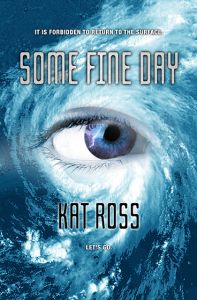
A: I have to give props to Dan Bloom for coining the term cli-fi. It’s super catchy, and he’s really given the genre a major boost. But when I sat down to write the book, there was no question that climate change would be a big part of the plot. As a journalist, I’d been covering it for almost a decade, and every year, the predictions got scarier. Some stopped being predictions about the future and started actually happening.
I was struck by the massive disconnect between what scientists and the public were saying – like hey, can we do something about this? – and the total lack of government action. The elephant in the room is obviously the fossil fuel lobby, among others. They spend billions of dollars spreading “doubt” about the science, which is ludicrous. I think fiction can be a great way into a conversation about these issues, especially with young people.
Some Fine Day starts with a basic question: what if the worst-case scenarios actually come to pass?
Q: Is the book, though set in the future, actually a commentary on our own times? If so, what do you think are the most important takeaways for young people at this moment in history?
A: Oh, definitely! I think it’s pretty explicit that the ravaged world in the story – about 80 years or so from now – is a direct result of doing too little, too late on runaway CO2 emissions. But the cool thing is that while we may have one toe at the edge of the precipice, we haven’t taken that plunge yet. There’s still time to change the future. And young people have been stepping up for years now. Adopt a Negotiator is a great initiative that works a lot with youth. They bring accountability to these very opaque negotiations.
Ultimately, it’s the people in their teens and twenties who will be living with the consequences of the choices we make today – and they’re not happy. Governments better start listening.
Q: The book both celebrates and condemns the limits to which humanity has pushed technology and scientific experimentation — on the one hand, an entire civilisation living underground entirely as a result of scientific innovation; on the other, genetic engineering gone horribly awry. What were your thoughts as an author navigating these two extremes?
A: Well, that’s the thing, right? Technology itself isn’t good or evil, it’s what we do with it. This is not a new question. Just look at Mary Shelley’s Frankenstein, published in 1818. We’re still fascinated by her tale of death and reanimation, and the awful consequences of scientific hubris. The basic idea is that everything comes with a price, although in the case of a switch to renewables, there doesn’t seem to be quite the same downside as bringing a giant dead guy back to life.
For Some Fine Day, I had a lot of fun asking questions like, exactly how do you build an underground city? Where does the air come from, the food and water? Are hypercanes possible? (According to a scientist at MIT, the answer is yes) If all the icecaps melted, how much would the seas rise? What would that look like for the Eastern Seaboard?
In short, I have a fondness for creepy mutants and couldn’t help throwing a few into the mix.
Q: Themes of the surveillance state, fascist governance and the so-called ‘one percent’ run consistently through the book, with the protagonist first a product of, then an enemy of, all of the above. How did you imagine or hope your target audience would understand these ideas in the context of the story?
A: It’s become something of a fixture of the dystopian genre to have jack-booted thugs running things. But I think it actually made sense in the context of the story. These are people who have lost everything. They’ve been driven from the surface by massive storms, ocean acidification, species extinction, the whole enchilada. The transition to underground prefectures was spearheaded by the military, and now they’re facing very limited resources. Every drop of water, every bite of food is rationed. There’s a tendency to hoard, and to fight with your neighbours. So it’s not a very democratic society.
As you say, what’s interesting about the main character, Jansin, is that she starts off as one of the true believers – a special ops cadet who’s been trained all her life to never question orders. But she evolves over the course of the story to understand that she doesn’t have to live like that. It doesn’t have to be “us versus them.” Which is the most powerful propaganda tool ever invented.
It’s one of the reasons I like to write about young protagonists. I think in general, their minds are more open. Their core beliefs haven’t yet fossilized.
Q: There is a sense of urgency to the book that makes it an absolute page-turner. While this is a work of fiction, it does in many ways mirror the current emergency humanity finds itself in. Was this intentional? Or was the point more to create a thriller, and leave the readers to draw their own conclusions about the ‘climate politics’ of the world you create?
A: I don’t think I use the term “climate change” once in the book. That was deliberate. It’s pretty clear what’s happened, and frankly, the last thing most people want is a preachy novel where the characters are obvious stand-ins for the author’s opinion. Or maybe you do, but it’s easy to go out and find that kind of book if it’s your bag.
Some Fine Day is targeted at the young adult audience (though I think it’s for anyone), so I needed to be extra-careful there. Stealth indoctrination! Just kidding. No, I mainly wanted to tell a ripping good story, with characters you care about, and build a world that felt real in every sense.
Margaret Atwood pretty much summed it up. She says: “It’s rather useless to write a gripping narrative with nothing in it but climate change because novels are always about people even if they purport to be about rabbits or robots. They’re still really about people because that’s who we are and that’s what we write stories about.”
But if anyone reads my book and it inspires them to say to themselves, “Holy sh*t, this really sounds bad. Could any of this actually happen? Hey, I heard there’s a rally going on in the town square on Sunday. Maybe I should go see what they have to say…”
Well, I’d be just fine with that.
28 Comments on "What if the Worst-Case Scenarios Actually Come to Pass?"
Boat on Sun, 7th Jun 2015 6:21 am
Ratepayers will always end up holding the bag and will continue to switch to the most economical alternative. Nat gas is the big disrupter now with wind and solar waiting in the wings.
Nony on Sun, 7th Jun 2015 7:18 am
I just googled “The oil drum” and “peak gas” (also “shale gas”). It is amazing watching how the peakers never predicted the rise of shale gas and how they talked it down along the way.
Our old friend, David Hughes, gave a 2006 ASPO talk all about how LNG would be needed for the US and how it was in terminal decline! He got his ass kicked by the facts. But where has he discussed how massively wrong he was?
Boat on Sun, 7th Jun 2015 7:48 am
Let’s talk what Americans are good at. Driving Technology. Is it impossible to think of the day when fracking costs come down so much that they displace say off shore drilling or any other oil that takes a high price to produce.
Now refracking old oil fields with horizontal multi depth tech makes once thought depleted ares a viable opportunity. I can easily see the day when fracking around the world will be part of base production instead of the so called swing production.
Rodster on Sun, 7th Jun 2015 9:38 am
” I can easily see the day when fracking around the world will be part of base production instead of the so called swing production.”
Now what are you going to do about fresh, clean drinkable water? Because fracking requires millions upon millions of gallons of fresh water. China, the US, Brazil, India, Africa all have water issues.
penury on Sun, 7th Jun 2015 10:01 am
I have a tough time trying to maintain a grip on reality with all the “worst case scenarios” out there. I am one of those silly people who prefer facts. Then I can make up my mind about how bad it could be. And in my little corner of the world, It looks really bad. Climate, resources, economics,education, food,water, too many people. I just need some good stories to tell me how Awesome” this period of time is.
ghung on Sun, 7th Jun 2015 10:02 am
The above comments are fine examples of how cowards will divert any topic that perks their own cognitive dissonance rather than face the subject of their fear; “see no evil, hear no evil….”, all that. Nony especially is wont to point out where and when others have been wrong in the past (of course, having nothing at all to do with the posted article), likely as an effort to divert his own thinking away from his own frequent wrongness; typical troll behavior; intercept the conversation from the beginning and away from subjects that terrify themselves.
Scared, pitiful little people, and why we’ll likely fail as a species. Also why I rarely post here lately; waste of time these days. Scan the articles and move on.
Nony on Sun, 7th Jun 2015 10:27 am
ghung: There was some sort of board glitch. Was a previous article with different topic (US gas and oil independence). It got deleted and replaced with this one. First 3 comments apply to that previous article.
Perk Earl on Sun, 7th Jun 2015 10:44 am
Who knows when and if a worst case scenario will occur, however below is a link to an article about a new TV reality show by CBS, in which struggling families (due in part to the inequality between the rich and poor increasing) are presented with a briefcase loaded with a lot of cash. But there’s a catch: They are also presented with stories about other families that are struggling, then are told to decide which one’s deserve the money. Them or one of the other possibly sadder situations. It forces strong emotional reactions which is cruel and potentially a big money maker for the network because as we know most lemmings love strong emotional reactions.
http://mic.com/articles/119760/new-cbs-show-pits-struggling-families-in-competition-for-101-000
BobInget on Sun, 7th Jun 2015 11:00 am
I’m waiting for legions of “cli-fi” readers to turn 18.
Lets hope enough bother to vote in 2016.
The trick, for any movement, will be to articulate goals for Climate Changes remediation that the majority believes are in their own interests.
If these kids believe ‘it’s too late’, it will be.
Lately, there have been breakthroughs.
A few Republican pols admit the climate is indeed changing. They can’t admit to
anthropogenic, or human causes for fear of
riling their so called base, ‘the religious right’.
Evangelicals are getting a huge gift in Climate Change. If ‘Gelicals’ take up the cause, it cuts the floor out from under corporate sponsored ultra right groups who see
climate change talk, actions, as ‘bad for business’.
In the big world, there’s Instagram, Twitter,
FaceBook and on and on. I have a feeling here, we are preaching to a smallish group of somewhat mature adults, IOW’s, each other.
Any constructive ideas?
Plantagenet on Sun, 7th Jun 2015 11:34 am
Sounds like it will make a great teen movie, but people who look for political lessons in “teen fiction” would be better off reading Orwell or Atwood.
GregT on Sun, 7th Jun 2015 12:22 pm
Teens aren’t going to stay teens forever planter.
They will be the ones running the show, when you will need them the most.
Apneaman on Sun, 7th Jun 2015 12:23 pm
Invasive cancer as an empirical example of evolutionary suicide
“In fact, evolutionary biologist Haldane has observed
that animals and plants are not quite such ruthlessly
efficient strugglers as they would be if Darwinism were the whole truth…it does not pay a species to be too
well adapted. A variation making for too great efficiency may cause a species to destroy its food and starve
itself to death. It should be noted therefore that any gains that may be benefited from mutation-selection in the
population will inevitably perish by one mutant drives population to evolutionary suicide.
Evolutionary suicide occurs because of evolution (mutation/selection) fav
ors the genotype allele of
invasive mutant whose phenotypic trait has higher adaptive fitness landscape, its adaptation progress to the
point that a population no longer can exist.”
http://www.iaees.org/publications/journals/nb/articles/2014-4%282%29/invasive-cancer-as-an-evolutionary-suicide.pdf
Apneaman on Sun, 7th Jun 2015 1:39 pm
Catalyst – ‘Earth on Fire’
https://www.youtube.com/watch?v=JQEJ35UX-Do
Apneaman on Sun, 7th Jun 2015 1:48 pm
Greg, I’m thinking most teens are not going to make it out of the folks basement. They have grown up in a culture of lies, deception, corruption little opportunity and dopamine dripping electronic intoxication. Turn on, tune in, drop out – 21st century style.
E-sports will ‘be as big as the NFL’ by 2017
http://www.bbc.com/news/technology-32819070
Apneaman on Sun, 7th Jun 2015 1:53 pm
Are Video Games Addictive?
Is it possible to become addicted to video games?
“Adolescents (particularly male adolescents) seem especially prone to video game addiction though identifying young people who are vulnerable can be difficult given how popular gaming is in people of all ages. While researchers have linked excessive gaming to different personality factors such as impulsiveness, higher acceptance of violence and lower social skills, gamers having trouble coping with their lives in general can be vulnerable as well. Not only are people dealing with excessive stress and general unhappiness in their lives more likely to become addicted to video games, but gaming addicts are also more likely to be diagnosed with other disorders. These related diagnoses can include attention-deficit hyperactivity disorder (ADHD), depression, and anxiety.”
https://www.psychologytoday.com/blog/media-spotlight/201308/are-video-games-addictive
GregT on Sun, 7th Jun 2015 2:24 pm
Apnea,
I’m thinking that most teens are going to face a life of unimaginable horrors in 20 to 30 years time. Maybe if enough of them read teen stories like the one above, they’d get pissed off enough to actually fight for change. They certainly won’t be reading Orwell or Atwood like the plantster spews above. I do agree with you though, it doesn’t appear the least bit likely that anything will change, kids today are headed in completely the wrong direction.
Apneaman on Sun, 7th Jun 2015 3:15 pm
Greg, the ones that do manage to get decent paying jobs must first run the education/corporate/gov matrix only to end up being managers for the 1% project.
Amputating Life Close to Its Base
http://www.monbiot.com/2015/06/03/3769/
Perk Earl on Sun, 7th Jun 2015 4:08 pm
“…dopamine dripping electronic intoxication.”
“Adolescents (particularly male adolescents) seem especially prone to video game addiction…”
Ap, imagine what it will be like for those whose lifeline is electronic gizmos without them. If over a relatively short period of time BAU taps out, there will be millions going through withdrawals. But it will be equally a nightmare for those addicted to pharm uppers as they descend into the abyss.
We knew of someone that took quanipin (don’t know the spelling) and became addicted. Tried to get off and couldn’t which wasn’t a surprise because it’s considered to be as or more addictive than heroin. There will be millions of those too.
Apneaman on Sun, 7th Jun 2015 4:16 pm
Maybe after the crash the Chinese will start exporting opium to Great Britain and N America….paybacks a bitch round eye.
Steve Challis on Sun, 7th Jun 2015 6:51 pm
Whenever I see a ‘worst case scenario’ I always tend to think of a worse one.
For some people, the extinction of the human species is worse (as well as more likely) than the one in the book described in the article, although arguably it would be better for the planet.
Makati1 on Sun, 7th Jun 2015 9:22 pm
Apneaman, we are too much alike in thought…lol. I bet not 1 in 100 will get your opium comment because they were never told about the great British war on China.
As for video games…they are even on your cell phone. Distraction is the name of the game today, especially in the US. I have a 30 year old friend who is addicted to them and something called ‘cos-play’.
The youth of today have no real future. If they survive the coming world war, they still have a difficult, and probably short, life ahead. The ecosystem has been destroyed and is not going to be saved by some ‘transition’ or techie miracle. Too little too late.
As a lifelong SF fan, I have read thousands of futuristic story lines. Some so close to today to be scary. I prefer the intelligent writers of the past (Heinlein, Bradbury, Campbell, Asimov, Herbert, etc) who were intelligent and educated and required some intelligence and education to follow the storyline. Today’s stuff is fluff for mass market teens of limited ability and attention span. Not worth the cost to buy.
tahoe1780 on Sun, 7th Jun 2015 10:15 pm
16 ships – http://www.dailymail.co.uk/sciencetech/article-1229857/How-16-ships-create-pollution-cars-world.html Doesn’t seem like an unmanageable number. Seriously?? http://humansarefree.com/2014/03/15-largest-cruise-ships-pollute-more.html
Apneaman on Mon, 8th Jun 2015 2:09 am
Congrats China, you have obtained our techno industrial way of life. Not all it’s cracked up to be is it? So much for the hypothesis that Asians are “Smarter” than the round eyed apes. /
///////////////////////////////////////
The Cost of China’s Industrialization: 700 Million People with Diabesity /Cancer /Lung Disease and 225 Million with Mental Disorders
http://charleshughsmith.blogspot.jp/2015/06/the-cost-of-chinas-industrialization.html?utm_source=feedburner&utm_medium=feed&utm_campaign=Feed:+google/RzFQ+(oftwominds)
Dredd on Mon, 8th Jun 2015 9:17 am
There is no “if” to it, the debate is about “when.”
The estimations have been underestimates all too often, so models are being worked on to improve them (The Evolution of Models).
Goat1001 on Mon, 8th Jun 2015 2:54 pm
The future 70 years out may look like a combination of “Ashen Winter”, “Soylent Green” and “The Road”. Unless of course, the YA audience gets the message and gets something done, fast.
apneaman on Mon, 8th Jun 2015 3:33 pm
China, the Paper Tiger
http://www.dailyimpact.net/2015/06/08/china-the-paper-tiger/
apneaman on Mon, 8th Jun 2015 5:41 pm
May was the wettest month for U.S. in 121 years of record-keeping
http://www.washingtonpost.com/blogs/capital-weather-gang/wp/2015/06/08/may-was-the-wettest-month-for-u-s-in-121-years-of-record-keeping/?hpid=z3
Makati1 on Mon, 8th Jun 2015 8:46 pm
Apneamna, if you bother to look, the US figures for those diseases are about the same percentages. The Chinese numbers are only larger because China has 4 1/2 times the population of the US.
Some may argue that the US has more than 220 million with mental disorders…lol.