
Peak Oil is You

Donate Bitcoins ;-) or Paypal :-)


Page added on May 6, 2015

‘Beyond petroleum’ – fracking’s collapse heralds the arrival of peak oil
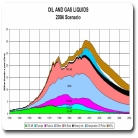
The ‘death of peak oil’ has been much exaggerated, writes Paul Mobbs. Take out high-cost ‘unconventional’ oil and production peaked ten years ago, and even North America’s fracking and tar sands boom has failed to open up new resources both big enough to make good the shortfall, and cheap enough to reward investors. We really do need to be thinking ‘beyond petroleum’.
This is the cleft stick within today’s global energy supply: too little ‘cheap energy’ to enable economic growth, too low a return on capital to allow investment in higher production.
A few weeks ago tremors rocked the world of ‘fracking’ in the USA – though few heard them. The US Energy Information Agency (USEIA) had issued its latest Monthly Drilling Report and the news was not good.
It wasn’t simply the economic failure of fracking (covered in The Ecologist last December) and the subsequent collapse in drilling (covered in January). The news from the USEIA was far more grim for those who understood its deeper meaning. Their press release was very matter-of-fact:
“EIA’s most recent Drilling Productivity Report (DPR) indicates a change in the crude oil production growth patterns in three key oil producing regions… The DPR estimates include the first projected declines in crude oil production in these regions since publication of the DPR began in October 2013.”
In the shale oil producing areas of Eagle Ford, Niobrara, and the Bakken, production had reached a peak and was beginning to decline. What the USEIA is not clear about is whether this is the result of recent economics, or some longer-term trend.
This message was echoed a few weeks later in the Post Carbon Institutes’s new analysis of Marcellus shale production, along with a warning about the future prospects:
“Industry invariably drills its best prospects first, hence the cheapest gas is being exploited now. Infinite faith in technology cannot make up for the realities of geology. These realities are showing up now in the most productive counties.”
In Britain, emulating the USA, we’ve been told that we have to go all out to realise the ‘US shale energy revolution’. It has been sold to the public as a new economic Renaissance … what went wrong?
I have to begin a decade ago …
Ten years ago this month, in May 2005, I published my first book – Energy Beyond Oil (copies are still available from a few bookshops).
Long before $147 oil and the resultant economic crash that followed, the book analysed the evidence for the peaking of various energy resources, and the economic problems which might result from the practical reality of these phenomena.
‘Peak oil’ – or the peaks of other resources such as copper or rare metals – is not equivalent to ‘running out’. The ‘peak’ is the point in time when half the available non-renewable reserve has been extracted – somewhere between a half and two-fifths through the lifetime of the resource.
From that point on it gets progressively harder to maintain production. Supply begins to fall, and both the energy and resources expended to produce a given quantity of the resource begins to increase exponentially over time.
This effect is the result of the interaction of geology and economics:
- Geology gives a natural distribution of resources – with a few large high-quality deposits, a slightly larger number of middling-quality deposits, and a lot of very small low-quality deposits.
- Economics dictates we use the easiest to exploit and cheapest first, which means we use the biggest, easiest to access ones. Over time what’s left gets progressively harder and more expensive to produce as we work through the ‘stock’ of the resource.
The difficulty is that when we’re talking about essential industrial minerals and energy resources, tight supply and rising prices – like the trends operating across the decade of the 2000s – can destabilise the economy.
That’s very bad for business and our resource-consuming lifestyles.
In 2008 the crash came. What was worse, the warning signs related to the problems of finite energy supplies, ecological limits and debt were ignored; their message smothered beneath billions of pounds and trillions of dollars of quantitative easing.
As billions poured into the banks, all the bankers could do in the midst of a recession was to lend to the few large industrial investment projects which were under-way – such as ‘fracking’ in the USA, or the housing market in Britain.
By 2009 I found that people no longer wanted to talk about peak oil and its effects. They could experience that reality every day! As a result, in mid-2009, I shifted my work away from ecological limits into unconventional gas and oil production – aka ‘fracking’ – in Britain.
As with my shift into peak oil back around 2002, it was to become a fortuitous choice.
‘The death of peak oil’
The high oil prices of the 2000s led, by the end of the decade, to a concern about ‘peak oil’ and geopolitics. Once more people were researching and talking about the ecological ‘limits to growth’.
For neoliberal economists the offence of ecological limits is not that it seeks to describe physical trends with reference to historical statistics. The offence is that it attacks the philosophical heart of neoliberalism – because if energy supply cannot grow inexorably then neither can the global economy.
For the economic lobby fracking was a human-made miracle. It answered the criticisms of peak oil theory by alluding to a vast untapped resource of oil and gas that could be brought to the market by new technology and human ingenuity.
From 2011 the pro-fracking lobby began to spin a story of ‘the death of peak oil’. It was promoted by senior oil economists such as Daniel Yergin, and repeated uncritically in the media. When The Oil Drum, a peak oil analysts’ web site, closed in 2013, the pro-fracking economic lobby were ecstatic:
” … today, it is probably safe to say we have slayed ‘peak oil’ once and for all, thanks to the combination new shale oil and gas production techniques and declining fuel use.”
Peak oil defined by the existence of a web site? How absurd!
Peak oil’s not dead, it’s very much alive!
The deeper meaning of the USEIA’s announcement about the downturn in shale oil production is that – for the pro-fracking economic lobby – it represents the return of the monster they thought they’d slain.
In late 2014 – when the first signs of an impending collapse in fracking, and the exaggeration of the available resources came to light – the arguments over the ‘death of peak oil’, which had been quiet for a year, were dragged from the economic lobby’s closet.
Stories of the continued demise of peak oil were spread by the economic media and pro-fracking lobbyist sites.
Around this time I began watching the statistics on oil and gas production closely once more. And with the USEIA’s recent announcement, the reality has become clearer.
The quiet reality of North American oil
Canada produces a lot of conventional and unconventional oil – a large proportion of which gets sent to the USA. This fact is used as a positive message by the tar sands lobby to promote their industry.
What that message misses is that the whole of the continent of North American acts as a single market – in part due to NAFTA.
Mexico used to supply a lot of oil to the USA too, but production in the Cantarell field peaked in 2003 and is now in decline. For the last few years all that those increases in Canadian production have done is to roughly keep pace with the decline of Mexico’s production.
In the USA, yes they’ve produced a lot of new oil and gas from shale. What’s equally significant is that, as a result of the economic downturn, they’re also consuming 10% less oil than they were before the crash.
Within the North American energy system, the impacts of the US economic recession on consumption is every bit as important as all those fracking rigs. In the global context too, the recent Chinese economic slowdown is a major factor in OPEC having the ability to floor the price of oil, thereby curtailing unconventional sources of oil.
The figures are clear – we’ve peaked!
If we take the data from the BP Annual Statistical Review for 2014, global oil supply was higher than in any other previous year. Peak oil averted? – arguably not.
BP’s figures include fracked shale oil, Canadian tar sands, and natural gas liquids from unconventional gas production. As outlined recently by the USEIA and Post Carbon Institute, shale oil is beginning to hit the limits of production. In Canada too, production is being constrained by a lack of new investment due to currently low prices.
The other major factor is that, even amongst conventional producers, all is not rosy. Six nations produce half the worlds oil, three of which have peaked conventional production; 14 produce 75%, six of which are arguably past their conventional oil peak.
For the last decade fracking and tar sands have produced enough oil to influence the global figure – but only by a few percent. Strip out that few percent of unconventional oil (let’s ignore the gas liquids for now) and that small buffer evaporates.
Once shale production falls significantly, or Mexico or another key producer begins to hit the steeper part of their depletion curve, or just a few more oil producers reach their peak, production will fall more steeply – portending yet another global energy, then economic crisis.
Without the small contribution from unconventional oil, global oil production peaked in 2005, and has been on a very gradual downward trajectory ever since. This is the cleft stick within today’s global energy supply: too little ‘cheap energy’ to enable economic growth, too low a return on capital to allow investment in higher production.
In terms of a definition of ‘peak oil’ which encompasses both its economic and geophysical nature – this is a situation which demonstrates the reality of oil’s ecological limits.
Today, doubts over the future of unconventional oil make peak oil a reality.
If prices rise, won’t fracking and tar sands make a comeback?
If supply falls, and prices rise, won’t we just start the whole bandwagon over again? That depends upon the economic conditions the other side of the crisis.
During the early 2000s ‘gas fracking’ in the US arose under the lax credit arrangements which existed in the USA before the 2007/8 economic crash. After the 2008/9 crash most of those gas rigs were withdrawn and re-directed to oil production. What has fuelled ‘oil fracking’ since 2009 has been near-zero interest rates and the ‘cheap’ money created by quantitative easing.
Also, given what we know about unconventional fossil fuels today – their impacts upon the climate, and human health, and their unwholesome relationship with political power and academia – the public are in a far better position to resist any attempt to resurrect the industry.
More significantly, any meaningful climate deal in Paris in December will have to put limits on global fossil fuel production. As the dirtiest fossil fuels, fracking and tar sands would have to be on the list of what we must ‘keep in the ground’.
The Age of Oil is winding down – it has been doing so since 2005. In a greenhouse gas constrained world, where the swift adaptation of our food system to climate change is arguably a higher priority than fuelling private cars or passenger air travel, there is no room for unconventional fossil fuels.
Of course the neoliberal economists who chuckled at the ‘death of peak oil’ will scream with rage! Peak oil hasn’t just refused to die; it’s alive and well and perturbing their economic models once more.
That’s their own ideological problem. They will have to adapt their theories in the face of peak oil’s statistical reality, or stand aside and allow ecological economists – who do internalise these factors – to begin guiding society on a new path.
That’s the real implication of peak oil.
The data on this and other ecological issues indicates that the core of neoliberal theory – of continual growth, technological progress and monetary wealth creation – is fatally flawed.
Just as energy and industrial planners will inevitably need to find solutions beyond oil, governments will need to go back to the drawing board and find new model for the political economy.
20 Comments on "‘Beyond petroleum’ – fracking’s collapse heralds the arrival of peak oil"
dave thompson on Wed, 6th May 2015 12:37 pm
Nice summery.
rockman on Wed, 6th May 2015 1:08 pm
Dave – True but I would still change the phrase “…fracking’s collapse heralds the arrival of peak oil” to “fracking’s boom heralds the arrival of peak oil”. I suppose it just depends on how one views the Peak Oil Dynamic. But easy for me since my first mentor in the oil patch clearly explained the PO world I was entering in 1975. All that has happened since then, including events today, fit the tale he spun 40 years ago. The dates might not have been exact but the reality has been spot on.
dave thompson on Wed, 6th May 2015 1:12 pm
I hear ya Rock. One way or another we are living in “interesting times”.
apneaman on Wed, 6th May 2015 1:13 pm
Lol. winds of change? or do they just want better management? Won’t change anything.
///////////////////////////////////////
New Democrats win Alberta election as Canada’s oil sands dump conservatives
Progressive Conservative party kicked out after 44 years as leftwingers take charge of province that is single biggest exporter of oil to the US
http://www.theguardian.com/world/2015/may/06/new-democrats-win-alberta-election-as-canadas-oil-sands-dump-conservatives
antaris on Wed, 6th May 2015 2:28 pm
Poor dumb flatlanders don’t realize what they have done. Alberta is in for 4 years of pain now. For you Yanks who think Obama is a lefty, he is actually in the middle. Socialism is the true left and NDP is a short way of saying it.
nony on Wed, 6th May 2015 2:50 pm
Franking kicked peakers ass. How can you say it is all old tech and geology and then claim it’s an unexpected development
Ps cornies always said we would find new sources. Peakers said no. Cornies were right.
apneaman on Wed, 6th May 2015 2:54 pm
antaris, if you pay careful attention to Dave Cohen’s accurate description of the 7.2 billion inhabitants of flatland it’s clear that, at this point, politics are just rearranging deck chairs on a world in Titanic overshoot.
http://www.declineoftheempire.com/2014/10/adventures-in-flatland.html
Davy on Wed, 6th May 2015 3:05 pm
Wonder boy what are the next sources now that fracking is a dud?
apneaman on Wed, 6th May 2015 3:06 pm
nony, what’s unexpected (not by me) is the increasingly reckless lengths that they/we will go to for another decade or two of dollar store shopping. It’s like an athlete who ruins his body with roids for a few years of glory. You and your corny friends need to ignore all the other costs -short & long, environmental & social. Your language makes it clear that this is merely a game for you. You keep score with barrel counts as if the prove your worldview, yet ignore the mounting consequences to real people. You actually believe there are going to be winners?
California’s Doomsday Water Cycle
http://www.bloombergview.com/articles/2015-04-29/carbon-energy-production-shrinks-california-water-supplies
shallow sand on Wed, 6th May 2015 3:13 pm
Issue going forward may be price instability. Assuming OPEC isn’t going to try to control oil prices through cuts, we may see a price zig zag in the future.
This will benefit Gulf OPEC, who have the lowest costs, to the detriment of higher cost US and Canadian producers, who could get whacked in the event they have too much debt during a downturn.
Also, at $61, WTI is still low compared to 2010-2014. I assume costs have been cut in all major US basin’s, but $61 WTI is still not enough, in my opinion, to see a ramp up in US production like was seen from 2010-2014. We may see completions resume and begin to catch up with drilling, though.
I still say the “shale oil” guys have some issues. They really need to pay down some debt, and IMO need prices another $20 or so higher to start doing that. Do not know if 80+ is around the corner, seems like it should not be, but I have long given up on trying to predict oil prices.
$61 does take the edge off. Huge difference from $43-48 if you are just trying to pay operating each month.
apneaman on Wed, 6th May 2015 3:13 pm
Let it burn – we needs dat water for fracking.
/////////////////////////////////////////
California drought’s devastating toll: 12 million trees killed in one year
Water scarcity is harming the state’s forests, aerial surveys reveal
Lindsay Abrams
http://www.salon.com/2015/05/04/california_droughts_devastating_toll_12_million_trees_killed_in_one_year/
antaris on Wed, 6th May 2015 3:14 pm
Ap I agree we are headed towards the iceberg. Getting dizzy from going in circles and spinning wheels will be unpleasant for Albertans before the crash though.
apneaman on Wed, 6th May 2015 3:39 pm
I was born in Calgary and have built some of the heavy energy infrastructure in the province and BC too. As the money rolled in it was matched by stupidity and arrogance. Not much swagger and lots of panic now – a number of my cousins are eating the humble pie. Same as it ever was. One of my big short term fears is a major tailings pond failure at the tar sands. When budgets/profits get cut, inspection and maintenance tend to suffer. A major failure would be a disaster on every level.
Nony on Wed, 6th May 2015 6:51 pm
Ape: I think it’s more the opposite. You gotta bunch of obstructions. No ANWAR, no KXL, no MD, no NY, no VACAPES. If we got the tree huggers to back off, we could really fill the SUVs.
apneaman on Wed, 6th May 2015 7:02 pm
What are those citizens obstructing exactly?
apneaman on Wed, 6th May 2015 7:42 pm
Nony speaks stock symbols…….for the symbol minded.
Davy on Wed, 6th May 2015 8:20 pm
Wonder Boy, don’t you think there should be limits on development of some kind? You are balls to the walls development minded. Do you not have any balance whatsoever? I have said many times we need to consider every and any liquid fuel sources but in a condition of crisis mitigation and adjustment. Wanton destruction of the environment for foolish ends is a sin against nature. Those who participate in this rape should be punished. Instead we are all punished. You are really a poor example of a human being. I hope you come around one day in a conversion but now you stink.
Nony on Wed, 6th May 2015 8:22 pm
Fracking is a mile underground and no danger to the water table. but the donk yanks in MD and NY banned it. It’s not about raping the environment, but about insane hurdles that stop everything for the smallest reasons.
apneaman on Wed, 6th May 2015 8:51 pm
Nony how do you know what happens in the field?
apneaman on Wed, 6th May 2015 9:05 pm
Nony says “that stop everything” Everything? Everyday you go on and on about how much massive extraction has taken place because of the Shale miracle, and now your claiming a small handful of citizen environmentalists has caused “insane hurdles that stop everything” Which one is it Nony, because it can’t be both.