
Peak Oil is You

Donate Bitcoins ;-) or Paypal :-)


Page added on April 14, 2015

The Peak Oil Crisis: Have We Reached the Peak
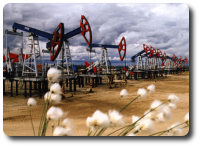
Events never play out the way one expects. It is now over ten years since the modern concept of peak oil arose among the rapid oil price increases that took place in the mid-2000’s. Instead of an oil shortage that many expected we would be seeing by now, the world is in the midst of an oil glut (albeit temporary) with crude prices down some 50 percent; oil stocks building steadily; and the oil drilling industry collapsing around us as oil is selling for less than it costs to produce. For most, peak oil with its specter of unaffordable gasoline prices and shortages is nearly forgotten as we are incessantly told that because of its technical ingenuity, America is on its way to an energy independence that will last for decades.
Let’s remind ourselves what peak oil means. It is the time when global oil production rises to a peak so that forever after less oil is extracted from the earth in whatever time period one would like to select. Most know that the concept of oil has gotten messier these days as people lump in all sorts of liquid hydrocarbons, such as biofuels and natural gas liquid. While these additional liquid hydrocarbons have many uses, mainly in making petrochemicals, for the most part they do not make the transportation fuels that move our cars, trucks, ships, and airplanes.
By now we have all heard of hydraulic fracking and the shale oil revolution which has increased America’s oil production by more than 4 million barrels a day in the last five years and incidentally created the current oil glut. What most have not heard, however, is that outside of the U.S. and Canada, the world’s oil production has remained stagnant during the last few years. Nearly all the growth in global oil production since 2007 has come from the astonishing growth in U.S. shale oil.
Now the modern shale oil industry has some interesting characteristics that makes it strikingly different from your grandfathers’ oil industry. Contrary to popular perception, the U.S. shale oil industry came into existence because the price of oil climbed over $100 a barrel, and because the federal government started printing so much money that even shale oil companies that were losing money could raise all they needed. The owners made money; the workers made money; the oil services industry made money; local economies made money; but the people financing the industry, partly the taxpayers, are destined to lose as shale oil and gas costs more to produce than it is selling for.
The end of the great US shale oil boom started last June when too much oil and a slowdown in the global economy combined to lower oil prices by 50 percent or more. Oil that was marginally profitable, or could be made to appear so, fell to a level that made it clearly a losing proposition. Investment in new exploration and drilling for all kinds of oil dropped quickly so that the International Energy Agency estimates that the oil industries capital expenditures will be down by $100 billion in 2015 from last year.
To keep production of the rapidly depleting shale oil level requires that hundreds of new wells be drilled every month. These new wells are no longer being drilled in sufficient quantity so that US production has already started to decline. It will, however be many months before we know where production stabilizes.
If U.S. shale oil production, which has been the only source of oil that has continued to grow in the last five years, starts to fall, it suggests that the world is or is close to the all-time peak of world oil production.
The U.S. Department of Energy, however, is currently projecting that U.S. oil production will fall in the next six months, but will recover next winter and continue to grow to new highs. Implied in this projection is that oil prices will rise again – perhaps not to $100 a barrel, but to a level high enough to entice the hundreds of U.S. rigs that have been taken offline back to work drilling those hundreds of new wells that would be required to push production above current levels. It mostly depends on oil prices, but there is one other factor that enters the equation. Shale oil fields have “sweet spots” where enough oil comes out of nearly every newly drilled well to sort of pay for the high costs of drilling and fracking the new wells – most of the other shale drilling sites don’t do this. For now drilling in shale oil fields is concentrating on the sweet spots where new wells can at least give the impression they will make money – or at least when prices go way up.
Places to drill in the sweet spots are being used up quickly and recent analysis shows that initial productivity is dropping in the more productive parts of the shale fields too. The shale oil boom in the U.S. may not have much longer to run even if prices rebound substantially in the next year or so.
There is more to the peaking of oil production than simply U.S. shale oil however. Middle Eastern production is currently down about 2.5 million b/d due to geopolitical problems in Libya, Syria, Yemen, Sudan, and Iran. Only Iran seems to offer much hope of getting out of its sanction problems in the near term, thereby possibly adding up to another 1 million b/d to the world’s oil supply. Even this seems problematic at the minute, however.
When all the myriad factors bearing on the peaking of world oil production are weighed together, it still is impossible to reach a conclusion just yet. It should be noted, however, that if U.S. oil production declines significantly this year and prices remain relatively low, there is a chance that world has seen the all time high of oil production. It still will be many years after the fact before the peak whenever it comes can be confirmed for real.
11 Comments on "The Peak Oil Crisis: Have We Reached the Peak"
Plantagenet on Tue, 14th Apr 2015 8:09 pm
It is possible that 2015 will be the peak. Its also possible that it won’t be.
It seems unlikely to me that we’ll reach the peak in the middle of an oil glut, when oil supply is markedly exceeding oil demand. IMHO the global oil production peak should be marked by shortages and high oil prices as demand outstrips supply.
ronpatterson on Tue, 14th Apr 2015 9:12 pm
Peak oil will happen at point in time when more oil is produced than at any other time in history of the world. It will be far more likely that this period in history will be regarded as a time of an oil glut rather than an oil shortage.
In the past we have had lots of oil peaks. Every peak we have ever had has been followed by a price collapse due to over production. There is absolutely no reason to believe the final peak will be any different.
penury on Tue, 14th Apr 2015 9:59 pm
Peak oil or peak affordable oil, Is there a difference? Wages for the average worker are falling, prices for necessary items are rising, taxes will be raised, there will be oil for those who can afford it, but a lot of manufacturing will be abandoned, no sales will mean no production, no production will mean no workers, no workers mean no pay checks, all this means declining demand for oil, hence peak oil.
Speculawyer on Tue, 14th Apr 2015 11:24 pm
“Peak oil or peak affordable oil, Is there a difference?”
No, there is no difference. But the cornucopians like to say there is. And they like to say “Well, there could be peak *demand* but not peak oil.” But they are the same thing.
There will always be some oil left underground that could be found given enough money to look for it. Thus peak oil is always about peak demand.
Davy on Wed, 15th Apr 2015 6:15 am
However you want to call a peak a peak all peaks matter. Peak supply, peak demand, peak net energy, peak affordable, and peak production. My point is all peaks even peak demand are limits being reached and signal diminishing return and stagnation of growth. I say signal because all we can know is we are in the vicinity of limits, diminishing returns, and peak oil dynamics.
If you look at the global system as complex, interconnected, and networked you then understand it is a dynamic system that will behave as other systems do. All system react to less growth. Natural systems handle this very well because of a resilience built up naturally over thousands of years by thousands of species in symbiotic relationships.
Our system cannot handle less. We have a brittle production resilience built by efficiency and performance. IOW our system is like a temperamental race car running on the edge of the performance envelope. The cornucopians will like to tell us that we may be a peak demand but this is because our economy is decoupling from energy. We are still growing just more efficiently. This is hopium propaganda that is only supported by manipulated studies.
The basics of real production are energy driven. As complexity and progress increases energy intensity must increase. Any efficiency resulting in saved energy is quickly used up in other areas of the economy along with a growing population. We are also deceiving ourselves with the volumetric of oil and the lumping together of different oils as if all oil provides a similar energy return. Our system cannot degrowth. If BAU bounces on a bumpy plateau or descends it begins to decay.
Our system is a JIT production, distribution and confidence driven system with elaborate games of liquidity. This has been sustainable and reliant only through growth. We are now clearly bumping up against limits so we should expect entropic decay to start entering this equation. The timing and the resulting effects of this decay will only be seen in the review mirror. The vast global world with thousands of locals will react in a complex way to this descent or stagnation.
The oil sector and the economy are very closely linked. Any supply and demand dysfunction at a point of a bumpy plateau or descent points to decay. At this point in time of the approach of limits and diminishing returns both demand and oil supply are more sensitive to dysfunction. We are at that boundary systematically where any perturbation is dangerous for stability.
A perturbation is quite capable of breaking BAU systematically to a lower level our economic activity with a corresponding supply potential break. IOW a vicious cycle may have started just recently with the end of effective central bank monitarization and rate repression with the corresponding final supply increase from shales.
We now see an economy with demand likely dropping and a corresponding supply potential being shaved. Our current excess supply from this production boom period is likely a signal of demand and supply destruction. This may be that final peak of all peaks that will be the beginning of the vicious cycle down of the economy in economic demand and energy supply destruction.
rockman on Wed, 15th Apr 2015 7:00 am
And once again we hear that almost childlike obsession with PO dates. It amazes me that anyone can look back at the last 25 years and see the hundreds of thousands of lives lost and $trillion spent trying to control oil producing regions and not see that is a manifestation of PO. Just as the high oil prices that caused the US shales to boom as they also hindered US economic recovery.
And the “current excess supply” will signal a demand destruction??? That’s such a bizarre statement I don’t even know how to respond.
To borrow a political slogan from the Clinton years: “It’s the POD, stupid”. LOL
BobInget on Wed, 15th Apr 2015 10:14 am
EIA trends (RePost)
Oil supply has resumed its decline last week to 9.38m barrels from 9.40m barrels the week before or a decline of 20K barrels. The YoY growth is supply however remains strong at 14.2% or 1.17m increase to 9.39m barrels. Total petroleum demand declined slightly from last week to 18.99m barrels from 19.12m barrels in the week prior, however the YoY 4 weeks average demand is up by a solid 4.3% or a 784K barrels increase to 19.07m barrels from 18.28m barrels last year. Core petroleum demand (Gasoline, Kerosene and distillates) is up by 330K barrels from 14.08m barrels to 14.41m barrels or a 2.3% increase. Refinery input was up 283K barrels thus increasing total refinery utilization by 3.3% in comparison to last year. Crude imports meanwhile collapsed week over week by 1.07m barrels, however imports are in line with their levels in 2014.
http://ir.eia.gov/wpsr/overview.pdf
This EIA report is a complete validation of the bull thesis of declining US supply, strong US demand and a reduction in inventory growth due to increased refinery input. The reduction in weekly imports played a role but this is only due to imports returning to their normal range in 2014. As long as WTI remains under $60, these bullish trends will persist and may accelerate in the coming weeks as additional domestic supplies are removed due to the rig declines effect being increasingly felt, demand will likely ramp up as weather improves and US refineries will continue to increase their crude processing as they return from maintenance. I have held the view since February that WTI will cross $55 in Q2, today we have hit this modest goal. A new trading range between $55 and $65 is likely for the rest of the quarter.
Regards,
Nawar
BobInget on Wed, 15th Apr 2015 10:35 am
I hold a more ‘bullish’ view.
Due to greatly deteriorating Middle East and
North African war situations;
Putting aside Israeli wet dreams of bombing
Iran, Syria’s so called ‘Proxy War’ metastasized into mano a mano, international, unacknowledged, undeclared, Oil War.
Historians will mark this year as one third of the way through a ruinous thirty year war.
Saudi Arabia, with a US green light, went steps too far. Eventually, we all ‘pay the price’ far higher oil prices, shortages, leading to world wide depression.
Don on Wed, 15th Apr 2015 3:43 pm
Boy I wish I had a nickel for every time I heard we hit peak oil again. After 35 years in the industry that would be a lot of nickels. The one thing that is always ignored when making these predictions is the changing technology that takes possible reserves and converts them to proven reserves.
The shale boom hasn’t ended same as the once dead gulf of mexico is still alive and well.
Man will never run out of oil. Eventually something will come along to replace it that makes better economic sense. The stone age didn’t end because we ran out of rocks.
Nony on Wed, 15th Apr 2015 4:47 pm
I have always agree with Rock that price is more important than volume. It was a powerful argument against the cornies to point to the 100+ prices. However, failure to admit that “POD” took a 50% haircut is dishonest.
ERRATA on Thu, 16th Apr 2015 4:24 am
Peak Oil, inevitably come.
That’s what he said: [Down on Wed, Apr 15th 2015 3:43 pm]
hear / read many times.
But, it’s only religion /
cornucopians anthem.