
Peak Oil is You

Donate Bitcoins ;-) or Paypal :-)


Page added on April 2, 2015

Goldman Sachs: US needs to cut, not OPEC
The onus for restoring the oil price back to an equilibrium lies squarely on the shoulders of countries like the U.S. and not on the Organization of the Petroleum Exporting Countries (OPEC), a top Goldman Sachs analyst told CNBC.
Michele Della Vigna, head of European energy research at Goldman Sachs, said non-OPEC oil producers had created the oversupply in the market which has weighed on prices.
“I think the market has realized that where we need to find the adjustment is onshore U.S. and that’s where the market is focused,” he told CNBC Thursday.
“The adjustment is starting to happen there. Clearly an OPEC cut would help getting to the equilibrium faster, but at the end of the day, it is non-OPEC that needs to sort out the oversupply that it has created.”
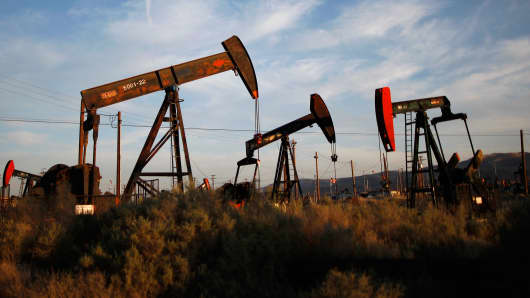
Weak global demand and booming U.S. shale oil production are seen as two key reasons behind oil’s price plunge, which has fallen around 50 percent since mid-June last year. OPEC’s reluctance to cut its output at its last meeting in November has also weighed on the commodity.
OPEC, a group of 12 major oil producers which accounts for 40 percent of the world’s crude oil output, has continually iterated that the organization has no intention to meet again until June. But Della Vigna said he believes a cut in production at this meeting is even less likely than at November’s talks.
OPEC countries are able to extract oil from the ground at a cheaper cost than U.S. shale firms, and there has been speculation that the two industries could be playing a “game of chicken” before cutting back to ease oversupply.
So far, the U.S. has bared the brunt of the cut in production, with data from the EIA (Energy Information Administration) Wednesday showing a fall in the amount of rigs that are in operation and a drop in U.S. output for the first time since late December.
This helped snap a three-day losing streak for oil, with gains of around $2. But the commodity edged lower again on Thursday morning, with West Texas Intermediate (WTI) futures falling 0.13 percent to 49.95 a barrel by 9:00 a.m. London time, and Brent crude futures falling 0.2 percent to $56.91 a barrel.
Negotiations over Iran’s nuclear deal have also dented the price of oil over recent days, as talks overran a self-imposed deadline.
Any positive resolution is seen as negative for the commodity, as the lifting of sanctions could see Iran release yet more oil into an already oversupplied market. Tensions in Yemen have also complicated matters, with many analysts telling CNBC that violence in the Middle Eastern country is essentially a “proxy war” between Iran and Saudi Arabia.
U.S. Secretary of State John Kerry has extended his stay in Lausanne, Switzerland, where the Iran talks are taking place, but White House Press Secretary Josh Earnest stated late Wednesday that the U.S. would “walk away” if it sensed that the talks were stalling.
Meanwhile, Iranian Foreign Minister Mohammad, Javad Zarif, told reporters Wednesday that there are obvious problems that have prevented a solution so far, but he added that he hoped his international colleagues would recognize that this was a “unique opportunity that will not be repeated.”
Goldman’s Della Vigna reiterated his call for Brent to find an “equilibrium” of $70 by year-end, but also said that the near-term risk is for the commodity to fall to $40 a barrel during the summer months.
He added that a “super spike” to above $100 a barrel was becoming increasingly unlikely and said that $25 a barrel for oil was also not a likely scenario.
Amrita Sen, a chief oil analyst at Energy Aspects, told CNBC Wednesday oil prices were unlikely to fall much lower than their current levels. She argued that demand for the commodity was “phenomenal” and was absorbing a lot of the oil that was being produced.
19 Comments on "Goldman Sachs: US needs to cut, not OPEC"
Davy on Thu, 2nd Apr 2015 6:44 am
GS speaking is always suspect because of their market making. Speak into the market to short or long it is well know from them. They are the biggest of the parasites in the global game of wealth transfer and corruption. They have infiltrated most major powers politically in the west some say China too. This particular article has some good talking point for the normally suspect legalized thieves.
rockman on Thu, 2nd Apr 2015 6:48 am
FYI for the folks at Goldman: oil prices and production volumes are at equilibrium and always have been and always will be. The producers produce the volume they chose to sell and the buyer buy the volume they wish to purchase at the price they are willing to pay. And that’s equilibrium in the real world. And while that might not be the price that Goldman needs to make a profit on its positions that isn’t the basis for the definition of equilibrium.
It ain’t all about you, Mr. Goldman. LOL
Mark Ziegler on Thu, 2nd Apr 2015 7:58 am
Except the storage tanks are near full.
viewcrafters
shortonoil on Thu, 2nd Apr 2015 9:08 am
As we have stated repeatedly, the oil age will not end with mile long gas lines, or $100 per gallon gasoline. The oil age will end when producers can no longer make money producing oil. This will occur when the consumer can no longer pay a price that is high enough to cover the cost of producing it. The value of a barrel of oil to the consumer is a matter of the amount of work that it can provide. That has been going down since the first barrel was extracted in 1859 by Colonel Drake. Today a barrel of oil can only provide 23% of the work that it did when the Colonel first began hauling oil out of his 63 foot well. That effect is called depletion.
Today the ability of a barrel of oil to provide work has fallen to a level where a lot of the world’s petroleum supply is no longer affordable to the consumer. The cost to produce it has been going up, and its value has been going down. The higher production cost oils have become too expensive for the consumer to buy. Massive debt formation in recent years has been keeping these zombie operations in business. That is now coming back with a vengeance:
http://www.zerohedge.com/news/2015-04-02/revolver-raid-arrives-wave-shale-bankruptcies-about-be-unleashed
http://www.zerohedge.com/news/2015-04-02/china-becomes-global-lender-last-resort-bailout-worlds-most-indebted-oil-company
What the consumer can afford to pay will keep going down, depletion does not take a vacation.
http://www.thehillsgroup.org/depletion2_022.htm
What it will cost the producers to produce it will keep going up.
As the two (producer cost, and consumer affordability) move further apart, more and more producers will follow the shale operations into oblivion. Attempting to count the barrels that might become available is a fools errand. Oil that no one can afford to buy, will stay were nature put it.
http://www.thehillsgroup.org
Chris Hill on Thu, 2nd Apr 2015 10:10 am
Yes, it takes more oil to get oil out of the ground. On the other hand, we’ve learned how to use oil more efficiently. I really can’t say which side of the equation is moving faster.
marmico on Thu, 2nd Apr 2015 10:54 am
I really can’t say which side of the equation is moving faster.
Of course you can. The global standard of living (as measured by GDP)is rising faster than fossil fuel consumption.
Take the U.S as an example. Oil consumption has been essentially flat since 1980 but GDP has more than doubled (obviously less per capita). It’s called energy intensity.
Primary Energy Consumption by Source (in quads).
Nony on Thu, 2nd Apr 2015 11:06 am
Price will come from supply and demand equilibrium. The higher priced producers will gradually exit the market. This is why futures curve is in contango. This is just how commodity markets work. No volition needed. It will just happen.
And the storage tank stuff is totally overworked. That’s more a reaction to price curve over time versus a cause of it. Price is climbing slowly now, which indicates the glut is being worked off.
rockman on Thu, 2nd Apr 2015 11:07 am
“Except the storage tanks are near full”. FYI: about 50% of the 435 million bbl US oil storage capacity sits empty today. And within a month or two the refiners will start pulling more oil from storage to build for the summer driving demand…which appears to have already started last December. If the trend follows historical trends US oil storage will begin seeing a net decline soon.
“I really can’t say which side of the equation is moving faster.” EROEI has just become less relevant with respect to oil production rate then it was just 6 months ago. The EROEI has not changed at all in the last few months. But the price of oil has and that has already shut down more about half the rigs drilling for oil. IOW the 4,000+ shale wells that won’t get drilled this year due to low oil prices would have had the same EROEI as 4,000 shale wells that were drilled last year.
EROEI will never directly determine what gets drilled or not…the economic analysis will make that call.
Nony on Thu, 2nd Apr 2015 11:19 am
Cushing storage prices have gone from a dime per barrel per month to a dollar per barrel per month. So the storage crunch is real. But big deal. It just means price gets depressed a dollar a month for a few months on the forward curve. It’s a reaction, not a cause.
There is pressure in the mid, downstream to have storage capacity (e.g. people waiting on API 653 inspections). But it’s not like people are building new tanks (40 year plus lifetime) for a few months of extra storage opportunity.
Net, net: there are some real dynamics going on in storage, but not either the OMFG we are running out NOR the “lots of empty space sitting available with people having their thumb up their butt instead of making free money doing contango arbitrage”.
Plantagenet on Thu, 2nd Apr 2015 11:26 am
Goldman Sachs is just telling the truth. US oil production will adjust to the oil glut by going down.
Its already happening—US rig counts are way down.
Nony on Thu, 2nd Apr 2015 11:38 am
Planty, I hate the term “glut”, but for all intensive purposes, that’s what we had/have in WTI. You see it more there than in Brent because of the export restriction. See the big forwards curve contango, depressed split. Even the higher prices for per barrel storage. and a lot of pressure at refineries, terminals, etc. to delay or accelerate API 653 tank outages. Whole thing will be fixed in a few months though as the contracts get worked out and the marginal barrels exit the market.
marmico on Thu, 2nd Apr 2015 11:39 am
FYI: about 50% of the 435 million bbl US oil storage capacity sits empty today
Nobody knows. Cushing is in uncharted storage territory. Nameplate storage capacity is not the same as physical capacity storage.
And within a month or two the refiners will start pulling more oil from storage to build for the summer driving demand
No. Seasonal summer refinery demand may stop storage build but it won’t decrease storage inventory. Storage is 25% above last years level. Stocks and flows.
The only way storage inventory declines is if future flows to storage decline relative to last year which is a function of domestic production and net imports.
rockman on Thu, 2nd Apr 2015 1:00 pm
“Seasonal summer refinery demand may stop storage build but it won’t decrease storage inventory.” As I point out below; utter bullsh*t. But your choice: believe our friend marmco or the folks at Wood Mackenzie:
Just more support for the Rockman’s assertions over the last few weeks that the “OMG we’re running out of oil storage” hype and using it as an explanation for future lower oil prices was complete bullsh*t:
Wood Mackenzie: U.S. Crude Stocks Set to Decline: US crude oil stocks have grown over 30 million barrels each month this year, leading to a series of record highs. Even so, Wood Mackenzie’s latest outlook estimates that the US has about 200 million barrels of unused crude storage capacity. Wood Mackenzie explains: “We do not expect the US to run out of crude storage. On the contrary, we anticipate that the uptick in refinery crude runs and exports will exceed the growth in supply eventually leading to stock withdrawals.”
Wood Mackenzie forecasts refinery crude runs will rise significantly in April as refineries exit seasonal maintenance and gear up for the summer driving season. “Refinery crude runs could increase over 1.7 million bbls/d from the spring lows to the summer high and set new records. The ramp up in crude runs is expected to be the largest factor impacting the trajectory of US crude stocks. As US refineries increase their throughputs, we anticipate they will also increase their imports of crude oil from the March 2015 levels”.
{So not only are we NOT going to run out of storage we’ll need to start increasing imports to cover the increase in demand by the refineries.}
The low crude oil prices have contributed to slower growth of US crude oil supply. Wood Mackenzie expects this growth will be counterbalanced by increasing exports of crude oil and minimally processed condensate. These exports are supported by a wider Brent-WTI differential. Although the US has ample crude storage capacity available, Cushing is now about 80% full. The April 2015 startup of the 250,000 b/d Cactus pipeline from the Permian into the Gulf Coast is expected to reduce pressure on Cushing. This pipeline bypasses Cushing, and moves light crude to the Gulf Coast refining and storage hub. Rising Cushing crude stocks could also reach the Gulf Coast by accessing the 1.55 million b/d pipelines connecting the two regions.
Wood Mackenzie’s outlook reiterates that despite the rise in crude oil stocks this year, US storage is not close to reaching capacity. Record high crude stocks will be pulled down this summer as US refinery crude runs rise over 1.5 million barrels per day.
{Got that: they expect storage to have 45 MILLION BBLS OF OIL PER MONTH to be sucked out of storage as the summer fuel demand kicks in. A demand that is expected to reach near term record levels thanks to the decline of oil prices. OK sheeple…time to reverse the direction of the stampede and start running towards the other cliff. LOL. And folks predicting the future price of oil might want to go over their calculus and see if they still like the assumptions they were making}
Plantagenet on Thu, 2nd Apr 2015 1:03 pm
@ Nony
1. It doesn’t matter if you like the term “glut” or not. The word glut has a specific meaning in economics and we are clearly in an oil glut.
2. The phrase isn’t “for all intensive purposes”—its for ALL INTENTS AND PURPOSES.
Cheers!
PS—good to see you back with your interesting viewpoints.
shortonoil on Thu, 2nd Apr 2015 1:57 pm
Yes, it takes more oil to get oil out of the ground. On the other hand, we’ve learned how to use oil more efficiently. I really can’t say which side of the equation is moving faster.
At least a third of the world’s producers are now operating at a price that is below their cost of production, and there is no relief in sight. It doesn’t make any difference how efficiently the end user uses oil if the producer can not afford to produce it. Anyway, the efficiency of use by the end consumer has not improved very much in the last 85 years. The average vehicle in the US fleet is now getting 24.3 mpg, the Model A Ford got 23 in 1930.
Makati1 on Thu, 2nd Apr 2015 8:34 pm
“Que sera, sera
Whatever will be, will be
The future’s not ours to see
Que sera, sera
What will be, will be”
Prediction of the future is just a guess. You can only play the odds. Most of us here see the direction the world is heading in and it ain’t pretty or positive.
Delusion is obvious to those who believe that REAL GDP is rising. It’s not. Those numbers are fake/lies and have been for years and will only get worse.
NET energy has been falling for at least as long, but you rarely get NET numbers in the news, only barrels of ‘watered down’ liquids or some measure of energy that only engineers or physicists would understand.
Bandits on Thu, 2nd Apr 2015 8:54 pm
If I am growing big, fat, sour, expensive, thick skinned oranges with little juice, which nobody will purchase then store them, (US shale oil) and at the same time eat sweet juicy imported oranges, (imported cheap oil) is that a glut of oil……or oranges, or an idiot running around screaming glut, glut, glut to convince himself that his crap expensive oranges are not purchased due to a fucking glut.
rockman on Fri, 3rd Apr 2015 7:02 am
“…which nobody will purchase then store them…”. FYI: as of last January the US was exporting that oil “nobody will purchase” at the rate of 160 million bbls per year. The US is also exporting the refined products made from 1 BILLON BBLS PER YEAR of that oil “nobody will purchase.” And since the US refineries only crack oil with gravities between 29 and 32 API they must blend our heavy oil imports with that light oil “nobody will purchase”. Thanks to the shale production the US has significantly reduced its import of light oil.
And that 1 BILLION BBLS of Canadian oil sands exported yearly to the US consists of 200+ million bbls of that light oil (most of which is imported from the US) “nobody will purchase”. It’s required to be able to flow the Canadian heavy.
And the obvious that so many are missing: much of the oil that “nobody will purchase” is oil that WAS PURCHASED to specifically go to storage. The US is on the verge of moving into the ANNUAL storage drawdown phase as the refiners begin to ramp up production of motor fuels for the summer. The demand for oil at that time normally exceeds the combined capacity of domestic production and import capability. And this year it appears the summer surge in gasoline demand began last December. So shortly the US will suffer a shortage of that oil “nobody will purchase” and begin drawing around 40+ million bbls of oil per month from storage in order to keep the refineries supplied with that production “nobody will purchase”.
Nony on Fri, 3rd Apr 2015 8:43 am
There is an 8 dollar split between Brent and WTI (WTI cheaper), when Brent has traditionally been a little under a dollar cheaper. The grades are almost identical. (WTI slightly lighter, sweeter). Clearly the export restriction does have an impact. Just look at the $$!
Rock is citing some numbers that on a percentage basis are tiny. And exports are basically restricted to Canada, plus limited swaps with Mexico and I believe one cargo to SK (ever!). All of this activity controlled and approved by US export control.
I see crude cargos bought and to say that WTI is not impacted by the export restriction is wrong. Just self evidently by the dollars and to every trader and refiner in the world…butt wrong.
WTI-Brent spread. Duh, duh, duh.
http://oilprice.com/Energy/Oil-Prices/The-Reemergence-Of-The-WTIBrent-Spread.html
“For several years, WTI traded at a discount to Brent – sometimes by $5 to $10 per barrel – owing to the rapid increase in oil production from the United States where the WTI marker is based. WITH DRILLERS UNABLE TO EXPORT their crude, higher supplies tended to somewhat saturate refiners’ ability to process crude.”