
Peak Oil is You

Donate Bitcoins ;-) or Paypal :-)


Page added on February 3, 2015

Peak Affordable Oil
It is quite obvious that high oil prices in the last 3-4 years.
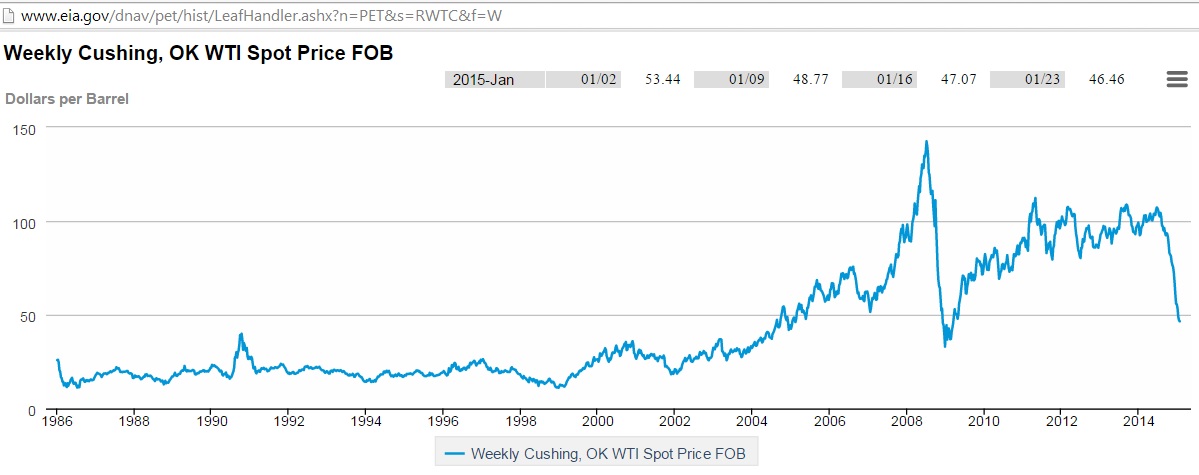
Fig 1: WTI spot prices to 23/1/2015
have reduced demand for oil, as shown in this IEA graph for OECD countries:
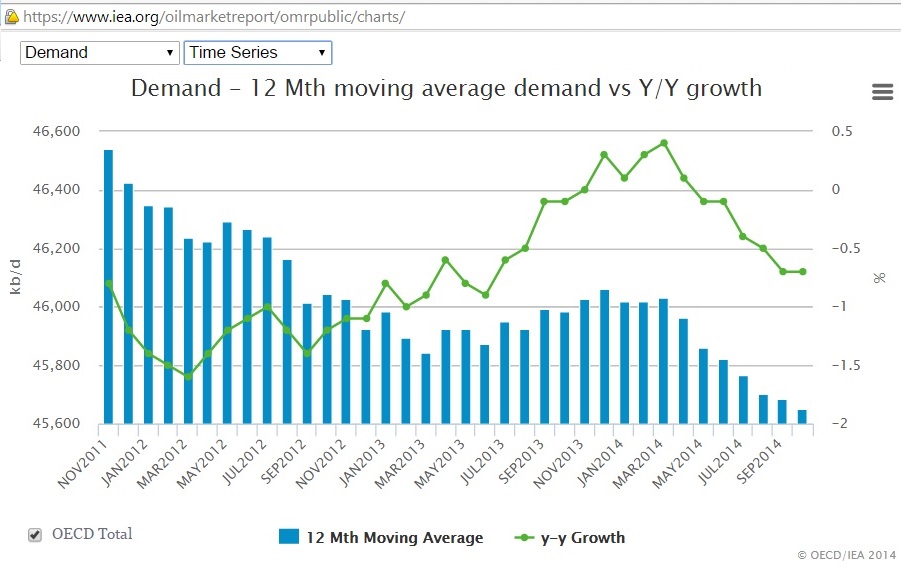
Fig 2: Oil demand in OECD countries Oct 2011 – Sep 2014
So which oil is affordable? Let’s use a graph of the Monetary Policy Report (January 2015) of the Bank of Canada (which would be favourable to Canadian tar sands).
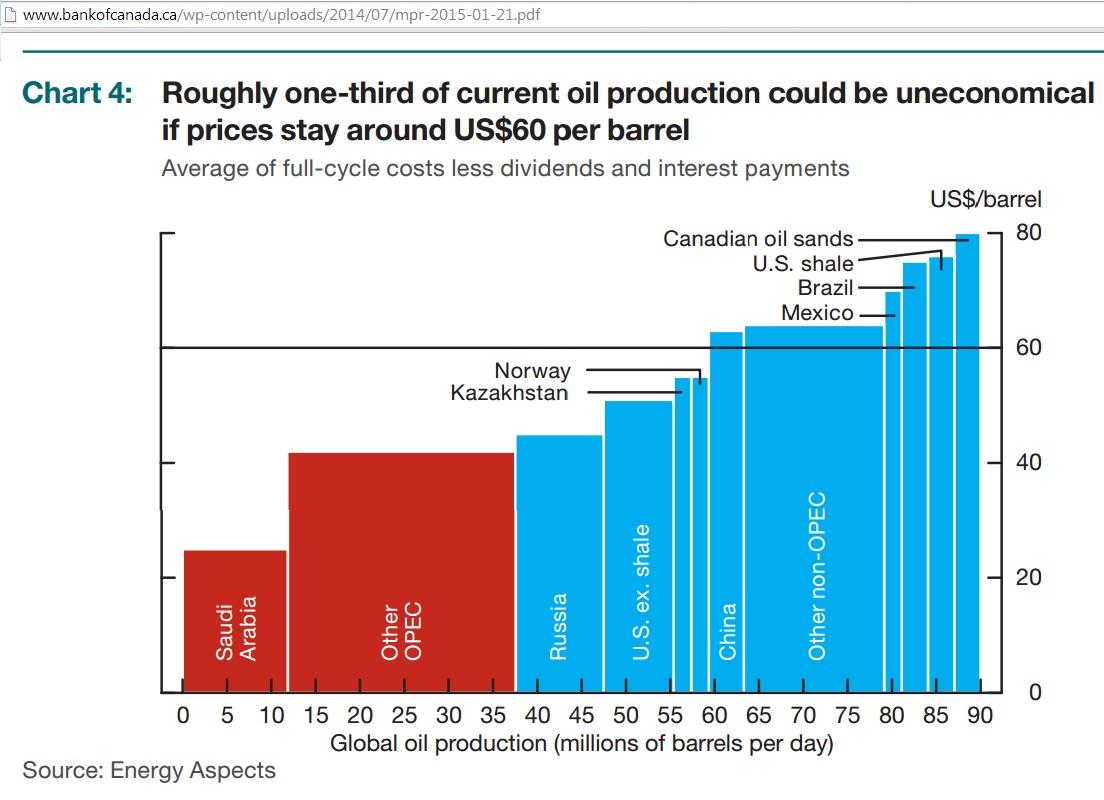
Fig 3: Oil production by area and full-cycle costs
The Bank of Canada report reads: “Based on recent estimates of production costs, roughly one-third of current production could be uneconomical if prices stay around US$60, notably high-cost production in the United States, Canada, Brazil and Mexico (Chart 4). More than two-thirds of the expected increase in the world oil supply would similarly be uneconomical. A decline in private and public investment in high-cost projects could significantly reduce future growth in the oil supply, and the members of the Organization of the Petroleum Exporting Countries (OPEC) would have limited spare capacity to replace a significant decrease in the non-OPEC supply.”
http://www.bankofcanada.ca/wp-content/uploads/2014/07/mpr-2015-01-21.pdf
http://www.bankofcanada.ca/wp-content/uploads/2014/07/mpr-2015-01-21.pdf
Let’s put these costs into oil production graphs:
(1) Total Oil Supply
Fig 3 refers to 90 mb/d (x-axis) which was the world’s total oil supply for 2013, according to EIA’s stats available here: http://www.eia.gov/cfapps/ipdbproject/IEDIndex3.cfm?tid=5&pid=53&aid=1
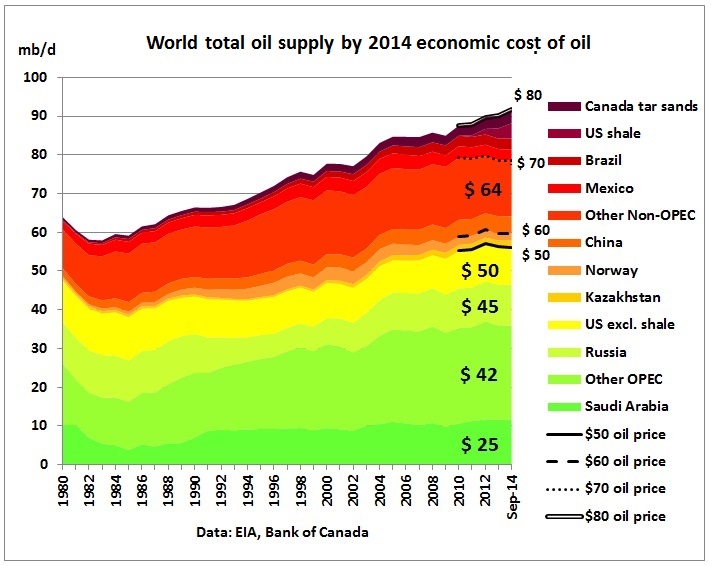
Fig 4: Oil supply by country/area and economic cost of oil
In Fig 4, oil supplies are stacked by 2014 economic cost of oil, starting with Saudi Arabia ($25/barrel, green) and going up to Canadian tar sands ($80/barrel, dark red). The colors have been extended over the whole period to 1980 so that the production history can be seen. Lines in various styles show 4 different cost levels, whereby their lengths are indicative only to show corresponding production levels for the last years.
It seems that oil supplies up to around $75 have peaked (all countries up to Brazil). In other words, if the world is willing (or able) to pay only $75 a barrel, corresponding oil production declined since 2012 – at around 1.6% over 2 years. $50 oil was up and down, but at only 56 mb/d or 60% of current demand. What is important here is that affordable oil does not appear to increase in volume. That has serious implications for economic and transport planning
In Fig 4, oil supply includes: crude oil, natural gas plant liquids, refinery processing gains and other liquids (including bio fuels). The EIA definitions are here:
http://www.eia.gov/cfapps/ipdbproject/docs/IPMNotes.html#p1
http://www.eia.gov/cfapps/ipdbproject/docs/IPMNotes.html#p1
Let’s check how that graph would look like if we used just crude oil and condensate.
(2) Crude oil and condensate
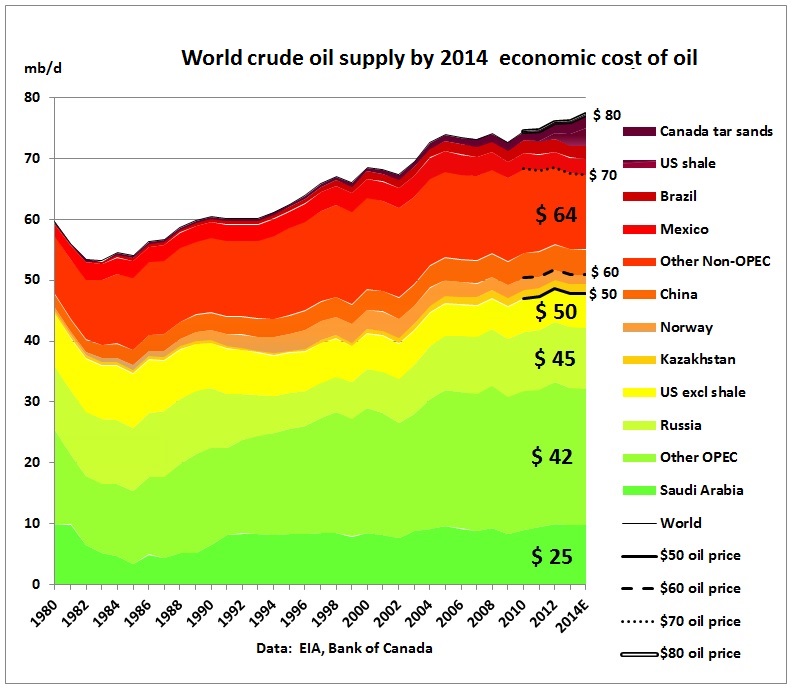
Fig 5: Same as Fig 4, but for crude oil only
All crude oil up to $75 is basically flat since 2005. Expensive unconventional oil has covered up this indisputable trend.
(3) Canadian tar sand costs
So how did the Bank of Canada arrive at $90 for tar sands? The following table is from a July 2014 report of the Canadian Energy Research Institute (http://ceri.ca/)
CANADIAN OIL SANDS SUPPLY COSTS AND DEVELOPMENT PROJECTS (2014-2048)
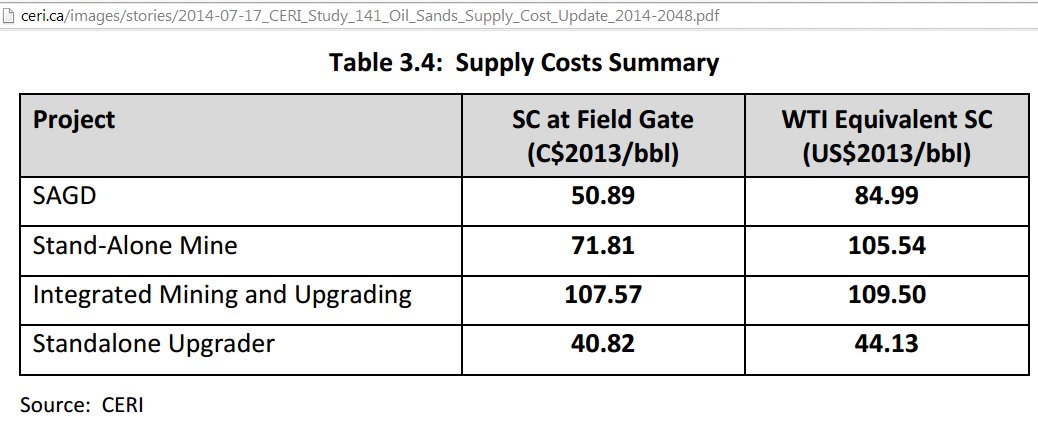
Fig 6: Cost of Canadian tar sands
SAGD stands for steam assisted gravity drainage for in-situ tar sand projects as described here:http://www.connacheroil.com/index.php?page=great_divide_oil_sands
So the Bank of Canada has taken $90 as a WTI equivalent average. The above prices assume a light/heavy differential of $18 a barrel between West Texas Intermediate and West Canadian Select, even after the reversal of the Seaway pipeline and the construction of the southern leg of the Keystone XL in 2013 to connect Cushing to the Gulf of Mexico. This increased WTI, thereby narrowing the differential to Brent, but not to historical levels of $2-5/barrel “potentially indicating two things: either the two markets are no longer correlated and prices are representative of regional markets only or the market to market connectivity is not sufficient to increase WTI prices to Brent levels (sans transportation costs) or a combination of both….. Over time as more blended bitumen and SCO (syncrude oil) continue to penetrate the existing markets as well as new markets, such as the US Gulf Coast and markets outside of North America, the light heavy differential might narrow in the future.”
http://ceri.ca/images/stories/2014-07-17_CERI_Study_141_Oil_Sands_Supply_Cost_Update_2014-2048.pdf
http://ceri.ca/images/stories/2014-07-17_CERI_Study_141_Oil_Sands_Supply_Cost_Update_2014-2048.pdf
Conclusion:
Using the assessment of the Bank of Canada, production of affordable oil at price levels up to $75 has peaked or is at peak since the turning point of 2005. This means that the global economy cannot grow “normally” again.
17 Comments on "Peak Affordable Oil"
shortonoil on Tue, 3rd Feb 2015 6:34 am
Using the assessment of the Bank of Canada, production of affordable oil at price levels up to $75 has peaked or is at peak since the turning point of 2005. This means that the global economy cannot grow “normally” again.
It is nice to know that some one is listening to us! We have been stating for almost a year that there is a maximum price that the economy can afford to pay for oil:
http://www.thehillsgroup.org/depletion2_022.htm
The next reality check will be when they finally understand that the price must decline as petroleum continues to be extracted.
We here at http://www.thehillsgroup.org/ would like to thank PO News for giving us a world wide forum to express the results of our research.
Thank You
rockman on Tue, 3rd Feb 2015 6:58 am
“Based on recent estimates of production costs, roughly one-third of current production could be uneconomical if prices stay around US$60, notably high-cost production in the United States, Canada, Brazil and Mexico”. And there’s the less than obvious assumption everyone is making: the use of “recent costs” to predict future activity. I can’t predict what the future development costs will be especially in areas outside the US trends. But I can assure you the costs to develop the US oil shales will be coming down significantly. Few outside the oil patch watched the huge inflation of drilling costs as those trends heated up. Aside from expendables such as casing and drilling mud most of the cost to drill, complete and frac a shale well is the RENTAL fees charged for the drill rig, directional equipment, etc. From the pre-boom days some of those major components increased 200% to 400% thanks to overheated demand. I’ve already heard of operators negotiating day rates for rigs down to $16k/day from the previous $24k/day. The daily cost for just the directional drilling equipment attached to the end of the drill pipe had gotten up to $28k/day. It had been taking around 15 days to drill a well. Total daily “burn rates” of $400k or more was not uncommon when including the expendables.
Consider that the cost to run a big rig for the contractor might only be $6k+/day. So a $24k day rate generated a net cash flow of $18k/day. Of course a drilling contractor takes into account the capex investment and the wear of the rig. But just like oil producers cash flow is still king. Which is why both companies will sell their product for less than it cost them to develop them. IOW I might never recover 100% of my investment in a well selling oil at $50/bbl. But I will still sell every bbl I can to generate the cash flow I need to keep my doors open.
A drilling contractor can drop his rate from $24k/day to $10k/day and still make a positive cash flow. Or he can stack that rig in his yard and pay several $hundred/day maintaining that rig for the next year or two…or 3 or 4…waiting for someone willing to pay $24k/day again.
I still vividly recall seeing three huge drill rigs sitting in a yard along the highway I commonly drove back during the bust in the 80’s. They probably had cost $100+ million to build. Brand new they had never left the yard to drill a single well before the bust. And they sat there for several years waiting for a contract until the bank finally foreclosed on the loan. Stripped of motors etc. they were cut up and sent to the scrap yard.
Again I don’t know if the cost to drill an Eagle Ford well will drop 20% or 50%. But the cost is definitely coming down. So however accurate the claims of $80/bbl may (or may have not) been to develop plays like the EFS that number is no longer relevant and thus is useless in predicting how many wells will or won’t be drilled. Certainly fewer than had been drilling. But it’s by no means certain that any of the shale trends will be completely shut down.
And I can’t speculate on the change in the development cost of the oil sands…operations have changed a good bit in the last 15 years. But I’ll again remind that the first 1 million bopd of oil sands production was created at an inflation adjusted oil price significantly less than the current price. Some new projects will certainly be delayed. How many existing projects, where much of the infrastructure has already been paid for, carryon uninterrupted remains to be seen.
shortonoil on Tue, 3rd Feb 2015 7:20 am
IOW I might never recover 100% of my investment in a well selling oil at $50/bbl. But I will still sell every bbl I can to generate the cash flow I need to keep my doors open.
That is why prices will not recover to a level that will again make high cost production projects possible. We are beginning to see the expenditure of depreciating assets; the cannibalism of the embedded energy in the industry’s infrastructure. That will continue as prices continue down. A point will be reached where the industry can no longer afford to replace its reserves, or its operational components. We are probably already there!
http://www.thehillsgroup.org/
rockman on Tue, 3rd Feb 2015 8:07 am
“That is why prices will not recover to a level that will again make high cost production projects possible.” Very true. Which is why production costs will decreases as competion for drill rigs etc decreases. Whatever it cost to develop a bbl of Bakken or EFS oil last yuear it will certainly be less in 2015. Maybe a good bit less. Basing how much new reserves will be developed at an $80/bbl cost is no loger valid IMHO.
“A point will be reached where the industry can no longer afford to replace its reserves, or its operational components. We are probably already there!” Certainly not to the level it had been. But if costs get low enough there will be new reserves added to the books. As far as the operational components go there will be no need to add any for some years to come IMHO: we have enough excess equipment today to handle needs for a very long time.
And one more little silver lining that will improve the economics of lower priced oil development:
Reuters – “A years-long bidding war for trains to haul crude oil across North America has abruptly ended, with more than a dozen mile-long unit trains now parked in Midwest stockyards and tank car lease rates halving from last summer’s peaks. While overall oil-train traffic remains near record highs, the shadowy industry that deals in the specialized 87-tonne crude carriers is getting the taste of the wild swings that define the global oil market.
Monthly lease rates for the most common of oil rail cars fell to $1,300 late last month from a high of $2,450 about year earlier, according to data obtained by Reuters from energy industry intelligence service Genscape. The rates for cars, used to transport more than half of North Dakota’s crude, are at their lowest in about three years, said Tom Williamson, owner of Transportation Consultants.”
So for just a single 100 car unit train the companies will be saving $1.4 million/year. Not a huge helping hand but it does add to the bottom line and improves the economics a tad.
paulo1 on Tue, 3rd Feb 2015 8:25 am
As an example of declining cost in the Oil Sands, consider flights. When my son started working there 10 years ago companies would pay his flights to a camp from Vancouver Island, (and back) every two weeks. People were given LOA to simply work out of a camp, despite all costs being paid for. Then in 09 flights stopped. Just before the latest crash and just before my son quit working there, flights were coming back as part of compensation. When home base is Newfld, the travel costs are considerable. It was at least an extra 2,000/month for son.
We had a discussion the other day about all his friends now out of work. I told him that when it ramps up again, and it will, people will be expected to live much closer and find their own way to a marshalling site. Furthermore, bennies and perks will be a thing of the past, as well as padded contracts for contractors.
I’ll bet 30% labour costs could be undertaken and still provide very well-paid jobs. Case in point, he had a friend who made $200,000/yr running a heavy hauler. He got hurt (off the job) and was off work for over a year. His compo pay (paid by the company) saw him clear $5,000 bi-weekly!!! He never lost a cent. Those days are gone for sure.
Unfortunately, those who did not get into another line of work will have to live there. Nigerian jungle camps might be worse than northern Alberta, but I doubt it.
buddavis on Tue, 3rd Feb 2015 8:26 am
Price per barrel is not the question.
The question is what percentage of household income is going to energy?
And to Rocks argument, I know producers who have seen 20-30% reductions from service companies. The price of oil the producer gets is only 1/2 of the equation.
Davy on Tue, 3rd Feb 2015 8:47 am
Demand & supply destruction in a vicious deflationary cycle within a paradigm shit to a bumpy descent of complexity IOW the end of the world as we know it.
Plantagenet on Tue, 3rd Feb 2015 9:10 am
The price of oil is set by supply vs demand in the marketplace. The current price collapse will end when the oil glut ends. As oil prices return to higher levels the oil production that is now uneconomic will once again be profitable
Davy on Tue, 3rd Feb 2015 9:31 am
Planter what market place. The market is not in a normal price discovery environment. The market is being manipulated poorly by those who have no business being the manipulators. They are using tool that are unfair and unbalanced. These tools are not tested or proven.
The public good is being sacrificed for the benefit of a few to maintain their ill gotten gains. In such an environment is it not plain to see why there is a demand destruction? The real economy that is physical is being parasitically bled by a parasitic leadership class that does not produce anything of physical value. Since that class will not acknowledge limits it is also destroying the system from within.
The mal-investment and uneconomic production of multiple commodities has resulted. For our purposes of discussion here that commodity is oil.
Normal Econ 101 theory does not operate properly in a repressed and manipulated market. Normal Econ 101 has never been modeled around a paradigm shift to descent from a long period of growth. IMA a shift of epic proportions within an environment of overshoot, limits, and dimminishing returns. An environment where substitution is over and more complexity is destructive. An environment that can only be healed by the death of that system.
shortonoil on Tue, 3rd Feb 2015 9:43 am
The price of oil the producer gets is only 1/2 of the equation.
When the energy balance equations applied to petroleum production are converted to dollar terms a whole lot of money is unaccounted for. That is what we call societal costs: roads, military, harbors, education, judicial systems, regulatory services, legislative services, and many, many others that are not directly paid for by the price of petroleum. They are, however, necessary to produce petroleum, and its products.
When the price of oil goes down, those societal costs remain the same. Federal, State, and Municipal budgets see smaller revenues as taxes per unit fall, jobs are lost, and businesses close. The biggest loser in an oil price crash will be governments, and the institutions that are directly dependent upon them. The $trillions now being wiped off industry ledger sheets from stranded assets, will pail in comparison to the overall loss to society.
The Etp model is a thermodynamic equation of state. It allows for the calculation of the Total Production Energy. It doesn’t separate out producers costs, processing costs, or the gas that goes in a Texas RRC’s employee’s car so they can get to work. It counts up all of it. This is why it is superior to a straight economic analysis. No economic analysis could even begin to take into consideration all the costs associated with petroleum production. To ignore them gives a totally skewed picture of the process.
The recent price crash will demonstrate how deeply entwined society is with petroleum. The tentacles of its influence have propagated throughout every aspect of modern society. Its decline will, eventually, take everyone of them with it.
http://www.thehillsgroup.org/
Rodster on Tue, 3rd Feb 2015 9:44 am
Here’s an article Plant would love. 🙂
http://www.counterpunch.org/2015/02/02/why-the-crash-in-oil-prices-should-bury-peak-oil-once-and-for-all/
Plantagenet on Tue, 3rd Feb 2015 9:57 am
Hi Rodster
Your claim that the current oil glut “should bury peak oil once and forever” is silly.
If anything increased oil consumption due to lower oil prices will accelerate the arrival of peak oil
buddavis on Tue, 3rd Feb 2015 10:13 am
Well short, not what I was alluding to.
I will give it to you, you are nothing if you are not consistent.
rockman on Tue, 3rd Feb 2015 10:45 am
Bud – “I know producers who have seen 20-30% reductions from service companies.”. Let’s wait and see what the discount is in 3 months. Last week I heard about a meeting that one of the bigger Texas operators had with a large group of vendors they normally use. There was no discussion about pricing. He made it clear that if they submitted bids at prices higher then what they were charging in 2004 they would be banned from any future work with the company. The salesman that was there and told me the story said the guy wasn’t the least bit apologetic or even sympathetic. I’ll be drilling my next hz well in a couple of months so I’ll begin issuing my own ultimatums shortly. But I will be somewhat sympathetic. That doesn’t cost me anything. LOL.
A reminder of what was going on in 2004. BTW the avg day rate collected by H&P, the largest US drilling contractor, in 2004 was $12,400…about half of the avg rate last year. And that was at the end of 2004 when an uptick in drilling was already underway:
“Baker Hughes’ US rig count for the week ending Oct. 29, 2004 is 1,251 rigs, up 1 from the week before. The US rig count was 144 higher than the year before. Most rigs in the US were drilling for natural gas (86%), while only 14% were drilling for oil. Most were drilling vertical wells (787; 63%), 26% were drilling directional wells (331), and about 11% were drilling horizontal wells (133).
shortonoil on Tue, 3rd Feb 2015 2:49 pm
Well short, not what I was alluding to.
I will give it to you, you are nothing if you are not consistent.
When you are working from a detailed model conclusions don’t change unless the model breaks. That hasn’t happened yet. We have added components to it that weren’t at first obvious when we constructed it. Hopefully more ramifications of the depletion event will make themselves known as time progresses. This situation is anything but static.
We said, very early on, that the price break down was way over done, and that prices would rebound into the 60’s by 2016. We also said that the rebound would not be sufficient to save shale, and other high cost producers. The loss of asset value that has already occurred in the the industry would take decades to recover. Credit markets have been permanently impaired, and any short term benefit that the industry receives will soon be negated by a long term price decline:
http://www.thehillsgroup.org/depletion2_022.htm
The question is what percentage of household income is going to energy?
The question is what percentage of the total economy’s budget is going to energy. More specifically the energy that comes from petroleum. Looking at only the production costs is seeing just the tip of the iceberg. Total costs are many times the production costs alone, and they are still on the rise while the contribution coming from petroleum is in decline.
Makati1 on Tue, 3rd Feb 2015 7:02 pm
LOl… lots of dreams on both sides of the peak oil crowd. Does it really matter if and when oil costs come down if there are no customers? Huge debt is killing oil and everything else in this century.
How much debt do the drillers have to service? The rig owners? The shippers? The refiners? The final customers? THOSE are the numbers that will determine the future. Nothing else.
If any of the numbers I have been reading are even close, the debt load of all of them is going to kill BAU in the next few years. Buckle up!
fnaf on Fri, 15th Jun 2018 10:36 pm
Planter what market place. The market is not in a normal price discovery environment. The market is being manipulated poorly by those who have no business being the manipulators. They are using tool that are unfair and unbalanced. These tools are not tested or proven.
The price of oil is set by supply vs demand in the marketplace. The current price collapse will end when the oil glut ends. As oil prices return to higher levels the oil production that is now uneconomic will once again be profitable.