
Peak Oil is You

Donate Bitcoins ;-) or Paypal :-)


Page added on December 20, 2014

What the US Should Learn from Russia’s Collapse
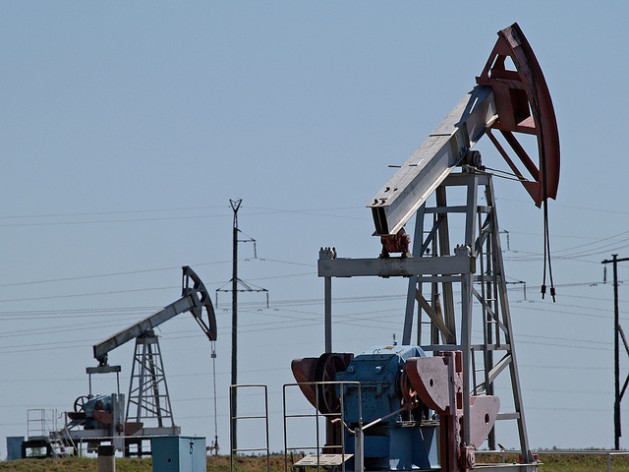
After months of whispered warnings, Russia’s economic troubles made global headlines when its currency collapsed halfway through December. Amid the tumbling price of oil, the ruble has fallen to record lows, bringing the country to its most serious economic crisis since the late 1990s.
Topping most lists of reasons for the collapse is Russia’s failure to diversify its economy. At least some of the flaws in its strategy of putting all those eggs in that one oil-and-gas basket are now in full view.
Once upon a time, Russia did actually try some diversification — back before the oil and gas “solution” came to seem like such a good idea. It was during those tumultuous years when history was pushing the Soviet Union into its grave. Central planners began scrambling to convert portions of the vast state enterprise of military production — the enterprise that had so bankrupted the empire — to produce the consumer goods that Soviet citizens had long gone without.
One day the managers of a Soviet tank plant, for example, received a directive to convert their production lines to produce shoes. The timetable was: do it today. They didn’t succeed.
Economic development experts agree that the time to diversify is not after an economic shock, but before it. Scrambling is no way to manage a transition to new economic activity. Since the bloodless end to the Cold War was foreseen by almost nobody, significant planning for an economic transition in advance wasn’t really in the cards.
But now, in the United States at least, it is. Currently the country is in the first stage of a modest defence downsizing. We’re about a third of the way through the 10-year framework of defence cuts mandated by the Budget Control Act of 2011.
Assuming Congress doesn’t scale back this plan or even dismantle it altogether, the resulting downsizing will still be the shallowest in U.S. history. It’s a downsizing of the post-9/11 surge, during which Pentagon spending nearly doubled. So the cuts will still leave a U.S. military budget higher, adjusting for inflation, than it was during nearly every year of the Cold War — back when we had an actual adversary, the aforementioned Soviet Union, that was trying to match us dollar for military dollar.
Now, no such adversary exists. Thinking of China? Not even close: The United States spends about six times as much on its military as Beijing.
Even so, the U.S. defence industry’s modest contraction is being felt in communities across the country. By the end of the 10-year cuts, many more communities will be affected. This is the time for those communities that are dependent on Pentagon contracts to work on strategies to reduce this vulnerability. To get ahead of the curve.
There is actually Pentagon money available for this purpose. Its Office of Economic Adjustment exists to give planning grants and technical assistance to communities recognising the need to diversify.
As we in the United States struggle to understand what’s going on in Russia and how to respond to it, at least one thing is clear: Moscow’s failure to move beyond economic structures dominated by first military production, and now by fossil fuels, can serve as a cautionary tale and call to action.
Diversified economies are stronger. They take time and planning. Wait to diversify until the bottom falls out of your existing economic base, and your chances for a smooth transition decline precipitously. Turning an economy based on making tanks into one that makes shoes can’t be done in a day.
This story originally appeared on Foreign Policy in Focus.
12 Comments on "What the US Should Learn from Russia’s Collapse"
Rodster on Sat, 20th Dec 2014 10:55 am
The USSA has been taken over since the early 1900’s by a banking cartel who doesn’t give a sh*t about anyone other than their theft of wealth. Wall Street further went into bed with the U.S. Gov’t and basically dictated policies that offshored US mfg jobs to the East as well as tech support jobs.
It’s all about corporate profits and stock prices that now drive the economy. Which is why The Fed had to step in and fund the banks and Wall Street by printing money because the US no longer has a real economy. It’s all about lies, deceit and cooking the books.
This article should have been entitled did Russia and China make the mistake of copying the Western economy? Because that’s what has happened. China is not in the great shape we are being led to believe and we are seeing the same cracks in Russia as well.
dissident on Sat, 20th Dec 2014 11:39 am
What a retarded title. The Russian government is running a healthy surplus thanks to the exchange rate fall. People in Russia are paid in rubles and not dollars converted from rubles. Thanks to the fall in the exchange rate the fall in the price of oil has been more than offset.
Talking to my relatives who live outside the major developed regions of Moscow and St. Petersburg, they are not seeing any jacking up of prices. And that only makes sense since not everything is imported in Russia. You don’t need to buy an LCD TV every day.
And there are actual Russian LCD TV makers who are going to reap the windfall from the effective import tariff imposed by the low exchange rate.
Dave on Sat, 20th Dec 2014 12:11 pm
Absolutely a ridiculous title. We’ve never recovered fully from the last recession and our middleclass has been decimated. Oh, but that one percent is doing so very well in the old USA these days. How fricking dumb does MSM think the average American really is anyway?
J-Gav on Sat, 20th Dec 2014 12:34 pm
Russia has obviously not (yet) “collapsed,” though there is a concerted international bankster effort to try and make that happen, including a fifth column within Russia itself (ie its own Central Bank and monetary policy). As elsewhere, Putin does not control that and he may need a refresher course in combatting it.
He has a lot of (geo)political savvy but finance is not his thing and he’s getting shafted in his own country by oligarchs. Again “as elsewhere”, they don’t give a good god-damn about the well-being of the people, they’re only looking out for their own interests.
That’s why they raised rates instead of reducing them, which would have been much more logical to stop the decline of the ruble.
I wouldn’t be surprised if he ended up Khodorovsky-izing a few of them. But now he’s in kind of a corner. He needs offshore oligarchy/mafia money to shore up accounts without knowing how many of them he can count on …
shortonoil on Sat, 20th Dec 2014 12:54 pm
How fricking dumb does MSM think the average American really is anyway?
The three CEOs who control 95% of the media in the US still believe that if they tell people over, and over again that Americans are richest, smartest, best off, strongest, and most moral people in the world that they will believe it. Some of them do!
As we continue to approach the end of the oil age, and the wheels fall further, and further away, their stories will appear more, and more like the illusions that they are. The next few years will turn these fairy tales into guillotines, and burning cities.
Give a wide birth to the steam roller heading this way.
Speculawyer on Sat, 20th Dec 2014 5:44 pm
“Russia’s Collapse” Sorry, Orlov. USA 2 Russia 0.
shortonoil on Sat, 20th Dec 2014 6:35 pm
There seems to be some illusion traveling around the web that the FED will step in, and save the shale industry because it is TBTF. That was the excuse that they used to save the banks after the Lehman collapse. The FED is owned by its member banks, and it was they who told the FED to fleece the American taxpayer for their failed, and poorly managed performance. The banks will do everything in their power to not lose one dollar when the shale mirage goes belly up. If it saves them money they will be the first to tie the noose around that industries’ neck. America is truly facing a savage enemy, but it is not the Russians. It is the same oil nemesis we have faced for a very long time. It is the banking cartel.
Makati1 on Sat, 20th Dec 2014 7:34 pm
Speculawyer, you got your numbers reversed. Russia 2 USA 0.
Russia has all the resources it needs. The US is trying to take what it needs, by force, from the rest of the world.
Russia has a surplus trade balance. The US has a huge negative balance.
Russia has $400B in reserves. The US has about $35B and a debt of $18T and growing.
Russia has a population that is used to work and hard times. Both work and hard times are foreign to Americans today.
So, while you might want to see Russia collapse, you are more likely to see the EU and US go first.
Kenjamkov on Sun, 21st Dec 2014 2:39 am
If Russia cuts off trade to the west, they still have the east. Europe suffers.
Russia has gold it bought with the extra oil revenue when the price was high.
The USSR collapsed because the leadership was weak. They also did not have the reserves to survive the oil price drop then.
Can the US apply this pressure long enough to outlast the Russians?
Apneaman on Sun, 21st Dec 2014 11:48 am
It was not Russia that turned America into a shit-hole police state; it was Americans who did that. The same Americans who put out the brainwashing rally around the flag propaganda so as to deflect your anger elsewhere. Even if Russia completely collapses into utter anarchy, not one fucking thing will get better in the Homeland. Any spoils will not be shared with the sheep, but you will get to eat the lions share of the blow back. The days of the average man riding the imperial coat tails and feasting on the scraps are over. The American citizen is now looked upon like any global citizen; as slaves. But you are still free to cheer for your masters while they play their power games.
Makati1 on Sun, 21st Dec 2014 6:55 pm
Well put, Apneaman. America is a land without mirrors.
Kenz300 on Mon, 22nd Dec 2014 1:00 pm
Diversify…diversify…diversify…….
Russia’s economy is a one trick pony…….
Every country in the world needs to develop a plan to diversify its energy sources and type. Wind, solar, wave energy, geothermal and second generation biofuels made from algae, cellulose and waste are the future.
Energy security and economic security depend on diversification.