
Peak Oil is You

Donate Bitcoins ;-) or Paypal :-)


Page added on November 7, 2014

The End of the Big Oil and Gas Game Has Come
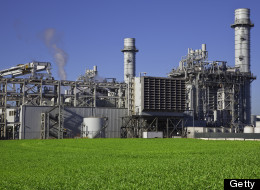
Sheikh Ahmed-Zaki Yamani said in 2000, “The Stone Age came to an end, not because we had a lack of stones, and the oil age will come to an end not because we have a lack of oil.” The former Saudi oil minister was arguably the world’s foremost expert on the oil industry at that time. However, then he introduced this extraordinary observation in the UK’s Telegraph, which was an even more prescient point about how, “Thirty years from now there will be a huge amount of oil — and no buyers. Oil will be left in the ground.”
A decade and half later and we are coming to the end of Big Oil.
Yet not as others have predicted, such as Mark Stansberry, in his book America needs America’s Energy (2012), which reviews how natural gas has risen to be the foremost energy source in the USA and is now being sold to other countries around the world. Stansberry, whom Clark knows very well due to their working together on shared issues such as: the need for a “national energy plan”; the move off of “coal and oil dependency”; and therefore the “control and [reduction of] carbon and greenhouse gases.” However, Stansberry, like his mentor, Robert Hefner III, saw natural gas as the “Major Bridge” as the energy source before wind, solar and a new “hydrogen-based economy.”
The problem is when conventional energy sources are discovered, produced, distributed and become economical, they are not a bridge or as every natural gas advocate states today, the “transition” to renewable energy sources. Unless “transition” is defined and then based upon a ROI or business model for 3-5 years. The definition of transition is a myth (and a false representation) in terms of the number of years and time in which natural gas will be the predominate source of energy in the USA, and around the world. However, with natural gas, as with other fossil fuels, such a short time frame can never happen. All fossil fuels need, due to their conventional economic models, to be in place for 3-4 decades at the minimum to cover the loans, investments and profits that the company owners want. That is why oil and coal have been the energy supply sources of all global economic growth for over a century.
Why?
The bridge or transition is based in conventional classical economics. The need to borrow funds and satisfy investors means that the entire discovery of natural gas to its final consumer, must return a solid, dependable and long-term profit. There is no transition period of time, unless defined as decades. Government support of all fossil fuels follows the same line of reasoning and economic models. Historically, and even now with natural gas pipelines, processing rules and shipping, the national and local governments become “partners” in this “transition.” Hence not only are their debates, which are monetized into financial “tax breaks and deductions” for these companies, but also there is the subversion of environmental laws, ignoring health costs on personal and community levels.
The natural gas industry claims to be able to make America “energy independent.” Again another false and devious use of language. Many of us involved in supporting and getting public along with private sector support for renewable energy, were calling it the pathway to make America “energy independent” of other nations and no longer in need of oil, coal and gas. The wind, sun and water sources for energy were virtually free and obtainable without massive drilling, transit, shipping or pipelines. For example, fracking and shale oil from land are destroying land and water in the USA. On-site power to people in their homes and businesses is far more “independent” and doable than any these fossil fuels. Nonetheless the historical domination of the world’s geopolitics, business and economics by the fossil fuel interests over the past century have now taken a new and even more environmentally costly strategy that will make the USA dependent upon THEIR fossil fuel sources for energy over another 50-100 years.
A new era of energy generation, storage and sharing is upon us, known as The Green Industrial Revolution (GIR), the title of our new book. This GIR has emerged as the next significant political, social and economic era in world history. It has already taken hold, in parts of EU and Asia, and will result in a complete restructuring of the way energy is generated, supplied, and used. It is a revolutionary time of extraordinary potential and opportunity, with remarkable innovations in science and energy that will lead to sustainable, smart and carbonless economies powered by nonpolluting technologies that are integrated with one another like wind, geothermal, wave, river and solar along with their storage and back up devices. These resources along with advanced environmental technologies like flywheels, regenerative and maglev systems as well as hydrogen fuel cells.
Many factors are coming together to hasten this Green Industrial Revolution. Vladimir Putin’s annexation of the Crimean and eastern Ukraine has shocked Europe and the rest of the world. On a good side, it has made nations and communities around the world aware of how countries that control energy sources like oil and gas can control vast regions of the world. Thus the Putin advances on countries, like the Ukraine which is NOT the only nation near and dependent upon Russia, has stirred the region’s efforts to generate more renewable energy in order to become independent of Russia’s fossil fuels.
The same scenario is exactly what got the USA involved in the Middle East when President George Bush ordered American troops to Kuwait in 1991. Unlike his son, he also stopped that war since the goal was to free Kuwait from terrorists. The war in the middle-east now has been over a decade and now spreading. The terrorists in the middle-east get their money from the regional oil and gas industries. If the USA and other nations stopped buying their oil and gas, there would be no need for war. Nor would there be terrorists.
Perhaps the clearest, most reasoned analysis of the US oil and gas industry tax subsidies and the potential benefit of removing them came from Alan Krueger, the chief economist and assistant secretary for economic policy at the US Department of Treasury in 2009. In testimony to Congress he explained that the “current US tax law provided several credits and deductions specific to the oil and gas industry.” Hence the Administration recommended:
Eliminating these tax preferences would raise revenues about $10.3 billion from 2010 to 2019. The administration also proposed to repeal three tax preferences available for integrated and nonintegrated firms. Elimination of these would result in about $20.3 billion from 2010 to 2019 (Krueger, 2009).
Krueger gave a long list of other economic related issues that would be supported by such a change in policy. Yet the report and data were rejected by the Republican controlled Congress and their fossil fuel industry supporters. There is no need to list names. They are always the same and well known. The answer by the Republicans was instead to have an additional $2.3 billion in annual tax cuts to the oil companies.
Today three key factors will stop the fossil fuel industry and make the Sheikh Yamani’s prediction come true for all fossil fuels.
1) Carbon Emitters Made to Pay
The first is that the carbon emitters will be held accountable and made to pay for using the atmosphere as a garbage can. While still struggling to price the cost of pollution, most nations have come to realize that the heavy carbon emitters need to pay for the damage that they have done. A cap-and-trade (C&T) process has risen from the government bureaucracies supported and advanced by Wall Street financial interests as the first method to hold the carbon emitters accountable. However, the C&T is not nearly as effective as a straight carbon tax that collects money and then allocates it. While politicians and the public do not like the word “tax” some of us prefer to all it an “incentive” program much like the successful non-cigarette smoking program that started in California and now has spread around the world.
The cigarette tax become known as an “incentive” so that political leaders would not be accused of advancing a new tax. As the extra few cents paid for a pack of cigarettes, such an incentive along with the restrictions on smoking due to the health dangers of smoking to individuals and those near-by (e.g. second hand smoking) will control, decrease and finally replace fossil fuels. This “incentive” system is not seen or used as a tax, but as means to raise funds to research, develop programs and implement plans to stop smoking. Now it has grown and spread throughout the world. The European Union’s program, which started several years ago, is now deemed a success. The C&T program failed there while the smoking incentive has become an established part of European culture and corporate practice. Various nations such as Australia, New Zealand, Canada, Korea and China have looked into cap-and-trade programs but are leaning now much more to a Carbon Tax (Incentive) program.
The pressure to make the major carbon emitters pay for their pollution is coming from the agreements made at the 2012 UN Conference on Climate Change in Doha, Qatar. At this conference world governments consolidated the gains of the last three years of international climate change negotiations and opened a gateway to greater ambition and action. Among the decisions was to concentrate on a universal climate agreement by 2015, which will come into effect in 2020. The 2015 UN Climate Conference will be held in Paris, and world governments are expecting much greater cooperation and agreement for carbon-reduction policies from the U.S.A and other major emitters, including China which ranks number #1 in the world, passing the U.S.A.
2) Grid Parity
The second major factor hastening the end of today’s megalithic fossil fuel industries is “grid parity,” which is a technical term meaning that the cost to a consumer for electricity from a renewable source (without subsidies) is about equal to the cost from a traditional source — be it fossil fuel or nuclear. The Germans used grid parity to price their feed-in-tariff, or FiT program that launched Energiewende.
In short, grid parity puts renewable energy sources on the same exact price as conventional fossil fuels and nuclear are today. It is important to keep in mind that historically when oil and gas (and more recently nuclear) energy came into use for consumers (grid or energy system suppliers), the costs had been high and needed to be leveled or lowered (parity) in order for users to pay for them.
The cost of conventional energy from traditional sources is rising, driven by higher extracting costs, additional externalities (such as legal and insurance costs due to supply system accidents), increased maintenance costs for natural gas pipelines and increased operating costs at nuclear power plants. Due to the tsuanmi in Fukishima, the shut down of nuclear power plants is occurring all around the world. To keep them operating and securing means extremely high and almost unpredictable add-on costs. At the same time the costs for renewable energy — wind, solar photovoltaic, and bio-waste fuels, wave, ocean and hydro power are declining.
For example, the costs for wind generation have been for almost a decade and still are, the lowest. Solar costs are declining rapidly as use spreads not just to power utilities but to home owners, shopping malls and office buildings as well as government, schools and colleges. Deutsche Bank reported in January 2014 that there were 19 regions around the world where unsubsidized PV solar power costs were competitive with other forms of generation. This equality of costs with fossil fuel and natural gas is creating a worldwide solar boom in 2014-2015.
Germany with its FiT program for grid parity started this economic process that lowered the costs for solar. Now, other nations have enacted similar FiT programs with funding and resources supporting them. China now leads the world in the production and sale of wind and solar systems.
Solar PV technology, which has been helped by the USA military, is improving so fast that it has achieved a virtuous circle. As described by New York’s Sanford and Bernstein Investment Bank, the world has entered an era of “global energy deflation.” This ratcheting down of energy costs may be slow to start, but they argue that the fossil fuel dominated energy market will experience a major decline in costs over the next decade. The market is entering a new order that will erode the viability of oil, gas and the fossil fuel continuum.
In April 2014, the highly respected Paris-based financial company Kepler Chevreux released a research report that has rippled through the fossil fuel industries. Kepler Chevreux described what is at stake for the fossil fuel industry as the world governments’ push for green fuels and reduced GHG emissions gathers momentum. The firm argues that the global oil, gas and coal industries are set to lose a combined $28 trillion in revenues over the next two decades as governments take action to address climate change, reverse green house gases (GHG), clean up pollution and move to de-carbonize the global energy system. The report helps to explain the enormous pressure that the industries are exerting on governments not to regulate GHGs.
The report said oil industry revenues could fall by $19.3 trillion over the period 2013-2035, coal industry revenues could fall by $4.9 trillion and gas revenues could be $4 trillion lower. High production cost extraction such as deep-water wells, oil sands, and shale oil will be most affected. Recent monitoring of the global stock exchanges mirror these conclusions. The fossil fuel industry, when the true costs of their products are known, is facing a major collapse — as it should. And as it leaders are well aware of since they are targeting and attacking those who provide this evidence: the fossil fuel industrial is not even close to providing the U.S.A. or other countries the ability to be “energy independent.” The facts and economics are just the opposite.
Sooner than later, fossil fuel assets will be too expensive to extract, and like Sheikh Yammi said, the oil, now natural gas and soon uranium, will be left in the ground. The cost savings in terms of every aspect from drilling to delivery will be saved, climate and pollution reduced and human health costs saved.
Kepler Chevreux’s report is consistent with others released in 2014. One report from U.S.A.’s CitiGroup was titled “Age of Renewables is Beginning — A Levelized Cost of Energy (LCOE).” Released in March 2014, the report argues that there will be significant price decreases in solar and wind power, which will add to the renewable energy generation boom. CitiGroup projects price declines based on Moore’s Law, the same dynamic that drove the boom in information technology.
In short, CitiGroup is looking for cost reductions of as much as 11 percent per year in all phases of PV development and installation.
When the world’s major financial institutions start to do serious, accurate, research science and measure the declining costs of renewable energy verse the rising costs of fossil fuels, it becomes easier to understand the monumental impact that the Green Industrial Revolution is having.
3) Zero Marginal Cost
We have come to the last leg of our triad, “Zero Marginal Cost.” Marginal cost, to an economist or businessperson, is the cost of producing one more unit of a good or service after fixed costs have been paid.
Companies have used technology to increase the productivity, reduce marginal costs and increase profits from the beginning. However, as Jeremy Rifkin points out in Zero Marginal Cost Society, we have entered an era where technology has unleashed “extreme productivity,” driving marginal costs on some items and services to near zero. File sharing technology and subsequent zero marginal cost almost ruined the record business and shook the movie business. The newspaper and magazine industries have been pushed to the wall and are being replaced by the blogosphere and YouTube. The book industry struggles with the e-book phenomenon.
A powerful technology revolution is evolving that will change all aspects of our lives, including how we access renewable energy. An energy Internet is coming that will seamlessly tie together how we share and interact with electricity. It will greatly increase productivity and drive marginal cost of producing and distributing electricity down, possibly to nothing beyond our fixed costs.
This is almost the case with the early adopters of solar and wind energy. As they pay off these systems and their fixed costs are covered, additional units of energy are basically free. This is the concept that Ikea, the Swedish furniture manufacturer, is exploiting. Ikea is test marketing residential solar systems in Europe that cost about $11,000 with a payback of 3-5 years. Eventually, we’ll be able to buy a home solar system at Ikea, Costco or Home Depot, have it installed and recover our costs in less than two years.
All three of these elements — carbon mitigation costs, grid parity and zero marginal costs, (and others like additive manufacturing and nanotechnology) are seen in the spreading of the Green Industrial Revolution.
It will be an era of momentous change in the way we live our lives and it will mean the passing of the carbon-intensive industries. Like the centralized utility industry, the fossil fuel industry and the large centralized utilities have business models predicated on continued growth in consumption. Once that integration and hence nexus of declining prices for renewables and rising costs of extraction with distribution are crossed, the demand will rapidly shift and propel us into “global energy deflation.” There are many regions and nations around the world where this has already started.
20 Comments on "The End of the Big Oil and Gas Game Has Come"
rockman on Fri, 7th Nov 2014 9:50 am
Since the beginning of the petroleum age there has always been “a huge volume of oil” that is left there because there are no buyers. No buyers who can afford to pay the price necessary to produce most of that oil. And that will always be the case.
Just as there is huge amount of wind and solar equipment potential out the that won’t be built because there are no buyers for it. buyers who can’t afford the equipment. And that has been the case from the beginning of wind/solar. And that will always be the case IMHO.
eugene on Fri, 7th Nov 2014 10:03 am
Amen, Rockman
Lawfish on Fri, 7th Nov 2014 10:04 am
“A new era of energy generation, storage and sharing is upon us, known as The Green Industrial Revolution (GIR), the title of our new book.”
I stopped reading after that line. Technology will save the day. Oh, and buy our book.
Northwest Resident on Fri, 7th Nov 2014 10:15 am
I agree that we are in for “an era of momentous change”. But not in the way that the author seems to think.
forbin on Fri, 7th Nov 2014 10:28 am
Sheikh Ahmed-Zaki Yamani said in 2000, “The Stone Age came to an end, not because we had a lack of stones, and the oil age will come to an end not because we have a lack of oil.”
apparently this sheik and the author are unaware we are still in the “stone age” atleast as far a building work goes . With the use of fossil fuels we are using vast amounts of the stuff !
Also the oil age will come to an end , its a finite resource after all. And its true lots will be left in the ground as econ 101 tells us all if it don’t turn a profit – it aint gonna happen ( be careful of where the profit comes from 😉 )
And yes
” the demand will rapidly shift and propel us into “global energy deflation.”
“global energy deflation.” ah yes that bit is going to be true – the real effects on the world’s population is not going to be pretty , eh ?
Forbin
GregT on Fri, 7th Nov 2014 10:30 am
Green- industrial? That would be right up there with sustainable- growth.
Plantagenet on Fri, 7th Nov 2014 10:57 am
We’ll still have big oil. It will just be big national oil companies like Gasprom, Aramco, and Sinopec rather than private oil companies like BP, Exxon and Shell.
Davy on Fri, 7th Nov 2014 11:23 am
Amen Greg, what a contradiction of terms.
nemteck on Fri, 7th Nov 2014 11:32 am
“Thirty years from now [2030] there will be a huge amount of oil — and no buyers.”
Note that our own shortonoil gives the same date where oil will cost $0.00.
I hate when people carelessly utter phrases without thinking. Famous is Einstein’s pronouncement that “God does not through dice”. That was because he did not believe in quantum mechanics.
With careless uttering, people open themselves up to criticism and ridicule. Worse, these sentences are taken to propel ones own agenda. So, the Einstein phrase, for example, is taken by religious groups as proof that God exists.
Is it believable that, just in 15 years, oil is not needed anymore? No chance, in my opinion since millions of solar panels and wind mills,etc., have to be constructed together with nuclear and tidal wave plants, hydro dams and massive transport infrastructure. Do we use quickly all oil we can get to build that new world before we give it up? Will there be no cars anymore at that time? When do we buy our last one so that in 2030 we can through it away?
I believe that all this will come to pass, may be in 100 years or later but not in 15.
.5mt on Fri, 7th Nov 2014 12:58 pm
Things are looking pretty bad, but they can still get worse. 3 dollar gas is a temporary mirage. Soon there will be long lines for no gas because it is too cheap. Desperate times loom. Smoke ’em if you hit ’em.
Davy on Fri, 7th Nov 2014 1:24 pm
Nem, obviously you miss shorts central point about oil’s energy delivered into the economy. It is also obvious you are one of those renewable fantasy types. Do you see us going to Mars in solar powered space ships? That will be your next barking noise.
shortonoil on Fri, 7th Nov 2014 3:13 pm
“Is it believable that, just in 15 years, oil is not needed anymore?”
I’ve gone through libraries of engineering, and mathematics texts over the years. Not once have I ever seen a variable defined for “need”.
“Knowledge without numbers is of a meager and unsatisfactory kind” – Lord Kelvin
Keith_McClary on Fri, 7th Nov 2014 5:41 pm
shortonoil:
You need to look in nutrition texts.
:^)
Keith_McClary on Fri, 7th Nov 2014 5:46 pm
“Unlike his son, he also stopped that war since the goal was to free Kuwait from terrorists.”
DMyers on Fri, 7th Nov 2014 10:23 pm
That is a rather stunning quotation, Keith.
To suggest a change in terms, I have to object to this notion of “grid parity.” Here, it is defined as a point where renewable forms of energy are equal in cost to conventional, fossil derived energy sources.
This term would be better reserved for the concept of “parity in capacity to power the grid.” That is where the big difference lies,i.e.,parity is lacking.
Makati1 on Fri, 7th Nov 2014 11:42 pm
When I got to “… natural gas has risen to be the foremost energy source in the USA … and is now being sold to other countries around the world…” I began to suspect the accuracy of this article. “Around the world” being to Mexico and Canada ONLY. More BS and fluff from the Ministry of Propaganda. More dreams of BAU in a techie utopia.
http://www.eia.gov/dnav/ng/ng_move_expc_s1_a.htm
Kenz300 on Sat, 8th Nov 2014 7:08 am
Climate Change is real……. we will deal with the cause or we will deal with the impact.
Chris on Sun, 9th Nov 2014 2:55 am
I doesn’t matter if the marginal cost of something is driven to 0. If that cost is never passed on to the people that use the product or energy then it doesn’t matter. The rich tiny group of people will just continue to gouge everyone for absolutely everything they can and I mean literally every single dollar . They already do I work full time and never have a dollar to spare why because, my sneakers cost $10 to make but $125 to buy, oil costs $10 a barrel in Saudi but $100 to buy in America.. Unless you outlaw capitalism, or place global controls on what something can cost over the cost of production then it doesn’t matter if every product in the world only cost 1 penny to make, its how much will we have to pay for it..
Davy on Sun, 9th Nov 2014 7:18 am
Chris where did you study economics?
Chris on Sun, 9th Nov 2014 5:36 pm
NYU How about yourself?