
Peak Oil is You

Donate Bitcoins ;-) or Paypal :-)


Page added on September 10, 2014

Whose consumption is killing the planet?
THE CONSEQUENCES of human-induced climate change are dire. Crop failures will increase. Severe weather and rising sea levels will wreak more havoc. Species are being wiped out by the hour–and the continued existence of our own is threatened.
Even without the threat of climate change, we live in a world of vast inequality, where the majority of the world’s population struggles to meet basic needs like putting food on the table–while corporations refuse to pay living wages, and decent health care and housing remain unaffordable for many, when there is access at all.
As of 2010, 2.4 billion people in the world were living on less than $2 a day–more than one-third of the world’s population. Close to 1 billion people live on less than a $1 a day on average. Nearly 870 million people suffer from hunger and malnutrition, according to UN standards–around one in every eight people on the planet.
The growing numbers and size of urban slums throughout the world have typified this poverty in the modern era. One-third of the global urban population lives in what are classified as slums–6 percent of the urban population in developed countries and a staggering 80 percent in developing countries. Most slum dwellers live without clean water or other infrastructure.
Yet some people would have us think that the growing ranks of the poor are the real source of environmental stress and food shortages, rather than demand from those who rule in the Global North.

This is simply not true. According to environmental writer Fred Pearce, the poorest 3 billion people are responsible for only 7 percent of global emissions of greenhouse gases, while the richest 7 percent produce half of all emissions.
Clearly, the world’s poor are not driving climate change. Food shortages have more to do with the price of food, not its availability.
– – – – – – – – – – – – – – – –
MANY IN the environmental justice movement are rejecting the racist arguments about “overpopulation.” But mainstream environmental organizations still typically accept the idea that “buying” is at least a major source of the ecological crisis. The belief is that consumer choices and individual lifestyles, especially in the wealthiest countries, drive the unsustainable devouring of resources around the globe.
The persistent stereotype is that average Americans, especially working class whites, just love gas-guzzling pickups, junk food, plastic, God, the Republicans and shopping at Walmart. Of course, people like this do exist, but they are not as universal as the stereotype suggests–and moreover, they are more of a symptom of the world we live in than a cause of it.
The plain truth is that most of us, even though we live in the country most responsible for greenhouse gas emissions and environmental destruction, are powerless to shape the economic system–and have had no say in the creation and maintenance of a fossil fuel-based energy infrastructure.
The fact of higher emissions in the Global North is often presented using per-capita consumption statistics–which suggest we are all equally to blame. As a PBS television special noted, for example, “The average North American consumes five times as much as an average Mexican, 10 times as much as an average Chinese and 30 times as much as the average person in India.”
The trite conclusion is that we should all just consume less and recycle more. But all this directs our attention away from primary driver of environmental destruction–namely capitalism, a political, economic and social system run undemocratically by elites at the expense of the planet and ordinary people.
– – – – – – – – – – – – – – – –
THIS SOLUTION of reducing personal consumption also doesn’t take into account the one in six people living in poverty in the U.S.–and that statistic is according to official standards, which understate the actual numbers of the poor. These “North Americans” don’t consume enough food on a daily basis, not to mention their lack of access to housing and health care.
Roughly, 70 percent of U.S. consumption takes place among the top 20 percent of income earners. The wealthiest 5 percent of Americans own more than the rest of the population combined.
Beyond the gap between rich and poor, the environmental destruction caused by corporate consumption and production dwarf those of individuals. Roughly two-thirds of greenhouse gas emissions since the beginning of the industrial age have come from just 90 major companies, according to researchers writing in the journal Climatic Change.
This lopsided reality applies to other forms of pollution. According to Heather Rogers, author of Gone Tomorrow: The Hidden Life of Garbage, for every pound of household waste, there are another 70 pounds of waste created by industries like mining, manufacturing, agriculture and petrochemicals.
The corporate elite decide how and where electricity is produced, not consumers. And even though a recent study shows broad support for more public transportation, particularly among the young and lower-income people, our car culture is ruthlessly defended and promoted by the auto and oil industries, even now.
Despite these facts, the “all Americans are to blame” approach was used to explain the second Iraq war. Supposedly, our addiction to oil, suburban homes and SUVs caused the U.S. invasion–George W. Bush sent in U.S. troops so American consumers could have more oil. The consumerist logic was that if we just rode bikes or at least used fuel-efficient cars, war would eventually stop.
But the end goal for U.S. imperialism in Iraq was to use oil as an economic and political wedge against its main competitors on an international scale, including Japan, India and China. At the time of Iraq war, the U.S. got about 13 percent of its oil from the Middle East. Since then, the U.S. energy boom has led the Obama administration toward rebuilding the U.S. economy on the basis of cheap fracked natural gas and shale oil–and clearly, the U.S. is no less prone to going to war.
U.S. corporations and their political partners in Washington don’t try to control Middle East oil because they are following orders from U.S. consumers. They want control over world energy supplies to leverage American corporate interests in a global economy prone to crisis.
– – – – – – – – – – – – – – – –
MANY ANTI-capitalists would agree with all of this, but there is still debate about whether a reduced standard of living is necessary in the advanced world to get the kind of drastic emissions cuts necessary to head off environmental collapse.
The organization Deep Green Resistance (DGR), for example, holds that “civilization, particularly industrial civilization, is fundamentally unsustainable and must be actively (and very urgently) dismantled in order to secure a livable future for all species on the planet,” according to one summary.
While many people reject the controversial politics and tactics of DGR, their position on deindustrialization is often understood as the only remaining solution for serious environmentalists. We must all return to a more natural existence, which likely would mean growing our own food.
We do need a different type of society that is not based on chaotic and unplanned growth, in which we would need far less energy. But does that mean a return to a more primitive way of life–or a planned, rational and sustainable system that raises the quality of life for the majority of people in society.
For many of the world’s poor, including those living in the U.S., wherever they live, there is daily struggle to get access to food, electricity, water, education–that is, the most basic elements of a human existence. The idea that these people, who already live with far too little, need to “go back to the land” and “live with less” seems like an insensitive joke.
The romantic view about de-industrialization glosses over the entrenched systemic problems of poverty, racism and inequality, and therefore throws out an important part of the solution–the type of sustainable, smart and coordinated development that is needed to raise the quality of life for everyone on the planet.
The de-industrial argument is based on the same “per-capita logic” that blames all Americans for environmental problems. While this more radical version targets capitalism as the cause of the crisis, it also dismisses the idea that working people could organize together to reconstitute and reshape our society collectively.
Yes, we need to radically and quickly transform current industries–but how will that take place? By industrial sabotage carried out by an elite group of eco-warriors, the only people who really “get it”? By pre-figurative experiments that overwhelm the system? Or by a revolution of the vast majority in society that wrests political and economic power from the rich, and transforms ourselves and our way of life in the process?
Any solution to climate change will require a sane, democratic and planned economy that stops making cheap shit people don’t need, that ends wars, that radically curbs waste and pollution, and that transforms all the other things keeping energy and transportation demands so high. This must begin with people organizing throughout society, especially in their workplaces, to have a say in what we produce and how we produce it.
Demands for jobs as part of the solution must align with these priorities–not by simply adding green jobs and renewable energy to the mix under capitalism. A just transition must address historic inequality and uneven development, and reject the laws of profitability by taxing the rich and nationalizing polluting industries to shut them down.
Understanding the capitalist system is key to building the climate justice movement we desperately need to achieve these goals. The lifeblood of the capitalist mode of production is constant accumulation in its search for profit. It’s a system based on ruthless competition, chaotic growth and never-ending waste.
Ordinary working people and the poor in the U.S. and around the world aren’t to blame for the crisis we face. It’s not our individual consumption that is destroying the world. Capitalism is burning our planet as it preys on the world’s resources–human and natural resources alike.
The elite of this country–from political leaders to their buddies in the corporate boardrooms–are the ones destroying our planet. We must organize collectively to stop them.
13 Comments on "Whose consumption is killing the planet?"
Plantagenet on Wed, 10th Sep 2014 7:18 pm
Of course ordinary working people and poor people in the US are partly to blame for global warming. Global warming is happening because of carbon emissions, and poor and working people mostly drive around in cars that belch out CO2 just like rich people do.
MSN fanboy on Wed, 10th Sep 2014 7:48 pm
So, this article summed is “Blame the rich, its their fault”…
Intresting. However, lets say a politician spouts the socialist line of this written piece.
Would he get elected?
Thought not…
Wait, but there are more poor than rich right.
right.
So they have more voting power right.
right.
so why isnt this happening.
because the poor want cars, roads, houses, running water, fast food etc…
The public gets politicians they deserve
Makati1 on Wed, 10th Sep 2014 8:07 pm
MSN, you have the correct picture. Collectively, the West is committing species suicide and all are guilty.
Pollution will not stop because: the wealthy want more and the poor still dream of becoming wealthy. It will take a total crash of all systems to stop the runaway train. It cannot come soon enough.
penury on Wed, 10th Sep 2014 8:08 pm
if you spend the time think it through, no one is to blame. Each human exists in the manner which is customary in their culture. THERE ARE JUST TOO DAMN MANY HUMANS. In a setting containing finite resources including space,air,water and food it is no ones fault when the well runs dry. Humans can look at the predicaments and realize that the experiment was always doomed unless re-supply of critical elements was possible. We are fortunate to be the ones living when the cracks are becoming obvious to all.
Davy on Wed, 10th Sep 2014 8:29 pm
We are all to blame and no one is to blame. How can you blame a 1%er for being who he is in a system that through many billions of individual decisions everyday self-organizes? All this emissions growth worry is mute in my mind being a doomer. This ship is going down and along with it will be emissions. Probably not enough but we will see a huge fall in emissions in 5 years time I predict. This fall will be significantly more than these climate change folks are arguing for through their various plans that follow BAU. This is the subject not covered by MSM, academia, governments, and think tanks. The reason it is not covered is these mainstream institutions can’t discuss collapse. The develop world is to blame argument is lame too. We know that overconsumption is a big part of the problem. But the idiots that try to say over population is not an issue are into the Kool-Aid. People whether rich or poor destroy ecosystems. They consume a minimum of calories. They generate a minimum of waste. They have to cook and keep warm. When you take the US population and consumption then look at China and it population and consumption what is the difference when considering pollution and AGW issues? There is not much difference. The US has a much lower population but consumes more. China has many more people that consume less. The net effect is both consume too much. It is a luxury for a country to have large populations. It is not somehow fair to have a large populations that complain that smaller populations consume too much. I am not buying into the per-capita shit. Per Capita has a place in analysis but you can’t compare countries solely by this comparison when it comes to an ecological footprint. We all have to practice relative sacrifice. The rich “MUST” lower consumption and the third world must cap population growth.
noobtube on Wed, 10th Sep 2014 9:00 pm
The smug, degenerate American a**holes are always screaming about how they are 1st world, and industrialized, and developed, and civilized, and rich, and everyone is just jealous of their “success” in ruining the planet.
As soon as it comes time for them to pay for this trifling, backsliding, cowardly, degenerate lifestyle, they want to scream about how it’s no one’s fault, therefore EVERYONE MUST PAY FOR THE AMERICAN LIFESTYLE despite the fact only the Americans got the benefits.
No, the Americans are going to pay for the American lifestyle. Americans caused this mess. Americans are going to pay for this mess.
These same self-important, entitled, “exceptional” pieces of garbage ran all across the world terrorizing, destroying, polluting, and trashing every place they could (Korea, Vietnam, Middle East, Latin America, Africa, Caribbean, South Pacific).
Now, that the bill is coming due, these American cowards are trying to get everyone else to pay it.
Nope. Not going to happen.
The debts are coming due. Americans are going to have to pay the price, or disappear off this planet.
I can tell you now, Americans are going to disappear off this planet, because no one can pay the bill they’ve charged on the Earth, these past 70 years.
Solarity on Wed, 10th Sep 2014 9:08 pm
What a crock of BS propaganda probably written by B.Obama–it certainly expresses his sentiments.
One of its faulty statements: “Most of us [Americans/Western Europeans] … are powerless to shape the economic system.” After making this statement, it discusses the contradicting idea that the western economy driven by consumerism. Analysis of fuel consumption against demographics, shows that such consumption is fairly equally distributed among the population, regardless of economic condition. IOW about 80% of energy consumption is used by or on behalf of about 80% of the population.
Capitalism is a cooperative system whereby people work together with capital and resources to feed and provide for themselves. This write-up favors is an idealistic ‘level playing field.’ The overwhelming success of the cooperative economy based on merit proves that it will always out-perform an altruistic one.
Northwest Resident on Wed, 10th Sep 2014 9:53 pm
Solarity — Some might say that capitalism is a predatory system where privileged elites manipulate and control the resources and people and governments to enrich themselves at everybody else’s expense. Your characterizing capitalism as a “cooperative system” is true in a lot of ways, and is what capitalism should be, but there are some enormous and very dark sides to capitalism that don’t fit into that rosy description. I’m sure you know that.
Norm on Thu, 11th Sep 2014 12:04 am
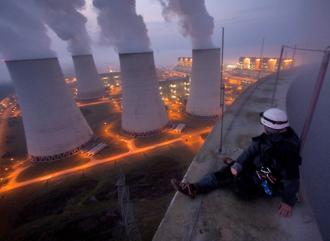
I like how they put a rifleman on top of the nuclear plant. Cool picture. I like boobtube, he so anti everything. I tryin to figure out what continent he is on. Probly not this one. He should talk more about fat slob Americans waddling from wal mart to their monster truck, eating three big macs while they walk one hundred feet. Blame the rich? Too socialist. The rich did not have all the offspring on food stamps that are too stupid to spell their own name.
Norm on Thu, 11th Sep 2014 1:42 am
LOL where is all the electric energy going to? http://mynorthwest.com/11/2605144/Washingtons-indoor-pot-grows-could-be-big-power-suck?google_editors_picks=true
The mightiest nation on Earth has the mightiest pot growing operations on Earth. Lets build nuclear power plants, so that we can grow pot? What would the aliens think?
Davy on Thu, 11th Sep 2014 5:16 am
Solar, NR is right, capitalism and representative democracy are corrupt and predatory now. It is just a function of limits of growth and diminishing returns. This is nothing new and has always been the case through history that a civilization’s economic structures breakdown at the peak of their cycles. Economic/political power concentrates and the system begins to degenerate through a breakdown of the productive elements at the bottom. The rich extract an ever greater parasitic draw on the productive. This is plain and simple to see today with the financial system that is way too big relative to the economy and that is because it is a bubble. Further this bubble is a debt Ponzi scheme on a global scale. Being global the potential for its growth and longevity is different than the micro Ponzi schemes. This can go on awhile until the productive forces have been gutted destroying the social fabric in unrest or confidence at the top is destroyed by the very greed and corruption that keeps this unholy system functioning. We are in uncharted water in so many dangerous ways now from the climate to the financial system. Capitalism and representative democracy are just another aspect of the dangerous convergence of a growth based system meeting limits of growth and diminishing returns. It will end badly but predicting the when, where, and how is beyond even the best of the super computers. Just like the climate it is far too complex being driven by billions of daily decisions in a self-organizing system driven by unpredictable and contradictory human behavior.
JuanP on Thu, 11th Sep 2014 9:27 am
Solarity “The overwhelming success of the cooperative economy based on merit proves that it will always out-perform an altruistic one.”
I won’t argue that capitalism took over the world because it has economic efficiencies other economic systems lacked, but the success of capitalism is destroying the biosphere.
I don’t consider the capitalist societies in which I’ve lived all my life an overwhelming success, but rather an abject failure. You see Western and westernized capitalist societies as a success, but others may not.
A system that requires infinite growth for its existence and makes no considerations for pollution and other externalities that are destroying the biosphere is not a success, IMO.
Kenz300 on Thu, 11th Sep 2014 12:17 pm
Quote — “As of 2010, 2.4 billion people in the world were living on less than $2 a day–more than one-third of the world’s population. Close to 1 billion people live on less than a $1 a day on average. Nearly 870 million people suffer from hunger and malnutrition, according to UN standards–around one in every eight people on the planet.”
—————-
Maybe it is time to quit adding 80 million more mouths to feed, clothe, house and provide energy for every year. Endless world population growth is not sustainable.
Endless population growth is not sustainable.
Overpopulation facts – the problem no one will discuss: Alexandra Paul at TEDxTopanga – YouTube
https://www.youtube.com/watch?v=fNxctzyNxC0