
Peak Oil is You

Donate Bitcoins ;-) or Paypal :-)


Page added on August 9, 2014

The Effect of Overpopulation on Public Health
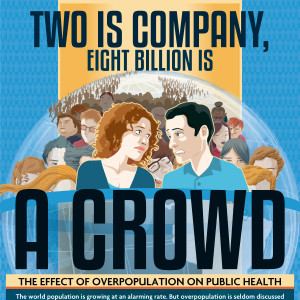

The Effect of Overpopulation on Public Health
The world population is growing at an alarming rate. But overpopulation is seldom discussed as a public health issue. Just how many of us are there and how is our rising population affecting human health?
You Can’t Ignore the Facts
7,246,909,000
Current world population (1)
This number grows by the second.
296 billion
The world population that could be reached in 150 years if fertility remains consistent (2)
The population of Africa alone is expected to double around the mid-21st century (2)
76 million
The rate at which the population grows per year (2)
In the last 40 years, the population has doubled. (2)
World population by year (2)
Year: Population (in billions)
1804: 1
1927: 2
1959: 3
1974: 4
1987: 5
1999: 6
2011: 7
2023 (estimated) : 8
10 most populous countries (3)
China: 1,355,692,576
India: 1,236,344,631
United States: 318,892,103
Indonesia: 253,609,643
Brazil: 202,656,788
Pakistan: 196,174,380
Nigeria: 177,155,754
Bangladesh: 166,280,712
Russia: 142,470,272
Japan: 127,103,388
The Causes
Why such a huge increase in population in just the past 40 years alone? (4)
Decline in death rate (particularly infant mortality) (5)
The infant mortality rate in 1900 was 165 per 1,000 births. Today, that rate has lowered to 7.
Advanced medicine (6,7)
In 1900, the average life expectancy was a mere 48 years. But thanks to advances in modern medicine and nutrition education, today the average life expectancy in the U.S. is 78 years: a 30-year difference in just over a century.
Fertility treatment technology (7)
191,000 infants born in the U.S. in 2005 alone were conceived via fertility treatments. They accounted for 4.6% of births that year.
Lack of family planning (8)
Across the world, in developing countries, fewer than 1 in 5 women uses a form of family planning. With a lack of education about contraception, the population continues to boom.
The Effects
Overpopulation already affects most countries in the world. And if rates continue as they are, it’s about to get a lot worse. (4)
Food shortages/starvation (9)
Between 2010 and 2012, 1 in 8 people around the world was suffering from hunger and undernourishment.
Easily spread disease
The closer people become, the easier airborne illnesses are spread.
8.6 million
Tuberculosis cases in 2012 (10)
Water supply contamination (11)
3.4 million people die each year because of contaminated water related disease. Overpopulation will only create more polluted water supplies.
Disappearance of nonrenewable resources (12)
It is estimated that the earth’s supply of natural gas will run out in the next 35 years. It may happen sooner if the population rate continues to grow.
Desertification (13)
Currently, the health and livelihoods of nearly one billion people in 100 countries are threatened by the desertification of land. The hope for expanded agriculture could soon be gone.
Environmental damage
Beyond desertification, the general environment is very affected by overpopulation; with more people come more CO2 emissions. Climate change will be accelerated due to higher amounts of CO2 and methane in the atmosphere. (14, 15)
Climate change-related public health concerns:
- Heat waves
- Hurricanes
- Tsunamis
- Drought
- Air pollution
- Insects
- Contaminants
Unemployment (16)
The number of jobs available will never catch up with the population boom. In the last 60 years, the unemployment rate in the U.S. has risen from 2.5% to 6.1%.
Rising conflict between territories
Overpopulation will undoubtedly cause more wars regarding the ownership of land.
55,000
Conflict- or terrorism-related deaths every year (17)
11 Comments on "The Effect of Overpopulation on Public Health"
noobtube on Sat, 9th Aug 2014 11:28 am
When it’s something negative, the United States and Europe make sure to put Africa front and center.
When it’s something positive, magically, the United States and Europe have nothing good to say about Africa.
Funny how that works.
Kenz300 on Sat, 9th Aug 2014 2:15 pm
Birth Control Permanent Methods: Learn About Effectiveness
http://www.emedicinehealth.com/birth_control_permanent_methods/article_em.htm
bobinget on Sat, 9th Aug 2014 4:15 pm
It’s not just Hobby Lobby. There are one hundred cases that have been filed for the right to discriminate against women’s healthcare. NOW calls them the “Dirty 100″.
Here they are in all of their infamy: The following is a list of plaintiffs in the 100 cases that have been filed in opposition to the birth control mandate in the Affordable Care Act, as provided by the National Organization for Women.
American Family Association
American MFG Co
American Pulverizer Co
Annex Medical
Autocam Corp
Ave Maria School of Law
Ave Maria University
Barron Industries
Beckwith Electric Co
Belmont Abbey College
Bick Holdings, Inc.
Cherry Creek Mortgage Co
CNS Ministries
Colorado Christian University
Conestoga Wood Specialities Corp
Continuum Health Partnership/Management
Criswell College
Doboszenski & Sons
Dordt College
Dr. James Dobson’s Family Talk
East Texas Baptist University
Eden Foods
Encompass, Develop, Design & Construct LLC
Eternal Word Television Network Inc.
Fellowship of Catholic University
Feltl & Co., Inc.
Franciscan University of Steubenville
Freshway Foods
Gilardi
Grace College and Seminary
Grote Industries
Hart electric LLC
Hastings Automotive
Hercules Industries Inc.
Hobby Lobby
Holland Chevrolet
Infrastructure Alternatives
Johnson Welded Products
Korte & Luitjohan Contractors
Liberty University
Lindsay Rappaport and Postel LLC
Little Sisters of the Poor
Louisiana College
M&N Plastics
Mersino Management Company
Michigan Catholic Conference
MK Chambers Company
O’Brien Industrial Holdings
Ozinga
Paul Wieland
Priests for Life
QC Group Inc.
Randy Reed Automotives
Reaching Souls International
Right to Life Michigan
Roman Catholic Archdiocese of Atlanta
Roman Catholic Archdiocese of New York
Roman Catholic Archdiocese of St. Louis
Roman Catholic Diocese of Beaumont
Roman Catholic Diocese of Biloxi
Roman Catholic Diocese of Cheyenne
Roman Catholic Diocese of Dallas
Roman Catholic Diocese of Erie
Roman Catholic Diocese of Fort Worth
Roman Catholic Diocese of Fort-Wayne – South Bend
Roman Catholic Diocese of Nashville
Roman Catholic Diocese of Pittsburgh
School of the Ozarks
Seneca Hardwood
Sharpe Holdings, Inc.
Sioux Chief MFG Co
SMA LLC
Southern Nazarene University
The Most Reverend Thomas Wenski
Tonn and Blank Construction
Trijicon, Inc. (AKA Bindon)
Triune Health Group
Tyndale House
University of Notre Dame
Weingartz Supply Co
Wheaton College (Wheaton, IL)
Willis & Willis PLC
WLH Enterprises
Zumbiel
bobinget on Sat, 9th Aug 2014 4:18 pm
Colorado teen birthrate drops 40% with low-cost birth control
Women have many choices when it comes to avoiding pregnancy. According to the Centers for Disease Control and Prevention, 99% of sexually active women from 2006 to 2010 used at least one contraceptive method at some point. Here’s a look at a variety of birth control methods and how they each work. Women have many choices when it comes to avoiding pregnancy. According to the Centers for Disease Control and Prevention, 99% of sexually active women from 2006 to 2010 used at least one contraceptive method at some point. Here’s a look at a variety of birth control methods and how they each work.
A woman’s choice
(CNN) — One state has found a way to significantly reduce teen pregnancy rates. But is its solution realistic for the rest of the United States?
Colorado’s teen birth rate dropped 40% between 2009 and 2013, the Colorado Department of Public Health and Environment announced this week, in part due to a program that provides long-acting contraception to low-income women.
Colorado’s Family Planning Initiative provided funding for 68 family clinics across the state to offer around 30,000 intrauterine devices and implants to young women at low or no cost. An IUD is a small T-shaped device that is inserted into the uterus by a doctor. They’re either wrapped in copper or contain hormones, which kill sperm and make the uterine lining too thin for egg implantation. Because IUDs stay in place for five to 10 years, they’re easier to comply with than taking daily birth control pills.
An anonymous donor funded the $23 million initiative, which also provided training, outreach and technical assistance to clinics statewide.
The state health department conducted a study, to be published in the fall issue of Perspectives on Sexual and Reproductive Health, to analyze the program’s impact. It found that the low-cost IUDs were a significant factor in the state’s overall decrease in teen births.
The percentage of young women receiving IUDs and implants quadrupled in participating clinics, according to the study. From 2008 to 2012, Colorado went from having the 29th lowest teen birthrate in the nation to having the 19th lowest.
Written by health department staff members, the study says the decline in births from young women served by these clinics accounted for about 75% of the overall decrease in the state’s teen birthrates.
St. Louis, Missouri, implemented a similar program in 2007, providing 10,000 teenage girls with their choice of free birth control. A year later, the teen pregnancy rate in Missouri was significantly lower than the national average. Colorado’s study included more women over a longer period of time, demonstrating the possible longer-term implications of providing free birth control.
The teen birthrate overall in the United States is at a record low, according to the Centers for Disease Control and Prevention. In 2009, the national teen birthrate was 13.5 births for every 1,000 teens; in 2013, preliminary data put it at 12.5 — a drop of about 7.5%.
In 2010 alone, Colorado saved $42 million on health care costs associated with teen births, thanks to the program, according to a press release from the governor’s office.
“Our Colorado Family Planning Initiative has helped thousands of young women who weren’t ready to have children avoid pregnancy with affordable, safe and effective contraceptives,” said Dr. Larry Wolk, department executive director and chief medical officer.
Seven out of 10 teen pregnancies in Colorado are unplanned, which can carry health risks for both the mother and child and increases the rate of elective abortions. The health department said that teen abortion rates during the study time period also decreased 35%.
Colorado’s funding for the initiative only runs through 2015, so despite its very promising results, its future is uncertain. While the program’s success is certainly encouraging, it would be difficult to implement in other states due to the substantial cost.
But the study authors say the initiative serves as a model for family planning coverage under the Affordable Care Act.
“By showing the effectiveness of long-acting, reversible contraceptives, we’re providing the evidence needed for health plans … to cover family planning services,” said a spokesman for the Colorado health department.
Kenz300 on Sat, 9th Aug 2014 9:38 pm
The right wing religious extremists shout to end abortions but their real goal is to end contraception.
They want lots of babies but then complain about the poor people that have them. They want to stop you from using contraception and then when you have a child you are on your own with no help from anyone. They live comfortably and can not understand the poverty of the working poor. If you can not provide for yourself you can not provide for a child. The right wing is against expanding medicare or raising the minimum wage. Both are things that can help raise a family out of poverty.
——————-
India Overpopulation Documentary – YouTube
https://www.youtube.com/watch?v=QERpT1Bq8AA
——————–
Birth Control Pictures: Types, Side Effects & Effectiveness
http://www.medicinenet.com/birth_control_pictures_slideshow/article.htm
Makati1 on Sun, 10th Aug 2014 8:25 am
Mother Nature is going to control the population. Maybe she has already started. Ebola anyone?
Thomas Venander on Sun, 10th Aug 2014 11:38 am
The one thing that should be added is the increase in food production capabilities. Any species that has an abundant food supply will continue to reproduce accordingly!
bobinget on Sun, 10th Aug 2014 3:13 pm
Kenz300, That guy. couldn’t have articulated my feelings better.
Almmost everyone sees the benefit of spay and neuter
programs for our beloved pets. Voluntary, free birth control has proven time and agin to be cost effective and of course, cuts abortion numbers.
The truth? If a so called ‘pro-life’ pol needs an abortion for his mistress, daughter or wife, secrecy, not the woman’s feelings, are most important.
Rightist pols justify this sort of thinking in their minds because they understand the situations of their women involved. For them, contact with poor underclass voters gets them nothing but bad relations with their ‘base’.
The trick here is getting poor folks interested in voting.
Forty percent of Americans have no notion which party controls Congress. Most have given up on politics if they ever had interest. I’m hoping for more candidates with ‘star’ value but are as articulate as
Kenz300
Alison Smith on Mon, 10th Feb 2025 3:22 am
Overpopulation can strain public health systems, leading to increased stress and limited access to care. Aquavita Wellness and Medspa promotes individual well-being by offering rejuvenating treatments that help manage stress, restore balance, and support overall health in a fast-paced world.
james on Sat, 14th Jun 2025 9:32 am
This is a great blog with really useful information that’s easy to understand and follow. I appreciate the clear explanations and practical tips you shared. After reading, I even started thinking about ways to simplify my life—like deciding to sell my iphone and focus on what really matters. Keep up the excellent work!
fastembroiderydigitizing on Thu, 30th Oct 2025 9:32 am
Overpopulation strains healthcare systems, increases disease spread, and limits access to resources. Likewise, professional embroidery digitizing online
shows how organization and precision can prevent overload and maintain balance in complex systems.