
Peak Oil is You
Donate Bitcoins ;-) or Paypal :-)


Page added on August 1, 2014

Depleting oil, gas reserves to affect energy security
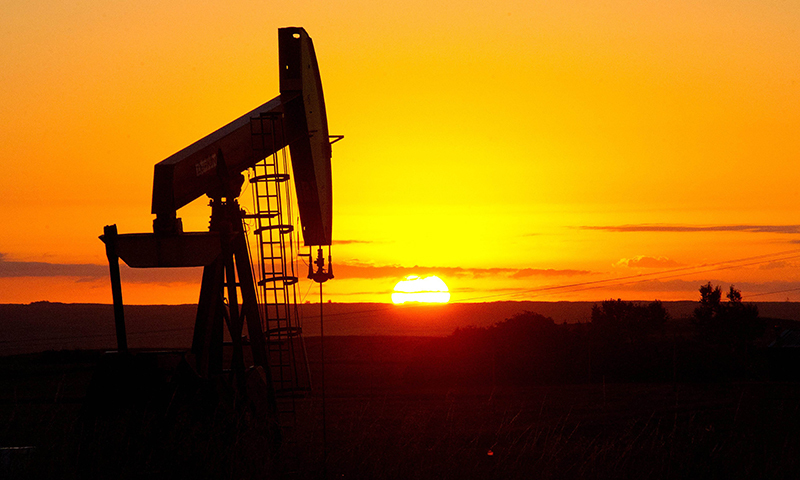
The depletion of oil and natural gas reserves, especially in Pakistan, will reduce energy security sustainability in the region, although coal reserves both in Pakistan and India will still be substantial in 2035, calculates a new working paper released by the Asian Development Bank (ADB).
In South Asia, the energy security sustainability in Afghanistan, Bangladesh, Bhutan, India, Maldives, Nepal, Pakistan and Sri Lanka will decrease through in Bhutan and Nepal, it will remain almost unchanged since hydro and biomass waste will still be the main contributors to their energy systems in 2035.
There will be significant improvements in affordability of energy for Bhutan, India, Maldives, Nepal, Pakistan and Sri Lanka in South Asia, says the working paper.
It said the oil-based power generation in Pakistan will be replaced by gas (from 30 per cent in 2010 to 43pc) and hydro (from 29pc in 2010 to 29.8pc) by 2035 in exchange for coal that will contribute 47.3pc of power generation.
Oil-based power generation in Pakistan will be replaced by gas and hydro by 2035
Although gas will be imported by Pakistan, its lower cost compared to oil will contribute to a lower overall LEC.
Afghanistan and Pakistan will improve their energy security with better integration with Central Asia which has important oil and gas reserves, the paper says, adding that from the analysis of energy security sustainability, Central Asia offers the most distinct benefits for regional integration.
Regional integration would alleviate the cost of importing fuels for island economies without indigenous fuel resources, and for those whose fossil fuel reserves will be depleted by 2035. In those economies, the regional aggregated levelised electricity cost (LEC) is lower than the national LEC.
Considered separately, the energy security sustainability of most economies will decrease substantially from 2012 to 2035, but the aggregate regional security indicator will remain high due to the fossil fuel reserves in Azerbaijan, Kazakhstan, and Turkmenistan.
The paper says that oil and shale gas is expected to play an important role in maintaining energy self-sufficiency. Additionally, the region possesses substantial uranium reserves which are not being utilised.
Coal is the fossil fuel with the largest reserves in the region and, therefore, is the main contributor to carbon dioxide. In the business-as-usual scenario, the coal contribution to the primary energy mix will decrease only slightly from 46.4pc in 2009 to 40.2pc in 2035; and the oil contribution will remain virtually unchanged at 24.6pc in 2009 and 24.1pc in 2035.
Economies with few fossil fuel reserves will have more affordability issues in 2035 as they will need to resort to more capital-intensive power generation technologies such as renewable energy or to importing fuel for conventional generation. South Asia, Central Asia, and Southeast Asia have the worst affordability and may need additional tariff support to ensure inclusiveness.
9 Comments on "Depleting oil, gas reserves to affect energy security"
Plantagenet on Fri, 1st Aug 2014 12:17 pm
Much of Afghanistan will largely revert to using dried donkey dung for fuel shortly after the US withdrawal and concomitant Taliban takeover.
ghung on Fri, 1st Aug 2014 12:45 pm
Yeah, Planet, at least the Afghanis have something to fall back on, and not so far to fall. What’s in your fuel basket?
Northwest Resident on Fri, 1st Aug 2014 2:09 pm
Articles like this must be intended for comedic relief.
Plantagenet on Fri, 1st Aug 2014 2:58 pm
@ghung
I suppose you are right—the Afghani Taliban are lucky to have donkey dung to “fall back on” for their energy supplies, while us unfortunates in the industrialized west have to rely on solar, wind, tides, hydro, geothermal, nukes, diesel, NG, and coal.
But what if you are wrong?
penury on Fri, 1st Aug 2014 3:36 pm
I am certainly impressed that at least one oracle can see clearly what the world will be like in 2035, I wonder if they could tell us what the fate of the American dollar will be and when?
ghung on Fri, 1st Aug 2014 6:51 pm
@Planet – I’m betting most westerners will have a harder time falling back on renewables than Afghanis and their donkey dung. I figure their expectations are a bit more realistic at this point; at least their supply chains are less complex.
Davy on Fri, 1st Aug 2014 7:33 pm
I always say when you meet a prospective woman look at the mom. When you want to know what an adjusted collapse is then look to someplace like Afganistan, Somalia, Yemen, and many more. Notice I said adjusted collapse but in reality BAU never sunk roots in these places. We see some modern in pockets with primitive surroundings. We need to study these places and cultures and the issues these cultures experience.
bobinget on Fri, 1st Aug 2014 8:12 pm
Let us count ‘oil wars’ both current and latent.
If it’s one thing modern military experts agree on, it’s
the need for oil over any other weaponry.
Japan is gearing up to fight China over S.China Sea oil.
Vietnam, militarizing for the same reasons.
S. Sudan vs Sudan
Yemen vs KSA
KSA vs Syria
Iran vs ISIS
ISIS vs unoccupied Iraq
Iran vs KSA
Israel vs Palestinians
Russia vs USA
Kurds vs Turkey
Boko Haram vs Nigerian paper government
One serious development ha’s overlooked by media.
We know ISIS is getting about eighty million dollars a day selling oil, black-market. al Qaeda never was able to get its mitts on so much money. (AQ dependent on
a few hundred million yearly from ransom payments made by European governments to repatriate kidnap victims)
ISIS is flush with funding that will in time, buy nuclear weapons from Pakistan. No doubt, Western intel, including Israel will be urging some sort of organized
counter attack before the first of 2015.
In this era of ‘proxy wars’, which country in the Mideast
has the most to lose from ISIS open threats against Jews?
There will be deals.
I’m guessing Syria’s Assad will be supplied with ‘tactical’ weapons in exchange for Israeli ‘protection’. ISIS is already at ‘war’ with the Syrian government so no casus belli is needed.
In any event if no organized fighting force is brought to bare on ISIS, they, along with Russia, will control
what remains of exportable oil and gas.
Makati1 on Fri, 1st Aug 2014 9:11 pm
I’m always amazed that someone can predict 20 years out with a straight face. I would hesitate to predict 20 days out with any bet that I would put big money on. 9/11 is an example of why not. Look back over the last 20 years and ask yourself if you thought any of what is now history could happen, as you sat on your porch watching the kids play on August 1, 1994. I didn’t.