
Peak Oil is You

Donate Bitcoins ;-) or Paypal :-)


Page added on June 14, 2014

This is what Peak Oil looks like
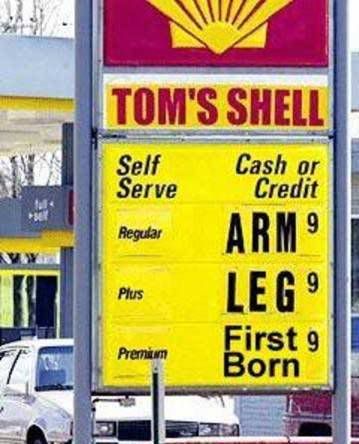
When they got you over barrel — what are you gonna do?
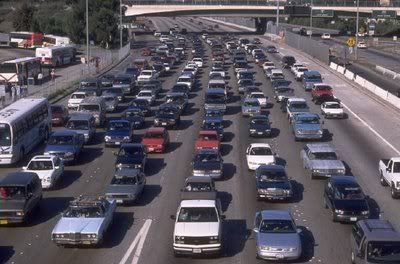
You pull up, and you pay their latest price … petro, you gotta have it.
Oil thirst rising as Iraq unrest boosts prices
by Wendy Koch and Gary Strauss, USA TODAY — June 13, 2014
The turmoil in Iraq pushed up U.S. and world oil prices about 4% this week. The U.S. benchmark crude oil, West Texas Intermediate, closed at $106.91 a barrel, up 38 cents on Friday. Brent, the international benchmark, rose 31 cents to $113.41.The IEA [International Energy Agency] has forecast that Iraq, which has the world’s fifth-largest proven oil reserves, would account for 60% of production growth from the Organization of Petroleum Exporting Countries for the rest of this decade. Iraq, now producing about 3.3 million barrels a day, has become OPEC’s second-largest producer, after Saudi Arabia.
Even if the fighting stays in Iraq’s north, the IEA sees an impact. It says the unrest makes the reopening of a key pipeline from Kirkuk in Iraq to the Mediterranean port of Ceyhan in Turkey “look even more elusive.” It has been out of use since March because of sabotage.
[…]
And the long-run forecasts are anything but encouraging. Those forecasts call for pain; they call for more of the same …
Over $48 Trillion Energy Investment Needed by 2035, IEA Report Concludes
by Sharon Kelly, desmogblog.com — 2014-06-13
[…]
It will cost $48 trillion to keep up with rising energy demand worldwide over the next two decades, a newly released report by the International Energy Agency concludes. That’s a massive jump from the $16 trillion predicted the last time the report was fully updated in 2003.
[…]Over the next two decades, the world would need to invest over $20 trillion to replace production from aging, declining oil and gas fields.
[…]An alternate plan, aimed at limiting climate change to 2 degrees Celsius, would add another $250 billion to the average yearly price tag, the IEA adds, and require a focus on energy efficiency and renewable energy sources and reduced spending on oil, gas and coal.
But this approach could ultimately be less expensive, because less will need to be spent compensating for the harmful effects of global warming.
[…]
A trillion here, a trillion there … pretty soon you’re talking about real ‘nation re-building’ money.
Thing is, whose nations (and whose accounts, and whose energy security) are going to get rebuilt, in the process?
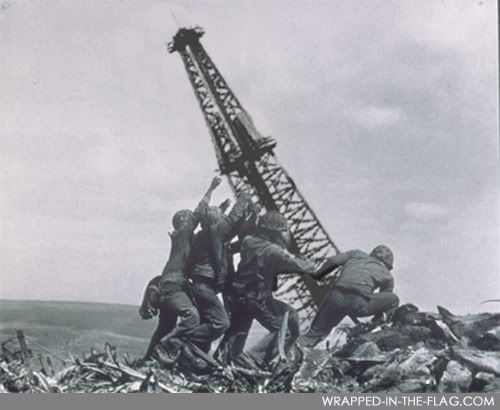
The old guard, or the new generations, fearful over their very uncertain future …
When Jed Clampett hit crude, he did what everyone said — and he moved to Beverly Hills. (Jed was one of the ‘lucky’ ones … one of the fortune few.)
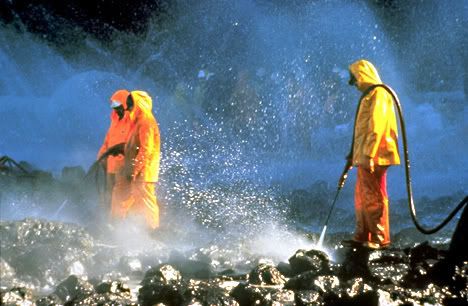
When American Interests strike oil, well those profits head for their well-oiled destinations. Same as it has always been …
IEA releases Oil Market Report for June
Accelerating global demand to reach 94 mb/d by end of year; non-cartel output more than offsets lacklustre OPEC production
iea.org — 13 June 2014
The IEA [International Energy Agency] Oil Market Report for June forecast a 1.3 million barrel-per-year (mb/d) [sic] rise in global oil demand for this year, to 92.8 mb/d, a modest acceleration on 2013 as the macroeconomic backdrop improves. Global oil demand is set to increase sharply from a low of 91.4 mb/d in the first quarter to a high of 94 mb/d in the fourth.Global supplies rose 530,000 barrels a day (530 kb/d) in May, to 92.6 mb/d, mostly on an increase in non‐OPEC production of 440 kb/d, the monthly report informed subscribers. On a yearly basis, world output was up 1.0 mb/d for the month, as non‐OPEC growth of 2.1 mb/d compensated for OPEC declines.
[…]
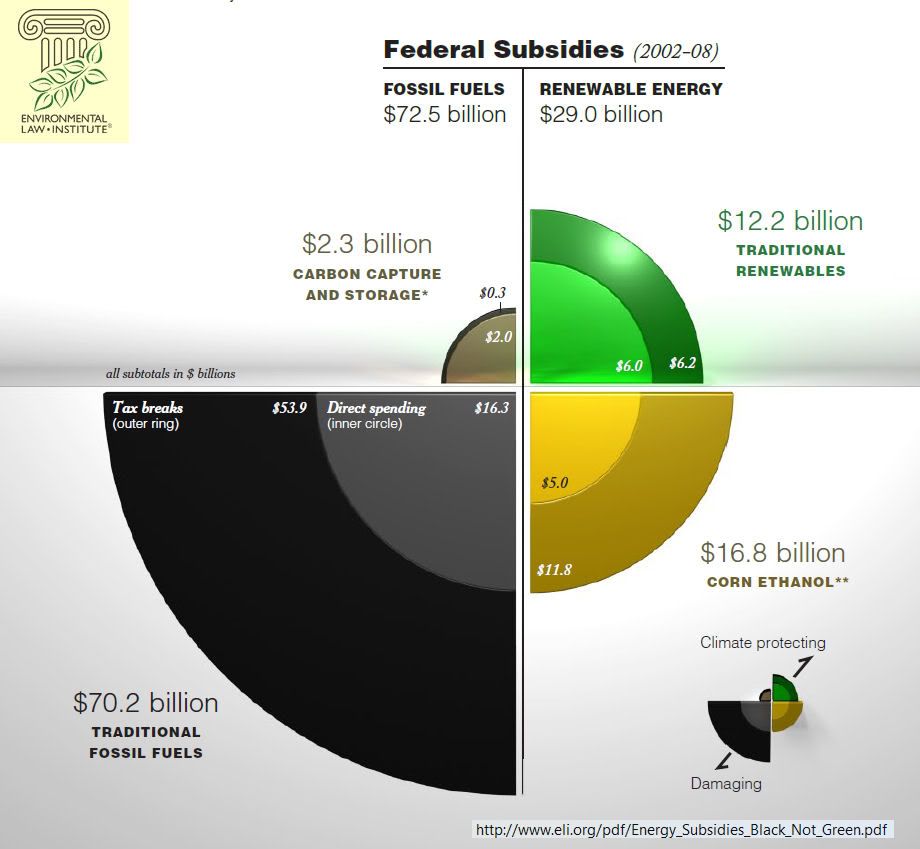
— Old school vs New school … (larger)
World needs $48 trillion in investment to meet its energy needs to 2035
IEA World Energy Outlook special report sees rising role of governments in shaping investment decisions
iea.org, London — 3 June 2014
Meeting the world’s growing need for energy will require more than $48 trillion in investment over the period to 2035, according to a special report on investment released today by the International Energy Agency (IEA) as part of the World Energy Outlook series. Today’s annual investment in energy supply of $1.6 trillion needs to rise steadily over the coming decades towards $2 trillion. Annual spending on energy efficiency, measured against a 2012 baseline, needs to rise from $130 billion today to more than $550 billion by 2035.“The reliability and sustainability of our future energy system depends on investment,” said IEA Executive Director Maria van der Hoeven. “But this won’t materialise unless there are credible policy frameworks in place as well as stable access to long-term sources of finance. Neither of these conditions should be taken for granted. There is a real risk of shortfalls, with knock-on effects on regional or global energy security, as well as the risk that investments are misdirected because environmental impacts are not properly reflected in prices.”
[…]
When those ‘investments’ never make it outside of their traditional box, we can be sure, we will just keep on getting their traditional results. More pain at the pump.
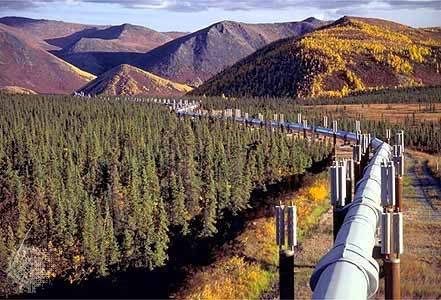
We need to think outside of the ‘bubbling crude’ box. We need to stop relying on their ‘Texas Tea’ (like Jed).
We need is a long-term plan, that takes into account Oil’s many, many hidden costs.
We need a modern-day Apollo Project with goals and targets, for the modern century — not for the out-dated ones of the last century.
Do we want to be FREE of Foreign Oil and Foreign Wars, or NOT?
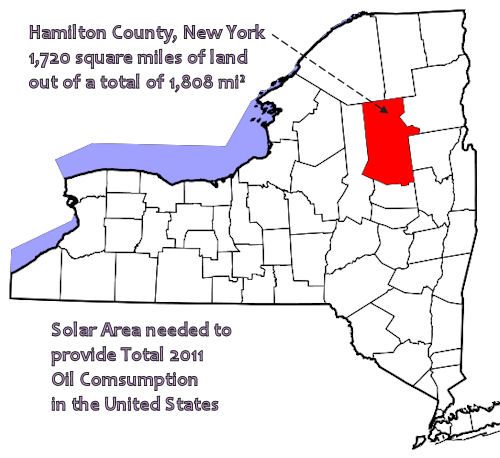
Do we want to be FREE from fracting the hell out of our Ground Water, and tarring our Shorelines, or NOT?
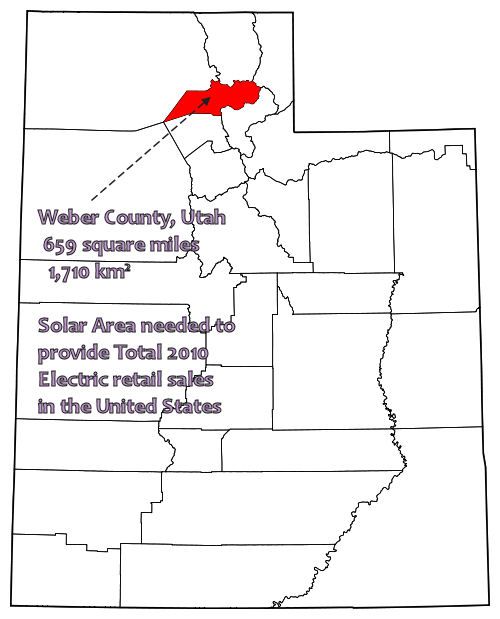
It’s our Future … It’s our Energy Insecurity … it should be OUR Decision.
Should it not?

Because as it is turning out … “Oil’s not Well, that ends not well.”
10 Comments on "This is what Peak Oil looks like"
paulo1 on Sat, 14th Jun 2014 8:51 am
Solar info misleading as it promotes a simple footprint formula on a very complicated issue of useage, intermittant production, storage, distribution, and installation. Added to this the short range of ev, a simple switch is not likely to happen anytime soon. FF are portable and powerful.
Let the gas prices rise and rise. When the price is high enough solutions that also make economic sense will arise. Those solutions will unlikely be a new powered form of BAU, but rather indicate change in all ways we live and work. There will be casualties and displacement. BAU, or BAU lite is unlikely to exist. Governments do not have the solutions and need to remain clear beyond regulatory mandates, etc. It is up to individuals to be aware of these coming changes and prepare to meet them with a decline in living standards and realistic expectations with regard to the world’s resources.
Our way of life is, in fact, very negotiable.
Paulo
rockman on Sat, 14th Jun 2014 8:55 am
At least they make a good point that I keep harping on: the exact date of global PO is of little importance. What is critical and is currently significantly impacting the global economy is the dynamic relationship between supply, demand and price.
And while moving as quickly as possible to the alts is obvious they seem to make the same mistake others do: retargeting much of the current capex flow from fossil fuels to the alts. First, the oil patch invests in drilling wells…it doesn’t build solar panels or wind turbines. In particular a pubco can’t quickly abandon oil/NG and not expect to destroy much of the market value of its stock. If it wants to move into the alts that’s OK but it can’t afford to abruptly turn away from its core business. Given the tens of millions of Americans have some portion of their retirement accounts in fossil fuels it would be unacceptable as a nation. Second, the economy depends on maintaining fossil fuel consumption as it is today lest it gets pushed into another global recession. Which would not only reduce capex availability for fossil fuel development but also for the alts.
As has been said here many times before there was a gradual transition path from fossil fuels to the alts. But we needed to start seriously on that path at least 40 years ago IMHO.
There’s no arguing that we don’t need to move to a conservation/alt orientation ASAP. Knowing what we need to do is simple enough for a 14 yo to lay out IMHO. Now we need someone really smart to detail a plan on how it can be ECONOMICALLY accomplished. Just endless repeating what we should have done decades ago and what we should be doing now is wasting everyone’s time IMHO. The solution is obvious. How we afford that fix is not obvious to me.
penury on Sat, 14th Jun 2014 9:51 am
The world is essentially bankrupt. Military actions (if not outright war) are flaring in several places, not the least the Ukraine and Iraq.In the U.S. a mid-term election is approaching, so both parties will be clamoring for a release of oil from the reserve to maintain low prices. In this atmosphere I fail to see where any investment in alternative energy will be possible before 2015 at the earliest. I do think that things will have to get much worse before any action will be taken.
J-Gav on Sat, 14th Jun 2014 9:53 am
Rock – I’m not sure there’s a human alive today smart enough to figure out how to make an energy transition smooth, peaceful, painless and ECONOMICAL. And if there is, he/she is probably in jail for ‘disturbing the peace’ i.e. BAU …
eugene on Sat, 14th Jun 2014 11:41 am
The rants of “should, could and need to” makes me think of sitting in a bar listening to half dozen half loaded locals discuss the world’s problems. Whole lot of wind bag BS of quick easy solutions.
Makati1 on Sat, 14th Jun 2014 9:06 pm
Dreamers all…
rockman on Sat, 14th Jun 2014 9:50 pm
J-Gav: Exactly. Problems can have solutions even if they are difficult to realize. And there are predicaments which have no solutions but just reactions. Reactions that might improve the situation or make it worse.
Hiruit Nguyse on Sat, 14th Jun 2014 11:26 pm
RE: Solar Footprint Required to provide energy requirements. I have seen this fraud before.
Some years ago, I used a site that purported to give the square footage required for producing 1000KwH / Month of solar, and compared that to US Primary Energy consumption annually.
The result entailed covering the entire united states 2.5 times from coast to coast with Solar Panels. I see that most solar estimating sites do not give figures in Kilowatt Hours…this is the only figure that matters, and to know this, one has to know exposure, season, efficiency, duration etc.
I am not an expert on this subject, but obviously, these tiny little counties covered over in solar panels could not hope to cover our primary energy consumption in this nation which was about 95 Quads two years ago. This is:
27,863,236,111,111 KwH. (about)
Of course, I understand that electrical and transportation are only a part of this figure, but they are a large part. I would love any Energy Literate person to show me a calculation regarding the land surface area required to produce just 13,000 TwH (half the above). I don’t see that happening out of 2 teeny little counties…the total Solar Irradiance doesn’t even seem to be in the ball park.
I welcome any persons who can give me honest figures about annual Kwh / Required Square Feet.
hn
GregT on Sat, 14th Jun 2014 11:52 pm
Rockman,
Predicaments have only choices, none of which improve the situation. Problems have solutions, predicaments do not.
Davy, Hermann, MO on Sun, 15th Jun 2014 5:49 am
Greg, well put on predicaments!