
Peak Oil is You

Donate Bitcoins ;-) or Paypal :-)


Page added on May 16, 2014

Peak Oil: Semantics Vs Issues
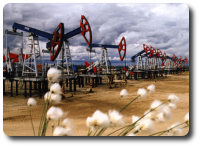
In the end, does the choice of words really matter?
He [Total CEO Christophe de Margerie] also cautioned against oil and gas industry pronouncements about abundant energy resources. When industry leaders ‘say there is plenty of oil and gas . . . you’re sending the message that we don’t care about the environment,’ de Margerie said. ‘We do care. And the problem today is not the oil and gas resources — it is access to those resources.’
Some resources are locked away in relatively unfriendly countries, de Margerie said. There is ‘no more peak oil’ and ‘no more peak gas,’ he said, but those geopolitical and access constraints do translate into ‘peak capacity.’ [1]
The reality is that by whatever phraseology one prefers, readily available and affordable conventional crude oil is no longer readily available and affordable. The energy source of choice for decades is no longer as abundant and accessible as it once was, and the fossil fuel industry has had no choice in recent years but to look elsewhere and at other types of supply. To the credit of industry efforts and technological prowess, recent years have seen an uptick in production from the shale formations here in the United States.
But while they may suffice for now, facts tell us that will be relatively short-lived. Any number of prior posts of mine as well as the efforts of others more knowledgeable than me have discussed the realities and shortcomings of tight oil production generated from hydraulic fracturing [fracking]: more expensive; not as energy “dense” or efficient; greater energy inputs are required; environmental concerns are greater; investments needed are no longer automatically available; higher prices are needed by the industry while not at all favored by consumers; high decline rates from fracked wells are the norm—necessitating more of the costlier wells just to keep even in production totals, and the list goes on.
The important issue is that no matter what words one uses or how the issues are characterized, the energy supply we’ve long relied upon to power our society to its impressive heights is no longer what it once was. That would be a challenge enough if it were only an issue here in the U.S. But that’s not the reality.
Exporting nations are keeping more of that supply for their own domestic needs. Other nations [think China and India] have expanded their economies and fossil fuels are the engines driving that growth. Still more nations seek to expand the quality of lives for their own populations, and fossil fuels likewise drive those ambitions.
“Geopolitical and access constraints” by whatever definition floats your boat still leads to a decline in availability and affordability of those same resources we depend upon. The supply is not the same and does not enjoy the same qualities it once did, and the sooner we all recognize our dependency and the need to make choices now to change that before it is no longer a choice we own, the better off we’ll all be and the better our options for adaptation.
It’s just not that difficult to understand.
4 Comments on "Peak Oil: Semantics Vs Issues"
Pops on Fri, 16th May 2014 7:05 am
Messaging.
The CEO points out that it is all about messaging then goes on to deliver a message. GW is more of a PR problem at the moment than PO so he urges restraint in dismissing PO so as to avoid looking callous to the GW concerns – and keep the share price up.
The message will shift as PO becomes the more immediate concern.
rockman on Fri, 16th May 2014 7:47 am
Pops – And as you and the rest of us know the energy situation can never be delivered and appreciated by the public from a few well scripted press release. Far to complex to be understood from a “message”. Just consider how complex the discussion here can get and most of us know much more than the public. Unfortunately the public just won’t dig deep enough into the subject to understand it. They’ll simply latch on to the “message” (positive or negative) that fits their preconceived ideas/hopes IMHO.
Plantagenet on Fri, 16th May 2014 10:46 am
Total has been more forthcoming than most energy companies in facing up to the peak oil problem. Everything the Total CEO said is quite true.
J-Gav on Fri, 16th May 2014 11:31 am
Hey Plant – We don’t always disagree. You’re right to point out that de Margerie has been ringing bells more loudly and for longer than any other Big Oil CEO. Starting years ago when he reacted to a prediction (EIA perhaps?) that world annual crude consumption would be 120 million barrels by 2018-2020 by saying he’d be very surprised if it ever got over 100-105 million.