
Peak Oil is You

Donate Bitcoins ;-) or Paypal :-)


Page added on May 3, 2014

How Iran Became One of the World’s Most Futuristic Countries
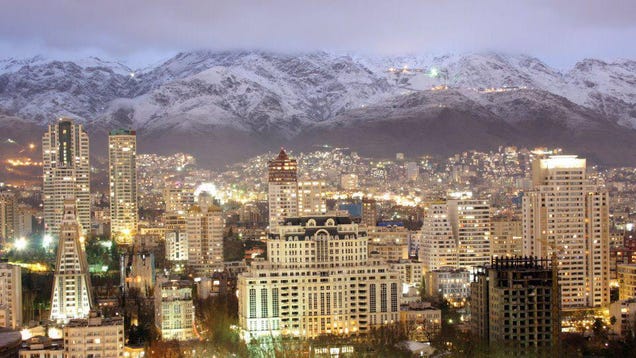
When we think about futurism, often we imagine cutting-edge technologies like bionic arms or weather machines for colonizing Mars. But if we really want to make it for another few centuries, we’re going to need something that Iran has already got.
To understand Iran’s breakthrough, we need to go back in time to 1993, when President Obama’s science adviser John Holdren was trying to figure out how big the world’s population could get before there was a major energy crisis. A respected environmental scientist, Holdren offered up a famous scenario based on the world’s population at that time.
Peak Population
At that time, Earth held 5.5 billion people (compared to today’s 7 billion), who consumed 13 terawatts of energy annually. Of course, they were not consumed equally: people in the developing world consumed on average 1 kilowatt per person, while people in the developed world consumed 7.5. Holdren suggested that given current population growth rates, the world would need 8 times more energy to fuel its 14 billion people by the end of the twenty-first century. Which would mean total collapse of the ecosystem, peak oil, and likely both.
That sounded crazily horrific, so Holdren asked what would happen if the population only boomed to 10 billion, and everybody had equal access to energy. Even if everybody only used on average 3 kilowatts, the world would still require 30 terawatts of energy annually by the end of the twenty-first century.
 Expand
Following up on Holdren’s research, population biologists Paul Ehrlich, Ann Ehrlich and environmental scientist Gretchen Daily decided to reverse engineer the scenario. They wanted to figure out what the ideal population size would be, if we wanted people to have access to 3 kilowatts, without destroying the environment. In their calculations, they assumed a twenty-first century where people would adopt more carbon-neutral sources of energy, like solar. They also assumed that some animals would go extinct, but that enough would be brought back from the edge of extinction that our ecosystems would remain stable.
The result? The Ehrlichs and Daily found that the most the planet could bear at that level of energy use would be 2 billion people, roughly the world’s population in the 1930s.
Iran’s Simple Solution
Confronted with numbers like that, it’s tempting to throw up your hands and give up on humanity’s future. How could we ever get the world’s population back down to 2 billion from its current 7 billion? Actually, it can be done — and it’s been done before, on a smaller scale.
A few years before Holdren described his population scenario, there was already one country in the world whose leaders were deeply worried about the economic and environmental costs of rising population. In Iran, during the 1980s conflict with Iraq, the Ayatollah Khomeini instituted new government regulations that encouraged women to have as many children as they could to build a “Twenty Million Man Army.” As a result, Iran’s population grew from 37 million people in 1979, to 50 million in 1986. This was, according to journalist Alan Weisman, “the highest rate of population increase the world had ever seen.”
Weisman, the author of The World Without Us, writes about Iran’s incredible growth in his recent book about overpopulation, called Countdown. By the end of the 1980s, government workers in Iran’s budget office realized that the nation was headed for a major economic crisis, not to mention a resource crisis. The booming population was set to outstrip the country’s resources. But after a series of secret meetings with the Ayatollah, a group of demographers, budget experts, and the health minister managed to convince their leader that something needed to be done, and it had to be done fast.
They needed to bring Iran’s population back down to manageable levels. And so, after the war ended in 1988, the Ayatollah gave his blessing to Iran’s Ministry of Health to set up a family planning program that would revolutionize his country.
It started with a slogan: “One is good. Two is enough.” This became the rallying cry in mosques, and in the many family planning clinics set up by the Ministry of Health. Workers with the Ministry, many of them women, were dispatched to every city in Iran, as well as even the tiniest villages. They had one mandate, which was to offer free contraception — from condoms to sterilization procedures — to any person who wanted them.
Nobody was forced to use contraceptives, nor were there any limits placed on how many children people could have. But women flocked to the health care workers. Battered by the war, facing economic hardships, most women opted to be sterilized after having two children. Others wanted to continue their educations after being exposed to the family planning classes offered in local healthcare centers. More and more women learned to read, and more went off to college. By 2012, 96 percent of women in Iran could read — up from about 33 percent in 1975. And at least a third of government workers were women.
 Expand
Best of all, the population growth had reversed. In 2000, Iran’s birthrate reached replacement levels of 2.1 children per woman. In 2012, the average woman had 1.7 children. After checking on these numbers using an independent group of demographers, the UN was so impressed that Iran’s health minister was awarded a United Nations Population Award.
Photo by Vihad Salemi/AP
Even when a new government regime came to power in Iran, and tried to roll back these healthcare policies, the population numbers continued to drop down to sustainable levels. Too many women had become educated and entered the workforce — it was impossible to restart the policies that led to the baby explosion of the 1980s.
Regardless of what happens next, we have evidence that in one generation, a large and religious country like Iran was able to lower its rate of population growth tremendously. And it was accomplished using one, simple technology: Contraception. That, coupled with family planning education, reversed their runaway population growth.
If we want to avoid an environmental crisis by lowering the world’s population, we now have good evidence that it can be done without coercion. All we have to do is make contraception freely available to anyone who wants it. That may prove to be a lot cheaper in the long run than trying to find those 30 terawatts of power year after year.
12 Comments on "How Iran Became One of the World’s Most Futuristic Countries"
diemos on Sat, 3rd May 2014 8:13 pm
“Best of all, the population growth had reversed.”
Lol. Somebody should remember to tell the iranians that, all 76 million of them.
RICHARD RALPH ROEHL on Sat, 3rd May 2014 11:18 pm
Iran is a sane nation. Unfortunately… the United States of Perpetual War Profiteering is nation insane.
GregT on Sun, 4th May 2014 2:03 am
Iran is one of the remaining nations that has not given in to the central banking cartels. A nation full of an abundance of natural beauty, highly educated citizens, and some very gorgeous women. Despite cartel sanctions, their economy is still doing better than ours.
The elite controlling Washington DC, and the Industrial military complex, want control over Iran, just like they have taken control over most western nations. Wake up people, your government isn’t acting in your best interest. They are spending your money on wars in far away nations, while your own country is falling apart.
Norm on Sun, 4th May 2014 3:39 am
When the author says People use 13 terawatts per year’ he is ignorant of basic college physics. Watts are a rate of usage, not an absolute total.
Davy, Hermann, MO on Sun, 4th May 2014 8:22 am
Greg, yes to the great people, beautiful women, and natural beauty no to the rest. Iran is another basket case resource driven economy with severe economic distortions because of its religious oligarch monopoly on the economy especially through the revolutionary guard and the devil mullah’s. They are exporting terrorism and extremism. This is not unlike others in the ME and no worse than the US exports of the US slim and stink. But please don’t promote a country in severe overshoot to carrying capacity who is hell bent on going NUk at a time when we know peaceful and wmd nuk is an unmanageable poison in the coming decent. They are every bit as bad as the US oligarchs and have their equivalent mafia all-be-it much smaller.
Makati1 on Sun, 4th May 2014 8:46 am
Ah, Davy, here comes the ‘basket case’ rant again. LOL
The uS is the most out of control basket case in the world today … but it is always ‘someone else’ in your mind. Too bad. Pull the oil plug and it will become very obvious quickly in the USSA.
Davey on Sun, 4th May 2014 10:45 am
Makster, will not aurgue US being a basket case but the US is far better positioned to survive collapse than your poster girls (Russia, China, and Iran) good luck mak on your return back to your mega city Slum
Makati1 on Sun, 4th May 2014 11:06 am
As I said before, there are 7+ billion of us now and that means 7+ billion different views of the world, based on our observations and experience. Your’s seems to be that of a narrow minded back-hills, flag waving patriot. Long rants don’t make you right nor does your once being in the 1% make you intelligent. If my comments on the worl bother you, don’t read them. Simple isn’t it?
Aire on Sun, 4th May 2014 11:09 am
It’s impossible to guess for sure which government (nation) can survive the storm but I would think a nation use to living without all the benefits of energy are more resilient. Region will most likely hold the nation together in my opinion too. Not saying religion will make life better for the average citizen but for keeping institutional services going without energy I’d say somewhat effective
Davey on Sun, 4th May 2014 11:17 am
Aire, US has food and a realativly low pop density that will help greatly unlike China that is very poorly positioned with food and population.
MSN fanboy on Sun, 4th May 2014 11:57 am
Davey, all you had to say was the U.S. has space.
Feemer on Sun, 4th May 2014 1:14 pm
The US isn’t in a great position, we are slaves to our precious economy, which is dependent on oil imports as well as a thriving world economy. From a collapse standpoint, yeah I would want to be in America or Canada, but just turmoil for decades because of peak oil, climate change, over population etc, then I’d rather be somewhere else.