
Peak Oil is You

Donate Bitcoins ;-) or Paypal :-)


Page added on May 2, 2014

Peak Oil: What’s A Few Hundred Billion $$ ?
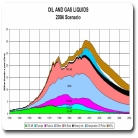
[I]f crude oil had not peaked and the price of oil remained at around $25 per barrel, the US would be spending around $1.5 billion less per day on oil, or $543 billion less per year. Most importantly, however, the US would be spending almost $600 million less per day on oil imports, or $216 billion less per year.
I highlight the import costs, in particular, because that is money that is being sucked out of the US economy….
What would the US look like today if it had an extra $600 million every day to spend on renewable energy, schools, hospitals, or public transport? [1]
The last two posts have examined several of the key points made by Samuel Alexander in another of his excellent reports on the world of energy. This most recent effort of his presents a sobering, but honest and straightforward examination of many of the most important aspects of the energy supply challenges ahead.
One may quibble with his calculations, and today’s prices may differ from those he relied upon to make the observation above, but I think it’s fair to say that for just about all of us, those are some seriously large numbers! They are probably too large for almost all of us to wrap our minds around. Who the hell deals with dollar amounts like that every day (or every lifetime, for that matter)?
It’s so far-removed from our daily experiences that the power and implications attached to the totals simply do not register with us. The significance becomes an abstract concept. Given the weight of our own daily burdens and responsibilities to make sure we get to tomorrow intact and safe, the relevance and relationship to our day-to-day experiences have no rational meaning or connection.
But therein lies one of the problems which must be both articulated more clearly by those who know, and appreciated at a much more personal level by those who currently do not. While the inclination is to assign data such as the dollar amounts above to the “Abstract” category, it’s every bit as important as anything else which more directly touches our lives.
When your small portion of expenditures is combined with the small portions of tens/hundreds of millions of others and it all flies out the window rather than staying put and being used for more tangible and direct benefits for you and me, that does affect us. It’s much easier not to connect those dots, but they’re connected nonetheless.
Having more information and appreciation for the impact and challenges current and future energy supplies will impose on us all affords us the choices and opportunities to start meaningful discussions about what we should be doing now and every day going forward.
Taking advantages of the fighting chances to do our best to create, adapt to, and thrive in a better future seems a whole lot wiser than avoiding the unavoidable and thus do nothing at all.
Choices matter. Peak oil matters, too—even if it’s not all that obvious at the moment.
23 Comments on "Peak Oil: What’s A Few Hundred Billion $$ ?"
rockman on Fri, 2nd May 2014 7:29 am
“It’s so far-removed from our daily experiences…”. Given that gasoline prices have doubled since the oil price slump in late ’08 I suspect the peak oil dynamic isn’t really that far removed from daily experiences. People might not as readily notice increases in the prices of most purchases but for many they get a reminder every time they fill up.
diemos on Fri, 2nd May 2014 7:40 am
No they don’t.
It’s just the new normal.
eugene on Fri, 2nd May 2014 7:55 am
Diemos
I enjoy comments from the upper incomes. Come on down to where most of us live. Of course we’re noticing price increases. We simply spend less on other necessities. You know things like dental work, proper nutrition, medical care, etc.
Couple yrs ago, I was at a small campground in North Dakota. Big motorhome was there. “Where you from” I asked. “Ten miles down the road” was the answer. “Local vacation” she said. The evidence is everywhere to us without high paying jobs, pensions, us average folks.
rockman on Fri, 2nd May 2014 9:34 am
Eugene – Yep…easy to forget about the folks at the bottom of the pyramid. Like the folks I saw selling some of their kid’s toys at a garage sale to raise money for their share of the car pool thy took to work. Fortunately for me I don’t even notice the pump price. But, then again, I sell oil for a living.
And I’m sure all thousands that have lost loved ones and friends in our effort to “export democracy” to the Middle East are very aware.
Jimmy on Fri, 2nd May 2014 9:37 am
Most folks, rich and poor alike, don’t blame high gasoline prices on peak oil. Duh!
Kenz300 on Fri, 2nd May 2014 9:42 am
Quote – “Most importantly, however, the US would be spending almost $600 million less per day on oil imports, or $216 billion less per year.
I highlight the import costs, in particular, because that is money that is being sucked out of the US economy….
What would the US look like today if it had an extra $600 million every day to spend on renewable energy, schools, hospitals, or public transport? [1]”
———————————–
Locally produced alternative energy provides local jobs and does not need to be imported. Wind, solar, wave energy, geothermal and second generation biofuels made from algae, cellulose and waste can all be generated locally helping the local economy.
Biofuels can now be produced from waste or trash. Every landfill can be converted to produce biofuels, energy, and recycled raw materials for new products. The fossil fuel companies hate that. It means more competition.
The Time for Wind and Solar Energy Is Now
http://www.renewableenergyworld.com/rea/news/article/2014/05/the-time-for-wind-and-solar-energy-is-now
peterjames on Fri, 2nd May 2014 9:51 am
Not a great article, its taken some facts and disregarded so many others. How many barrels of oil would the US be producing if the oil price was $25 a barrel, not much. Import 20 million barrels at $25 a barrel, and every unemployed ex high earning oil person will feel the pinch of 60 cent gallons.
Plantagenet on Fri, 2nd May 2014 10:22 am
US GDP is growing at 0.1%. Peak Oil has severely damaged the economy of the US and EU.
Makati1 on Fri, 2nd May 2014 12:04 pm
Right on, Plant!.
GregT on Fri, 2nd May 2014 3:13 pm
I wonder what GDP would look like, without the trillions of dollars injected into the system?
bob on Fri, 2nd May 2014 4:09 pm
Is there any chance that a giant oil field could still be discovered? Or that one has been discovered by one of the major oil companies but they are keeping it secret until prices get to a certain level?
Northwest Resident on Fri, 2nd May 2014 4:39 pm
bob — Good question. I have read there are some huge/gigantic untapped oil fields in Iraq. I’ve read informed speculation that those oil fields have intentionally been kept untapped by US and other Western powers. One can only imagine why. Dick Cheney wasn’t kidding when he said that “Iraq is the prize”. But don’t look for Iraq or their Western partners (masters) to tap those oil fields and ramp up production to meet world demand. We would burn through it all in an instant at current and growing demand levels, relatively speaking, leaving an even warmer climate due to CO2 emissions and no guaranteed source of easy-to-get oil for post-collapse human civilization.
KingM on Fri, 2nd May 2014 6:08 pm
We wouldn’t be spending that money on hospitals and roads. That’s a joke. We’d be spending it on boats and boob jobs and really fast cars that get shitty gas mileage.
Makati1 on Fri, 2nd May 2014 7:32 pm
“What’s A Few Hundred Billion $$”
Six months of Fed QE….
Davy, Hermann, MO on Fri, 2nd May 2014 8:36 pm
Mak, or 1 months of Chinese stimulus.
GregT on Fri, 2nd May 2014 11:04 pm
Bob,
“Is there any chance that a giant oil field could still be discovered? ”
So let’s just speculate on that for a moment. We find another SA, we continue on with BAU for a couple of more decades, we exploit even more finite resources, and our populations continue to grow exponentially.
That oilfield goes into decline as well, which it will do. Then what? We’re right back where we started, but with far less resources, larger populations, and a planet that is even further in decline.
Only kicking the can down the road, a road that will continue to get less possible to navigate, the further we take it.
bob on Sat, 3rd May 2014 12:21 am
I am not hoping or praying that we find that I am just wondering if it is possible…has everything been mapped out. I know when they were trying to find the Malaysian plane…they sent a sub in and did not know how deep the ocean was. I was perplexed by this; I just don’t know how much of the earth do we really know….
Poordogabone on Sat, 3rd May 2014 1:40 am
“the US would be spending almost $600 million less per day on oil imports, or $216 billion less per year.
I highlight the import costs, in particular, because that is money that is being sucked out of the US economy….
What would the US look like today if it had an extra $600 million every day”
I did not know that domestic oil was free.
Poordogabone on Sat, 3rd May 2014 1:50 am
I must add if we did not buy oil from our friends in the ME, how would they buy our guns and bullets?
If we did not buy our oil from Canada, with what money would they buy our cars and trucks?
Makati1 on Sat, 3rd May 2014 7:10 pm
Still suckin’ on that MSM cool aid Davy?
rockman on Sun, 4th May 2014 11:45 am
bob – Define “giant” and I’ll give a guess. For me a giant would be somewhere north of 1 billion bbls of oil. And that’s the oil in a field…not some trend like the Eagle Ford or Bakken. Kashagan Field, at 13 billion bbls, was the largest discovery in decades. But it was discovered 14 years ago and after spending $50 billion still isn’t producing. And even if they hit the 1.5 million bopd anticipated max it will take a minimum of 40 – 50 years to recover it all. So a giant field it might be but not as impactful as the reserve number would imply.
Nony on Sun, 4th May 2014 1:40 pm
I asked you for a definition of field versus trend and did not get a very precise answer, Rock. If the terms are hard to define anyhow, I think making a lot of hay about the difference is not worth much.
Also, as we discussed, USGS calls the Bakken a “continuous oil accumulation” and the largest one in the US. So, maybe this whole field versus trend thing is not so useful when dealing with shale source rock versus traps (or even fissured formations like Austin Chalk that are not the source rock (IOW have the oil via migration form the source).
Nony on Sun, 4th May 2014 4:21 pm
The Austin Chalk is right above the “eagleferd” and dependent on it for its oil. Some companies are looking to go back into the Chalk with more wells. Basically building off of the infrastructure (pads and such) for the EF and also maybe squeezing a bit more oil given the current technologies (OK, pricing!) 😉 See the presentations by EOG and COP for instance. Maybe a place for the Austin Chalk love…