
Peak Oil is You

Donate Bitcoins ;-) or Paypal :-)


Page added on April 19, 2014

Peak Oil: Facts Aren’t Optional
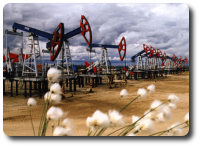
Part of the problem with rising oil prices is that they radiate through the economy in many ways: in higher food prices, because oil is used to produce and transport food; in higher metal prices, because oil used in metal production; and in higher finished products, such as automobiles and new homes, because they use oil in their production. With wages not rising sufficiently, as oil prices rise, workers find they need to cutback on discretionary goods. The result is recession and job layoffs….
The flip side of this issue is that without wages rising as fast as the cost of oil extraction, it is hard for the selling price of oil to rise high enough to provide an adequate profit margin for oil producers. It is inadequate oil prices for oil producers that seem to be the current problem. (links to other articles by this author in the original) [1]
That’s part of the problem, as Gail Tverberg has so ably discussed on numerous occasions in recent months. Limited knowledge duly noted, I’ve done the same [See these 1. 2. 3. for example.] It’s not the most pleasant of acknowledgments, but here in Reality, there are those moments when truth and the facts aren’t sunshine and ice cream.
Refusal to accept the facts has become the standard practice of too many fossil fuel industry officials and their coalition of media mouthpieces. Cherry-picking some of the information, offering uplifting and catchy buzzwords, scoffing at or insulting those who believe the public should be aware of facts which affect their lives (a novel idea, I know). Those tactics offer them the justifications they need to continue to play the same denial game just a bit longer; one more day to earn profits whose long-term prospects aren’t quite such a long-term assurance any more. (Facts can have that effect.)
The always-worth-reading Jay Bookman recently offered observations about the denial game played by climate change deniers:
Given those stakes — very rapid, irreversible and highly disruptive changes to the global climate that all living creatures are dependent upon — it is enormously irresponsible to cling to the diminishing degree of uncertainty as an excuse to do nothing. [2]
Not so surprisingly, the tactics used by the climate change deniers are all drawn from the same playbook used by the peak oil/energy supply deniers and far too many right-wing politicians—all of whom are apparently allergic to facts and reality. Many of the same names cross over into the other discussions. Shocking! Fact, truth, and integrity are not disposable commodities, mere conveniences to make use of only if and when it suits selfish motivations, but one would be hard-pressed to think that when listening to the volumes of moronic dissembling which takes place when reality intrudes on rigid ideology.
More recently, Bookman discussed a wonderful study by the well-credentialed James L. Powell (if a doctorate in geochemistry from MIT is supposed to be impressive; doesn’t everyone have one of those?) who examined 10,885 peer-reviewed studies in 2013 which addressed climate change. Two (2; deux; dos; zwei, etc. etc.) peer-reviewed studies disagreed with the conclusions offered by the other 10,883. But as sure as the sun rose this morning, some nitwit will trot out some argument as proof-positive that the two are correct and the 10,883 are part of some still-undefined conspiracy with still-secret motives.
As Robert Altemeyer pointed out in his outstanding study of authoritarians who readily dispute climate change and other inconvenient realities:
[T]hey will find someone, somewhere, with some sort of credentials, who will dismiss a great number of studies with a wave of the hand and give them the sound-bite they want. For them, one sound bite cancels the other, and there really is no difference between a widely-confirmed fact and a speculation, between fifty studies and one.
Must be nice….Certainly cuts down on thinking and worrying about responsibility!
This observation really shouldn’t carry the potential for any dispute at all, but in today’s world, when the facts about climate change or energy supply or policy proposals by the opposition intrude on profit-making or power-retention, it is sure to raise the hackles of some:
There are lots of reasons to care about energy, and lots of reasons to want to change the way we make and use energy in this country. For me, though, it boils down to a concern about climate change and about energy diversity. Those are the big reasons I think we need to seriously alter the way we make and use energy. Why do I think that? In a nutshell: that’s what the majority of scientific studies tell me. When many different, unconnected scientists come to the same conclusions, after decades’ worth of research, I listen. You should, too. [3]
I’ve asked this before, and I’ll do so now: Who wins and who does not? Who is benefitting now from the lies and misleading/disingenuous arguments or cherry-picked facts? If the truth isn’t part of the discussion, then what kind of argument is one making to begin with and what merits do they have at all? If those raising baseless objections don’t know or understand the issues, why are they speaking out?
And it’s not that hard to figure out that if they do know and understand but aren’t disclosing, then why would any decent human being want to listen to people like that for even a moment?
4 Comments on "Peak Oil: Facts Aren’t Optional"
Makati1 on Sat, 19th Apr 2014 12:50 am
“…[T]hey will find someone, somewhere, with some sort of credentials, who will dismiss a great number of studies with a wave of the hand and give them the sound-bite they want…”
Perfect example: the ‘doctors’ that said “smoking does NOT cause cancer” long after it was proven that it did.
You cannot change a person’s mind whose income/career depends on denying something is fact. Tobacco growers for instance. Ditto for the techie boys and the other ‘religions’ of today.
kervennic on Sat, 19th Apr 2014 5:10 am
With politicians facts are hugely optional. What is not is the moey they receive from oil companies to campaign.
shortonoil on Sat, 19th Apr 2014 1:39 pm
“It is inadequate oil prices for oil producers that seem to be the current problem.”
We have been saying for quite sometime that the petroleum industry was between a “Rock and a Hard Place”. Production costs are increasing, and product value to the consumer is declining. In 2005 when a gallon of oil was used by the end consumer it increased their income “on average” by $ 4.78. By 2015 that will have declined to $ 4.07, by 2028 $ 0.18.
It seems inconceivable that the consumer would increase their use of a product that was worth less, and less to them over time. They will cut back on such expenditures until the decline in value is compensated for by their gross purchases of the product. Yes, “inadequate prices for oil producers” is a problem, and it will get worse. Cap Ex spending will decline, high cost production fields will be shut-in, low energy petroleum will be abandoned. The simplistic way of explaining this is; we are Past Peak!
“Refusal to accept the facts has become the standard practice of too many fossil fuel industry officials and their coalition of media mouthpieces.”
If anyone knows the dilemma we are in it would be the petroleum industry. They are watching their profit, and loss sheet deteriorate every year. Venezuela, Brazil, Mexico, shale have all seen their part of the petroleum industry go from cash cow, to a cash black hole. Production is declining for major fields all over the world, and sovereign states are fending off bankruptcy by printing boat loads of fiat currency, or selling bonds at ever escalating interest rates.
We are rapidly approaching the end of the oil age. To deny that is disingenuous not only to others, but to ourselves.
“I’ve asked this before, and I’ll do so now: Who wins and who does not?”
Again, a simplistic answer; NO ONE. Some will make it, some won’t. That is not winning, it is surviving!
http://www.thehillsgroup.org
rockman on Sat, 19th Apr 2014 2:46 pm
“It is inadequate oil prices for oil producers that seem to be the current problem.” This will seem like a picky point but follow I anyway. Above all else, the cost to drill for oil/NG has not increased by any significant amount. Yes: many wells drilled today cost much more then wells drilled decade ago. But not because the cost to drill has gone up but because we are drilling more difficult types of projects. Adjusted for inflation it doesn’t cost more to drill and frac a shale well more than 20 years ago. The cost increase is going from a 1,000′ lateral with one frac to drilling 5,000′ lateral with 20+ fracs. In fact, recently the fracs on an EFS well are costing more then drilling the well itself.
The problem for the industry isn’t so much what it costs to drill PER FOOT but that most of the prospects left are much more complex/expansive then what we had to poke years ago. Consider that when I started drilling in the GOM in 1975 I was drilling 12,000′ wells in 300′ of water. My last GOM I worked on for Devon was 34,000′ in 4,000′ of water. It cost $154 million. But, adjusted for in flatiron, I can still drill that 1975 well for about the same cost. Maybe even a little less given the low demand for shallow water rigs.