
Peak Oil is You

Donate Bitcoins ;-) or Paypal :-)


Page added on March 8, 2014

Sunblock

Ted Glick, in “Making a Renewable Energy Revolution,” Future Hope, March 2, 2014, writes:
A climate revolutionary is someone who works for a rapid and just transition away from oil, coal, gas and nukes to an economy powered primarily by wind, solar and geothermal energy, with energy sources increasingly decentralized and community-based, with society-wide energy conservation and energy efficiency, and with a conscious plan to ensure that this transition is done in a way which creates living wage jobs both for the currently unemployed and for workers in the fossil fuel industry who lose their jobs because of the shift to renewables. There are tens, if not hundreds, of thousands of activists in the United States who I believe are in general agreement with this perspective. They are part of the numerous local, state, regional and national groups which prioritize the climate issue in some way.
Don’t get us wrong. We admire Ted Glick.
We have been bullish on transitioning the world back to solar energy since the late 1960s, when we bought our first solar cells and started tinkering with wind generators. By the early 70s, when we started Global Village Institute as ‘Global Village Technology,’ we were constructing concentrating arrays using Fresnel lenses and exotic gallium arsenide silicon chips and bending our own windmill blades on self-made presses, as our copies of Soft Energy Paths and The Mother Earth News grew dog-eared. In the 80s we enjoyed a steady diet of encouragement from Barry Commoner, Bill Mollison and Denis Hayes and hoped fervently that the world would beat the last remaining blades of fossil sunlight into solar plowshares.
A half-century later, we are likely seeing the end of that dream, not for want of desire, but from simple arithmetic. Industrial scale renewable energy will inevitably decline. Don’t mistake this prediction as saying we are at peak renewables. Quite the contrary. Perhaps even the nascent industry has a good ways to go, borne on the wings of capital flight from fossil and nuclear, and much good can yet be accomplished. But as a share of overall energy production, renewables are still in the trough that they slid into at mid-Nineteenth Century. On a straight-line chart, they could climb out of that slump by mid- to late-Twenty-First Century. What we won’t have, though, is the technological civilization Ted Glick takes for granted. The renewable energy source with the biggest market share will be firewood.
How long the solar and wind farm phenomena persist will depend on how long our current ‘extend and pretend’ debt-based global economic paradigm can be sustained. Maybe another month. Maybe half a century. But when that is done, we will be back once more to something approaching fully solar. You can take that to the bank.
Lets run a few numbers to demonstrate.
Energy keeps our economy running. Energy is also what we use to obtain more energy. The more energy we use to obtain more energy, the less we have for anything else. That dilemma was most recently explained in superlative detail by Steve Kopits in a talk at Columbia University in February.
The trend is already clear: the energy of the future will have lower energy return on energy invested — EROEI — than the energy of the past. Apart from some rare abiogenic sources, all fossil fuels are biofuels — from plants and animals that grew and harvested sunlight over millions of years. All renewables derive from the current energy flux (sunlight, wind, tides, plant growth, or heat from the earth) in real time. Renewables have low EROEI compared to high-carbon fuels such as coal and oil. In some cases — the Alberta Tar Sands, many shale oil plays, new nuclear — the EROEI may even be net minus. What is being purchased with greater nature-debt is time.
Jeff Vail, in a 2009 post, offered these two examples:
Basic data: 1.2 MW array installed 2009 in Los Angeles, cost $16.5 million up front (ignoring rebates/tax credits/incentives), projected financial return of $550,000 per year. At the rough California rate of $.15 per KWh, that’s about 4 GWh per year (conservative).
Price-Estimated-EROEI Calculation: The $16.5 million up-front is, at $0.09/KWh (here using national average, as there’s no reason to think that manufacturers would use primarily California peaking power to build this system), an input of 183 GWh through installation (I’m ignoring the relatively small maintenance costs here, which will also make the figure more conservative). If we assume a life-span of 40 years, then the energy output of this system is 160 GWh. That’s a price-estimated EROEI of 0.87:1.
Wind Example: I’ve had a more difficult time finding a recent wind project where good data (on both cost and actual, as opposed to nameplate, output) is available. As a result, I’ve chosen a 2000 Danish offshore wind project at Middelgrunden. While up-front expenses may be higher off-shore (making the resulting EROEI more accurate for offshore projects than on-shore), I think this is a relatively modern installation (2MW turbines).
Basic data: Cost of $60 million, annual energy output 85 GWh. Price-Estimated-EROEI Calculation: At the US national average rate for electricity ($0.09/KWh), the $60 million up-front energy investment works out to 666 GWh. Using a life-span of 25 years (and assuming zero maintenance, grid, or storage investment, making the result artificially high), the energy output comes to 2125 GWH. That’s a price-estimated-EROEI of 3.2:1.
While it might have been possible to build a Maya-type or Roman-type civilization on an EROEI of 3:1, it is not possible to sustain modern technological complexity on anything much below 5:1. Remember, we put men on the moon and laid internet fiber cables under the oceans when EROEI was 100:1, so even 5:1 is pretty speculative, and would likely require some significant technological leaps that have not occurred despite vast capital being thrown at them, and now seem unlikely (i.e.: “fairy dust”).
One bellweather is air travel. Since Peak Oil was hit globally in 2005, airlines have been operating on the edge of bankruptcy, cutting amenities to allocate more cash to purchasing fuel. It has been reported that without the quick and dirty impact of US shale oil in 2012, some airlines would have already gone into receivership.
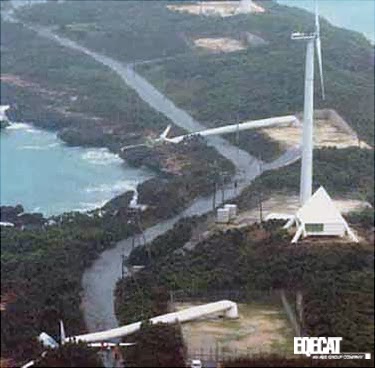 We continue to be amazed at how many commentators, otherwise very thoughtful and well-informed, seem to think that humans will find technological solutions, such as super-efficient appliances and mag-lev light rail, to cure the impending energy shortfall. That won’t happen, and the Ponzi money/debt system is why, but frankly, we find it difficult to imagine a civilization approaching ours in complexity being able to subsist on daily solar income in much the same style it had on that 500-million year fossil energy trust fund, even if money were magically reformed.
Since 2008 it has become clear that the timing of the crash of our oil-dependent civilization comes around to the fate of a single indicator. It comes down to James Carville’s famous imperative for the Clinton Campaign: “It’s The Economy Stupid!” We can count ourselves lucky, from a climate standpoint, that globalization was still relatively young when the party ran out of ice and had to break up.
All political systems exist to concentrate wealth at the center at the expense of the periphery. So to maintain their complex central operating systems and lavish gifts upon their extremely wealthy and wasteful bazillionaires, London, New York, Stockholm, Moscow and Beijing sucked wealth out of very large moneysheds — Africa, South America, Eastern Europe, Asia and Australia. When they can’t do that anymore — because the EROEI crisis has become a financial crisis — the sell orders will start to cascade. Distant trading relationships have a hard time remaining stable. Empire centers have to start maintaining their unsustainably high standards of living by sucking up marginal wealth from smaller, closer areas. This is what happened in ancient Rome and is now happening on the European periphery. That strategy only gets you so far before the local wealth is completely exhausted and there is nothing left to drain.
This is the soft underbelly of industrial scale renewable energy. It is not shortages of rare earths or energy inputs to make solar cells and windmills. It is the ability to finance production when your economic system is in free fall.
17 Comments on "Sunblock"
Davy, Hermann, MO on Sat, 8th Mar 2014 2:41 pm
Article good points:
How long the solar and wind farm phenomena persist will depend on how long our current ‘extend and pretend’ debt-based global economic paradigm can be sustained. Maybe another month. Maybe half a century. But when that is done, we will be back once more to something approaching fully solar. You can take that to the bank.
AND:
many commentators, otherwise very thoughtful and well-informed, seem to think that humans will find technological solutions, such as super-efficient appliances and mag-lev light rail, to cure the impending energy shortfall. That won’t happen, and the Ponzi money/debt system is why
AND:
All political systems exist to concentrate wealth at the center at the expense of the periphery. So to maintain their complex central operating systems and lavish gifts upon their extremely wealthy and wasteful bazillionaires, London, New York, Stockholm, Moscow and Beijing sucked wealth out of very large moneysheds — Africa, South America, Eastern Europe, Asia and Australia. When they can’t do that anymore — because the EROEI crisis has become a financial crisis — the sell orders will start to cascade. Distant trading relationships have a hard time remaining stable. Empire centers have to start maintaining their unsustainably high standards of living by sucking up marginal wealth from smaller, closer areas
This guy hit the nail on the head. Our global support system is a complex interconnected economic and social system in a population overshoot with diminishing returns to the limits of growth. All major vital resources are in decline of quantity and or quality. Our climate is becoming unstable. Our ability to feed our growing population is declining. Water scarcity is affecting energy production, food production, and development. “If” the economy were healthy and the above human predicament were not the case it is possible we could go much farther with our technological advancements. The problem now is with the global finance system being the weak link in the equation. The system is a Ponzi scheme debt bubble. Our global economic system with its just in time inventory shipped by far flung distribution distances is brittle and vulnerable to multiple shocks. Trade and exchange are built upon confidence and confidence is liquidity. Without liquidity the system seizes up. We are heading for a correction, contraction, and or collapse that will put an end to the fantasy of AltE based world. Once the very best sweet spots have been utilized any further penetration of AltE technologies in the power mix will be uneconomical. The very updates to the grid and the accommodations of the variability makes these technologies uneconomic much beyond what has been done. The industry is only marginally profitable on subsidies and niche applications. Many manufacturers are nearing bankruptcy in the solar industry because of overcapacity and miss-investment. When we see the inevitable correction come it will decimate the fossil fuel industry as well as the AltE industry. In any case even now with a functioning economy the needed capex is not there for a radical build out of new infrastructure let alone maintenance of the existing
Paulo on Sat, 8th Mar 2014 3:04 pm
This is a sobering and thoughtful article. However, I hope the argument theme is based on more than this assumption: “All political systems exist to concentrate wealth at the center at the expense of the periphery.”
Clearly, this is not the case. I think it is more accurate to say that political systems are about power and wealth, and for the most part distribute both to connected and insiders who support the current system in control.
One other thing, while I am not a tech cornucopian, there are more efficient ways to live our lives which will save energy. We also don’t know what bright engineers or scientists may turn up as events unfold. I believe that in the industrialized world we could scale back 50% and still have productive lives. We may not be able to hop into the Mercedes SUV and head to the pub for a Friday night social, or jet to Mazatlan for a 5 day all inclusive, but there are many many comfortable stops and ways to live along the way.
People have to get realistic about our circumstances and that won’t happen until there is a massive disruption that is full of unrest. Folks have to be wrenched out of their expectations. If it takes a family working together to survive/thrive, then families will be more prone to staying together. If the airline vacations are extravagent nonsense, (which they are), then folks might go by train to see some relatives, instead….and the affordable train system might actually exist. If it takes a solid work ethic and good education to get ahead, then the family might support education and studying/homework habits much like immigrant families do. Maybe parents will quit blaming the ‘system’ and teachers for lazy tv video game playing kids. The Provincial volley ball tournaments might be a thing of the past. Darn, what will we ever do? There will be no more trick snowboarding on tv? Oh no.
Maybe an industrialized society running factories 24/7 making electric coffee bean grinders and halloween decorations won’t exist on renewables, but even intermittant electricity is a wonder that should not be taken for granted any longer.
People will simply have to change to fit the limitations that are surely coming. We can start doing that, today, in our own lives.
Paulo
eugene on Sat, 8th Mar 2014 3:39 pm
For many years, I worked as a therapist focused on various addiction issues. It is an easy to look at energy/climate issues from that perspective. I see the same quick, simplistic solution type thinking as the depth and complexity of the problem is vastly underestimated. My hunch is even the “doomers” are not doomy enough.
Davy, Hermann, MO on Sat, 8th Mar 2014 4:01 pm
Eugene said – My hunch is even the “doomers” are not doomy enough.
I would agree Eugene. Let us hope some local areas have some advantage left when SHTF and balance the doom with hope. I see nothing but doom for our global system we all rely on for our local support. Unfortunately today is not pre 1940’s when the local was largely decoupled from the global. Witness how well the world survived the great depression then. Today we have a hyper complex interconnect system which leaves our local support systems extremely vulnerable to a global shock. This is as true in the 3rd world as the developed world for similar and different reason. The 3rd world may be less complex and interconnected so it is less threatened by the loss of the complex and technical aspect of the global system. Yet, the 3rd world is well beyond their carrying capacity in many areas because of population overshoot leaving food the primary issue. Many countries will descend into anarchy if their food imports get cut. We have created a monster and the monster is ourselves.
Dragon Spawn on Sat, 8th Mar 2014 4:13 pm
I’ve come to terms with Peak Oil, it’s Peak Cannibalism that worries me now.
Davy, Hermann, MO on Sat, 8th Mar 2014 5:30 pm
OOOOH Dragon, I like that phrase…Peak Cannibalism. It fits in so well with my view that the finance system is on big parasitic Ponzi scheme in an epic bubble of debt. It is a mega wealth transfer of the bottom to the top in a cannibalistic orgy. It is a cannibalistic orgy because currently there is no real growth. We are only seeing disguised recession with manipulated and distorted leading indicators globally claiming growth. So the rich top is growing at the expense of the other 6.4BIL
Stilgar Wilcox on Sat, 8th Mar 2014 6:35 pm
“It is a mega wealth transfer of the bottom to the top in a cannibalistic orgy.”
Absolutely, as we can see from these articles:
http://www.thedailybeast.com/articles/2014/03/04/america-s-billionaires-let-them-eat-food-stamps.html
Let them eat food-stamps. That is until they go berserk.
Forbes published its annual billionaire list, whose ranks continue to grow even as the American middle and working classes are poorer than ever thanks to stagnating worker wages.
Overall, half of the world’s wealth is owned by just one percent of the population.
http://www.csmonitor.com/USA/USA-Update/2014/0303/Forbes-richest-people-number-of-billionaires-up-significantly-video
Forbes’ richest people: number of billionaires up significantly
There are a record 1,645 billionaires worldwide, with the US the top supplier.
The US is still the world’s biggest supplier of big billionaires, with 492 names on the world list, and the US added the most billionaires to the list this year, putting up 50 new names. China, which added 37 new names, ranked behind the US at No. 2 with 152 billionaires, and Russia with 111, Forbes reported.
The 400 wealthiest Americans are together worth about $2 trillion, an increase of some $300 billion over last year, Forbes reported. That’s enough to fund the NASA budget for 2014 about 113 times over.
Although there are probably a lot of people reading MSM that think more billionaires is a good sign, this is imo a sign we are headed for catastrophe. One way the wealth transfer is taking place is via QE. Right now Yellen is continuing to taper, down from 85b to 65b a month, which is still a huge wealth transfer. We’ll see what happens to the S&P when it gets down to say 25b or even zero should the Fed have the guts to attempt a removal of life support.
J-Gav on Sat, 8th Mar 2014 9:26 pm
See the latest stats? The 85 richest people in the world own as much wealth as half the planet i.e. over 3.5 billion people. Yes, you read that correctly. “‘Nuff said” as Makati likes to say …
J-Gav on Sat, 8th Mar 2014 9:39 pm
“Maybe another month, maybe half a century.” Euh, anybody who thinks it’ll be half a century hasn’t been doing their homework.
Cloud9 on Sat, 8th Mar 2014 10:42 pm
Three minutes without air. Three days without water. Three weeks without food. The sorting out will be fast and furious with the very young and very old going out first. Without meds, I have a life expectancy of 36 hours. I have nine months on hand. When the cascade begins providence may save a few. Most of us will not make the cut. God help us all.
Stilgar Wilcox on Sat, 8th Mar 2014 11:59 pm
Cloud9, sorry to hear about your dependency on meds, and the implications post collapse. As odd as this sounds my body doesn’t make enough enzymes to digest a daily intake of food, so I take several every day. If I don’t take them I slow so far down nothing gets done. So my tether is how many I can store away. Fortunately it’s non prescription so it’s just a matter of how much money I want to throw at them to determine how long I last. Oh well, I figure anytime after the big unwind will be super gravy. My wife needs a supplement for her thyroid. I wonder what percentage of the population will expire simply due to a lack of the right meds.
jjhman on Sun, 9th Mar 2014 1:04 am
Enough about how much money how few have. It has always been so and the species has lived through it for thousands of years. Inequality of itself is not a portent of mass extinction or lives not worth living.
Having said that I suggest that we keep our eyes on what is possible. The years of cheap energy are dwindling so focus on what can be done to mitigate the inevitable suffering and steer your own society towards behaviors and values that make life is worth living.
Makati1 on Sun, 9th Mar 2014 3:11 am
A lot of good comments which I mostly agree with.
As for meds, the US, and maybe Europe, is going to have a lot of desperate people the first week the local drugstore and alcohol distributor is closed/empty. Take away the tranquilizers and booze and most will not be able to handle the situation.
Considering that many, if not most, of those people will be armed…
simonr on Sun, 9th Mar 2014 11:20 am
Briefly put, the gentleman is saying, at CURRENT cost of energy renewables depend on subsidy to be truly renewable.
So inflation not taken into account, or resource depletion.
On the flip side, the cost of building the renewables would also rise with the cost of energy.
Makati … please don’t worry about us poor Europeans, we have loads of booze, and still have the savoire faire to make it locally.
Kenz300 on Sun, 9th Mar 2014 1:07 pm
Elon Musk Thoughts on transitioning to 100% renewable energy – YouTube
http://www.youtube.com/watch?v=rce5RZHCzLk
Kenz300 on Sun, 9th Mar 2014 1:07 pm
The energy transition tipping point is here – SmartPlanet
http://www.smartplanet.com/blog/the-take/the-energy-transition-tipping-point-is-here/?tag=nl.e660&s_cid=e660&ttag=e660&ftag=TRE4eb29b5
Makati1 on Mon, 10th Mar 2014 2:32 am
simonr, Not if you have to eat the basic ingredients to stay alive. Better stock up now. And it makes a good barter item.