
Peak Oil is You

Donate Bitcoins ;-) or Paypal :-)


Page added on March 5, 2014

Peak oil demand: maybe here, but not there
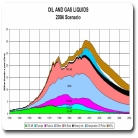
For years, meaning until the arrival of U.S. shale production, much ink was spilled on the concept of “peak oil” — the argument that the world was fast approaching an absolute maximum of crude oil that can be produced on a daily basis. Shale production has put the kabosh on that for the time being, but there’s another “peak” to argue about, and it’s peak demand. Oil consumption in Western Europe, Japan and the United States has been declining since about 2005. Have we hit “peak demand?”
Not hardly, at least not worldwide, agreed three panelists at the ongoing IHS/CERAWeek energy conference in Houston. Demand from Asia and the developing world will more than offset declines in OECD nations, said the panelists, all refiners. Bill Klesse, CEO of San Antonio-based Valero Energy, said world crude oil demand can be expected to grow about 1 million barrels per year through 2025. That will take world demand from about 90 million barrels a day to between 105 million and 110 million barrels a day by then. “We expect this business to be 15 to 20 percent larger,” said Klesse, who heads the world’s largest independent refiner. Abdallah Al-Saadan, of Saudi Aramco, said there will be two billion additional people on the planet by 2050, mostly in developing economies, and most will enjoy a higher standard of living that their countrymen do today, promising higher consumption even with improved energy efficiency and the development of renewables. Completing the trifecta, Philip Rinaldi, CEO of Philadelphia Energy Solutions, said energy-efficiency will trim U.S. demand, but the rest of the world is growing. We may have seen peak demand when it comes to gasoline for our vehicles, but there will be plenty of other uses that work to boost overall consumption, Rinaldi said. Philadelphia Energy Solutions bought two former Sunoco refineries and now processes about 350,000 barrels of crude oil daily.
5 Comments on "Peak oil demand: maybe here, but not there"
Davy, Hermann, MO on Wed, 5th Mar 2014 3:55 pm
We again see the “lobby of plenty” believing in the concept of “human exceptionalism” allowing the global economy to continue to grow without limits to growth. The claim the markets and the economic fundamentals of substitution and ingenuity will allow us to transcend our finite world for many more years. It is not that these folk believe in no limits it is they believe that we have far to go before these limits are faced. We here have debunked the whole idea of the “Peak demand” theory here as the sole driver of supply limitations. Sure there will be peak demand but it will be part of the Peak Oil dynamics of bellow and above ground factors. Supply and demand are not mutually exclusive. The biggest factor facing the complex interconnected global economy is a bubble we are in of rising debt and dysfunctional markets. At some point the problems to capex growth will become so great that the many sources of new oil sources will in no way be profitable to produce in an economy restricted by debt. At the same time as the costs associated with the production and marketing process of the oil industry drift out of the “Goldilocks” range the economics of growth will run into the reality of a limit to the ability of a modern economy to generate discretionary spending to grow when energy prices sap this vital growth element. We are already seeing stagnation in the oil patch with the majors and the nationals. We are seeing dysfunction in the markets in forecasting earning into the future without the sobriety of the limits of debt in the equation. Debt, unfunded liabilities, and unemployment cannot grow indefinitely. We are in a new normal of manipulation, corruption, wealth transfer, and distorted economic indicators. This new normal is, in another words, a Ponzi scheme of debt that is being driven by Central Bank policies of monitarization. These policies have reach a limit to their effectiveness. They are now in a state of diminishing returns. Since society is in a state of diminishing returns in the limits of growth this is in reality a predicament that cannot be solved. Eventually there must be a correction. All systems cycle including the Human ecosystem. All these forecast of linear growth unending are a deception of the mind. It is human optimism and exceptionalism at its worst. It will lead to great pain and suffering. These folks will be ridiculed and their contribution to this train wreck acknowledged as the great mistake of our age. It will be recognized for what it is and that is greed at the expense of reason. Greed for short term gains instead of long term sustainability. These people are our false profits.
Northwest Resident on Wed, 5th Mar 2014 4:02 pm
Davy — “These people are our false profits.”
I feel your pain, Davy, at not having an edit capability on this site that would allow correction of those little goofy mistakes. False prophets! But speaking of false profits, isn’t that what is driving the world economy today — all these “profits” being made in the stock market when everything is so overvalued — just pure fraud and trickery. Must have been a Freudian Slip… 🙂
Davy, Hermann, MO on Wed, 5th Mar 2014 4:19 pm
Yeap N/R I am a bandit of the English language. If it makes you feel better I try to edit but I just spew out words too fast for my own good, sorry if it hurts your mind. I know it used to piss my Mom off. She was an English major!
rockman on Wed, 5th Mar 2014 8:09 pm
For Dog’s sake Davy…take a pill. LOL. I fully understand the almost uncontrollable urge to hunt down folks like this and choke the crap out of them. The sad fact is that so many Joe6packs are more than ready to swallow this Kool-Aid means we’ll likely never win the battle.
But that doesn’t mean we should try to take out as many of these bastards as possible before TPTB hunt us down.
Nony on Fri, 7th Mar 2014 8:12 pm
World demand is up. Consider production is flat (actually slightly up) from 2004 to 2014, but price has gone from 40 to 100. So increased volume and increased price? DEFINITELY demand is higher. And the reason is demand from China, India, and the rest of the developing world (even including higher demand in the Middle East).