
Peak Oil is You

Donate Bitcoins ;-) or Paypal :-)


Page added on February 10, 2014

Record Number of Wind Energy Projects Under Construction

For American wind power, 2013 was the best of times, and the worst of times. On one hand, the American Wind Energy Association (AWEA) reports that 1.084 gigawatts (GW) of wind power came online in 2013, down fully 92 percent from the 13.131 GW of new capacity brought online in 2012.
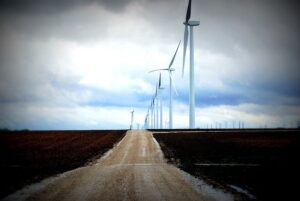 Not surprisingly, we can thank Congress for the precipitous drop in new wind capacity last year due to uncertainty and delay in dealing with the Production Tax Credit (PTC). We can all recall fondly the looming threat of the “fiscal cliff” that ushered in the start of 2013. The PTC was allowed to expire on December 31st 2012, extended the next day and signed back into law on January 2nd. By then the damage had been done for 2013. According to the AWEA when the PTC is allowed to expire the wind energy industry typically experiences a 70 percent to 95 percent drop-off in new installations. 2013 bore out this historical trend.
Originally enacted as part of the Energy Policy Act of 1992, Congress has extended the PTC five times and allowed it to expire 5 time, the last time on December 31, 2013. Given the “off” status of Congress’ on-again, off-again approach to energy governance, you may think things don’t look well for 2014 for wind energy growth. Fortunately, part of the American Tax Payer Relief Act of 2012, enacted in January 2013, allows eligible wind projects under construction before January 1st 2014 to qualify for the PTC.
Now the good news.
In it’s fourth quarter 2013 report, AWEA reports a record 12,000 megawatts (MW) of new wind energy capacity under construction at the end of 2013. Of that, 10,900 MW started construction in the forth quarter. AWEA also reports at least 60 Power Purchase Agreements for nearly 8000 MW were established between utilities and corporate buyers.
Congress and the PTC – why bad governance must end
Even with a record number of new projects under construction, Congress needs to stop it’s short-sighted policy for the PTC. Not only does it adversely impact renewable energy development, it hampers overall economic growth. According to the Union of Concerned Scientists, wind capacity more than tripled between 2007 and 2012, representing an average annual investment of $18 billion. There are now more than 550 manufacturing plants in 44 states producing 72 percent of all wind turbines and components in the United States. That’s a 25 percent increase since 2006. Furthermore, the cost of generating electricity from wind power has fallen by more than 40 percent in just the past three years.
Now it’s time for Congress to act responsibly on behalf of all Americans and offer long term support of the future of America and the new energy economy.
“Our current growth demonstrates how powerful the tax credit is at incentivizing investment in wind energy,” says AWEA CEO Tom Kiernan. “Now it’s up to Congress to ensure that growth continues by extending this highly successful policy.”
Let your Senators know you want action to support U.S. wind energy growth!
9 Comments on "Record Number of Wind Energy Projects Under Construction"
Makati1 on Mon, 10th Feb 2014 1:55 am
Wind power from huge machines? Not a viable source. One that will only last until the collapse and there is no money/energy to maintain what is up or build new ones. They are part of an intricate web of many thousands, no, millions of separate parts and sources and will only last until they break or are disconnected by a power line failure.
If you want wind power, put it on your roof as a stand alone, buy extra parts to replace those that will wear out and learn how to repair it yourself. You might get a few more years of electric than your neighbor(s), but what is/are he/they going to do/think if you have electric and he doesn’t? ^_^
PapaSmurf on Mon, 10th Feb 2014 5:18 am
Makati, you are a clown. Seriously. Just put a bullet in your head. Put yourself out of your misery. Thanks.
Davy, Hermann, MO on Mon, 10th Feb 2014 7:36 am
Rock your excellent post belongs here so I took the liberty of posting it here.
rockman on Mon, 10th Feb 2014 2:30 am
Perhaps the other states should study the incentive efforts created by the Texas state govt. Granted we benefited from the fed credits but check the plans below that were announced after the credit expired. Another advantage Texas wind has had: unlike all the other states the fed govt has no authority over our offshore wind. Which is how Texas offered not only offshore wind leases years ago we also had the first offshore wind pilot project installed several years go. In the meantime the law suites have raged over fed wind leases off the east coast. Two major offshore Texas wind projects are still scheduled.
Siemens AG (SIE), Europe’s largest engineering company, won a contract to supply 28 turbines to a wind project in Texas that’s majority owned by BlackRock Inc. Components of the 2.3-megawatt turbines used in the Windthorst-2 project will be built in Iowa and Kansas. The 68-megawatt wind farm will generate enough power for almost 20,000 U.S. homes and is expected to go into operation this year.
Also Siemens last week won a 79-turbine contract for a 182-megawatt wind farm, also in Texas.
Also Enbridge today announced that it has entered into an agreement with Renewable Energy Systems Americas Inc. for construction of the 110 MW Keechi Wind Project, located in Jack County, Texas, at a cost of approximately $200 million.
Also Google just announced a $75 million investment into the Panhandle 2 wind farm outside of Amarillo, Texas. This marks the company’s fifteenth renewable energy investment and its second in Texas. Once it’s operational, the new wind farm is scheduled to produce 182MW, enough capacity to provide energy to 56,000 homes. The facility is schedule to go online by the end of 2014 and will consist of 79 Siemens 2.3MW turbines.
Texas is a wind power superstar. But it has to be to stay up with our jobs and population explosion. Thanks to our wind power we just dodged a big bullet. This investment saved Texas’ bacon during the polar vortex that dropped temperatures across most of North-America. On Tuesday demand reached a never seen before peak of 57,277 megawatts.
Thankfully sufficient generation and higher wind output from West Texas wind farms boosted the state’s electric supply Tuesday compared to Monday when the grid operator declared an emergency as power plants shut unexpectedly, reducing supply.
I know some folks don’t like to hear the classic Texas brags. But as we say in the Lone Star state: IT ain’t bragging if it’s true. LOL.
Davy, Hermann, MO on Mon, 10th Feb 2014 7:58 am
Pops (papasmurf), you are a worried guy. You may need to get some Xanex or something.
Makati, good point, on wind power. I feel the micro generation from wind, solar, and small hydro is an excellent idea for the possibility of a collapsing increasingly unreliable grid. I myself have solar. I am not sold on the very large systems to run everything. My system is large enough to take care of moderate to low electric needs depending on the weather and season. I also use the grid.
I would not discount large wind and solar yet. I again mention I am hoping for a soft landing on the stair step down. N/R and I go back and forth on the stair step idea but it is still a possibility. My feeling on BAU is we need 1000 effective niche energy, food, and transport options to manage the decent down the energy gradient we are quickly heading for. We need to manage to build out some more renewables before that whole trend falls flat for a number of reasons. Primary reasons for renewable production loss are government subsidy curtailment, capex issues, and vital resource issues. We need to try to maintain all fossil fuel options that have a positive cost structure. Nope, oil from artic doesn’t sound economic. Nuke plants need to be maintained if we can do it relatively safely. Shut down Fukushimas but maintain others with good track records. We have to keep the lights on so they can keep the spent fuel ponds full of water. Guys all bets are off if these thousands of fuel rods start burning up because the electric water pumps stop
rockman on Mon, 10th Feb 2014 2:50 pm
“Wind power from huge machines? Not a viable source.” Texas produces more wind power than the #2 and #3 states combined and it’s all from large commercial wind arms. They tried individual home turbines and England and I gather it was such a poor investment it failed very quickly.
Not a viable source? So far big wind machines have proven to be the only viable source. If someone can create a better one then have at. Solar seems to be much more applicable on an individual basis.
Davy, Hermann, MO on Mon, 10th Feb 2014 3:31 pm
Thanks Rock, did not realize small wind may only be a niche for sailboats. I have solar and wind is not cost effective in central Missouri.
Nony on Tue, 11th Feb 2014 3:59 am
While you’re freeing up the offshore wind leases, how about offshore oil? Obama still has 85% of the coast offlimits. He has flip-flopped (no, yes, no) on allowing more offshore oil. There is a lot of continental shelf to look at. Virginia (with a Republican governor) was really pushing, but then Obama killed the project. And if you’re going to say Macondo, well…accidents happen and BP was supposed to be all green and fluffy…get real oil companies in there.
GregT on Tue, 11th Feb 2014 5:50 am
Nony,
If you value life on this planet, you’d better hope that offshore oil is not exploited. Climate change is already kicking in, and will continue to get worse for four more decades, even if we stop using all fossil fuels right now. If we keep on the path that we are on, all of our futures will become a living hell.
Better to start thinking about how you are going to feed yourself, because that time is rapidly approaching. More oil will only make matters much worse.
Kenz300 on Tue, 11th Feb 2014 5:09 pm
The transition to safer, cleaner and cheaper alternative energy sources continues to grow around the world.
Wind, solar, wave energy, geothermal and second generation biofuels made from algae, cellulose and waste are the future.