



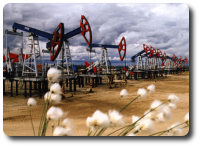
The fear that we have reached peak oil seems to have abated in recent years as the US and other countries began extraction of shale oil. But that doesn’t mean we should think that this problem has gone away.
According to UPI.com, new research published by the Royal Society’s Philosophical Transactions A suggests that the shale gas reserves are just a false dawn and that oil production has reached a terminal tailspin, as supply increasingly struggles to keep up with demand.
 The impact of this will be felt by economies all around the world, resulting to exploiting ever-more difficult to extract oil supplies in an attempt to prop up supply.
Former BP Geologist and co-author of the new research paper, Dr Richard G Miller told students at the University College London that data from international energy agencies suggested that global oil production had most likely peaked in 2008.
“We are drawing down on our reserves, even though reserves are apparently climbing every year. Reserves are growing due to better technology in old fields, raising the amount we can recover—but production is still falling at 4.1 per cent every year,” he said.
Co-authored with Dr Steve R. Sorrel of the University of Sussex, the new paper suggests that the use of shale oil will only heighten the issue of supply, as the oil is difficult to extract from these sources and is quickly exhausted.
The paper reports that it is time to “accept that conventional oil resources are at an advanced stage of depletion and that liquid fuels will become more expensive and increasingly scarce” concluding that “climate-friendly solutions to ‘peak oil’ are available, but they will not be easy” and “ appear unlikely to allow the majority of the world’s population to achieve the levels of mobility currently enjoyed in the West.
“Lower mobility, in turn, implies a very different direction for future economic development. In sum, adapting rapidly and peacefully to oil scarcity in a manner that does not destroy the global environment provides humanity with a formidable challenge.”
eugene on Thu, 16th Jan 2014 2:50 pm
I don’t believe alternative fuels will ever allow the standard of living we now have. In the US, being a good Christian nation, the poor will suffer enormously. They already are as we cut the minimal support system we have.
J-Gav on Thu, 16th Jan 2014 3:45 pm
“A formidable challenge” is right!
Northwest Resident on Thu, 16th Jan 2014 4:30 pm
I would substitute “insurmountable” for “formidable”. Entrenched interests, politics and resource scarcity being what they are, the idea of “adapting rapidly and peacefully to oil scarcity in a manner that does not destroy the global environment” is a pipe-dream. If it was going to happen, we’d be doing it right now, and we aren’t.
andya on Thu, 16th Jan 2014 5:37 pm
“the new paper suggests that the use of shale oil will only heighten the issue of supply, as the oil is difficult to extract from these sources and is quickly exhausted.”
Based on the speed of increase in shale oil production, it appears LTO is not actually that difficult to extract. Compare that to a difficult to extract resource like tar sands, and you get the picture.
Arguably protecting the environment is a very low priority for most people, if you judge actions talk louder then words that is. No we will go down fighting for every bit of fossil sunlight we can get. Don’t believe me? How much have you reduced your fossil fuel consumption?
GregT on Thu, 16th Jan 2014 5:38 pm
“In sum, adapting rapidly and peacefully to oil scarcity in a manner that does not destroy the global environment provides humanity with a formidable challenge.”
Rapidly? Perhaps. Peacefully? Not very likely, given our track record.
The global environment is most at risk of being destroyed if we keep burning fossil fuels, not if we stop. Humanity is now at great risk, no matter what we do. We made our bed, and now we get to sleep in it.
rockman on Thu, 16th Jan 2014 6:50 pm
andya – True…there’s nothing “difficult” about producing the shales. Takes just 2 – 3 weeks to get an Eagle Ford well down these days. How profitable such a well might be is another question. I’ve never worked with the oil sands but I’m not aware of any significant mechanical problems. The only real hurdle is the economics. If oil prices drop far enough the EFS play and the oil sands will stop. The wells won’t be any more difficult to drill…they just won’t be economic to produce.
Plantagenet on Thu, 16th Jan 2014 7:29 pm
Commodity pricing for oil is volatile. Just wait a bit and oil prices will rise again producing another frenzy of talk Bout alternative energy
andya on Thu, 16th Jan 2014 7:43 pm
Yeah, I think the difficulties with the tar sands are more in the arena of getting it to market. Isn’t that why it trades at such a sharp discount to WTI? Not so much an extraction issue at all. It’s all about the bottom line. Though saying ‘the EFS and tar sands will stop’ is a relative term. Prognosticators have been saying shale gas has been uneconomic for years. AFAIK they are still fracking shale gas. Slowed down some, but not stopped.
Northwest Resident on Thu, 16th Jan 2014 7:57 pm
andya — Shale gas WAS uneconomical for years due to the fact that per barrel oil price was too low. Now per barrel oil price is higher, so, now shale gas has become “economical” — as long as we don’t count the substantial hidden costs of pollution to environment and future environmental cleanup. The prognosticators were right. What’s your point?
Kenz300 on Thu, 16th Jan 2014 8:05 pm
It is time to end the oil monopoly on transportation fuels.
Bring on the electric, biofuel, hybrid, CNG, LNG and hydrogen fueled vehicles.
Better yet, buy a bicycle or take mass transit.
We all need more and better options…………
Kenz300 on Thu, 16th Jan 2014 8:07 pm
They said nuclear energy was “too cheap to meter”……… now they found out it is “too costly to clean up”…..
We may find the same is true for fracking……….
andya on Fri, 17th Jan 2014 1:30 am
How can the price of oil effect the economics of shale gas? Right now oil price is up, gas price down. Nobody is talking about environmental costs because they don’t appear on a balance sheet.
”
◾ According to Dizard, Dell estimates the true break-even price is $7.50-$8.00; Dizard followed up with contacts in gas production and services, and confirmed this view.
◾ The CEO of Devon was quoted in Aug 2010 as saying current $5/MMBtu was not sustainable; the break-even price was $6-$7.
◾ Chevron has said this year, without further elaboration, that shale was not providing positive returns.”
Four years later and they are still drilling this supposedly unprofitable gas.
http://www.clearonmoney.com/dw/doku.php?id=public:shale_gas_economics
As to my point. I have refuted Rockmans claim that once LTO/tar sands becomes uneconomic it will stop, because that has not been the case for shale gas.