
Peak Oil is You

Donate Bitcoins ;-) or Paypal :-)


Page added on November 18, 2013

The Decline of Oil
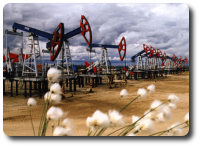
So-called environmentalists never tire of predicting the end of oil. They’ve been talking about “peak oil” for decades, after which annual production would inevitably decline as we drain the world’s finite supply.
In fact, proven reserves (oil that we know is there and is recoverable with current technology and under current law) have been steadily rising, despite the fact that the world pumps 83.9 million barrels a day out of the ground, a 32 percent increase over 20 years ago. New techniques, such as fracking and horizontal drilling, have brought new life to both old fields and new ones whose oil had previously been unrecoverable. And vast new fields, such as the giant finds off the coast of Brazil, have added new reserves.
Much of that 32 percent increase in world production has gone to power the fast-rising economies of the developing world, such as China, India, and Brazil. Oil consumption has been rising very slowly in the United States, however, up a mere 8.1 percent in 20 years.
But the U.S. population has risen over 20 percent since 1993, so U.S. oil consumption is down significantly on a per capita basis. We used 24.15 barrels a year per person in 1993; today the figure is 21.6 barrels, a 10.6 percent drop per person. The decline in oil consumption on a GDP basis is even more dramatic. In 1993, the U.S. had $1,096 of GDP per barrel of oil consumed. Today the figure is $2,393 per barrel of oil. Taking inflation into account, GDP per barrel of oil is up a whopping 34.8 percent in the last 20 years.
What accounts for that? There are several things. One is a slow but steady switch to other power sources, such as natural gas. In 1993, natural gas produced 13 percent of total U.S. electricity; today it produces 24.7 percent. Oil, meanwhile, went from producing 3.5 percent of total electricity 20 years ago to a mere 0.7 percent today. Another reason is a steadily increasing efficiency. Space heating took 53.1 percent of home energy consumption in 1993; today it is only 41.5 percent. The nation’s fleet of cars and trucks have much higher average miles per gallon than 20 years ago. A third reason is that GDP growth in recent decades has been centered in non-energy-intensive industries. Manufacturing automobiles is energy intensive. Manufacturing software is not.
Once oil drilling began in 1859, petroleum became ever more central to the world’s economy, first as an illuminant (kerosene) and lubricant. Then, just as electricity began to replace kerosene for home lighting, the internal combustion engine produced a vast new market for petroleum. By the mid-20th century, oil was the world’s most important product and therefore it was a main driver of world politics. The Middle East would have been a backwater, seldom mentioned in the nightly news, had it not sat upon a very high percentage of the world’s then known oil.
We are a long way from seeing the end of oil as a major force in the world economy, but it is steadily losing its centrality. You would think that would be good news for environmentalists. But, of course, nothing is good news for them. Chicken Little runs the environmentalist public-relations operations, which goes a long way to explaining why fewer and fewer non-liberals listen to them anymore.
13 Comments on "The Decline of Oil"
J-Gav on Mon, 18th Nov 2013 10:45 pm
I guess it’s no wonder nobody’s ever heard of Commentary Magazine, much less a journalist named Steele Gordon. Hopefully, we’ll never never hear from them again …
peterev on Tue, 19th Nov 2013 12:07 am
The statement: “Past performance is no guarantee of future returns.” comes to mind. No analysis; just cheer leading.
Martin Hanson on Tue, 19th Nov 2013 12:14 am
Interesting to note that there’s no mention of the increasing energy cost of extracting these ‘growing’ reserves. It’s not the size of the tank that matters, but the size of the tap!
Stilgar on Tue, 19th Nov 2013 12:38 am
If we are awash in oil, then why is there no explanation as to why oil is over a 100 vs. 20-30 in the 90’s? If there’s so much money making oil in deep offshore Brazil being added to reserves, then why did that country recently allow foreign country’s to bid its extraction? Why is Mexico allowing foreign oil companies to get involved when they previously had a constitution that forbid foreign companies from having anything to do with their oil? Could it have something to do with the increasing technical difficulty associated with more expensive to extract oil, which one could easily associate with peak oil? Fact is, there is a lot of expensive oil available if the world can afford it. But if more expensive isn’t a problem, then why is Japan and the US doing so much QE? Why do these economies need radical forms of ongoing stimulus if higher priced oil is no problem? Because after all we are awash in oil, right?! Just read all about it from Commentary Magazine and sleep tight tonight. No worries mate.
mo on Tue, 19th Nov 2013 12:47 am
Deceptive title. Sounds like a made up Hollywood name
BillC on Tue, 19th Nov 2013 4:26 am
Reads like a econ 101 term paper. I give it a ”D’ for dumb.
Concerned on Tue, 19th Nov 2013 9:56 am
M. King Hubbert was an environmentalist? DO tell.. The US and many tens of countries around the world are past peak. The world is in the middle of a depression with unbridled money printing trying to get the economy going. In the middle of a shale oil bonanza oil prices continue to hover at $100 bbl.
We are past peak oil on the gentle plateau enjoy it while it lasts the down shift will be nasty possibly world war nasty.
dashster on Tue, 19th Nov 2013 11:16 am
The worst comment in that article is that US population has risen 20% in the last 20 years. And we are looking to boost it more. Population growth is still seen as part of the solution by the United States elite.
Charlie Bucket on Tue, 19th Nov 2013 1:01 pm
People who care about the earth are such assholes!
steveo on Tue, 19th Nov 2013 1:12 pm
From Commentary Magazine’s about page: “COMMENTARY is America’s premier monthly magazine of opinion and a pivotal voice in American intellectual life. Since its inception in 1945, and increasingly after it emerged as the flagship of neoconservatism in the 1970s”
Translation: “A post war monthly that was going broke but found new life publishing neo-con propaganda on the internet.
bobinget on Tue, 19th Nov 2013 4:39 pm
You guys are being too hard on this little “Commentary” rag.
I’m certain, all of you have had this same experience. Innocent people ask you, “what is the real story on fracking?” or, “is it true, will the US soon be energy independent”? “Do we have more oil then we need”? ” Why is gas almost four bucks?” (never more then one of above)
These are all complicated questions we have spent years studying. Those poor
people asking ‘simple’ questions expect
short answers. Have you ever timed minutes before we lose attention span?
The more polite simply try to change the subject. Others wander off, eyes on imaginary ceiling frescos.
When an editor requests an article on oil consumption, the writer hits the net and mines ‘data’ from politically friendly publications. How hard is that?
What could go wrong? As kids say.
The trick here is to please an editor who in turn needs to please, (tell em what they hope to hear) readers. Never, ever, let facts spoil the fun.
One more reason printed paper, not oil, will be in surplus.
shortonoil on Tue, 19th Nov 2013 5:06 pm
“Once oil drilling began in 1859, petroleum became ever more central to the world’s economy”
The first commercially drilled well, using a steam drill, was done by a Russian engineer at Baku, in 1857. The Chinese were digging 300 ft oil wells by hand in 400 AD.
“Hay kid, go write a story on oil. Don’t spend much time on the details. Nobody will notice!’
Northwest Resident on Tue, 19th Nov 2013 5:46 pm
Peak Oil and Message Boards does us all an invaluable service by posting not only those articles that keep us truly informed about the facts associated with Peak Oil, but by also posting samples of the dishonest and misleading propaganda that are dumped daily into the media for consumption by people who are desperate to NOT see the truth.