
Peak Oil is You
Donate Bitcoins ;-) or Paypal :-)


Page added on November 13, 2013

Rob Hopkins Introduces New Yorkers to the Transition Movement


The Transition movement, a grassroots response to climate change, focuses on local economic development.

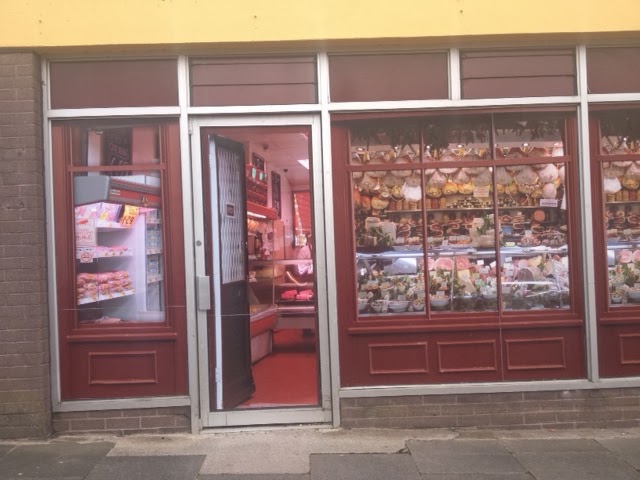
- The domination of big businesses over small businesses. Over the last fifty years or so there’s been an enormous transformation in how our economy works. A vast number of small businesses have been displaced by a small number of very large businesses. In the UK, 97% of all fresh fruits and vegetables are sold through 8,000 supermarkets. Many studies have shown that the small local businesses which make up the remaining 3% return much more of their income to their communities than the big box stores and corporate chains. However, most government economic development efforts concentrate on stimulating big businesses, with support for small businesses a much lower priority. Supporting local businesses to make local economies more resilient was not only a central theme of Hopkin’s presentation but also a goal of Transition initiatives.
- The myth of endless growth. It’s automatically assumed that a healthy economy has to grow continuously. But wouldn’t we be upset if children or the plants in our backyards never stopped growing? So why do we imagine that growth on a finite planet can go on indefinitely? The modest amount of economic growth we’ve been seeing in the last few years has disproportionately gone to the very wealthy, worsening income disparity while increasing carbon emissions.
- Climate change. The current science tells us that to put the brakes on climate change: we must leave 80% of the remaining fossil fuels in the ground. While the safe upper limit for further carbon emissions is only 565 gigatons, burning all of the total available fossil fuel reserves would release 2,795 gigatons of carbon into the atmosphere. Hopkins considers campaigns to get large pension fund and university investments out of fossil fuels and into sustainable enterprises to be very important.
- Oil dependency. Our assumption that we will always have enough cheap energy to keep our society going has been based on smoke and mirrors. Tar sands and fracking are literally scraping the barrel, because we’ve run out of the cheap and easy oil. In fact, our dependence on depleting supplies of oil is a great vulnerability. The economic growth that we’ve come to value can only continue as long as there is plentiful, easily accessible, cheap energy. But what happens in case of resource scarcity?
There’s no cavalry coming to our rescue, so even though national and international responses are needed, we can’t wait for them. While there’s a lot that can be done about these predicaments by individuals and through government action, there’s a great deal of untapped potential from mobilizing those around us. What would a community response to the end of the age of cheap energy look like? That vision is the missing element that Transition brings. It can lead to making what is now politically impossible become the politically inevitable.
Transition initiatives are different in small towns, suburbs and major metropolitan areas. They start with organizers raising awareness about these challenges, finding allies and building networks. Then, projects emerge organically as participants find out what resonates with others in their community.
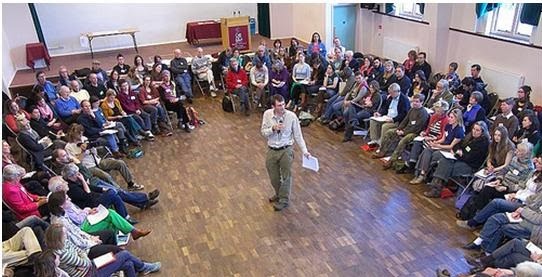
The Transition Streets project offers a template and workbook for several neighbors willing to get together every few weeks to make easy changes to how they use energy, water, food, packaging and transportation. Participants reduce their carbon emissions, but more importantly make new local connections.
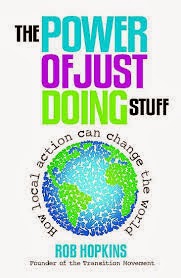
“The future can be what we want it to be. We are brilliant, imaginative and bold. But there are limits. Limits to the amount of carbon dioxide our climate can handle, to the amount of energy available to us, and the degree to which economic growth is still possible. I believe we need to apply our brilliance to designing within those limits, and we can do it. Around the world, people are already seeing these limits as opportunities. They aren’t waiting for permission, they’re coming together to create stronger and happier communities, more resilient and viable economies, and taking their power back at the same time. It’s the power of just doing stuff, and I think it’s one of the biggest ideas of our time. It’s about getting on and doing stuff – here, now, today. Visionary, practical, and meaningful stuff. You can start small but meaningful, and it can grow. In Kilburn, London, a local group has created the first edible garden on top of an underground station. In Slaithwaite, in Yorkshire, the community rescued the local greengrocer, creating a catalyst for the economic regeneration of the town. In Fujino, Japan, they created their own electric company, which has since inspired another forty communities across Japan to do the same thing. In Bristol, in the southwest of England, they set up their own complementary currency, the Bristol pound, which can be spent in hundreds of local independent businesses. The city’s mayor even takes his full salary in them. All of this can be done anywhere. When enough places do it, it starts to change our sense of what’s possible.”
– Rob Hopkins, in a two minute video for the book “The Power of Just Doing Stuff.”
While Transition provides the most comprehensive analysis and organizing approach, many groups such as BALLE, Slow Food, and Slow Money are working on the issue of localizing business. Business Alliance for Local Living Economies (BALLE) provides an extensive collection of resources, including reports, webinars, and manuals.
Transition UK’s economic development strategy is to stimulate entrepreneurial ventures in three areas: local food production, energy conservation retrofit services and renewable energy generation. They have produced reports quantifying current and potential spending in these sectors, as applied to a rural county, a small town and an inner city London neighborhood, and outlining next steps.
More about Transition
“Transition is a community-led response to climate change and shrinking supplies of cheap energy, building resilience and happiness. It is an idea about the future, an optimistic, practical idea. It is self-organizing and people-led, supporting the creation of communities that are more resilient, entrepreneurial, connected, equitable and engaged. And it’s fun.” – Transition Network
We are living in an age of unprecedented change, with a number of crises converging. Climate change, global economic instability, overpopulation, erosion of community, declining biodiversity, and resource wars, have all stemmed from the availability of cheap, non-renewable fossil fuels. Global oil, gas and coal production is predicted to irreversibly decline in the next 10 to 20 years, and severe climate changes are already taking effect around the world. The coming shocks are likely to be catastrophic if we do not prepare.
The guiding principles of Transition
In Rob’s 2009 TED Talk, he explained that we have to transition beyond fossil fuels not just because of climate change, but because the inexpensive oil our civilization has been built to operate on is now steadily running out. We can use our creativity to come up with new ways to operate but it must be based on a realistic sense of where we are. There are four stories we can adopt. One is that we can keep on with business as usual. Another is that we’ll hit the wall, and we’re so fragile everything will collapse. A third is that technology can solve everything, and we’ll just invent ourselves ways out of these predicaments. The fourth – the transition response – raises awareness about those challenges so they can be addressed directly, and encourages self-organizing local projects.
4 Comments on "Rob Hopkins Introduces New Yorkers to the Transition Movement"
action on Thu, 14th Nov 2013 1:34 am
The transition movement will fail pathetically. Where we’re going we won’t need alternate forms of currency, we’ll need calories, and much more than a vegetable garden can supply. Each person will need to dedicate themselves to sustenance, having knowledge of their trade. Wheat, grains, bread, rice, chickens, eggs, livestock… these things require knowledge to make them work, and they require land. The transition movement was attempted back in the 70’s, and it failed because the life was too hard. Talking about change brings a lot of happy feelings, when in reality change will involve hardship few will be able to withstand. If you’re feeling happy and optimistic about the transition, then you’re not living in reality. This is a Utopian idea that will not come to fruition for 99% of westernized society. These people are still juiced up on petro-comfort and techie dreams.
action on Thu, 14th Nov 2013 1:40 am
And all he learned about ‘An Inconvenient Truth,’ was that he wanted to be like Al Gore.
BillT on Thu, 14th Nov 2013 3:37 am
These guys are middle class yuppies. They are playing at ‘survival’ like the hippies played at communism for awhile until the real world intruded. The real world is going to intrude very roughly when the SHTF and those who survive will go back to the land as farmers. For a view of the possible future, visit an Amish farm. They will hardly notice the change.
ghung on Thu, 14th Nov 2013 4:19 pm
action: “The transition movement was attempted back in the 70′s, and it failed because the life was too hard.”
It didn’t fail at all. It succeeded nicely through a process of natural selection/elimination, just as the this latest round of reality will. Those of us who have taken the long view are well into their transitions, physically and emotionally.
BillT: “The real world is going to intrude very roughly when the SHTF and those who survive will go back to the land as farmers.”
Agreed. Waiting for the “forcing” will generally result in utter failure. I’ve made a point of letting friends and more distant relatives, who are continuing their BAU lifestyles until the bitter end, that after the shit has hit the fan, they generally won’t be welcome. Their acquiring the skills and resources to ‘transition’ after the fact while being supported by those who’ve spent decades ‘transitioning’ is an unrealistic liability. Survival of the already fittest will be the order of each day.
Of course, there are those incapable of making any changes, and most of these can’t be helped, which is nature’s way of dealing with overshoot. It’s a tough pill to swallow for those of us who have compassion, but learning to deal with this aspect of what’s ahead is also an essential part of our transition. The choices being offered by default will require that one get in touch with one’s inner sociopath at times. Not anticipating this is a failure to understand transition. The age of triage is upon us.