
Peak Oil is You

Donate Bitcoins ;-) or Paypal :-)


Page added on September 19, 2013

Peak Oil: What’s Going On?
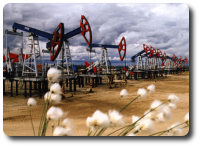
A recent spate of articles [with facts and everything!] discussing some of the problems encountered by the major oil companies all seem to be [more than just] hinting at some related issues. Might we be having a problem or two with maintaining levels of oil production? Shocking!
Many of the oil industry’s big players wrote down the value of their shale assets for second quarter — a move that indicates the continuing challenge of making many of the shale plays financially viable, according to Art Berman, a petroleum geologist and director of the Association for the Study of Peak Oil. [1]
Chevron has just joined the rest of Big Oil in reporting a miserable second quarter. And there do not seem to be consistently better days ahead. These gigantic energy companies face higher costs, trouble maintaining their size, and fierce competition from smaller, nimbler players….
This may be more than a passing carnage. We may be witnessing a more-or-less orderly industry retreat from Big Oil’s old, unsustainable size and Wall Street expectation, and toward a more manageable—and healthy—scale of business.
A common feature across Big Oil—a group that includes BP, Chevron, ExxonMobil and Shell—is a serious struggle keeping its weight on. Investor attention fixates on the prospect of growing daily production, which is treated as a sign of corporate health and future value. In the second quarter, Exxon for example had every incentive to produce higher volumes—its average oil prices were $94 a barrel, compared with $79 last year. Yet it—and all the companies—instead reported a year-on-year production decline. [2]
The shale revolution is ‘a little bit overhyped,’ Shell CEO Peter Voser said last week as his company announced a $2.1 billion write-down, mostly owing to the poor performance of its fracking adventures in U.S. ‘liquids-rich shales.’ Which of its shale properties have underperformed, Shell didn’t say, but CFO Simon Henry admitted that ‘the production curve is less positive than we originally expected.’ [3]
Go figure! Facts still suck, but for all the joy in Happy-Talk-Land about energy independence and vast this and that, reality must still be dealt with on a regular basis. No one doubts that recent oil production levels have been on the increase, but the facts on and under ground suggest it is far from the norm from now on.
And Jeffrey J. Brown’s continuing important research into production here and abroad adds another set of those annoying facts into the mix.
[A]n examination of 2005 to 2012 data indicate that a majority of the Top 33 net oil exporters in the world in 2005 are already headed toward the point in time when they would become members of AFPEC–the Association of Former Petroleum Exporting Countries.
While currently increasing US crude oil production is very helpful, it is very likely that we will continue to show the post-1970 ‘Undulating Decline’ pattern that we have seen in US crude oil production (currently US crude oil production is about 25% below our 1970 peak rate), as new sources of oil come on line, and then inevitably peak and decline….
We are still facing high–and increasing–overall decline rates from existing oil wells in the US. At a 10%/year overall decline rate, which in my opinion is conservative, the US oil industry, in order to just maintain the 2013 crude oil production rate, would have to put online the productive equivalent of the current production from every oil field in the United States of America over the next 10 years, from the Gulf of Mexico to the Eagle Ford, to the Permian Basin, to the Bakken to Alaska. Or, at a 10%/year decline rate from existing wells, we would need the current productive equivalent of 10 Bakken Plays over the next 10 years, just to maintain current production. [4]
Oops!
At a minimum, this information suggests we all ought to dial back the exuberance about endless supplies, yadda yadda yadda. Those of us concerned about the supply of fossil fuels in the years to come continue to point out that understanding the facts [increasing costs, inferior quality, more challenging locales, rate of production, etc., etc.] must be part of the discussion mix.
Stating we have a bazillion barrels here and a gazillion there is fine if you like puff pieces that make you feel good. But reality dictates that finite resources are indeed finite. With conventional production at best on a plateau for close to a decade now, and high decline rates in the supplies relied upon now to make up for the end of cheap and easy oil, we need to be a bit more grounded in what the facts are telling us.
Truth, and planning ahead, should be part of the dialogue starting right about now.
~ My Photo: el Morro, San Juan, Puerto Rico – 02.21.06
Looking Left and Right:
Inspiring Different Ideas,
Envisioning Better Tomorrows
Peak Oil Matters is dedicated to informing others about the significance and impact of Peak Oil—while adding observations about politics, ideology, transportation, and smart growth.
4 Comments on "Peak Oil: What’s Going On?"
J-Gav on Thu, 19th Sep 2013 1:53 pm
So true, facts SHOULD be playing a larger role in the energy discussion by now but it seems that time hasn’t quite come yet. The longer it’s put off, the messier things are going to get.
actioncjackson on Thu, 19th Sep 2013 2:22 pm
This isn’t one of my stronger comments but I’ll throw it out there anyway.
In regards to his last sentence, I think it’s confusion that’s really the only thing holding this boat together, and it’s been that way for a long time. If people in very large numbers, particularly in the US, were to know for SURE what we know regarding peak oil, it wouldn’t be good for profits and belief in the system would crash. Seriously, think about what would happen if the huge media puppets all started airing peak oil pieces with actual data and experts; Like if they actually tried to reach every person using the propaganda machine to convey facts instead of misleading crap. I don’t think that would bode well for the current arrangement of things, and the powerful would be exposed as having sold everyone out.
Soon though all will come to light and everyone will know exactly what peak oil means regardless.
Wheeldog on Thu, 19th Sep 2013 5:13 pm
Well stated, Action. Ignorance is the glue holding the system (industrial society) together. If (when) the facts become far better known and reality is more difficult to ignore the public faith will be sorely tried. May you live in interesting times.
shortonoil on Thu, 19th Sep 2013 8:08 pm
According to the EIA in 1975 a dollar would buy 42,000 BTU. In 2013 it will buy 6,100. It’s not hard to figure out whats going on. At this rate of progression, soon all the money in the world won’t get you a Big Mac. There is not much difference in the number of BTU it took to cook up a 1/4 lb of soy meal in 1975, to the number it takes today. This is what happens when oil moves from $6/b to $105. Image what it will be like at $200 – and $200 is only seven years away!