
Peak Oil is You

Donate Bitcoins ;-) or Paypal :-)


Page added on May 16, 2013

The Peak Oil Crisis: Supply Shock
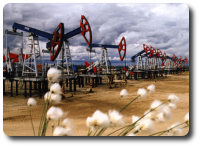
A new phrase, “supply shock,” entered the lexicon of the global oil business this week when the International Energy Agency reported that unexpectedly rapid growth in tight oil production from North Dakota and Texas is leading to profound changes in the global energy markets.
U.S. oil production which grew by 800,000 barrels a day (b/d) last year is now expected to grow by another 2.3 million b/d by 2018. In addition another 1.3 million b/d increase from Canada’s oil sands is expected. This 3.9 million b/d accounts for nearly half of the 8.4 million b/d increase in global production of combustible liquids that the IEA is expecting to be available by the end of the decade.
This rapid increase in North American oil production is expected to outrun the growth in global demand during next few years, which is forecast to grow at about 900,000 b/d annually – at least in the near term. This implies that the demand for OPEC oil exports during the next five years is likely to be weaker than had been expected. The Agency predicts that OPEC will gain an additional 2 million b/d increase in its spare capacity during the next few years. Growth in the domestic oil supply has already resulted in major reductions in US imports from West Africa which are now flowing to China and other Asian nations.
Needless to say, these new forecasts have the US financial press in ecstasy with predictions that the U.S. will soon become the world’s largest oil producer and could be energy independent by 2020 – if you throw in Canadian tar sands production and lots of pipelines to the south. Some even have U.S. output reaching an all-time high of 11.9 million b/d by 2018. There is a growing consensus that we won’t have to worry about all those petty sheiks and dictators controlling our gasoline, and we can all forget about oil shortages and perhaps even high prices – at least for the next five years.
Now all this is probably good news for it gives the world’s oil situation a few years of breathing space; helps the U.S. balance of payments; creates jobs; and unless you live downstream from some of the fracking operations or note the ever increasing buildup of CO2 in the atmosphere you should probably be happy with the news.
Like with most things, however, there is another side to the story — for simply talking about a few years of rapid increases in U.S. oil production does not tell the whole tale. As we should all know by now, oil obtained from hydraulic fracturing and from Canada’s tar sands is very expensive oil. As time goes on it will become still more expensive for the best spots are exploited first and costs of production will continue to increase. The only reason we can afford to exploit tight oil and tar sands oil is that prices have been holding close to $100 a barrel in recent years.
We should also all be aware that tight oil wells dry up much faster than conventional ones. The best forecasts by independent geologists, that are free to talk about their findings, is that America’s tight oil bubble only has another 3-4 years to run and that production will peak at about 2.3 million b/d circa 2017. This says that in four or five years US tight oil production will start to decline, unless somebody can work out the issues involved in exploiting the tight oil that is reported to be under California – a decidedly different place to drill wells than in North Dakota or south Texas.
In addition to production and the cost of oil, there are at least three other factors that could overwhelm the significance of a few million barrels of increased U.S. production. The rapidly deteriorating Middle Eastern situation is number one. Some 20 million b/d of the global oil supply currently comes from the region, and nearly all of the oil region’s oil exporters have a finger in the current turmoil.
The next issue is the condition of the global economy over the next few years. Europe is in bad shape and, except for the occasional flurry of optimism, the U.S. is really not doing much serious
3 Comments on "The Peak Oil Crisis: Supply Shock"
shortonoil on Thu, 16th May 2013 2:15 pm
Tom Whipple has been one of the few commentators over the past decade who has consistently exhibited more common sense than a retarded Goony Bird. Thanks Tom!
Here is a little item for you. According to the EIA, investment in shale oil – gas was $133.7 billion between 2008 – 2012. That investment was needed to produce about 900,000 b/d of shale oil. That equals $148,500 per barrel per day of initial investment. Compare that with the Middle Eastern fields of the 60’s – 70’s where per barrel investment was less than $40/ b/d, or the big fields of Texas where investment was less than $100/b/d, and you have an appreciation for the value of tight oil.
Shale oil is certainly not something to celebrate (as the Media would like us to believe) it is a true indication of the serious plight of the world’s oil reserves!
BillT on Thu, 16th May 2013 2:59 pm
We are finding drippings under the oil barrel and calling it a ‘huge’ find’!
And the more we hear “the peak is not here yet”, the more we know we already passed it.
J-Gav on Thu, 16th May 2013 4:04 pm
Don’t you just wonder what all these ‘profound oil supply revolutions’ are gonna look in 5-10 years? Pretty damn silly I’d wager, if I were a betting man.