
Peak Oil is You

Donate Bitcoins ;-) or Paypal :-)


Page added on April 3, 2013

Natural gas makes Iowa rich ground for fertilizer
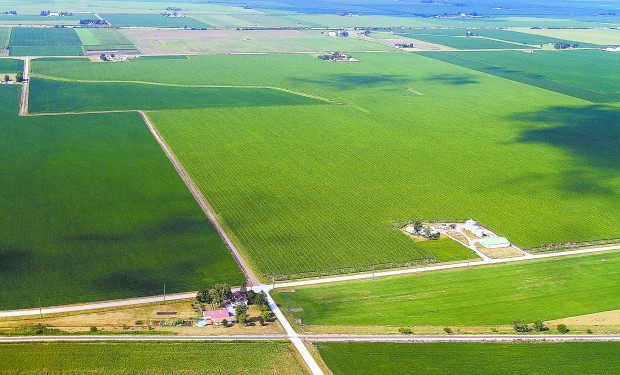
Iowa, it seems, has become a destination for companies that want to produce ammonium nitrate fertilizer.
Gov. Terry Branstad has announced two such deals, one in Lee County and one in Woodbury County, each requiring more than a $1 billion in corporate investment in the past 12 months. There’s also talk of a third potential plant at a site in Mitchell County.
But Iowa isn’t unique.
Multimillion dollar deals are in the works in spots throughout the Midwest, including southwestern Indiana, eastern North Dakota and central Illinois.
Although state and local economic development officials in each location look to entice fertilizer manufacturers inside their borders with tax breaks and other incentives, they’re mostly playing in the margins of larger economic forces at work.
“The primary driver of all of this, why we are seeing it in the Midwest, is the natural gas,” said Dave Miller, director of research for the Iowa Farm Bureau. “The supplies of natural gas that are available due to fracking technology makes it very profitable.”
20-year reversal
Natural gas is a feedstock for ammonia. Ammonia is a primary component in fertilizers, especially the ammonium nitrate fertilizer used on corn.
The Corn Belt — Iowa, Illinois, Indiana, southern Michigan, western Ohio, eastern Nebraska, eastern Kansas, southern Minnesota and parts of Missouri — is the primary world market for that fertilizer.
Fertilizer plants were common in the Midwest in the 1950s and 1960s. As technological advances cut the cost of transporting goods on the world market, however, those plants shut down.
By the 1980s and until recently, most ammonia fertilizer was being produced in the Middle East, where natural gas was cheap, and then shipped to the United States.
“There was a time where 65 percent to 70 percent of the natural gas being used to make the products was coming from the Mideast,” Miller said. “That’s a larger percent than the foreign imports of petroleum. Think about that.”
But with massive amounts of natural gas now open to exploitation in places such as North Dakota, the price of natural gas is about half of what is was just five years ago.
According to the U.S. Energy Information Administration, for example, the industrial price of natural gas in Iowa was $8.56 per 1,000 cubic feet in 2007. By 2012, it was $4.71. That’s the lowest the price in Iowa has been since 1999.
Delivery
Those price declines have been seen across the board, even though the average commercial price still varies among states. One thousand cubic feet of natural gas in Arizona, for instance, cost $10.49 in 2007 and was down to $6.36 in 2012. Likewise, Texans paid an average of $6.76 in 2007 and last year paid $3.05. The nationwide industrial average for 1,000 cubic feet of natural gas in 2007 was $7.68 and by 2012 fell to $3.87.
Tom Doggett, a spokesman with the U.S. Department of Energy, said much of that difference can be pinned on where pipelines crisscross the states.
A map that shows only state borders and the location of interstate and intrastate pipelines reveals the heaviest concentration of pipes near the Gulf Coast, followed by groupings near the Great Lakes and in the Midwest. The rest of the country is relatively bare.
“It’s not just the natural gas, although natural gas has changed everything,” said Dave Swenson, an economist in Iowa State University’s College of Agriculture. “What you have is this pipeline that goes right through the middle of the Corn Belt, which is exactly where the demand for the product is.”
He expects that the lower cost of gas and delivery will be realized in lower fertilizer costs for the farmers. Some of that price cut should make its way to lower feed cost for livestock. It may ultimately lead to some lower prices at the supermarket, but he doubts by that time the difference would be very substantial.
And although the plants will offer hundreds of jobs during construction, permanent jobs will be less than one might suspect from a billion-dollar capital investment.
For instance, the $1.2 billion Lee County plant is expected to have 150 long-term jobs, roughly the same amount of people it takes to run a mid-size retail outlet at a mall.
“It’s not unlike our modern ethanol plants that cost $100 million and only employ about 50 people,” Swenson said. “The operations have become so technologically advanced that the workers exist to maintain the operations to make sure everything is running as it should. They are caretakers.”
2 Comments on "Natural gas makes Iowa rich ground for fertilizer"
GregT on Wed, 3rd Apr 2013 12:46 am
Natural Gas, fertilizer, and jobs, will not be of much help if there is no water. If we do not end industrial society soon, the earth will end it for us.
BillT on Wed, 3rd Apr 2013 4:30 am
So true GregT. This is a typical ad for Big Ag AND Big Gas. Not one mention of the drought. All it pushes is the dream for bigger profits by making the reader think it might lower their food bills. Sorry. That NG will be sold at the national price no matter where it is delivered.