
Peak Oil is You

Donate Bitcoins ;-) or Paypal :-)


Page added on March 12, 2013

Peak oil apocalyptoids: eating crow yet?
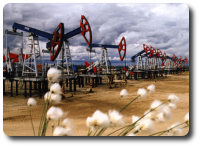
Remember the incessant squawking a few years back, when oil prices were spiralling, about how we were approaching “peak oil”? Been mighty quiet from that set recently, hasn’t it? Vince Beiser explains why in a piece called “The Deluge” in the Pacifc Standard, March 4:
The widely circulated fears of a few years ago that we were approaching “peak oil” have turned out to be completely wrong. From the Arctic to Africa, nanoengineered materials, underwater robots, side-scanning 3-D sonar, specially engineered lubricants, and myriad other advances are opening up titanic new supplies of fossil fuels, many of them in unexpected places—Brazil, Australia, and, perhaps most significantly, North America. “Contrary to what most people believe,” declares a recent study from the Harvard Kennedy School, “oil supply capacity is growing worldwide at such an unprecedented level that it might outpace consumption.”
We’ve noted before that booming domestic production has the US on track to top Saudi Arabia as the planet’s biggest producer (even as Obama is green-baited for bottlenecking the industry, natch). And we’ve noted before that the emergence of Africa as a strategic producer was instrumental in the Pentagon’s decision to estbalish a command for that continent. And, apropos of a certain South American country much in the news now, the Orinoco Belt is boasted to contain reserves outstripping those of Saudi Arabia. More from Beiser:
Right now, the map of who sells and who buys oil and natural gas is being radically redrawn. Just a few years ago, imported oil made up nearly two-thirds of the United States’ annual consumption; now it’s less than half. Within a decade, the US is expected to overtake Saudi Arabia and Russia to regain its title as the world’s top energy producer. Countries that have never had an energy industry worth mentioning are on the brink of becoming major players, while established fossil fuel powerhouses are facing challenges to their dominance. We are witnessing a shift that heralds major new opportunities—and dangers—for individual nations, international politics and economics, and the planet.
Um, yeah. The planet. But first one final trenchant observation from Beiser. He notes that we’ve always been running out of oil, if you go by the conventional wisdom:
[P]ractically since we started using the stuff, we have fretted that we were running out of it. In 1922, a federal commission predicted that “production of oil cannot long maintain its present rate.” In 1977, President Jimmy Carter declared that world oil production would peak by 1985. It turns out, though, that the problem has never been exactly about supply; it’s always been about our ability to profitably tap that supply. We human beings have consumed, over our entire history, about a trillion barrels of oil. The US Geological Survey estimates there is still seven to eight times that much left in the ground. The oil that’s left is just more difficult, and therefore more expensive, to get to. But that sets the invisible hand of the market into motion. Every time known reserves start looking tight, the price goes up, which incentivizes investment in research and development, which yields more sophisticated technologies, which unearth new supplies—often in places we’d scarcely even thought to look before.
One thing Beiser fails to note is that global consumption is growing precipitously, so the quantity that “we” have consumed “over our entire history” (which effectively means just the last century, the proverbial blink of an eye in the long view of the human species) isn’t as significant as it superficially seems. Nor is the process of price spikes bringing on new sources as spontaneous as the phrase “invisible hand” would imply. As we have argued before, sparking an oil shock to spur global production was probably an intentional aim of the Iraq war. But, intentional or not, the price spike that coincided with the worst years of the Iraq war had roots that were political, not geological—as we have demonstrated again and again and again and again and again.
In 2008 when prices started dropping, we asked if the peak-oil apocalyptoids were ready to eat crow. We ask again. Awful quiet, guys.
But don’t you Cornucopians gloat either. Your faith that science and capitalism will bring endless plenty is hardly vindicated. We had to call out smarmy New York Times columnist John Tierney on his 2005 bet with energy analyst Matthew Simmons that oil would not reach $200 a barrel by 2010. Technically, Tierney won. It got close, but never reached this point—the “Crude Oil Price History” at FedPrimeRate.com tells us the price peaked at $145 in 2008. But guess what happened that year that sent prices down again? Right, it wasn’t the genius of capitalism that saved us from $200 a barrel but the crisis of capitalism. And the very process of bringing new oil sources online requires periodic price spikes. So both the Peaksters and the Cornucopians just don’t get it.
Oil-Price.net tells us the current price is just shy of $92 per barrel—about 10 bucks lower than in November. Possibly because the petro-oligrachs had been inflating the price through various artifices to undermine Obama in the election.
The Peaksters have been reading the threat precisely backwards. The real danger is not an apocalypse brought on by running out of oil, but one brought on by not running out of oil! If the Geological Survey is right and there really is still that much oil in the Earth, that is very, very bad news—not good. On March 7, the New York Times reported:
Global temperatures are warmer than at any time in at least 4,000 years, scientists reported Thursday, and over the coming decades are likely to surpass levels not seen on the planet since before the last ice age.
Previous research had extended back roughly 1,500 years, and suggested that the rapid temperature spike of the past century, believed to be a consequence of human activity, exceeded any warming episode during those years. The new work confirms that result while suggesting the modern warming is unique over a longer period.
Even if the temperature increase from human activity that is projected for later this century comes out on the low end of estimates, scientists said, the planet will be at least as warm as it was during the warmest periods of the modern geological era, known as the Holocene, and probably warmer than that.
That epoch began about 12,000 years ago, after changes in incoming sunshine caused vast ice sheets to melt across the Northern Hemisphere. Scientists believe the moderate climate of the Holocene set the stage for the rise of human civilization roughly 8,000 years ago and continues to sustain it by, for example, permitting a high level of food production.
In the new research, scheduled for publication on Friday in the journal Science, Shaun Marcott, an earth scientist at Oregon State University, and his colleagues compiled the most meticulous reconstruction yet of global temperatures over the past 11,300 years, virtually the entire Holocene. They used indicators like the distribution of microscopic, temperature-sensitive ocean creatures to determine past climate.
And the findings are more grim than this account portrays. The study covers 11,300 years and finds temperatures higher than they have been over 70 to 80 percent of that time, OSU said in a statement on March 7.
The real question is whether we can somehow achieve democratic, public control of the industrial apparatus as the prerequisite for any social direction, including dismantling (or dramatically down-scaling) it for the good of the planet. As we have stated:
What really and urgently needs to happen is still completely taboo to even mention in mainstream discourse: the public expropriation of the entire machinery of Detroit and the oil companies, and the redirection of their vast technological and financial resources into mass transit and the reshaping of our communities and workplaces to accommodate the human organism, and human-powered transport like bicycles, rather than the private automobile.
Thanks to WNYC’s Brian Lehrer Show for juxtapositng these two stories—Beiser’s debunking of peak oil, and the ominous OSU findings. But of course Brian is constitutionally incapable of seeing his own implicit argument through to its inevitable conclusion…
7 Comments on "Peak oil apocalyptoids: eating crow yet?"
J-Gav on Tue, 12th Mar 2013 1:58 pm
Presenting things as if it was a this or that proposition (ie energy crunch OR climate change havoc) and the “peak oilers” got it wrong, is irresponsible. In due time we’ll get both, plus a few other decidedly unfriendly convergences.
Beery on Tue, 12th Mar 2013 3:25 pm
Oh dear! Yet another article in which the author fails to understand the very basics of what peak oil is, derides the straw man he’s created, makes incorrect claims about oil abundance and tells us that we’re in danger from surging quantities of oil.
Yawn!
I wonder what he’ll be saying in two or three years? I’m guessing he’ll be as quiet as a mouse: “Oil abundant? No. I never said that!”
Gale Whitaker on Tue, 12th Mar 2013 3:47 pm
I don’t know about you but the price of gasoline at may station is $4.33. It may be the case that our economy can’t survive if the price of gasoline is $4.33?
GregT on Tue, 12th Mar 2013 3:51 pm
The last oil price shock of $147/bbl, spawned the global economic crisis, which, by the way, has not ended. The resulting price of gas at the pump where I live reached an all time record high of $1.49/ liter. Five years later with $92/bbl oil, the price of gas is still rising and today is at $1.43/liter.
Peak oil is alive and well, and anyone who says otherwise is either a liar, in denial, or both.
DC on Tue, 12th Mar 2013 4:10 pm
If the price of oil advances due to a ‘recovery’, the drive-shop-consume economy will sputter quickly. Any ‘recovery s’ now will be either illusory, short-lived, or both.
And no, im not eating ‘crow’, I am eating exhaust, from all the gas-powered garbage bins that keep plying the congested roadways even though prices are only going in one direction, up. I cant avoid it, because the system is designed to run on gas-powered crap boxes only. All other alternatives have been pushed into the background or dont exist. Thus, even as the price keeps rising, so does demand, even as the economy continues to falter.
Plantagenet on Tue, 12th Mar 2013 5:10 pm
The authors of this attack on peak oil Are all frakked up
rollin on Tue, 12th Mar 2013 5:18 pm
The most dangerous things on this planet now are the denial of peak oil and global warming.