
Peak Oil is You

Donate Bitcoins ;-) or Paypal :-)


Page added on December 18, 2012

Supply surge jolts ‘peak oil’ theory
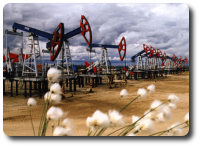
The entrenched notion that the world will soon start running short of oil was jolted earlier this year when an expert study concluded that, contrary to what most people believe, oil-supply capacity is expanding so fast that it will outpace consumption by a wide margin in the next few years.
The study by Leonardo Maugeri, a former oil industry executive who is now an energy specialist in the Belfer Center at Harvard University’s John F. Kennedy School of Government, added that this supply surge “could lead to a glut of overproduction and a steep dip in oil prices.” Proponents of “peak oil” argue that global oil output is reaching its maximum possible level and will fall irreversibly as production declines and consumption rises, pushing prices of increasingly scarce oil higher.
Some critics questioned the accuracy of Maugeri’s bullish survey of producing and potential oil wells, and his conclusions. However, his findings, published in June, were a soothing melody to the ears of politicians and policymakers in oil-hungry Asia, amid fears of an economic slowdown, increasing unemployment, and rising social unrest.
They would like to see a sharp fall in the price of oil spark stronger growth in their economies and help tame inflation. When refined, oil provides the fuels for modern land, air and sea transport, and feedstocks for key industrial products.
So far, the international price of oil, including the oil and refined products that Japan and other Asian countries import, has remained stubbornly high, despite sluggish growth in the United States and European economies. Benchmark Brent crude oil is trading at around $110 per barrel.
A number of factors are holding oil prices up. They include concerns about a possible supply disruption from the Persian Gulf if Iran’s nuclear facilities are attacked, and continuing substantial demand for oil in Asia, Africa, Latin America and the Middle East itself as the centers of economic expansion continue to shift from the West to developing countries.
The International Energy Agency on 12 December slightly raised its forecast for global oil demand in 2013 to 90.5 million barrels per day (bpd), although it said the tepid rate of worldwide economic growth overall would keep demand relatively sluggish. Despite several disruptions, global crude oil supply rose by 800,000 bpd in October, to almost 91 million bpd, putting it slightly ahead of consumption.
The growth in the Middle East’s appetite for its own oil may turn out to be particularly significant in the global supply-and-demand equation, and prevent or delay the price fall that Asian economies want.
In the decade to 2010, a combination of population increase and rising oil-fueled electricity generation, particularly for summer air-conditioning, lifted Middle East demand for oil by 56 percent. This was more than twice the rise in Latin American and Asia-Pacific nations, and four times the global average.
Government energy subsidies to keep prices of petrol and other fuels artificially low were doled out in exchange for popular support. They provided an incentive for excessive and inefficient use of oil-based fuels. Of the $192 billion in state oil subsidies in 2010, $121 billion were in Saudi Arabia, Iran and the other 10 members of OPEC, the Organization of Petroleum Exporting Countries.
What is happening in Saudi Arabia is especially important. The desert kingdom holds virtually all the world’s spare crude oil production capacity, enabling it to raise or lower output to keep prices relatively high and stable.
Saudi Arabia now consumes more than a quarter of the oil it produces. British think tank Chatham House predicted in March that the kingdom, the world’s biggest oil exporter, was consuming so much energy at home that “its ability to play a stabilizing role in world oil markets is at stake.”
U.S. financial services giant Citigroup Inc. warned in September that if Saudi oil consumption continued to grow at this rate, the country could become a net oil importer by 2030. Of course, energy efficiency measures can be applied and subsidies cut, although the latter is politically unpopular.
Meanwhile, oil production appears set to rise in other places as improvements in seismic and drilling technology unlock reserves that were previously considered too expensive, too difficult to reach or kept in the ground as a result of political instability.
Maugeri says that four countries will lead the coming oil boom: the U.S., Canada, Brazil and Iraq. He calculates that by 2020, global oil production capacity could be more than 110 million bpd, a rise of almost 20 percent.
Effectively adding to a potential oil surplus, cheap and abundant natural gas in U.S. and Canada may be turned into transport fuel. Petrol and diesel efficiency measures may continue to trim demand in North America. And recovery rates of oil from beneath the land and seabed may continue to improve.
Maugeri thinks that the oil glut will start to be felt in 2015, leading to a fall or even collapse in prices.
The head of leading French oil and gas firm Total SA, Christophe de Margerie, gives a more measured perspective. He believes maximum global oil output will reach 98 million bpd, then plateau for a long time before decreasing.
In his view, oil will not become cheap again. But there will be enough of it available to provide the economies of Asia and the rest of the world with the energy they need for the future.
Michael Richardson is a visiting senior research fellow at the Institute of South East Asian Studies in Singapore.
11 Comments on "Supply surge jolts ‘peak oil’ theory"
Plantagenet on Tue, 18th Dec 2012 7:41 pm
The averaged price of oil for 2012 was higher than in any previous year. Its a bit premature to be celebrating the death of “peak oil” when Mr. Market is saying loud and clear by the high price of oil that oil is still in short supply.
GregT on Tue, 18th Dec 2012 8:47 pm
“a soothing melody to the ears of politicians and policymakers in oil-hungry Asia, amid fears of an economic slowdown, increasing unemployment, and rising social unrest.”
So let’s just keep burning the stuff as fast as we can. We can still create a future with more mouths to feed, more people to employ and bigger economies to put at risk when we completely run out. Add to that, run away climate change, water shortages, food shortages and massive civil unrest.
Sounds like a game plan for total disaster. Just goes to show you that anyone can be an expert, even if they are complete fools.
Tig on Tue, 18th Dec 2012 9:07 pm
At the rate the US dollar is being devalued, it’s a wonder the price of oil is still below $100 when priced in the US dollar.
What is the price of oil in gold?
Sharpie on Tue, 18th Dec 2012 9:24 pm
Peak Oil isn’t a theory, the oil production peak itself and inevitable decline have merely been delayed.
ken nohe on Tue, 18th Dec 2012 10:46 pm
A lot of the new oil is not oil at all and therefore peak oil stay what it is. Price and market mechanism means that it does not need to be the end of the world but linking peak oil with the end of our society is fringe ideology. Far more likely is more of what we already have since 2008, just getting worse slowly.
Oil price may crash but it is not significant because it would bounce quickly. More important is the minimum price necessary to maintain the current level of production said to have moved from 35 to 70 USD. If that is the case however you look at it, the 2010s will be far less prosperous than the 2000s with less growth, more unemployment, an a widening general malaise. But no end of the world in sight… yet.
Gleb on Wed, 19th Dec 2012 1:24 am
End of world party this Friday down the street. Sounds fun.
BillT on Wed, 19th Dec 2012 1:30 am
Barrels of oil have declined. But they add in barrels of everything that will burn to make the numbers look good for the less educated. Soon someone will claim the billions of barrels of oil contained in the asphalt roads and parking lots across the country, as ‘reserves’.
Dmyers on Wed, 19th Dec 2012 1:39 am
How many times are they going to regurgitate the Maugeri Optimismo? It’s a sell job. Look at WHAT COULD BE instead of WHAT PROBABLY WILL BE.
Newfie on Wed, 19th Dec 2012 3:33 am
Ha ha. The fairy tale of never ending growth continues to delude these “geniuses”.
Gale Whitaker on Wed, 19th Dec 2012 3:34 am
This is stupid. We are not worried about oil running out. It’s just that it is getting too expensive to use for transportation. What is going to happen to the world economy when no one can afford to fly. I think that day is not very far away.
Arthur on Wed, 19th Dec 2012 6:00 am
Forget about Maugeri, for stellar optimism go to William Engdahl and his story that the eastern Meditarainian alone contains more than a century worth of high quality carbon fuel:
http://www.politaia.org/israel/gas-rush-im-mittelmeer-teil-1-von-william-engdahl/
If that is true, we need another atmosphere.