
Peak Oil is You

Donate Bitcoins ;-) or Paypal :-)


Page added on March 12, 2012

Peak Oil: Keeping Reality In Mind (Pt 3)
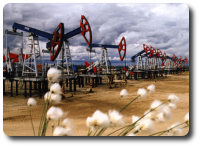
Ponder what it means that half of all the oil ever burned has been burned over the past 22 years and wonder about where the supplies will come from to fund the next 22 years. [1]
Thanks to Adam Smith and those who followed him, especially the current neoclassical economic theologians, we have seen such an increase in the world’s wealth and sheer numbers that it is hard to imagine life before the industrial revolution, with its shift from mostly human and animal muscle power to the energy dense fossil fuels—coal, oil, and natural gas. It is also hard to imagine that humanity could someday slide back into another age of scarcer and more expensive energy, but that is a possibility that cannot be excluded from our thinking. [2]
Obligatory disclaimer: We’re not running out of oil; at least not for many decades to come. If that were the only issue Peak Oil focused on, further discussions would be pointless.
But it’s not the only issue….
As difficult as it is to accept, life as we’ve known it and long expected/taken for granted will all too soon no longer be the same. Why?
Industrial civilisation’s entire economy is based on a finite resource we treat as infinite….
Our current global economy is based on continual growth, and that growth depends on cheap energy. [3]
Oil which was previously too expensive to exploit becomes economic with a rising oil price. To the uncritical observer, it might seem as if there is nothing to worry about in the oil market.
Unfortunately, there is something to worry about, at least if we want a healthy economy. The new oil reserves we’re now exploiting are not only more expensive to develop, but they also take much longer between the time the first well is drilled and the when the first oil is produced. That means it takes longer for oil supply to respond to changes in price….
If what we care about are the effects on the economy, it does not matter how much oil is in the ground. Over the last ten years, we have see a structural change in the oil market which will continue to have far-reaching effects on the economy even if we manage to increase the amount of oil produced….[4]
Worldwide, the average EROI* [defined in most cases as Energy Returned On Investment, or EROEI: Energy Returned on Energy Invested, with minor variations – my comment] of oil is down to 20:1 from its original value of 100:1 eighty years ago. This means that our oil-fueled economy simply has less capacity to generate wealth than it did back then, because an increasing share of the energy that used to be dedicated to producing goods and services is being plowed back into securing energy.
Even more troubling than oil’s 20:1 global average is the figure for new oil, just 5 to 1. It takes a lot of energy to drill five miles under the ocean and pump crude back to a refinery, or to cook tar sands to extract a usable fuel. The energy wellspring at the heart of our economy no longer gushes a torrent of wealth; it’s a smaller, much-diminished stream. [5]
* Back in November, in the course of offering some commentary on an article denying the validity of Peak Oil and EROI/EROEI specifically, I quoted from a terrific Jim Quinn article (here) in which Jim explained the concept as follows: “EROEI is the ratio of the amount of usable energy acquired from a particular energy resource to the amount of energy expended to obtain that energy resource. When the EROEI of a resource is less than or equal to one, that energy source becomes an ‘energy sink’, and can no longer be used as a primary source of energy. Once it requires 1.1 barrels of oil to obtain a barrel of oil, the gig is up.”
I then added my own observation: “More effort; more costs; more time; more difficulties in general; less inclination for countries to give up all they have left; increasing demand; less supply day-by-day simply because we’re taking out something that isn’t being replenished … all those factors add up to investing more to get less. That’s not good math.”
For all the misplaced optimism in the Magic Technology Fairy riding to the rescue as a result of the wonder of “human ingenuity” and the vast-massive-planets-full of unconventional fossil fuel just waiting for someone to stop by and extract it all, we cannot and will not go back to the means and methods of growth and prosperity we’ve long enjoyed. No one is falling off the cliff tomorrow or “soon”, but the path has been carved out for us.
As Dahr Jamail also noted (from one of the articles referenced above): “Oil touches nearly every single aspect of the lives of those in the industrialised world. Most of our food, clothing, electronics, hygiene products and transportation simply would not exist without this resource.”
I’ve argued consistently that this potentially unpleasant recognition of our dependence on this finite resource and the undertakings necessary to adapt do not equate to failure or decline or defeat unless that is what we choose by neglect or fear or passivity. We have choices….
Not just our “leaders”, but each of us with any concerns about our own future prospects, to say nothing for those in generations to follow, need to start asking and answering some fundamental questions. To state but one: Where and what are the best opportunities for growth and prosperity going forward, given the eventual displacement of abundant fossil fuel resources at the ready?
“Sacrifice” in some measure is the only way to move forward and sustain ourselves. Any insistence on the same business-as-usual models will eventually doom us. In many cases, we are going to have to create industrial, commercial, cultural, and transportations systems entirely anew (or at the very least re-build extensively). Relying on current conditions, false hopes, practices and customs of the past, or just tinkering only along the edges simply won’t work. Just because we won’t necessarily be confronting these realities next month or next year or in three years is not an excuse to postpone the thinking and planning needed.
Eric Zencey added this sobering thought to the quote above: “Everything our economy accomplishes, including health care, government, schools, roads, defense, repairing our aging infrastructure and re-engineering our built environment to handle the changed weather that oil use has given us, is going to have to be financed from a much-diminished EROI.”
Also not good math. We do have choices….
4 Comments on "Peak Oil: Keeping Reality In Mind (Pt 3)"
Gale Whitaker on Mon, 12th Mar 2012 4:52 pm
Can each of us take action to prevent peak oil chaos? I think not. America is run by the leaders of industry because they have corrupted the members of congress with their big money. The big oil companies will not tolerate any long term planning that might reduce the amount of our oil they can dig up and sell at exorbitant prices. Social unrest is our only option.
Shawn Aune on Mon, 12th Mar 2012 5:05 pm
Gale,
We can’t prevent the chaos but we can have some say about what that chaos evolves into.
Kenz300 on Mon, 12th Mar 2012 5:58 pm
The oil and coal industries love it when oil prices spike. They make windfall profits. They will continue to do their best to limit any alternatives to oil and coal and reap the profits of their monopolies.
BillT on Tue, 13th Mar 2012 1:16 am
Shawn, I wish we could have some positive effect, but,I doubt it. Take a look at the REAL US of A. Education…teaching creation instead of science. Inability to balance a check book, read anything requiring thought, thinking rationally, short attention span,etc. The most watched TV shows are junk, not educative. Support for wars of choice, not necessity. Debt as far as the eye can see. I could go on, but maybe it would be best if we collapsed and started again with about 90% fewer of us on the planet?