
Peak Oil is You

Donate Bitcoins ;-) or Paypal :-)


Page added on March 4, 2012

Two Scenarios for Our Post-Petroleum Future
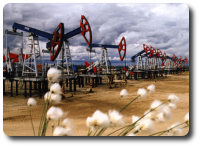
Even those who admit the existence of a problem with petroleum decline are a small minority of the human race, but working within that framework we can nevertheless say that there is quite a spectrum of opinion. In the general absence of established liturgies, creeds, or canons, no absolute definitions are possible, but there seem to be two intellectual poles.
(1) “Moderate” or “transitional”: The world will go through somewhat of a struggle as oil is declining, but eventually oil will be replaced by solar power and other forms of energy. Human life will then go on smoothly, although we may have to be somewhat more frugal.
(2) “Extreme” or “apocalyptic”: When resources such as fossil fuels and metals go into serious decline, there will be widespread famine. Large-scale political and economic systems will vanish. There will be no substitutes for those previous natural resources, and civilization will disappear.
At the risk of unfair pigeon-holing, and certainly with no wish to create a “star system,” it might be said that, among the more visible creators of scenarios, Heinberg, Kunstler, the Association for the Study of Peak Oil, and New Society Publishers (among other publishers) can be lumped into that first group. Hanson, Duncan, Catton, and Youngquist would probably all belong in the second. Gever, Meadows, Kaplan, Klare, Brown, and Simmons are somewhat harder to place. There are also those who write on the issue of overpopulation — e.g., Hardin and Ehrlich — without necessarily bringing in the question of fossil-fuel decline.
Between those two poles there are of course many possible variations, and many subordinate questions. Will there be a rise in the crime rate, or will the need for cooperation prevail? Is overpopulation a serious (or the most serious) problem, or is it a matter of a more-equitable distribution of resources? If we assume that alternative forms of energy are possible on a technological level, is there enough time to implement these on a global scale before humanity succumbs to the loss of fossil fuels? To what extent will politicians wake up and begin to play a leading role? Do artificial “debt crises” (kleptocracy) cause more damage than resource decline? How long can we go on dabbling with nuclear war in order to control the oil supplies? And so on.
But these variations and subordinate questions are secondary matters. What is first needed is to recognize that there are at least two distinct “schools” of futurology, and that they are, to a great extent, mutually incompatible. From “electric cars and wind turbines” to “beans, bullets, and band-aids” is an enormous gap, the distance from one planet to another. The first scenario means we can wait for technicians and politicians to solve any problems. Partly because politicians do not like to deal with unpleasant topics, however, the second may require more in-depth planning on a personal level, beginning with food and shelter.
Even then, we cannot simplify matters by saying that one vision is utopian and the other is dystopian. Probably most people would regard a return to the Paleolithic as undesirable, but members of our genus lived in that pre-civilized world 400 times longer than in civilization. Diamond, Lee, Ferguson, and Gowdy generally claim we were happier in those early days: warfare, inequality, disease, and resource depletion are far more typical of the post-Paleolithic world.
8 Comments on "Two Scenarios for Our Post-Petroleum Future"
Kenz300 on Sun, 4th Mar 2012 8:02 pm
Moderate or extreme it means less energy and higher prices in any case and an adjustment for the world. Individuals, business and political leaders are not preparing for a world of higher energy prices and reduced supplies. We tend not to react to a problem until we are forced to. Will a war with Iran and the resulting spike in oil prices cause people to react?
Cam on Sun, 4th Mar 2012 9:09 pm
Option 1 or Option 2, hmmmm? It really all depends on just two factors and both must turn out favorably to avoid a discontinuity in human civilization.
1. Will we dither and argue until its too late. (Seems quite possible!)
2. Will non-fossil fuel energy sources actually scale to meet our needs. (Quite possibly not!)
Hmmmm? Seems like Option 2 is the more likely!!!
SilentRunning on Sun, 4th Mar 2012 11:34 pm
Regarding Cam’s comments – everything on the political landscape shows that vested interests (Big Carbon) will push the situation towards option #1 will prevail, and as a results civilization WILL collapse.
I see NO political will in the USA to even begin changing Business As Usual, and all the spin-machines are working overtime to mold public opinion towards ever larger consumption that has no possible way of materializing.
Anvil on Mon, 5th Mar 2012 3:38 am
What is this crap.
BillT on Mon, 5th Mar 2012 4:24 am
Until the sheeple are made to give up their SUVs and cheap gas, nothing will change. There is no incentive to even think about a world without oil for most people who do not read or think.
Arthur on Mon, 5th Mar 2012 11:13 am
Kunstler should be in category 2. Read:
http://www.amazon.com/World-Made-James-Howard-Kunstler/dp/0871139782
Newfie on Mon, 5th Mar 2012 10:37 pm
I think Kunstler is Category 2.
Arthur on Tue, 6th Mar 2012 12:40 pm
Kunstler does not think that civilisation will vanish, but that it will be High Chaparral/Bonanza all over again, loosely speaking.
http://www.youtube.com/watch?v=mjdRgBAY278
This time starring YOU!