
Peak Oil is You

Donate Bitcoins ;-) or Paypal :-)


Page added on March 3, 2012

End of growth not end of the line
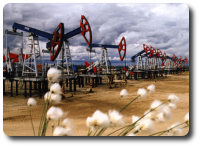
Cheap, readily available fossil fuels drove unprecedented economic expansion over the past hundred years, but the tank is starting to run dry — and if we want our economy to run smoothly again, we’re all going to have to get out and push.
That was the wake-up call delivered in Corvallis Wednesday night by Richard Heinberg, senior fellow of the Post-Carbon Institute and the author of “The End of Growth: Adapting to Our New Economic Reality.”
He spoke to more than 200 people at the Corvallis High School auditorium in an appearance sponsored by the Corvallis Sustainability Coalition and a number of local businesses and organizations focused on social change.
Armed with a slide presentation charting the meteoric rise and presumptive crash of modern industrialized economies, Heinberg built a case for the idea that our entire way of life is based on cheap energy supplies that can’t last much longer.
In an economic corollary to the notion of peak oil, Heinberg argued that when — not if — we run out of readily accessible oil, coal and natural gas, our global financial system will sputter and stall.
“Energy is only 10 percent of the economy, but energy is the economy,” he said. “If the lights go out or there’s no gas at the pump, the economy stops.”
The oil bonanza that sparked the explosive industrial growth of the 20th century also touched off a fundamental economic shift, Heinberg said, to a consumer-based society that depended on easy credit, an ever-expanding money supply and neverending growth.
“The whole system depends on growth,” he said. “It’s a kind of pyramid scheme. We live in a pyramid scheme, and we think of it as normal.”
We’re used to the boom and bust business cycle, Heinberg said, but this time we may not bounce back because the once-bountiful supplies of fossil fuels and other raw materials are rapidly growing scarcer and more expensive.
The result, he predicted, will be the spread of sovereign debt crises like the one now gripping Europe.
“We are going to be seeing the same thing here,” he said. “I hate to think of it, but the United States is now on the road to looking a lot like Greece is looking now in a few years.”
Heinberg predicted a sort of “globalization in reverse,” with national economies contracting into themselves as it becomes too costly to ship food, raw materials and manufactured goods around the planet.
But there is a solution to the problem, he added. It involves building local self-sufficiency in everything from farming and food processing to manufacturing and distribution. And to make it work, we’re all going to have to pitch in.
“It’s largely up to communities to weather the impending storm,” Heinberg said.
“There’s probably going to be a lot fewer jobs but a lot more work to go around. We have to figure out how to organize that work and organize ourselves so that everybody’s needs get met. We can do it.”
3 Comments on "End of growth not end of the line"
BillT on Sat, 3rd Mar 2012 2:19 pm
“… so that everybody’s needs get met …” That is the key…”NEEDS” not wants. The consumer society is about over. The days when muscles do most of the work is coming back to Western countries. Growth is over…at least the energy power type.
Kenz300 on Sat, 3rd Mar 2012 9:25 pm
Shipping goods around the world may not make sense in a world of high energy prices. Local production of goods means local jobs. That would be a good thing. We need to move to a more sustainable future where each country balances population, food, energy and jobs.
Anvil on Sun, 4th Mar 2012 1:49 am
End of growth the end of 6 billion people.
And its not the end of the line.