
Peak Oil is You

Donate Bitcoins ;-) or Paypal :-)


Page added on December 16, 2011

China’s Rare Earth Monopoly
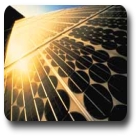
Rare earth minerals may be the most important, let least understood factor in America’s transition to a low-carbon, clean-tech future. They’re essential to virtually every source of renewable energy and consumer technology we use today.
But China dominates worldwide rare earth supplies and production, and their monopoly could corner the world economy. energyNOW! chief correspondent Tyler Suiters explores how U.S. dependence on China’s rare earths could affect our energy future and high-tech lifestyles. The full video is available below:
Americans are used to seeing the words “Made in China” on most things we buy, but could they soon also read “Mined in China?” The nation controls 97 percent of global production of the elements we rely upon in every aspect of modern life. Consider the technologies requiring rare earths: computers, smart phones, military jets, rocket systems, electric cars, wind turbines, energy-efficient light bulbs, and flat-screen televisions, to name a few.
China’s claim on the rare earths market began in the 1980’s. Premier Deng Xioping famously quipped “the Middle East has oil, but China has rare earths,” and the country rapidly ramped up mining efforts. This drove production costs down so sharply that rare earth mining became unprofitable in other countries, including the U.S., which had led global production since the 1960s. It also boosted China’s economy.
“They were very effectively using their control over the rare earth industry to force high-tech manufacturing into China,” said John Burba, CTO of Molycorp, operator of the only active rare earths mine in America. “I could look and see how fast it was leaving the United States.”
Molycorp hopes to counter China’s rare earths monopoly through its Mountain Pass mine in California. Until the 1980s, Mountain Pass was the single top producing rare earths mine in the world. Plunging commodity prices and a series of environmental accidents forced it to close.
Through a revamped approach that favors computer control and automation, Molycorp says it can safely produce 40,000 tons of rare earths a year by 2013 – equal to all U.S. demand. “A facility of this size in China would probably require 3,000 to 4,000 people,” said Mark Smith, Molycorp’s CEO. “We’ll have 300 or 400.”
Meeting that demand is critical to the burgeoning clean tech economy, which consumes 20 percent of the world’s rare earths. They coat the inside of compact fluorescent light bulbs, go into the magnets that turn electric vehicle batteries, and power the electrical generators inside wind turbines. For context, some of the biggest turbines can each use two tons of rare earths.
If production can’t be increased, another solution may be to find replacements. Companies with a big stake in renewables are actively looking for rare earth substitutes. General Electric says it has developed a higher-performance wind turbine magnetizer coil, completely free of rare earths, and Toyota is working on an EV motor that doesn’t need rare earths at all. But, both are still in the experimental phase and not yet market-ready.
So while breaking up the rare earths monopoly has environmental consequences, it also represents an economic imperative – and the window is closing. “The big danger is that China totally controls the production of all devices containing rare earths,” said Jack Lifton, of Technology Metals Research. “If we haven’t made any significant moves by 2015, we will simply no longer be a nation with any hope of doing so.”
3 Comments on "China’s Rare Earth Monopoly"
BillT on Fri, 16th Dec 2011 10:04 am
Smart people. When you have a resource in demand, be a good Capitalist and exploit it! Most people do not have any idea how dependent we are on Asia.
sunweb on Fri, 16th Dec 2011 10:07 am
More “renewable” hype
Solar and wind capturing devices are not alternative energy sources. They are extensions of the fossil fuel supply. There is an illusion of looking at the trees and not the forest in the “Renewable” energy world. Not seeing the systems, machineries, fossil fuel uses and environmental assaults that create the devices to capture the sun, wind and biofuels allows myopia and false claims.
ERoEI is only a part of the the equation. Each of these processes and machines may only add a miniscule amount of energy to the final component of solar or wind devices. How else would we do it? There is always the old way. Who of us will go down first?
A story in pictures and diagrams:
From Machines making machines making machines
http://sunweber.blogspot.com/2011/12/machines-making-machines-making.html
Kenz300 on Fri, 16th Dec 2011 3:24 pm
Limited resources of everything will lead to more monopolies. More monopolies lead to rising prices. Capitalism only works when there are abundant supplies and competition.