
Peak Oil is You

Donate Bitcoins ;-) or Paypal :-)


Page added on November 16, 2011

Rare-earth shortage to hamper clean energy: EU study
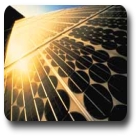
Looming shortages of metals that are in high demand and dominated by a single supplier – China – threaten Europe’s goals for cleaner transport and sustainable energy, says a new study prepared for the European Commission.
The study by the Joint Research Centre says supply shortfalls of component metals in the next two decades risk the production of solar, wind and nuclear technologies as well as electric vehicles and carbon-capture systems.
“This adds more evidence to the fact that Europe has to look within itself … and more toward waste management, to re-use existing metals,” said Dr. Raymond Moss, lead author of the report.
The findings could have serious implications for the EU’s “Roadmap for moving to a low-carbon economy in 2050” that hinges on development of renewable energy, cleaner transport as well as modernising and integrating Europe’s electricity grids.
Such ambitions depend heavily on the availability of neodymium, dysprosium, indium, tellurium and gallium, metals that are in demand globally.
EU’s vital raw materials
The Commission has already identified many so-called rare-earth minerals as well as metals like cobalt in its lists of 14 economically vital raw materials that are prone to supply disruption. The JRC study is part of the Commission’s examination of raw material needs.
Europe depends on imports for nearly all of its rare-earth metals. Though many are in abundant supply on the planet, the metals are dispersed or difficult to access, and despite their importance to green energy, require intensive mining and processing. China controls more than 90% of the market.
In July, the World Trade Organisation called on China to ease its export restrictions on 17 rare-earth metals important to energy, transport and electronics manufacturing.
Shortages or limitations on supply would have serious impact on many industries. But with solar and wind power expected to account for the biggest energy growth markets over the next 20 years, the impact on alternative energy could be profound.
The JRC report says five metals – dysprosium, neodymium, tellurium, gallium, and indium – are at the highest risk of supply “bottlenecks” from high demand, concentration of supply and “high political risks due to an extreme concentration of supply in China.” The study examines 14 rare-earth metals.
Solar energy technologies, for example, will require half the current world supply of tellurium and 25% of the supply of indium, the report says. Europe’s wind energy technology will require about 4% of the supply of both neodymium and dysprosium.
“While the percent might be small, it could have a significant effect on wind technology,” Moss told EurActiv. The concern, he said is that “90 percent of the source is in China at the moment, and they themselves have a rapidly growing demand for the same metals whilst they have also limited restrictions on export.”
Need for recycling, alternatives cited
The report says policymakers should consider reopening European mines where rare metals are available, and it calls for recycling and substitution of metals with more common materials.
Friends of the Earth Europe, an environmental group, recently called on European governments to step up recycling and reuse to tame consumption of raw materials and naturals resources that the group argues have environmental impacts on developing country producers.
The organisation contends in a recent report that the consumption of water, metals, minerals, fossil fuels and biomass for in manufactured products “has reached alarming levels. This is jeopardising the sustainable functioning of our ecosystems and the services they provide. Strategies for making resource use more sustainable are urgently needed.”
Ariadna Rodrigo, a natural resource campaigner for Friends of the Earth Europe, told EurActiv that the EU and national government need to adopt measuring systems that track how much water, fuels, land and raw materials go into finished products imported into the 27-nation bloc.
She said monitoring would help guide trade and environmental policies, and help consumers understand the ecological impact of their purchases.
More from EurActiv
7 Comments on "Rare-earth shortage to hamper clean energy: EU study"
BillT on Wed, 16th Nov 2011 1:07 pm
Interesting…that no-one thought about this while they were planning renewables growth…lol. You can buy all the PV panels you want from China. They want to use their resources to manufacture products and sell the products, employing their own people rather than export raw minerals. Smart people.
sunweb on Wed, 16th Nov 2011 2:34 pm
Gouging the earth for these metals, processing, transporting them along with all the other components makes this not a clean energy.
Solar and Wind are not renewable. The energy from solar and from wind is of course renewable but the devices used to capture the energy of the sun and wind is not renewable. Nor are they green or sustainable.
An oak tree is renewable. A horse is renewable. They reproduce themselves. The human-made equipment used to capture solar energy or wind energy is not renewable. There is considerable fossil fuel energy embedded in this equipment. The many components used in devices to capture solar energy, wind energy, tidal energy and biomass energy – aluminum, glass, copper, rare metals, petroleum in many forms to name a few – are fossil fuel dependent.
Wind used by sailing ships and old style “dutch” wind machines is renewable and sustainable.
From: Energy in the Real World with pictures of proof.
http://sunweber.blogspot.com/2011/01/energy-in-real-world.html
Mr Bill on Wed, 16th Nov 2011 4:28 pm
sunweb, while no energy infrastructure is renewable and sustainable, certain energy inputs are. I think this might relate the point you are making.
sunweb on Wed, 16th Nov 2011 5:26 pm
Mr. Bill – I agree and state that in my second paragraph. It is looking at the total system that matters here not the normal myopia of proponents of “renewables”.
See also:
To Make a Light Bulb
http://sunweber.blogspot.com/2011/10/to-make-light-bulb.html
Kenz300 on Wed, 16th Nov 2011 5:26 pm
Relying on one source for rare earths is risky. Relying on a few volatile countries for oil is risky. Our risk reduction plans did not work in the financial industry causing the global collapse in the economy. It looks like our risk reduction plans in the energy are also suspect.
James on Wed, 16th Nov 2011 6:19 pm
How can a fan that catches the wind, and convert it into electricity need a rare earth metal? I think the engineers could think about using common materials to do this. The only metal that might be costly in a windmill would be copper in the generator. The rest could be made out of common metals.
James on Wed, 16th Nov 2011 6:21 pm
What are they going to use when the RARE earth metals become scarce?