
Peak Oil is You

Donate Bitcoins ;-) or Paypal :-)


Page added on November 12, 2011

Looking at Peak Oil’s other angle
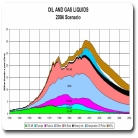
Peak oil is a big topic in energy circles, which usually refers to the theory that at a point in time (usually couched as being in the not-too-distant future) the world’s supply of oil, in terms of our ability to produce it, will reach its upper limit.
After that, we start running out of oil, which raises the spectre of skyrocketing prices, the strangling of transportation systems and the rapid erosion of society as we know it. At least if you are in the oil business.
However, there may be another “peak” in oil, on the demand side, a new report reminds us. To be honest, I haven’t followed this element of the energy picture before, but I am sure to pay more attention to it thanks to this story being reported by our colleagues at the Daily Telegraph on the work of a consultants group called Ricardo.
In Canada, energy economist Peter Tertzakian is the go-to expert, and earlier this year my colleague Don Cayo talked to him about how high oil prices will influence our behaviour on the demand side (i.e., make us drive less). You can see at least part of my last blog take on that here.
However, the Ricardo report pushes the discussion a little bit further, and instead of us experiencing runaway global demand for oil as the developing world develops western tastes for automobile transportation, we hit a peak for oil demand – in the not-too-distant future.
“The world is nearing a paradigm shift in oil demand,” Peter Hughes, Ricardo’s managing director for energy practice says. “The dirvers working against oil demand growth are increasing in number and intensity with the world’s consuming nations increasingly focused on reducing their dependency on oil, supported by an ever stronger legislative framework.”
In other words, with developed nations pushing for new regulations on energy efficiency and alternative sources of energy, Ricardo estimates that world demand for oil will peak at something like four per cent above 2010′s record oil-use year (when the world slurped up 87 million barrels a day) before 2020. Then by 2035, demand will have slid by three per cent below that 2010 consumption level.
It sounds interesting, but is this just a provocative theory? One hopes not.
3 Comments on "Looking at Peak Oil’s other angle"
Gale Whitaker on Sat, 12th Nov 2011 4:58 pm
The author used the phrase “we start running out of oil”. This is a dopey remark, it should be “production can no longer keep up with demand”. As for “peak demand”, even worse than dopey. Oil is precious, the uses are endless. We can’t even build roads without crude oil.
tubaplayer on Sat, 12th Nov 2011 10:29 pm
“i.e., make us drive less”
How many times do I see this? This ME, ME, ME and my car. All rubbish. You might well choose to drive less.
There is a big BUT here. BUT all the stuff you buy gets shipped into your local hipermarket of choice using???
Well, diesel mainly. Apply the comment at the top to that and what do you get? Drive less – less goods on the shelf.
Coming soon to a store near you
Kenz300 on Sun, 13th Nov 2011 8:54 pm
We will walk a little more, bicycle a little more, use public transit a little more and appreciate energy efficient cars and appliances a little more. Individuals, business and countries will use energy more wisely in the future. The transition is beginning as the price of energy rises.