
Peak Oil is You
Donate Bitcoins ;-) or Paypal :-)


Page added on October 6, 2011

The Rise and Fall of the Middle Class
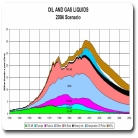
The industrial revolution introduced the world to a new prosperity never seen before. New sources of energy enabled mechanized and automated industrial processes to increase per capita output and free up labor to participate in value-added activities. Energy from coal and oil substituted manual labor many times over, leading to faster transportation, faster construction, greater agricultural production, cheaper materials (i.e. plastics), and more. With a barrel of oil reportedly replacing 25,000 man hours of work effort and costing very little to obtain (prior to 2005), the ROI on energy created a world of plenty.
A world of plenty can suddenly afford kitchen appliances, cars, bigger houses, post secondary education, entertainment, health care, social security, and more. Furthermore, a world of plenty can afford to structure it’s consumption economy using a credit-based model, because economic surpluses from future ROI on energy can be used to repay or service consumer loans made today.
I don’t think a higher being sat back and designed the economy to take advantage of the high returns on energy. The economic relationship between energy and economic growth was more likely an organic evolution led by consumers and innovative businesses that found ways to take advantage of an inexpensive resource. As the innovations became more pervasive, so too did economic dependence on the resource. After a couple centuries of high energy ROI (first from coal, then from oil) most people today don’t think twice about how much of our societal success is dependance on cheap energy. The truth is, we may owe much of what we’ve accomplished in bridging the gap between the bourgeoisie and proletariat, namely the growth of the middle class, to the surpluses generated by a high return on energy.
To clarify, return on energy, not the availability of energy, determines how energy use impacts an economy. If it costs less than a barrel of oil to extract a barrel of oil, energy is a net contributor to our lives. The less energy it takes to extract energy, the greater the economic influence – the world economy has benefited greatly because, for a long time, it took very little energy to obtain more energy. However, as the difficulty of extraction rises, it takes more energy to extract a barrel of oil and the economic benefits shrink. Eventually, when it takes 1+ units of energy to extract 1 unit of energy, the energy form is a sink and is no longer a viable source of economic or societal benefit.
Over the past decade energy prices have been rising as the difficulty to extract new sources rose. The days of sticking a straw in the ground and watching the oil gush out have been replaced by deep water drilling, shale oil and arctic exploration. Not coincidentally, the economies of the western world appear to have reached their limits. Real economic life has been replaced by the last gasps of a credit-based system. What little growth we’ve seen over the past 10 years was fueled easy money rather than real economic growth and the middle class today appears to be falling apart.
I believe the middle class may unfortunately be a fleeting phenomenon in the economic history of the world. With the availability of cheap energy, mankind stumbled upon a windfall gain that lasted a couple-hundred years, and democratic societies chose to spread the new wealth across all its members, creating a moderate, well-off majority that strengthened domestic stability. As this windfall gain begins to dwindle (because energy is harder to obtain), societies are caught between paying the over-promises of the past and watching domestic stability disintegrate.
As they are over-levered to consumption growth in a world where consumption growth is shrinking, developed market economies are highly vulnerable to a shrinking energy ROI. This vulnerability is bubbling to the surface, as the middle class in the western world has struggled over the past decade and real economic activity in developed energy consuming nations has disappointed. Crash after crash, recession after recession, we could be witnessing the beginning of the slow demise of the middle class. The devolution of the middle class could take generations to play out, just as it took generations for a meaningful middle class population to form. Nevertheless, unless we discover a way to raise energy ROI to previous levels, the middle class might vanish.
5 Comments on "The Rise and Fall of the Middle Class"
Kenz300 on Thu, 6th Oct 2011 1:25 pm
The world economy was built on cheap (OIL) energy. That is coming to an end as oil becomes harder to find and more expensive to extract. Soon it will not make economic sense to ship fruit, vegetables and toys across the world. The cost of shipping will become a greater factor in the economy. It is time to end the oil monopoly on transportation fuel. Bring on the electric, flex-fuel, hybrid, CNG and hydrogen fueled vehicles. It is time to transition to alternative energy sources and diversify our types and sources of energy. Wind, solar, wave energy, geothermal and second generation biofuels made from algae, cellulose and waste are the future.
James on Thu, 6th Oct 2011 3:19 pm
The middle class will not simply disappear. It will devolve back to a more stable level of life. Before we had all of this energy available, we got along just fine, maybe things moved a little slower, and people had to work a little harder. But, is that so bad? As we slow down and become more localized, we will get to know our neighbors better, and have more compassion for our neighbors. Communities will become smaller and inter-connected by railroad systems and mass transit. Before we had all of this oil available, we were an agrarian society that was much closer to the Earth and took steps to take care of it. We used more simplistic, lighter farming equipment, and animals to get the farming done. Local communities benefited from local tradesman and businesses to support the needs of the local economy instead of a Global economy. We will still benefit from most of the developments that mankind has come up with, just not as fast, big, or global. Time to slow down and smell the roses.
Harquebus on Thu, 6th Oct 2011 11:11 pm
@Kenz300.
You should brush up on your science before advocating renewable energy mate. Wind and solar do not work.
People who promote renewable energy have no idea about the laws of thermodymanics which, state that the perpetual energy dreamed up by these morons just can not exist.
The sun’s energy is so diffuse that, the energy used to manufacture ineffient solar and wind energy generators will always be greater than that returned.
SimplifyIt on Thu, 6th Oct 2011 11:20 pm
What often seems to get missed (or ignored) in articles like this is the unavoidable fact that mankind is severely over-populated due to all that formally abundant cheap oil. I’d like to think it will be a slow, steady descent to a more sustainable world, but I don’t see how that is possible in a world with 7 billion people.
sunweb on Fri, 7th Oct 2011 11:04 am
I agree with the assessment of “renewable” energy. An oak tree is renewable. A horse is renewable. They reproduce themselves. The human-made equipment used to capture solar energy or wind energy is not renewable. There is considerable fossil fuel energy embedded in this equipment. The many components used in devices to capture solar energy, wind energy, tidal energy and biomass energy – aluminum, glass, copper, rare metals, petroleum in many forms to name a few – are fossil fuel dependent.
From: Energy in the Real World with pictures of proof.
http://sunweber.blogspot.com/2011/01/energy-in-real-world.html
AND
We will go kicking and screaming down the path to the new Middle Ages as fossil fuels desert us. With the decline of available energy, those of most of us who have sat at the top of the energy pyramid will become the new peasants. With the popular view of the Middle Ages as a brutal and dirty time filled with famine and disease and at the mercy of armed overlords. We cringe at the thought.
With great sadness, we must recognize the direct connection between present day population levels and the use of fossil fuels in food production, medical procedures, medicines and hygiene. With the fall in fossil fuel availability there will be a reduction in population. Population soared with the industrial revolution and the development of industrial, fossil fuel based agriculture. It cannot be sustained.
From: The New Middle Ages
http://sunweber.blogspot.com/2011/05/new-middle-ages.html