
Peak Oil is You

Donate Bitcoins ;-) or Paypal :-)


Page added on September 9, 2011

Peak Oil, Peak Debt, and the Concentration of Power
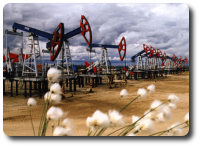
When theorists approach the peak oil problem from the perspective of finding a substitute that will allow us to maintain our present energy infrastructure, their conclusion is one of despair. There may be many substitutes for oil as a concentrated form of storable energy, but none of them are nearly as good as oil itself. Those invested in the status quo would, quite understandably, like to maintain it, but it is becoming apparent even to the most highly invested that the status quo is doomed; that it can be maintained only temporarily, and at a rapidly accelerating environmental cost. The transition before us is not merely a transition in fuel types. It is also a transition in the whole energy infrastructure, both physical and psychological; a transition away from big power plants, distribution lines, and metered consumers; away from capital-intensive drilling, refining, distribution, and consumer fueling stations. More broadly, it is a transition away from centralization, concentration, and all the social institutions that go along with it.
Both the energy system and the money system are based on accumulation and the concentration of power. Not only our energy infrastructure, but our dominant yet invisible way of thinking about energy, presupposes a centralized system of distribution based on a highly concentrated energy source. Many alternative energy technologies have made little headway, not because they are technologically unfeasible, but because they don’t fit into our present physical, financial, and psychological infrastructure.
There is a causal as well as a metaphorical parallel between the concentration of power in oil and in money. A concentrated power source that can be stored allows social and political power to concentrate in the hands of those who control it. It generates very different social dynamics from an energy source that is universally distributed and constantly renewed. For one thing, the profit potential of the latter is intrinsically less. Once you have sold the geothermal pump or the PV array, the buyer is self-sufficient, unlike the electrical power consumer who has to pay the metered rate in perpetuity. Energy dependency and economic dependency are closely linked.
A similar pattern holds in other fields as well. In medicine, for instance, the universal, endogenous medical knowledge of several centuries ago that employed common weeds as medicine has given way to a system in which both knowledge and pharmaceutical medicines have been purified, abstracted, and concentrated in an exclusive domain. There is little profit potential in dandelion or burdock, nor did the village herbalist or country doctor of yesteryear make much money. We might apply the same analysis to the migration of legal power from informal community-based mechanisms of dispute resolution to the centralized, codified, and therefore in a sense concentrated mechanisms of the law. So also for education, entertainment, and news.
In all these realms though, the trend toward increasing concentration is nearing its peak, or has peaked already. The peak manifests in many different ways. In some areas it reflects resource depletion; in others, demand saturation; in others, it is due to technology. For example, thanks in large part to the Internet, a tide of decentralization and disintermediation is erasing the producer/consumer divide in the areas of news and entertainment. That more and more of our time is spent watching “content” produced by amateurs suggests that we are approaching “peak Hollywood,” in parallel with peak healthcare, peak pollution, peak advertising, peak fisheries, and peak oil.
It should not be surprising, since the profit motive has been the primary driver towards these peaks, that we should be approaching a peak in the realm of money as well, a peak that we might call “peak debt.” The crisis in money is ineluctably related to the crisis in everything else, because the viability of our money system depends on growth: the conversion of nature into goods, and relationships into services. This conversion cannot proceed much farther, due to resource depletion and the inability of society and biosphere to sustain more damage. While one may dispute that economic growth depends on petroleum, it does depend on increasing consumption of something. For decades or centuries, we have maintained growth first by meeting needs, then by creating new needs, then by bringing non-monetized cultures and non-monetized domains of our lives into the money domain. Community, for example, can be stripmined just as coal can: turn the functions of story-telling, dispute resolution, child care, elderly care, recreation, entertainment, into paid services. But in either case, material or social, this process is reaching its limit. We are indeed entering a time of Peak Everything.
The crisis in money is related to the crisis in energy, the environment, and everything else. The difficulty in finding a substitute for oil, for example, is born of economics. Imagine what we could have accomplished if the millions of scientific careers and hundreds of billions of dollars that have been devoted to petroleum and nuclear power over the last fifty years had gone instead into developing “alternative” energy technologies. Imagine if, at the dawn of the environmental movement in the 1960s, we had launched a global scientific effort exceeding that devoted to the space race to create a pollution-free society. It did not happen, and with good reason: there was no money in it (given the kind of money system we have had). Compared to the technologies of Big Energy, there is little profit to be made in the alternatives. The alternatives are not conducive to economic growth, and will never flourish in a money system that compels and depends on growth.
Sunlight, wind, conservation, geothermal energy, and more controversial technologies like cold fusion, Bedini/Bearden devices, and so forth share an important characteristic in common. Their energy source is more or less ubiquitous, so that users needn’t be dependent on an ongoing supply of scarce fuel. They are, in an important sense, abundant. This feature puts them at odds with our money system, which depends on the creation and maintenance of scarcity. To profit from something, say energy, it must be scarce: high-tech pharmaceuticals, for example, rather than ubiquitous weeds and folk medicine.
The same is true of information; hence the strenuous efforts of music, book, and film publishers to create artificial scarcity in digital content through copy protections and intellectual property law. They are fighting a losing battle: when the marginal cost of production for any product approaches zero, the natural price point tends toward zero as well. The first copy of Microsoft Word costs hundreds of millions of dollars to produce, but each subsequent copy costs virtually nothing.
Alternative energy sources are similar: the initial cost may (or may not) be high, but once the installation is complete, ongoing costs are extremely low or zero. By returning energy to a non-monetary realm, they actually contribute to economic de-growth. Think about that next time you read economic arguments about how to “stimulate demand” and “reignite economic growth.” In the present system, in the absence of growth, unemployment, poverty, and the polarization of wealth intensify. In the present system, economic well-being is incompatible with post-carbon energy technologies.
A cynical observer, looking at the history of the suppression of alternative energy technologies, might conclude the same attempt to create artificial scarcity is happening in energy as it has in digital content. However, there is no need to resort to conspiracy theories to explain it; mere economics will suffice. Let’s consider an example.
It is not too difficult to build houses that require almost no external power source for heating and cooling. By using construction materials of large thermal mass, geothermal wells, and passive solar principles, a house could, with sufficient PV (photo voltaic) power, be comfortably independent of the energy grid. Why aren’t they being built this way?
One reason is certainly the habits and culture of the building industry, but the main reasons are financial. (1) For starters, future energy savings are generally not fully capitalized in a real estate value appraisal. (2) But even if they were, our interest-based system, with discounting of future cash flows, only motivates the initial investment if it generates savings above the rate of interest. (3) Finally, the existing energy system enjoys a high level of hidden subsidy due to the externalization of its environmental and social costs.
The first point is easy to explain: assuming a 2.5% interest rate, the net present value (NPV) of $1,000 in annual electricity savings is $40,000. Rarely, however, does that modest level of energy efficiency contribute nearly that much to a house’s value.
As for the second point, what is more economically rational: to buy a house for $200,000 and pay $2,000 a year for power, or to buy a house for $300,000 and pay $200 a year for power? Assuming your mortgage loan is at 5% interest, it is much more rational to pay $2,000 a year for power, forever and ever. Even if you don’t need to borrow, you can earn more than 2% interest on that extra $100,000.
Thirdly, the price of gasoline, oil, electrical power is artificially cheap. The costs of pollution, war, oil spills, nuclear accidents, and so forth are not reflected in the price of a gallon of gasoline or a KWH of electricity. They are offloaded onto society and future generations. For example, because the government will have to pay the costs of any truly catastrophic oil spill or nuclear accident, the companies are operating with free insurance. It is no coincidence that massive risks accompany centralized energy installations. Big Energy comes with big risks, as well as the political power to socialize the costs of those risks. People complain that solar and wind power are only competitive because of subsidies, but conventional energy enjoys far greater subsidies.
These subsidies are not the result of mere political influence. They are built into our money system. Unless and until we have a money system that forces the internalization of costs and eliminates the discounting of future cash flows, Big Energy will always enjoy an advantage. That advantage can be mitigated through moral suasion and various kinds of subsidies, but wouldn’t it be better to align the money system with the kind of energy system we would like to see, and indeed the kind of planet we would like to see, so that goodness and profit need not be opposed?
What would a money system like this look like? Perhaps it would model the common feature of alternative energy systems that I have described. Rather than originating at a monopoly source, perhaps it would be universally distributed in its genesis. Rather than being storable in concentrated form, maybe it would require constant regeneration. Rather than requiring payment for its continuing supply (i.e. via interest), maybe it would be generated at no cost.
In fact, money systems bearing some or all of these features have been proposed, and if implemented, they would create conditions far more salubrious than at present for the development of a new energy infrastructure. These systems internalize social and environmental costs, restore the commons, build community, reverse the discounting of future cash flows, are compatible with a steady-state or de-growth economy, eliminate economic rents, and systemically discourage the concentration of wealth.
My book, Sacred Economics, lays out one such system, or rather a synthesis of several of them. The key ideas are not new, however, and are even slowly making inroads into the mainstream dialog as the inescapability of Peak Debt becomes undeniable. A central idea is negative interest (also known as demurrage), which discourages accumulation, allows money to circulate in the absence of growth, and encourages long-term thinking.
Other important pieces of the puzzle include commons-backed currency, local and bioregional currency, mutual credit and P2P banking, gift economics, shifting taxation away from income and onto resource and pollution, and a social dividend. Today, most of these proposals seem very radical, although they are entering the public discourse in covert forms. Interest rates, for example, are nearing zero and look to stay there for the foreseeable future, making investments with very long payback periods more feasible. Some economists, among them Willem Buiter, Greg Mankiw, and Robert Hall, have even dared propose taking rates (namely the Fed Funds Rate) negative.
As old certainties break down, what was once radical becomes common sense. However dogged our denial, the present energy infrastructure is doomed to obsolescence. The same is true of our financial infrastructure; indeed, the two are inextricably linked. They will fail together, yet on the other hand, while they remain, each props up the other. The money system exerts an irresistible pressure to convert everything and anything into money – for example, the Alaskan National Wildlife Refuge, the Alberta tar sands, the capacity of the atmosphere to absorb waste – and with each successful conversion, the money system gets a brief reprieve. By the same token, any bit of nature that we can protect from exploitation hastens the demise of the money machine.
This is why efforts to reform the energy system must go hand in hand with efforts at financial reform. Neither is prior to the other; each, rather, is a different facet of the same thing. The collapse of each is part of the collapse of an entire mode of civilization, and an entire way of being that underlies it, clearing the way for the emergence of a new, in accordance with universal dynamics of birth, death, and transcendence.
We might call this way of being, this mode of civilization, the “Ascent of Humanity.” It was an age of growth, of domination, of taming the wild and expanding the human realm; of becoming the lords and possessors of nature. That age is ending, and a new era of co-creative partnership with nature is beginning, in which we understand that we are interdependent, not separate. The energy system, and money system, of the future must embody this new relationship.
Add starLikeShareShare with noteEmailKeep unreadEdit tags:
* Peak Oil News
Sep 7, 2011 (yesterday)
Drumbeat: September 7, 2011
from The Oil Drum – Discussions about Energy and Our Future by Leanan
Saudi Arabia’s water needs eating into oil wealth
(Reuters) – Long before it understood the value of oil, the desert kingdom of Saudi Arabia knew the worth of water.
But the leading oil exporter’s water challenges are growing as energy-intensive desalination erodes oil revenues while peak water looms more ominously than peak oil — the theory that supplies are at or near their limit, with nowhere to go but down.
Two reasons why Asia’s still thirsty for crude oil
SINGAPORE: Two seemingly unrelated bits of news on Monday show why there is hope that Asia’s oil demand remains robust even as the global economic outlook darkens.
Firstly, Saudi Aramco saw fit to raise the premiums it will charge refiners in Asia for crude supplies for October, a sign the world’s biggest oil exporter isn’t too worried about slowing demand.
And secondly, China made a major revision to its July crude import figures, saying it actually imported 6.3 percent more than earlier reported, as some Russian pipeline imports weren’t counted.
Authorities scramble to prevent aviation fuel shortages
Deputy Prime Minister Igor Sechin gathered government officials to formulate a response to looming fuel shortages at the nation’s airports on Tuesday. Media reports had earlier speculated that Moscow airports’ fuel reserves had dropped to critical levels over recent days. Sechin announced at the meeting that a 10-day fuel reserve was to be created for the capital’s airports.
Is Ukraine alone against Russia in the renewed pipeline wars?
Most places ignore the inauguration of new energy pipelines, but most places are not Russia, where the control of the flow of hydrocarbons means raw power. Yesterday, Russian Prime Minister Vladimir Putin inaugurated Nord Stream, a huge gas pipeline linking his country to Germany. It ought to have been an ordinary event, but this 760-mile, $12.5 billion line is steeped in politics — from Putin’s explicitly stated perspective, Nord Stream at last allows Russia to bypass pesky former Soviet Bloc countries such as Poland, Lithuania and Ukraine that resist Moscow’s will.
We thus enter an elevated stage in the pipeline wars, a long-running and turbulent tournament of shadows under way on European soil. But there are signs that time has passed by this strategy for fortifying Russia’s place in Europe.
Ridge: Shale drilling worries ‘phony hysteria’
PHILADELPHIA (AP) — Energy executives opened a major conference on shale gas Wednesday by advocating a national energy policy in which natural gas plays a leading role, citing its domestic abundance and cleaner-burning characteristics.
Former Pennsylvania Gov. Tom Ridge, now an industry consultant, said that gas extracted from the nation’s vast shale deposits can help reduce U.S. reliance on foreign sources of oil.
Industry Hears Details of New FERC Energy Strategy
The Obama administration is briefing industry on a new energy strategy that could create a fast-track approval process for major transmission lines serving renewable energy projects, according to Federal Energy Regulatory Commission staff comments on the plan.
Popping the hype balloon on electric cars
We continue to see new critical rankings of the top electric and plug-in hybrid vehicles, but the truth is that these models so far are selling at best in the low thousands and more often in the hundreds (the new French-German Mia pictured above). So neither the U.S. nor Chinese are likely to achieve their competing goals of 1 million such cars on their respective roads in the next few years.
This is not surprising — it is simply the air starting to go out of the hype. So what truly does seem likely in the coming years? Read on to the jump.
Cassandra and the limits to growth
No matter how well the model was explained, understanding LTG required an effort that most people were not willing to expend. It is difficult to fight against the human tendency of disbelieving bad news – the Cassandra effect, in short.
But we can learn something from the LTG experience. A fundamental point is related to the public perception of models. For a scientist, the need for models is obvious; but it is not so for a politician or for the public. In this sense, world modelling and modern Climate Science have the same problem. Both fields are seen as based on complex models that are beyond the capability of understanding of the non-specialist. So, what is exactly the role of models in the public debate on the issues of climate change and resource depletion?
Are jobs obsolete?
We’re living in an economy where productivity is no longer the goal, employment is. That’s because, on a very fundamental level, we have pretty much everything we need. America is productive enough that it could probably shelter, feed, educate, and even provide health care for its entire population with just a fraction of us actually working.
According to the U.N. Food and Agriculture Organization, there is enough food produced to provide everyone in the world with 2,720 kilocalories per person per day. And that’s even after America disposes of thousands of tons of crop and dairy just to keep market prices high. Meanwhile, American banks overloaded with foreclosed properties are demolishing vacant dwellings Video to get the empty houses off their books.
Our problem is not that we don’t have enough stuff — it’s that we don’t have enough ways for people to work and prove that they deserve this stuff.
Visualizing a plenitude economy
This beautifully drawn 5-minute video provides a vision of what a post-consumer society could look like, with people working fewer hours and pursuing re-skilling, homesteading, and small-scale enterprises that can help reduce the overall size and impact of the consumer economy.
Big Oil: To create jobs, let us drill more
NEW YORK (CNNMoney) — With job creation taking center stage in American politics, the oil industry Wednesday made a pitch for drilling more widely. With looser restrictions, the industry says it could deliver 1.4 million new jobs, boost tax rolls by $800 billion, and increase domestic energy production almost 50%.
To hit those numbers, the industry would need to drill off the East and West Coasts, in waters off Florida’s Gulf Coast, in Alaska’s Arctic National Wildlife Refuge, and on most federal public land that’s not a national park. These areas are currently off limits to drilling, except for some public land in these regions.
Crude Gains on Forecast Stockpile Drop as Cyclone Builds in Gulf of Mexico
Oil advanced from the lowest in more than a week in New York as a weather system in the Gulf of Mexico threatened supplies in the U.S., where production halts because of storms have already reduced crude stockpiles.
West Texas Intermediate climbed as much as 1.6 percent after the National Hurricane Center said a weather system over southwestern Gulf of Mexico may become a tropical cyclone. An Energy Department report tomorrow may show inventories declined 2.25 million barrels last week as Tropical Storm Lee shut production in the gulf, a Bloomberg News survey of analysts showed. Brent’s premium to U.S. prices narrowed from a record.
EU Energy Chief: Russia Committed To Respect EU Gas Deliveries
BRUSSELS -(Dow Jones)- The latest spat between Russia and Ukraine doesn’t seem to pose any threat to Europe’s natural gas supply at the moment, the European Commission’s energy chief said Wednesday.
Don’t talk oil with Cuba, lawmaker warns
WASHINGTON (UPI) — Washington is sending the wrong message by having a delegation in Cuba review the country’s plans to drill offshore for oil and natural gas, a lawmaker said.
A delegation led by William Reilly, a top official at the National Oil Spill Commission, left Monday for Cuba to examine Havana’s oil plans.
Cuba is looking into cutting the amount of oil it imports from Venezuela through development of offshore reserves.
Russia Can Double Oil Reserves By Tapping Arctic Potential -Lukoil Executive
SINGAPORE -(Dow Jones)- Russia can double its oil reserves if the governcment is determined to exploit the potential in the Arctic, a senior OAO Lukoil Holdings (LKOH.RS) executive said Wednesday.
“The development of Arctic fields needs political will and support from the government,” Sergey Chaplygin, chief executive of Lukoil International Trading and Supply Co. said, but didn’t elaborate. Lukoil is the country’s biggest private oil producer.
BP: Significant Resource Extension Of Mad Dog Field In Gulf Of Mexico
LONDON -(Dow Jones)- BP PLC, an producers of oil and gas, Wednesday announced the drilling of a successful appraisal well in a previously untested northern segment of the Mad Dog field in the U.S Gulf of Mexico, adding that pending confirmation through future appraisal drilling, the total hydrocarbons initially in place in the complex are now estimated to be up to four billion barrels of oil equivalent.
Chevron finds new oil site in Gulf of Mexico
SAN RAMON, Calif. (AP) — Chevron Corp. said Tuesday that it has found a new oil source at the Moccasin prospect in the Gulf of Mexico.
The oil company said it is evaluating the results of the find, adding that more work will be needed to determine the extent of the discovery.
Suncor Energy Chief Sees Record Year for Cash Flow on Oil Price, Cost Cuts
Suncor Energy Inc. (SU), Canada’s largest oil-sands producer, will report record cash flow this year because of higher oil prices and lower costs, Chief Executive Officer Rick George said.
Where is global growth without U.S., Europe, Japan?
It is getting harder and harder to see where tomorrow’s global growth will be coming from. Job creation in the U.S. has come to a screeching halt. Growth in the euro zone has done the same. And a still irradiating Japanese economy continues to stagnate, while an emerging energy crisis has suddenly sparked plans to start off-shoring manufacturing.
One of the top questions for our time: how will Peak Oil affect the economy?
Peak oil might hit sometime during the next five years. How might this affect the world economy. We we examine important dynamics about oil prices, some misunderstood by many writing about Peak Oil — from doomsters to cornucopians. The bottom line: we cannot reliably forecast what will happen. Peak oil might have little effect — or crush the economy.
Many Libyans miss trappings of security under Gadhafi
Away from the celebrations, there are some in the city who fear for the future and say they miss the stability and security of life during Moammar Gadhafi’s 42 years in power.
“We lived in peace before. We had money. We had everything,” Akram Mohammed Al Garbarji, 30, said as he waited to withdraw money from a bank in downtown Tripoli. “I love Gadhafi; I will die for Gadhafi.”
Heavy gunfire in central Syria; several killed
BEIRUT (AP) – Security forces intensified their crackdown in the flashpoint city of Homs on Wednesday, killing and wounding several people in fresh attacks amid heavy gunfire, activists and residents said.
Syria shrugs off sanctions, eyes China oil sales
ABU DHABI – Syria plans to sell the oil European customers cannot take under a new EU import ban to Russia or China and will be unharmed by western sanctions as long as its own energy needs are met, Syria’s finance minister said on Wednesday.
Marcellus Shale conference to open in Philly
PHILADELPHIA (AP) — Energy executives and elected officials are gathering in Philadelphia this week for a major conference on natural gas drilling.
The Marcellus Shale Coalition expects 1,600 attendees at its inaugural “Shale Gas Insight” conference at the Pennsylvania Convention Center on Wednesday and Thursday.
China’s Cabinet orders ConocoPhillips spill probe
SHANGHAI (AP) — China’s top leaders have ordered an investigation into oil spills in China’s Bohai Bay that have drawn intense criticism from marine authorities and environmentalists, adding to pressures on oil field operator ConocoPhillips.
Chevron to pay $4.5 million for Utah oil spills
SALT LAKE CITY (AP) — Chevron Corp. has agreed to a $4.5 million settlement with Salt Lake City and state environmental officials for two oil spills that polluted a creek and city pond.
Through the agreement, announced Tuesday by city officials, Chevron will pay $3 million for mitigation projects, $1 million to help impacted residents and businesses and a $500,000 civil penalty to the state.
Gulf Coast beaches rebound 1 year after oil spill
PENSACOLA, Fla. — Last summer John Ehrenreich wondered whether his Pensacola Beach go-cart track and parasailing business would make it through the BP Deepwater Horizon oil spill.
But this summer, business has boomed at Bonifay Water Sports, Ehrenreich said as he waited for a parasailing group to return. And he’s not the only local businessman with good news. Beach towns from Alabama through the Florida Panhandle have had a strong summer 2011 rebound after a 2010 marred by tar balls, crude oil sheen, and cleanup crews and equipment ruining the views for any would-be sunbathers.
Nobel winner urges Japan to abandon nuclear power
TOKYO (AP) — Nobel laureate Kenzaburo Oe urged Japan’s new prime minister on Tuesday to halt plans to restart nuclear power plants and instead abandon nuclear energy.
Oe cautioned Prime Minister Yoshihiko Noda against prioritizing the economy over safety. Noda has said he will allow idled nuclear plants to resume operation when their safety is confirmed.
Easing Stance, Iran Offers Inspectors ‘Supervision’ of Nuclear Program
WASHINGTON — Iran on Monday made its first counterproposal in two years to ease the confrontation with the West over its nuclear program, offering to allow international inspectors “full supervision” of the country’s nuclear activities for the next five years, but on the condition that the mounting sanctions against Iran are lifted.
Russia Says No Plans to Build Nuclear Power Stations in Iran After Bushehr
Russia isn’t currently planning to build any new nuclear stations in Iran after operations start at the Persian Gulf state’s first atomic plant in Bushehr, Deputy Foreign Minister Mikhail Bogdanov said.
The Bushehr power plant is due to be fully operational soon, Bogdanov said yesterday in a written reply to e-mailed questions from Bloomberg. It’s “premature” to speak about further plans for Russian-built atomic facilities in Iran.
Wind Industry Lobbies for Tax-Credit Extension
So far 2011 has been a good year f0or wind energy projects. Installations in the first six months of 2011 were almost double what they were in the comparable period in 2010 in terms of total megawatts (2,151 versus 1,250), according to the American Wind Energy Association. But a bipartisan coalition of 24 state governors, fretting that the industry could lose momentum, has already begun lobbying the Obama administration to improve business conditions for wind energy developers.
Energy innovation: From a garage to the Pentagon
TWENTYNINE PALMS, Calif. (CNNMoney) — Spurred by a desire to save money and lives by reducing the number of vulnerable fuel convoys they depend on, the Marines last month invited 13 companies to their desert base to pitch them the latest in battlefield solar and fuel efficiency technology.
When it comes to energy waste, tech is hero and villain
(CNN) — Let’s take a little quiz. Which piece of home technology do you think uses the most electricity?
A. Refrigerator
B. Laptop
C. DVR/set-top box
D. HD television
If you answered set-top box (C), you’re right. That little box near your TV — the one that plays and records cable television — uses more electricity than a modern refrigerator, and it probably sucks down more power than the TV it’s attached to, according to a recent report from the Natural Resources Defense Council.
Policing Your Power-Hungry Appliances
Belkin has a new line of products that measure the electricity consumption of specific bulbs or appliances, calculate the costs and find ways to achieve savings.
Utah ends 4-day workweek experiment
Former Utah Gov. Jon Huntsman launched the “4/10″ workweek — 10 hours a day, Monday-Thursday — for thousands of employees in 2008 to improve efficiency, reduce overhead costs and conserve energy at a time when budgets are tight and resources are dwindling.
A 2010 legislative audit showed the savings never materialized, in part due to a drop in energy prices.
Ambitions for carbon capture on standby
The UAE is among the most vocal advocates of the practice of burying greenhouse gas emissions underground, hosting UN talks today in the capital. But it has trouble selling the idea within its borders.
Kiribati considers oil rigs as answer to climate change
Rising sea levels could force Kiribati authorities to move the country’s entire population onto artificial islands.
Some villages in the country have already been forced to relocate due to rising sea levels.
Total Arctic sea ice at record low in 2010 – study
(Reuters) – The minimum summertime volume of Arctic sea ice fell to a record low last year, researchers said in a study to be published shortly, suggesting that thinning of the ice had outweighed a recovery in area.
The study estimated that last year broke the previous, 2007 record for the minimum volume of ice, which is calculated from a combination of sea ice area and thickness.
Unlocked by melting ice-caps, the great polar oil rush has begun
It’s the melting of the Arctic ice, as the climate warms, that makes it possible — and you can understand why they’re all piling in. In July 2008, the US Geological Survey released the first ever publicly available estimate of the oil locked in the earth north of the Arctic Circle.
Seoul, Moscow to hold talks on new arctic route
Korea and Russia will hold maritime talks this week to discuss Seoul’s development and use of new Arctic Ocean shipping routes that encompass Russia, officials here said Tuesday.
In the world’s breadbasket, climate change feeds some worry
Some scientists and agronomists are becoming increasingly concerned about the real effects they see now on growing conditions in the Midwest, the vast black-soiled region long the core region of the U.S. agricultural miracle.
They also say that not only skeptical farmers but also government authorities are trying to quietly adapt, from equipment to planting to research.
“We don’t have a long-term reserve. We have a global food supply of about 2 or 3 weeks,” said Eugene Takle, Professor of Agricultural Meteorology and Director of the Climate Science Program at Iowa State University.
Add starLikeShareShare with noteEmailKeep unreadEdit tags:
* Peak Oil News
Sep 6, 2011 (2 days ago)
Database damage causing problems with some users’ accounts
from The Oil Drum – Discussions about Energy and Our Future by Super G
On Monday, the The Oil Drum website suffered a crash that damaged the database table that holds information about the site’s users. As a result, some users are not able to log in and their comments are not appearing. This issue will persist until we can restore the data from our backups. The restoration will take place Tuesday evening U.S. Eastern time.
We apologize for the inconvenience.
[UPDATE 9/6/11 9:40a EDT] This problem also applies to some TOD staff members, and their articles are not appearing either.
[UPDATE 9/6/11 11:25p EDT] The problematic database table has been restored. This should fix 95-100% of the problems we’ve been having. Those users that created duplicate accounts have had their newer accounts merged with their older accounts.
Add starLikeShareShare with noteEmailKeep unreadEdit tags:
* Peak Oil News
Sep 5, 2011 (3 days ago)
Global Wind Power Potential
from The Oil Drum – Discussions about Energy and Our Future by Gail the Actuary
2 people liked this
This is a guest post by Carlos de Castro, a professor of Applied Physics in the University of Valladolid in Spain. Carlos is the lead author of an article that was recently accepted by Energy Policy called, “Global wind power potential: Physical and technological limits.” The article is behind a pay wall, but Carlos was kind enough to write a summary of the article for us.
Global wind power potential: Physical and technological limits
Cite: De Castro C. et al. 2011. Global wind power potential: physical and technological limits. Energy Policy. Doi:10.1016/j-enpol.2011.06.027
Received 5 November 2010; accepted 13 June 2011. Available online 29 June 2011.
Abstract:
This paper is focused on a new methodology for the global assessment of wind power potential. Most of the previous works on the global assessment of the technological potential of wind power have used bottom-up methodologies (e.g. Archer and Jacobson, 2005, Capps and Zender, 2010, Lu et. al., 2009). Economic, ecological and other assessments have been developed, based on these technological capacities. However, this paper tries to show that the reported regional and global technological potential are flawed because they do not conserve the energetic balance on Earth, violating the first principle of energy conservation (Gans et al., 2010). We propose a top-down approach, such as that in Miller et al., 2010, to evaluate the physical-geographical potential and, for the first time, to evaluate the global technological wind power potential, while acknowledging energy conservation. The results give roughly 1TW for the top limit of the future electrical potential of wind energy. This value is much lower than previous estimates and even lower than economic and realizable potentials published for the mid-century (e.g. DeVries et al., 2007, EEA, 2009, Zerta et al., 2008).
Our calculations:
We use a top-down methodology based on six stages. The base data is the kinetic energy contained in the atmosphere, and this amount is restricted by several constraints that subtract the energy that cannot be transformed into electricity. These constraints are:
1. The energy of the lowest layer of the atmosphere, f1, P0(h < 200) = f1·P0
Estimates of the total kinetic energy dissipation in the atmosphere vary from 340 TW to 3600 TW. We take an intermediate value of P0 = 1200 TW as our starting point. The fraction of that energy that is available in the lowest 200m, f1, can be estimated via different methods taking into consideration 1) changes in energy density with height; 2) residence time of surface air masses or 3) dissipated power of the Atmospheric Boundary Layer. All three methods yield similar values near f1=0.083. Thus the power dissipated in the lower 200m of the atmosphere (accessible to windmills) is calculated as: f1·P0(h < 200) = 100 TW.
2. Reachable areas of the Earth (geographical constraint), f2. PG = f1·f2·P0
The Earth’s surface is not uniformly suitable for kinetic energy extraction. Deep sea areas (more than 200m deep), areas permanently covered by ice, etc., can be excluded as uneconomic. Thus ¾ of the Earth’s surface is not suitable for wind farms. On the other hand, the windiest continent is Antarctica, and wind has a lot more energy over the deep seas than on the ground. We could, therefore, easily estimate that less than 80% of the energy will be lost because of these geographical restrictions.
f2 < 0.2
3. Percentage of the wind that interacts with the blades of the mills, f3
We estimate than a farm could catch less than approximately 30% of the kinetic energy that goes through it (considering the space among mills, a wind front of 200 meters high and mills of 100 meters in diameter), because the rest will simply never interact with the blades of the mill. Therefore:
f3 < 0.3
4. Areas with reasonable wind potential, f4
Even in locations accessible for wind parks, we consider that the mills will be situated in areas of class 3 or higher. Approximately half of all the kinetic energy of the geographically accessible areas are in areas of class 3 or higher, then we have: f4= 0.5
5. Percentage of energy of the wind speeds that are valid to produce electricity (not too little or too much velocity), f5
Wind turbines do not perform equally efficiently at all wind speeds. On average, modern wind turbines have an energy conversion efficiency of < 50%. We estimate that future designs will be able to improve this ratio and use three quarters of the energy that interacts with them, but not much more, therefore: f5 = 0.75
6. Efficiency of the conversion of kinetic energy into electric energy, f6
The maximum theoretical efficiency of a wind turbine (power output)/(power in wind) is known as the Betz limit and has a value of 0.59. If we assume than in the future the losses relative to the Betz limit (front kinetic energy to net electric energy) will only be 15% (at present losses are >30%) then: f6 = 0.5
Therefore: PT = f1·f2·f3·f4·f5·f6·P0 ~ 1TWe
Our conclusions:
The global assessment of the technological potential of wind power to produce electricity, based on the top-down approach, shows quite different results to those of previous works. The technical assessment potential that has been obtained is one or two orders of magnitude lower than those estimated by other authors. This means that technological wind power potential imposes an important limit on the effective electric wind power that could be developed, against the common thinking of no technological constraints by economic, ecological or other assessments.
According to the World Wind Energy Association, the electrical wind power produced today is ~0.045 TW and this type of energy is growing at an annual rate of > 25%. If the present growth rate continues, we would reach the 1 TW we estimated in less than 15 years. Therefore, probably in this decade, we will see less growth than we saw in the previous decade.
This limit poses important limitations to the expansion of this energy. Since the present exergy consumption of all energies is ~17 TW, it implies that no more than 6% of today’s primary energy can be obtained from the wind.
Furthermore, if the electric wind power of the world were to approach 1TW, we could generate a new class of “tragedy of the commons” with the necessity of the international regulation of rights to winds. Without an effective regulation, in a medium-term future, we will see “wind park effect and wake effect” on a global scale, making new and old installed parks less efficient.
Global assessment of potential energy based on bottom-up methodologies has been used for renewable energies such as tidal, wave or geothermal.
A top-down review of the global assessment of potential energy from these renewable sources may be necessary in order to obtain the best estimation for the top limit of primary energy that our society is able to use in a sustainable
Some of our References
These two papers use bottom-up methodologies being criticized:
Archer C. L., M. Z. Jacobson, 2005. Evaluation of global wind power. Journal of Geophysical Research, vol. 110, D12110.
doi:10.1029/2004JD005462
Capps S.B., C.S. Zender, 2010. The estimated global ocean wind power potential from QuickScat observations, accounting for turbine characteristics and sitting. Journal of Geophysical Research. Vol 115, D01101, 13PP, doi:10.1029/2009JD012679
These two papers calculate the power of the wind in the atmosphere that we use for our top-down approach:
Peixoto, J. P., Oort, A. H., 1992. Physics of climate. American Institute of Physics, 1, 379–385, 1992. 109
Sorensen, B., 2004. Renewable energy: its physics, engineering use, environment impacts, economy and planning aspects. Elsevier Acad. Press.
This paper gives a theoretical discussion of why bottom-up methodologies violate the first principle:
Gans, F., et al., 2010. The problem of the second wind turbine—a note on a common but flawed wind power estimation method. Earth System Dynamics Discussion 1, 103–114. doi:10.5194/esdd-1-103-2010.
This paper discusses why the “solution” is not the hypothetical energy transfer of wind from the upper layers of the atmosphere:
Wang, C., Prinn, R.G., 2010. Potential climatic impacts and reliability of very large-scale wind farms. Atmospheric Chemistry and Physics 10, 2053–2061.
This paper discusses the wake effect on a local scale:
Christiansen, M.B., Hasager, C.B., 2005. Wake effects of large offshore wind farms identified from satellite SAR. Remote Sensing of Environment 98 (2–3), 251–268 15 October 2005.
More Information
More details and more extensive references can be found in the original copyrighted version of the paper, Global wind power potential: Physical and technological limits, available from Energy Policy.
Add starLikeShareShare with noteEmailKeep unreadEdit tags:
* Peak Oil News
Sep 5, 2011 (3 days ago)
Drumbeat: September 5, 2011
from The Oil Drum – Discussions about Energy and Our Future by Leanan
Kuwait, Saudi Arabia boost oil output to ease prices
KUWAIT CITY — OPEC members Saudi Arabia and Kuwait boosted their oil production in August to prevent prices from rising sharply and negatively impacting on the world economy, Kuwait’s oil minister said Sunday.
“Had not a number of OPEC members, including Kuwait and Saudi Arabia, increased their oil production, prices would have jumped way above the current level,” Mohammad al-Baseeri told the official KUNA news agency.
Saudi Arabia ups Asia crude prices, cuts US
Saudi Arabia has raised the price of its flagship Arab Light crude oil by 90 cents for customers in Asia, who buy more than half its crude exports, and cut prices for US buyers, Saudi Aramco said on Monday.
Saudi Aramco has set the Arab Light price for Asian buyers at Oman/Dubai plus $1.65 per barrel for October, up from $0.75 for September and $1.35 for August.
Oil shocks in a global perspective: are they really that bad?
Using a comprehensive global dataset, we outline stylized facts characterizing relationships between crude oil prices and macroeconomic developments across the world. Approaching the data from several angles, we find that the impact of higher oil prices on oil-importing economies is generally small: a 25 percent increase in oil prices typically causes GDP to fall by about half of one percent or less. While cross-country differences in impact are found to depend mainly on the relative size of oil imports, we also show that oil price shocks are not always costly for oil-importing countries: although higher oil prices increase the import bill, there are partly offsetting increases in external receipts. We provide a small open economy model illustrating the main transmission channels of oil shocks, and show how the recycling of petrodollars may mitigate the impact.
Ukraine cites $230 as ‘fair’ price for Russian gas
Ukraine, which is looking to review gas contracts with Russia, would accept a price of $230 per 1,000 cubic meters, Naftogaz Ukraine head Yevhen Bakulin said on Monday.
BP May Send Workers Back To Gulf Platforms
HOUSTON — BP PLC said Monday it may start sending back workers Tuesday to several platforms it evacuated last week in the Gulf of Mexico ahead of what became Tropical Storm Lee.
Shell says weather hampering U.S. Gulf restaffing
(Reuters) – Royal Dutch Shell said on Monday that high winds and rough seas prevented the company from restaffing and restarting Gulf of Mexico operations south of Louisiana in the wake of Tropical Storm Lee.
Chevron Begins Restarting Production At Some US Gulf Platforms
HOUSTON–Chevron Corp. said Monday it has started sending workers back to some of the Gulf of Mexico platforms that were evacuated last week ahead of tropical storm Lee and that it was in the process of resuming production.
BP boss Dudley says investors are “frustrated”
LONDON (Reuters) – BP chief executive Bob Dudley told employees on Monday that investors’ patience was wearing thin, as his turnaround failed to show rapid results and the oil giant continues to face headwinds.
Dudley wrote to employees, in an email obtained by Reuters, after a series of problems in recent weeks, including its Moscow offices being raided, its replacement by rival Exxon Mobil in a key Arctic venture, and incorrect reports the Macondo well in the Gulf of Mexico was leaking again.
Pertamina in Tiaka restart after deadly riots
Indonesian state oil firm Pertamina has resumed production at its Tiaka oilfield where violent protests caused the facility to be shut down for 13 days, Reuters has reported.
Russia to start producing gas at Shtokman field from 2016
CHEREPOVETS (RIA Novosti) Russia may start producing gas at the giant Shtokman offshore gas field in the Arctic from the fourth quarter of 2016, Prime Minister Vladimir Putin said on Monday.
Putin Promises Airports Fuel
Prime Minister Vladimir Putin will immediately sign a decree on the allocation of fuel from reserves to supply Moscow airports if needed, his press secretary Dmitry Peskov said.
“A government decision on the allocation of reserve fuel will be signed immediately” if necessary, Peskov said, Rossiiskaya Gazeta reported, citing Itar-Tass.
Kampala charcoal prices soar
“The energy sector is concentrating on fossil fuels and developing hydro-electric power, while the environment ministry is concentrating on planting trees for timber and not for wood fuel. So the energy crisis is not being addressed,” said Diisi.
Over 90% of Ugandans depend on wood fuel, with the urban population using mainly charcoal and the rural areas relying on firewood, according to the latest report released by the Uganda Bureau of Statistics.
Energy infrastructure of the post-carbon future
In 2008, The New York Times reported 56% of the energy generated in the United States was wasted. In electricity generation, 66% was lost as heat out the smoke stacks of remote power plants and another ten percent lost during transmission. Of transportation energy, 71% was lost from heavy, idling vehicles and cars carrying only a driver. Meaning, in a time when fossil fuel resources are declining around the world, over half the 100 Quadrillion BTU’s generated in the US consumed fuel without doing any work.
A Point of View: The revolution of capitalism
At the time nothing seemed more solid than the society on the margins of which Marx lived. A century and a half later we find ourselves in the world he anticipated, where everyone’s life is experimental and provisional, and sudden ruin can happen at any time.
A tiny few have accumulated vast wealth but even that has an evanescent, almost ghostly quality. In Victorian times the seriously rich could afford to relax provided they were conservative in how they invested their money. When the heroes of Dickens’ novels finally come into their inheritance, they do nothing forever after.
Today there is no haven of security. The gyrations of the market are such that no-one can know what will have value even a few years ahead.
Noda Tells Wary Japanese That Atomic Power Needed to Save Nation’s Economy
Japan’s new Prime Minister Yoshihiko Noda in his first days in office started to deliver a difficult message to a public still in shock from the Fukushima nuclear disaster: Atomic power is needed to save the economy.
Nuclear power provided about 30 percent of the electricity in the world’s third biggest economy before the March 11 earthquake and tsunami. Now, about 80 percent of Japan’s 54 reactors are offline with more shutting for scheduled maintenance in the months ahead.
Iran’s First Nuclear Power Plant Goes Into Operation
TEHRAN (Reuters) — Iran’s first nuclear power plant has finally begun to provide electricity to the national grid, official news media reported on Sunday, a long-delayed milestone in the nuclear ambitions of a country the West fears is covertly trying to develop atomic weapons.
The start-up will come as a relief to Tehran after many years of delays and false starts at the plant it hopes will show the world it has joined the nuclear club, despite sanctions imposed in an effort to curb its nuclear progress.
Oil Prices Drop on Signs of Slowdown; Gulf Workers Return After Storm
Oil declined for a second day in New York on speculation that slowing economic growth in the U.S. and China will crimp fuel consumption in the world’s two biggest crude users.
Futures fell as much as 2 percent after a Chinese services index published today fell to a record low in August. A report tomorrow may say U.S. service industries grew at the slowest pace in more than a year. Crude also declined as Exxon Mobil Corp. and Royal Dutch Shell Plc returned workers to some oil and natural gas platforms after Tropical Depression Lee moved out of the Gulf of Mexico. London-traded Brent widened its premium to U.S. prices for a second day.
Charter rates driving oil tanker groups bankrupt
Larger oil tanker operators are likely to face insolvency as oversupply continues to weigh on the industry, according to senior figures.
The oil tanker charter industry is currently facing a slump in rates due to over-supply of vessels, with charter rates per day dropping way below the operating expenses.
Supertanker owners stand to benefit in scramble to fill oil gap
The Syrian oil embargo is good news for supertankers, the massive vessels that carry 2 million barrels of oil at a time.
Syria’s energy sector
The impact of any disruption of Syrian oil exports on global supplies would be small compared with the loss of more than 1.3 million bpd of oil and 956 million cubic feet (mmcf) a day of gas exported by Libya until early 2011.
Emerald Isle Hopes For a New Oil Rush
TONY O’Reilly, son of the Irish billionaire of the same name, wants to start an oil rush that turns Ireland into the next Aberdeen. He may soon get his wish.
Next month, his company, Providence Resources, starts drilling off the coast of the Emerald Isle as part of a $500 million-plus (£309 million) programme.
Nigeria: ‘Why International Oil Coys Shun Refinery Projects in Country’
Irrespective of Federal Government’s policy four years ago that investment in the downstream sector, particularly in refinery projects, would be the condition for issuance and renewal of concessions and oil licences, none of the International Oil Companies (IOCs) operating in Nigeria has indicated interest to build a refinery in the country.
THISDAY gathered that these oil majors, which currently account for about 95 per cent of Nigeria’s oil production, had been unwilling to invest in refinery projects because the downstream petroleum industry sector had remained regulated.
Ukraine sees no possibility to join Russia-led Customs Union despite gas discount promise
Kiev can not join the Moscow-led Customs Union of Russia, Belarus and Kazakhstan, a concession necessary to get a discount on Russian gas, Ukrainian Foreign Minister Kostyantyn Hryshchenko said on Monday.
But he said that Ukraine would try to solve its long-standing gas price dispute with Russia out of court, a week after Ukrainian President Viktor Yanukovych said that Kiev would seek arbitration in Stockholm if Russia did not offer a better deal on gas supplies.
Ukraine, Russia give no sign of gas dispute end
MOSCOW—As a new natural gas dispute between Russia and Ukraine brews, the countries’ foreign ministers are giving no signs that a resolution is close.
Rogozin Calls Libya a NATO War for Oil
BRUSSELS — Russia’s envoy to NATO said Friday that the alliance’s war effort in Libya marks a major strategic shift to focusing on securing oil and gas supplies for the West.
PetroTrans of China Denies Workers in Convoy Attacked by Ethiopian Rebels
PetroTrans Co., a Chinese oil- exploration company, denied claims by Ethiopian rebels that a military convoy escorting its workers in the restive Ogaden region was attacked last week.
Cnooc Falls After Cutting Output Estimate on Bohai Oil Leaks
Cnooc Ltd. (883), China’s largest offshore energy explorer, had its biggest decline in a month in Hong Kong trading after oil leaks at a field operated by partner ConocoPhillips forced the company to cut its output estimate.
US oil giant tried to cover up spill: China paper
BEIJING (AFP) – One of China’s most influential newspapers on Monday accused the US oil giant behind a huge spill off the country’s east coast of trying to cover up the disaster.
The strongly-worded article in the People’s Daily – the mouthpiece of the Communist Party – said ConocoPhillips had displayed ‘indifference’ to the damage to the environment and issued misleading statements over the spill.
Conoco Facing Chinese ‘Wrath’ on Oil Leak Says It Acted Promptly
(Bloomberg) — ConocoPhillips said it acted promptly to seal leaks at China’s biggest offshore oilfield, rejecting accusations of negligence by state media after a three-month battle to contain the spill off the nation’s northeast coast.
Solar ‘not competitive’ in Gulf
Subsidies for fossil fuels are preventing Gulf nations from taking advantage of the falling price of solar technology.
The cost of panels that convert the sun’s power into electricity has fallen by half in three years, but subsidies for power produced from oil and gas make carbon intensive energy much cheaper.
Beekeeping can supply you and neighbors with honey
The buzz about honeybees lately has been about their vanishing from gardens and farm fields.
New ranks of backyard beekeepers are trying to ease that scarcity, or at least have enough pollinators to produce a decent harvest.
Early success of Hub bike sharing surprises even program’s backers
In its first month, Boston’s European-style bicycle sharing-system pedaled past expectations, attracting riders more than twice as fast as similar programs in Denver and Minneapolis.
As of Aug. 28, the one-month mark, the program known as Hubway had attracted 2,319 annual subscribers and witnessed 36,612 station-to-station trips. At its current clip, the system is on track to surpass 100,000 rides before Halloween.
Stung by the President on Air Quality, Environmentalists Weigh Their Options
For environmental groups, it was the final hard slap that brought a long-troubled relationship to the brink.
In late August, the State Department gave a crucial go-ahead on a controversial pipeline to bring tar sands oil from Canada to the Gulf Coast. Then on Friday, leading into the holiday weekend, the Obama administration announced without warning that it was walking away from stricter ozone pollution standards that it had been promising for three years and instead sticking with Bush-era standards.
John D. Walke, clean air director of the Natural Resources Defense Council, an advocacy group based in New York, likened the ozone decision to a “bomb being dropped.”
Double whammy of taxes for Australian resource industry
The Australian government seems determined to press ahead with heavy taxes on its lucrative commodities and resource industry at a time when both the global and Australian economies lie in the balance.
The carbon tax, which will be imposed from the middle of next year and penalise the country’s biggest polluters with a A$23 (Dh89) a tonne tax on emissions, sits side by side with a mining tax (known euphemistically as the mineral resources rent tax), which penalises coal and iron ore producers that make excessive profits.
UN chief vows ‘real results’ on climate change
UN Secretary-General Ban Ki-moon on Monday vowed to the leader of Kiribati, a low-lying Pacific nation threatened by rising seas, to keep pressing for “real results” against climate change.
Add starLikeShareShare with noteEmailKeep unreadEdit tags:
* Peak Oil News
Sep 4, 2011 (4 days ago)
Tech Talk – NPRA and ANWR: Will They Help TAPS?
from The Oil Drum – Discussions about Energy and Our Future by Heading Out
1 person liked this
When I wrote about the Alaskan Pipeline last week, I noted that the pipeline was currently flowing at a volume of 495 kbd after the Alyeska folk who run the system had just issued a report indicating that there would be problems once the flow fell below 600 kbd. Checking the flow rate for August (posted on Sept 1), the flow rate has risen back to 539 kbd, with average flow for the year-to-date running at 568 kbd. (The EIA reported final average for 2010 was 589 kbd)
The problems that come with low flow (including reduced revenues) are recognized within the state and Alaskan Governor Parnell has urged that enough new wells be brought on line to allow flow to be raised back up to 1 million barrels a day (mbd) within ten years. With the ongoing decline of current reservoirs, one has, therefore, to look at the reservoirs that lie north of the Brooks Range, in what is known as the North Slope (though it is rather flat) and see what can be brought on line.
It should be remembered as a part of this, that despite talk of global warming, Northern Alaska is not a place where you can just drive a rig to a promising site and drop a new well in place within a couple of weeks. Nor has it the same level of Government scrutiny. For while the President has encouraged renewed drilling in the region, Shell, who was planning on a new program this year, has had to postpone it until next year because of an EPA concern over air quality permits. The nearest community to the planned wells in the Chukchi Sea is some 70 miles away, and has 245 inhabitants.
Relative location of the proposed new drilling activity off Alaska
The need to find and develop a replacement for the Prudhoe Bay field and its adjacent fields is clear from the way in which the fields have been depleting.
Contribution of the different fields to Alaskan Production (Governor’s Office)
The impracticality of an immediate turn-around in the current decline is perhaps indicated by the fact that only one exploratory well will have been drilled in the state in 2011.
Exploratory wells drilled in the North Slope (Governor’s Office)
There must therefore be some incentives if companies are to drill in the future and the Governor believes that this will come about with a change in the tax incentives from the State. This need for some incentives is particularly true given the cost of operations that far North. Shell, for example, has spent close to $4 billion so far and has yet to start development. It is also expensively seeking to ameliorate some of the concerns raised after the Deepwater Horizon disaster.
Shell is proposing to use two drill ships, each capable of drilling a relief well for the other in case of the kind of blowout that destroyed the Deepwater Horizon rig. The company is also promising to add more testing and an extra set of shears to its blowout preventers and to keep emergency capping systems near drilling sites to capture any potential leaks.
But disregarding the politics, there is the question of how much oil is there?
The USGS has often given estimates of the technically recoverable resources that can be found in a region, but in the case of the North Slope they have taken this analysis one step further. A recent report took a review of the resources likely to be found in the National Petroleum Reserve- Alaska (NPRA) and applied some costs for the likely development of those resources, from which they came up with an estimate of the likely economically recoverable amount of oil that the NPRA holds. The analysis, both of what is there and its likely extraction cost, included some 30 exploration wells not previously considered. The analysis is also statistical in that, without actually drilling the rock, they can only estimate the likelihood of how much oil and gas are there. However, one thing that the exploration wells showed is that a lot of what was thought to be oil in the reserve is actually gas. Further, that the reservoir quality is worse than originally estimated. When the two are combined, the estimate of the likely oil to be found and recoverable fell from 10.6 billion barrels of oil (bbo) to 895 million barrels of oil (mbo), of which some 500 mbo are likely to be economically recoverable. (This is the mean estimate).
The USGS also considered the gas volumes present, and with no present way of getting the large quantities of natural gas that exist up there down to a consumer (and with costs likely at the moment to exceed those at which natural gas is available from other sources), they assumed that it will take at least 10 years for the gas to find a path to market. If it takes twice as long, then the amount of recoverable oil is likely to be only about 358 mbo. For a 10-year delay, the mean estimate for the amount of recoverable natural gas is 17.5 Tcf (trillion cubic feet) but this drops to 7.3 Tcf if it takes 20-years to get a pipeline in place. (Note that the amount of natural gas held in the NPRA is, at the mean, considered to be 52.8 Tcf). I am not going to go into the details of either the geological estimate, or the economic analysis but these are provided in the USGS reports. It is interesting, however, that they used a 12% decline rate (which they defend). The news about the condition of the reserves has apparently led some companies to relinquish their assets in the NPRA.
On the other side of Prudhoe Bay lies the Alaskan Wildlife Refuge, and particularly that part running along the coast that has been designated as ANWR – 1002, or more comprehensively, the ANWR Coastal Plain. Just north of the coast lies Camden Bay in the Beaufort Sea, and it is here that Shell has just had permits approved for four exploratory wells that should be drilled next year.
Location of the ANWR Coastal Plain, relative to Prudhoe Bay ( ANWR)
For the Coastal Plain itself, the USGS last updated their assessment in 1999, and using the mean values considered(the others are given in the report), the technically recoverable oil in place would be 7.7 bbo out of a total 20.7 bbo in Area 1002. If one assumes that the same sort of economic criteria apply to ANWR as applies to the NPRA, then one might assume that roughly 55% of that technically recoverable might be also economically recoverable, for a total potentially available from ANWR therefore as being around 4.3 bbo. However, it may also be that the same changes in both the reservoir rock and the type of hydrocarbon present may occur in ANWR as in NPRA, and if that comes to be the case, then the economically recoverable oil may fall to 10% of the current estimate, or around 430 million barrels. Not to be sneezed at, but not nearly as promising a number as has been discussed in the past.
More detailed view of the 1002 Area (USGS via planetforlife)
While these numbers are still somewhat speculative, until a bit actually drills down to the rock and validates what is really there, the likely more critical conclusion at this time is that it is unlikely there will be enough new oil coming into the pipeline in the next few years to stave off continued decline and potential pipeline closure.
I had planned on writing about drilling in the Arctic and development and the off-shore fields, however I will put that off until next time.
Add starLikeShareShare with noteEmailKeep unreadEdit tags:
The Oil Drum
Leave a Reply