
Peak Oil is You

Donate Bitcoins ;-) or Paypal :-)


Page added on September 6, 2011

One of the top questions for our time: how will Peak Oil affect the economy?
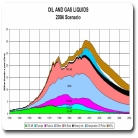
Peak oil might hit sometime during the next five years. How might this affect the world economy. We we examine important dynamics about oil prices, some misunderstood by many writing about Peak Oil — from doomsters to cornucopians. The bottom line: we cannot reliably forecast what will happen. Peak oil might have little effect — or crush the economy.
This posts discusses the effects of rising oil prices on the global economy.
- Comforting news from the past
- The #1 factor and major unknown: the rate at which oil production drops
- Scenarios. Some bleak, some hopeful
- Oil is not our only energy source
- The most important lost knowledge about oil
- For more information
(1) Comforting news from the past
As oil prices rise, what happens to the extra money consumers and businesses spend on oil? Many doomsters assume the money gets burned. Not so. Both history and theory show that the beneficiaries of higher oil prices spend the money. They invest it to increase output. Like everybody else, they spend some of their new wealth. Some of that buying flows back to products and services produced by oil consuming nations.
Why then do higher prices slow the economy? Oil producers (e.g., Gulf Princes) tend to have higher savings rates than consumers (e.g., me). Their savings rate increases even more when oil spikes up (aka a form of the permanent income theory, as people save some of a windfall). This in effect takes money out of circulation, slowing the growth of global real GDP.
New research shows how this has worked in the past: “Oil Shocks in a Global Perspective: Are they Really that Bad?“, Tobias N. Rasmussen and Agustín Roitman, IMF, August 2011 — Abstract:
Using a comprehensive global dataset, we outline stylized facts characterizing relationships between crude oil prices and macroeconomic developments across the world. Approaching the data from several angles, we find that the impact of higher oil prices on oil-importing economies is generally small: a 25% increase in oil prices typically causes GDP to fall by about 0.5% or less. While cross-country differences in impact are found to depend mainly on the relative size of oil imports, we also show that oil price shocks are not always costly for oil-importing countries: although higher oil prices increase the import bill, there are partly offsetting increases in external receipts. We provide a small open economy model illustrating the main transmission channels of oil shocks, and show how the recycling of petrodollars may mitigate the impact.
(2) The #1 factor and major unknown: the rate at which oil production drops
How will oil production change during peaking? (peaking is a process, not a point) This curve (production over time) might shape the 21st century and determine the fate of nations.
Often economic impacts result from rates of change more than levels. A doubling of prices during a year means hyperinflation, but only trivial effects when occurring over 25 years. Free markets adapt rapidly to changing circumstances; but the process takes time. Rapid changes creates disruptions, even recessions. Many in the peak oil community ignore this basic economics. One exception: Matthew Simmons frequently pointed this out. He was ignored, of course.
(3) Scenarios. Some bleak, some hopeful
Global peaking like that of individual oil fields would wreck the world (e.g., UK North Sea at 7%/year or even Cantarell at 30%/year). Doomsters usually assume that world production will follow the same pattern. Which is absurd. Rising prices have spurred the rapid development of unconventional sources: deep ocean oil, oil and natural gas from tight rocks (horizontal drilling and cracking), and alternative energy )(e.g., solar, wind, biofuels).
A long plateau or slow decline might have little effect on the global economy, especially since the rise in oil prices during the past decade has sparked the adaptation process. Price elasticity of demand measures how demand changes in response to price changes. Over a year only large oil prices changes greatly affect demand (low elasticity). But over a generation the elasticity of demand is far larger. As we saw in the previous oil price cycle. Oil prices spiked in 1972. By 1979 these dynamics kicked in strongly. After 7 years of rising oil prices, global oil demand was flat for the next 14 years.
Look out the window to see the same thing happening today. Higher oil prices spark fuel shifting (e.g., electric cars, biofuels), capital spending to increase efficiency (e.g., hybrid cars), and demand destruction (e.g., driving less). As a result oil demand remains unchanged since 2004, despite the almost 30% rise in world real GDP since then. Many confuse this flat demand with peak oil (an inability to increase productivity).
Oil producers also respond to prices. Most producers have invested to increase production, as have developers of unconventional and alternative energy sources. Offsetting this, OPEC (largely the Saudi Princes) have tightened their taps to keep oil prices near their break-even (i.e., point at which they balance their budget).
The effect of peak oil depends on the net effect of these factors. Unfortunately we cannot reliably estimate them.
(4) Oil is not our only energy source
Over short term time periods we focus on the supply and demand for liquid fuels (i.e., oil, natural gas, biofuels, synfuels). Liquid fuels play a vital role in the world economy (e.g., transportation). Over decades fuel there might be large-scale switching from oil to other sources. For example, instead of gasoline cars will use electricity, or fuel cells burning natural gas from shale). So the analytical focus will shift from oil to energy.
The result of these changes in energy production and consumption might be a plateau or a slow decline in energy usage — even after peak oil, if we are lucky and oil production drops slowly after peaking. These things receive too little attention in the Peak Oil community. They get too much from the cornucopians. The future holds many surprises, despite the confident guessing that characterizes energy research (see examples here and here).
(5) The most important lost knowledge about oil
Please read: Recovering lost knowledge about exhaustion of the Earth’s resources (such as Peak Oil), 27 January 2011 — Summary:
One of the saddest aspects of the Internet is that it so often fails to make us smarter. In a mutant version of Gresham’s Law, loud amateurs too-often drown out the voices of experts. Here we an excerpt from a 1975 book that tells us more about Peak Oil than a typical dozen posts on most peak oil websites. It’s an example of expert knowledge effectively lost to society by the proliferation of assertive ignorance. At the end are links to more on this subject.
One Comment on "One of the top questions for our time: how will Peak Oil affect the economy?"
BillT on Tue, 6th Sep 2011 4:06 am
This is a joke correct? Every creditable organization on the face of the earth KNOWS we passed peak, cheap oil years ago. Since cheap energy is required for economic growth and Capitalism, both are going to die with the last drop of oil we burn. Anyone who does not see the connection is either on drugs or never gave the topic any rational thought.